





How an asset falls when everyone wants to own it
If an asset remains desirable, its long-term fundamentals remain intact, and investors still want to own it, shouldn’t those qualities support its price?
Can an investor be right about an asset and still watch its price fall?
A financial crisis can temporarily change what determines prices when investors stop asking what they want to own and start asking what they can sell.
Some of the market’s most desirable assets become sources of emergency liquidity.
When the need for cash overwhelms the desire to hold
Prices reflect transactions at the margin.
An investor who considers an asset undervalued has little influence on today’s price if they aren’t buying.
An investor who must raise cash immediately has no such luxury.
That creates a strange dynamic during periods of severe financial stress. Investors may sell an asset despite remaining bullish on its long-term prospects because they need cash to meet:
- redemptions
- margin calls
- collateral requirements
- losses elsewhere
The Federal Reserve described this mechanism after the 2008 financial crisis. As funding became harder to obtain, some borrowers had little choice but to sell assets into increasingly illiquid markets. Those forced sales pushed prices lower, weakened other balance sheets, and created additional pressure to sell[1].
In other words, the asset itself doesn’t necessarily have to be the source of the problem.
It only needs to be sellable.
Liquidity can make strong assets vulnerable
March 2020 provided an unusually clear demonstration.
As the pandemic initially rattled markets, investors behaved largely as expected: risky assets fell while traditional safe havens benefited from a flight to safety.
Then the behavior changed.
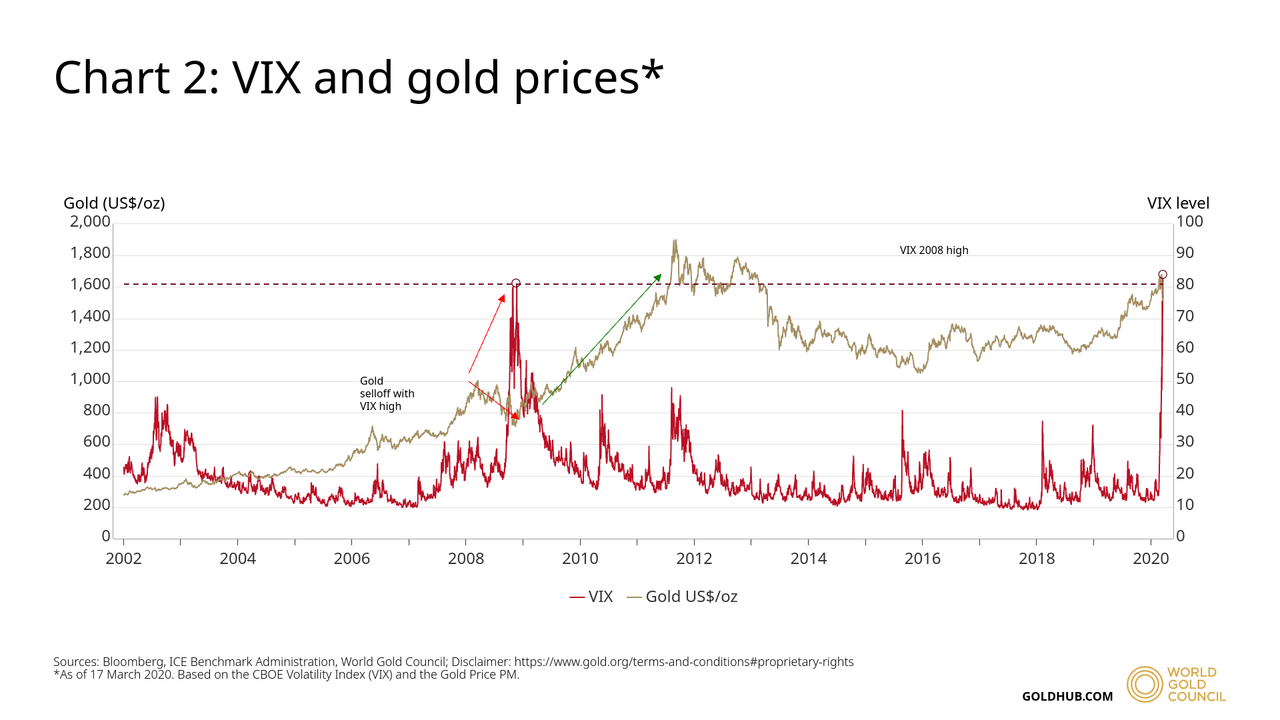
The Bank for International Settlements described what followed as a “dash for cash.”[2] Between March 9 and March 18, investors sold some of their most liquid assets as demand for cash accelerated.
- Ten-year Treasury yields rose sharply.
- Treasury bid-offer spreads widened dramatically.
- Gold fell 12%.
At the time, the World Gold Council similarly concluded that gold’s volatility reflected massive liquidation across financial markets, likely amplified by leverage. Gold’s liquidity actually made it useful to investors who needed to raise cash to cover losses elsewhere[3].
That produces one of the great ironies of a liquidity crisis: an asset can face selling pressure because it works well.
Falling prices can create more sellers
Forced selling can also become self-reinforcing.
Suppose an investor finances a portfolio with borrowed money, and falling asset prices reduce the value of the collateral supporting that borrowing. A lender may respond by demanding additional collateral or reducing the amount it will lend against the position.
The investor now needs cash.
Selling assets pushes prices lower, potentially weakening collateral values further. Other leveraged investors can then face the same problem.
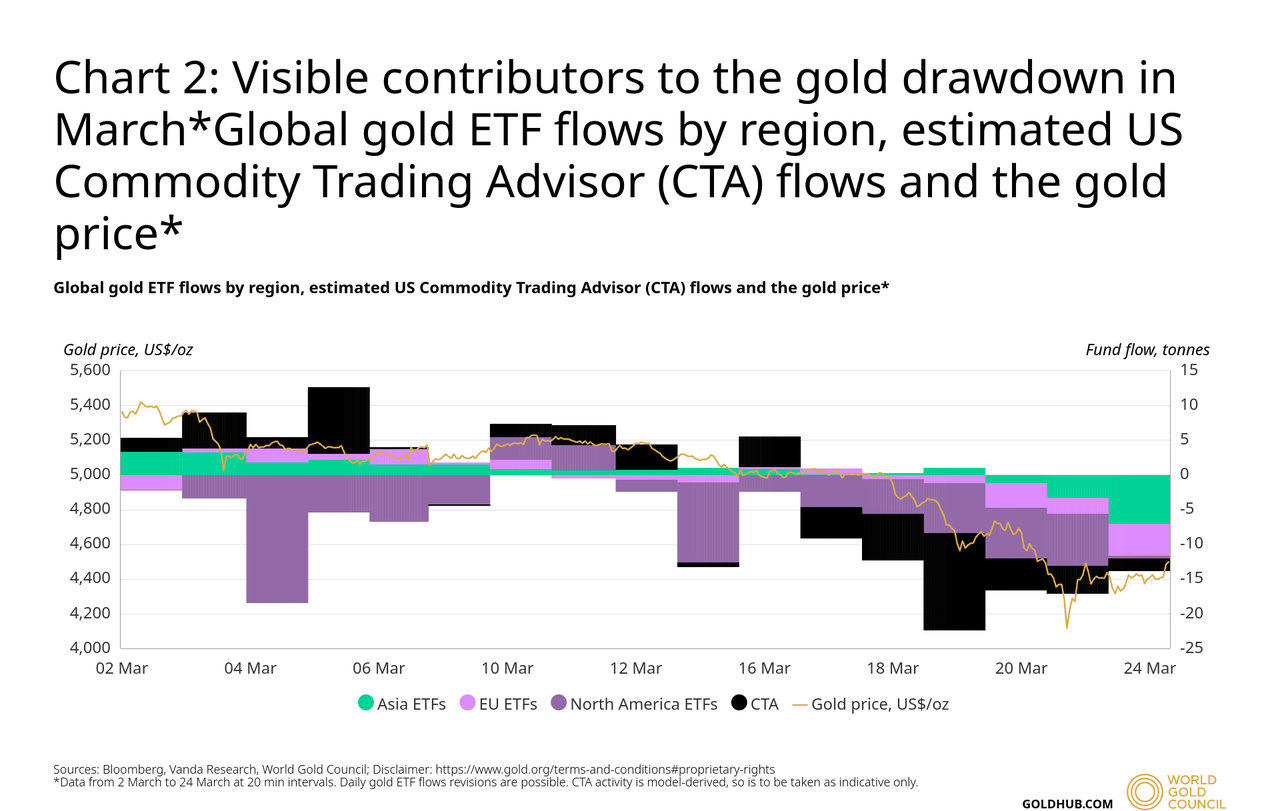
Fundamental investors may eventually recognize the lower prices as an opportunity. During the most acute phase of a liquidity squeeze, however, their willingness to buy has to compete with someone else’s immediate need to sell.
The reason for the decline matters
Naturally, a falling price invites a fundamental explanation. Investors look for:
- deteriorating earnings
- weaker demand
- changing interest rates
- some new piece of information that makes the asset less valuable
Sometimes that explanation is correct.
A liquidity-driven decline presents a different problem. The price may be responding less to changing expectations about the asset itself than to financing conditions elsewhere in the system.
That doesn’t make the decline harmless. An investor who needs to sell during the downturn experiences the loss regardless of why it happened.
But it does change what the price is telling you.
The most important signal during periods of financial stress may not be which assets investors suddenly stopped wanting. It may be which assets they can still sell when everyone needs cash at once.
Understanding how liquidity can overwhelm an asset’s fundamentals is only part of the story. Jeff Snider joins the Gold Exchange Podcast to explore where those pressures can originate, how they can spread through the financial system, and what a more resilient monetary system could look like.
Sources: