





The global gold market has a transparency problem. Does it matter?
Gold is one of the world's most closely watched assets. Investors track its price, central banks report their reserves, and analysts publish detailed estimates of global supply and demand.
Yet despite all this information, significant portions of the gold market remain difficult to measure.
Unlike stocks and bonds, gold trades across a fragmented network of exchanges, private vaults, bullion dealers, and over-the-counter markets.
So how much do investors really know about the gold market?
What the gold market isn't telling us
Publicly traded companies must disclose financial statements, ownership information, and other material developments. Gold has no comparable universal reporting system.
While exchanges publish trading activity and gold-backed ETFs disclose holdings, substantial portions of physical gold ownership remain private.
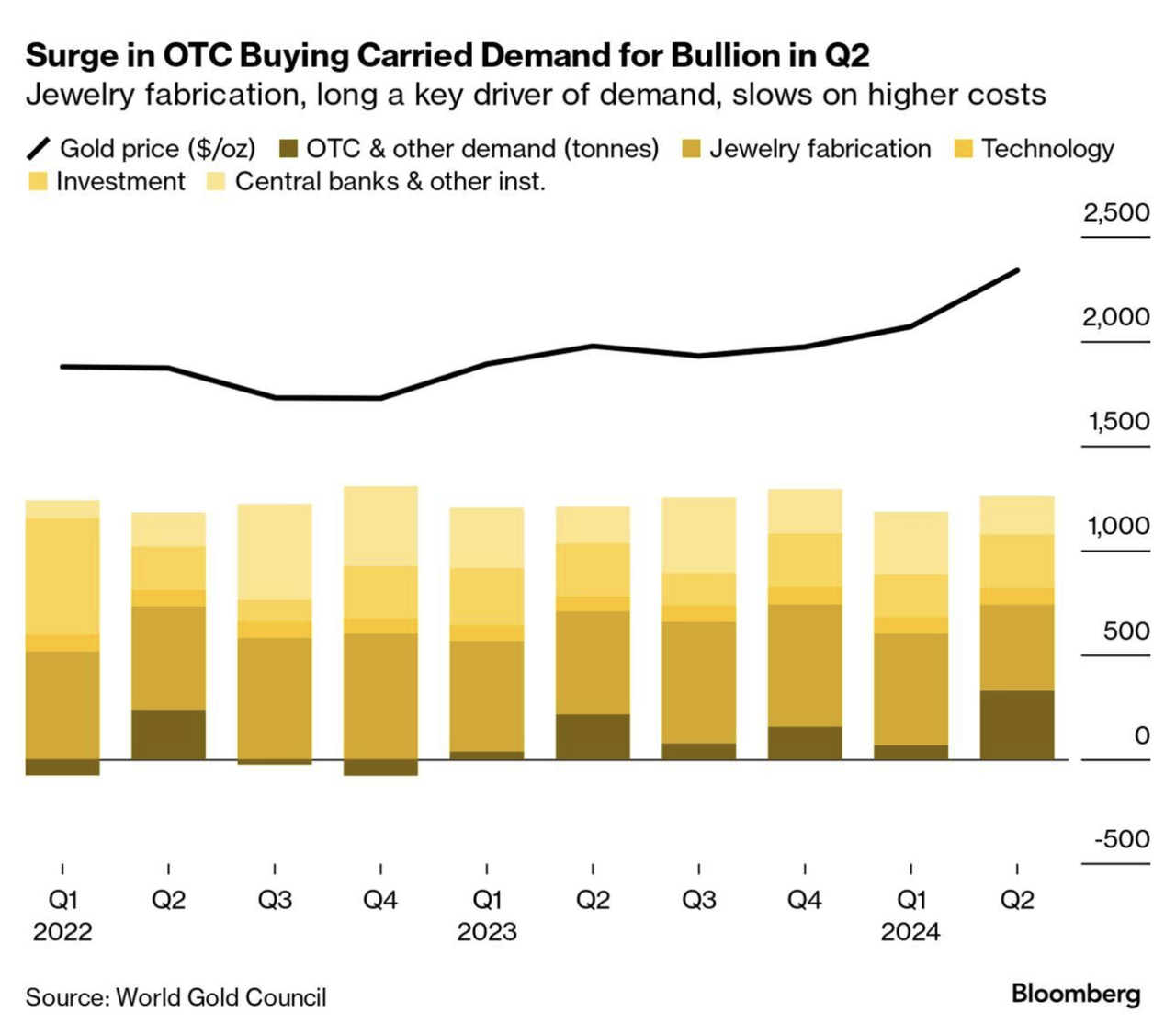
The World Gold Council even includes a category called "OTC and other," which captures estimated over-the-counter investment activity, inventory changes, and statistical differences.
In the second quarter of 2026, this category represented an estimated 327 metric tons of gold demand.
That's a significant amount of activity that cannot be fully explained through publicly observable transactions. [1]
Chart 1: Gold demand by category
Does missing information mean market manipulation?
When investors encounter gaps in market data, speculation often follows.
Gold is particularly vulnerable to this because it serves as more than an investment. It's a monetary asset, a store of wealth, and, for many, protection against financial uncertainty.
But limited transparency doesn't automatically mean manipulation.
Chart 2: Gold spot price bid-offer spread
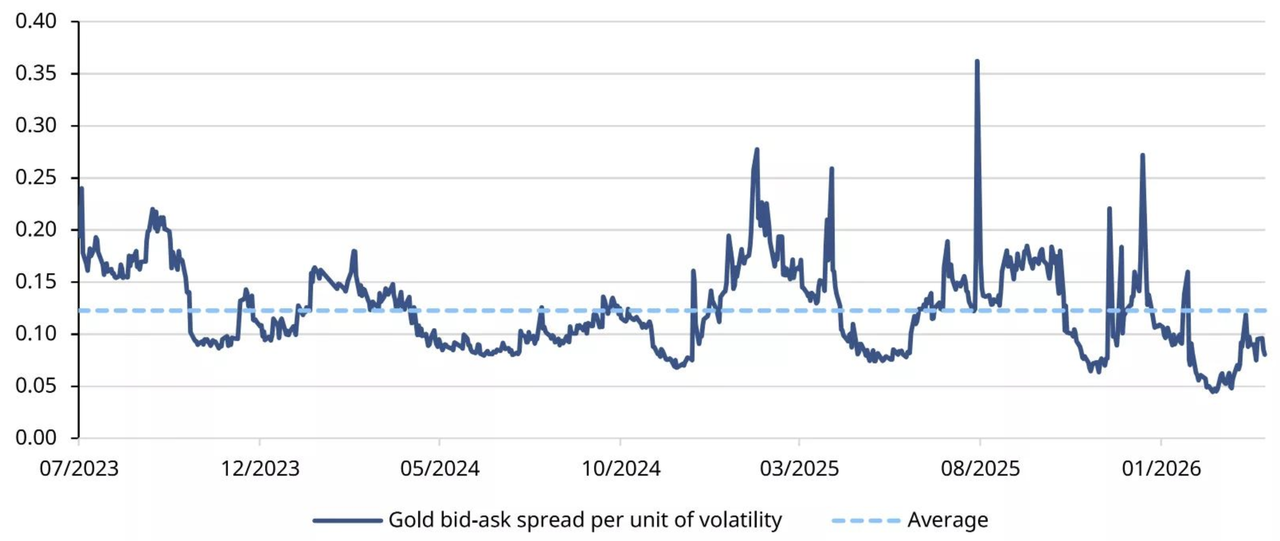
Over-the-counter transactions are common across currencies, commodities, and other financial markets. Many legitimate participants value privacy, particularly when managing substantial positions.
The challenge is distinguishing between genuine market vulnerabilities and conclusions that go beyond the available evidence.
Not knowing everything about a market doesn't mean everything being reported is wrong.
Why this matters for gold investors
Gold prices reflect more than mine production or central bank purchases. Existing holders can influence supply simply by deciding whether to sell or continue holding their metal.
The World Gold Council estimates that the financial physical gold market represented approximately $14 trillion at the end of 2025.[2]
Yet the motivations and transactions of many private holders remain largely invisible.
That leaves investors relying on estimates, incomplete datasets, and assumptions that aren't always clearly explained.
The real problem isn't necessarily missing information. It's treating incomplete information as absolute certainty.
In the latest episode of the Gold Exchange Podcast, Ben Nadelstein sits down with CPM Group founder Jeffrey Christian to challenge some of the most widely accepted claims about gold and silver.
From central bank reserves to physical gold ownership and futures markets, the conversation asks a question every precious metals investor should consider:
How much of what we believe about gold is actually supported by the evidence?
To explore these questions further, watch Ben Nadelstein's conversation with CPM Group founder Jeffrey Christian as they challenge widely held assumptions about gold, silver, and the data driving precious metals markets. Discover what investors may be getting wrong in the full episode below.
Source:
[1] https://www.gold.org/goldhub/research/market-primer/gold-market-primer-…
[2] https://www.gold.org/goldhub/research/market-primer/gold-market-primer-…