


Ignore The Rally, This Blue Wave Will Crash The Market
Submitted by QTR's Fringe Finance
Well, the voters have spoken. Screamed, actually. And if last night’s election results were supposed to provide some kind of reprieve for the Trump administration, they did precisely the opposite. Democrats delivered a decisive, sweeping victory, taking control of both the House and Senate and flipping seats in places Republicans have considered safe for generations.
“Democrats are on track to win the largest House majority since 2008, when they won 257 seats,” Alicia Parlapiano of the New York Times wrote this morning.
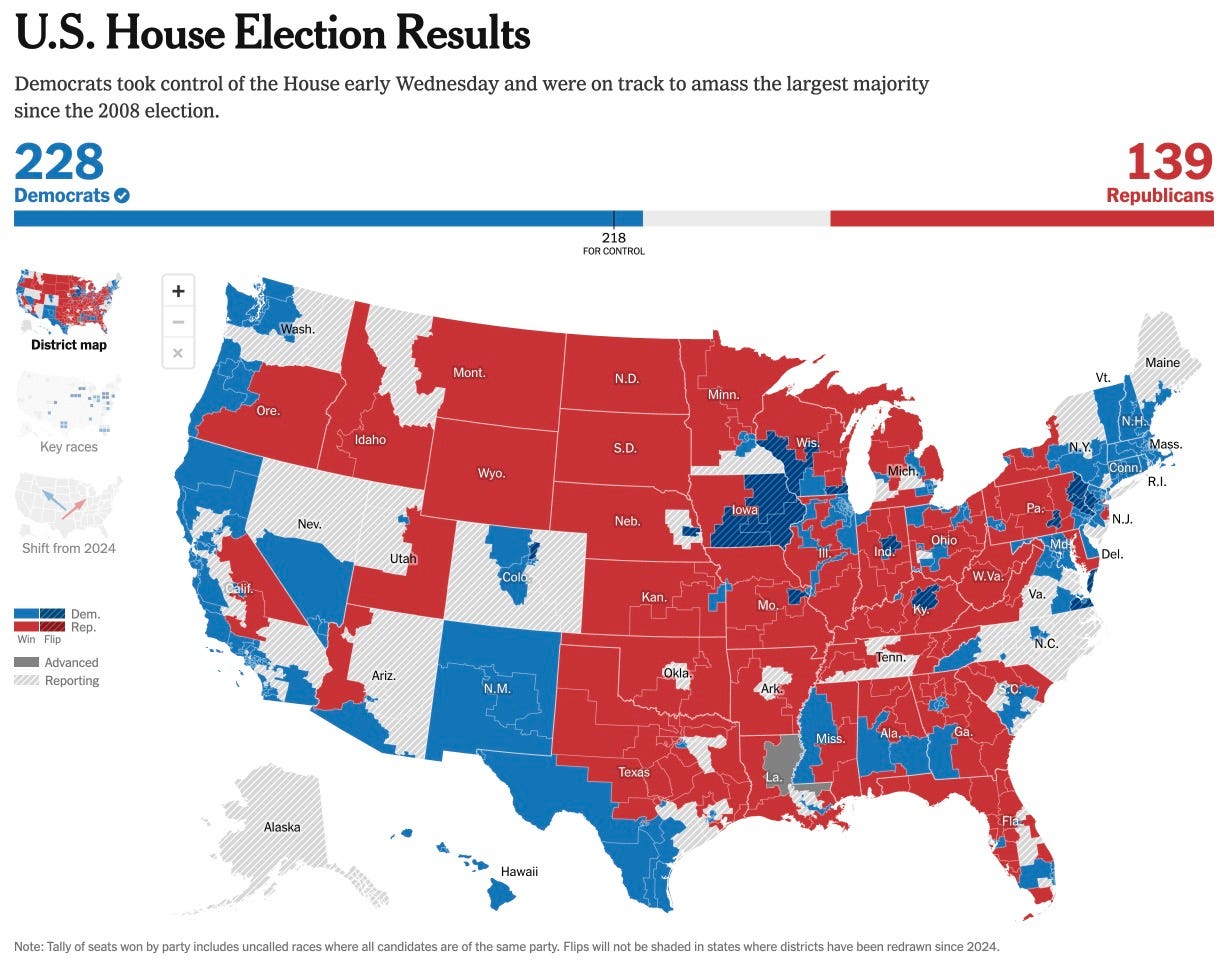
Chart: NY Times
Perhaps most remarkable was Texas, where Democrats captured the governorship and a U.S. Senate seat, an extraordinary political development in a state that has become central to the country’s energy, technology and industrial infrastructure.
The result is a Democratic Congress, a Republican president whose legislative agenda is now effectively on ice, and a political environment that looks dramatically different than it did 24 hours ago.
Whatever you think of the results politically, the implications for markets, regulation and corporate America are going to be significant, as I have been writing about for the last month.
The market’s initial reaction reflected exactly that. Nasdaq futures plunged more than 2% overnight as the scale of the Democratic victory became apparent, with investors suddenly confronting the prospect of a very different regulatory and political environment.
But in a remarkable reversal, futures have since clawed back their losses and, as I write this before the opening bell, are being quoted around 1% higher. That’s a roughly three-percentage-point swing in a matter of hours.
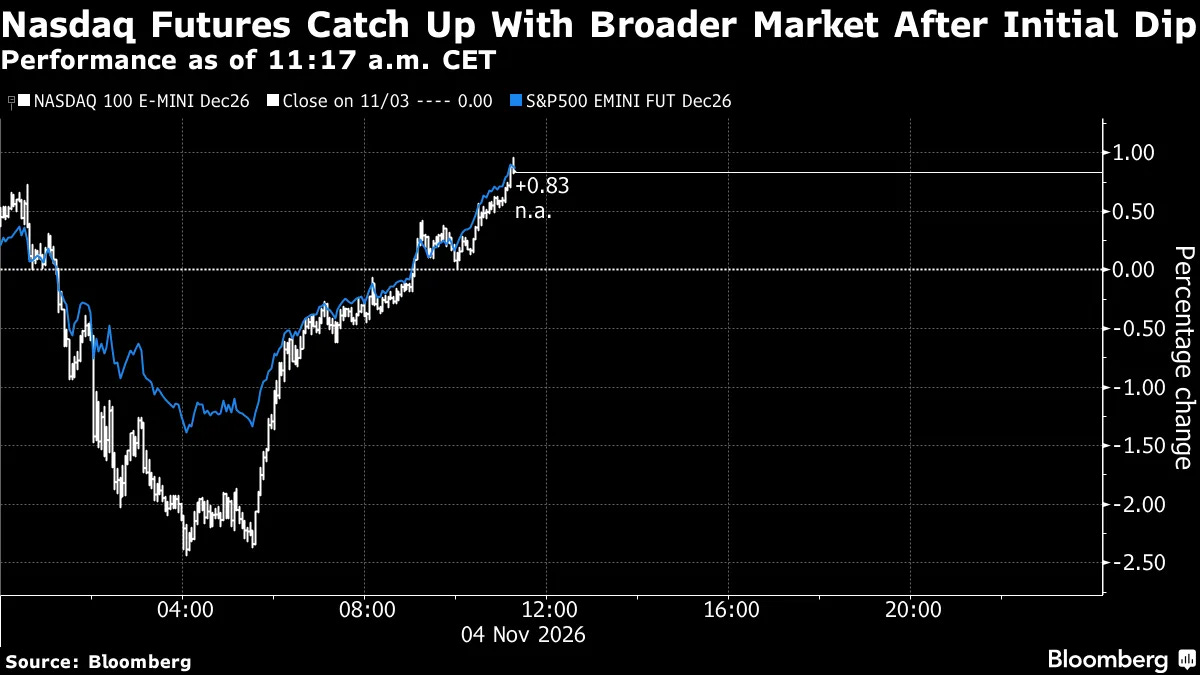
In other words, the market initially appeared to hate the results, then decided it loved them. Or, as I’ll explain, perhaps neither interpretation is entirely correct.
The initial selloff, in my opinion, was perfectly rational. In fact, it reflected many of the risks I’ve been writing about for weeks. Look at Texas, for example. A political transformation there could have enormous consequences for the data-center buildout, particularly as electricity demand, water consumption, infrastructure spending and local opposition have become increasingly contentious issues.
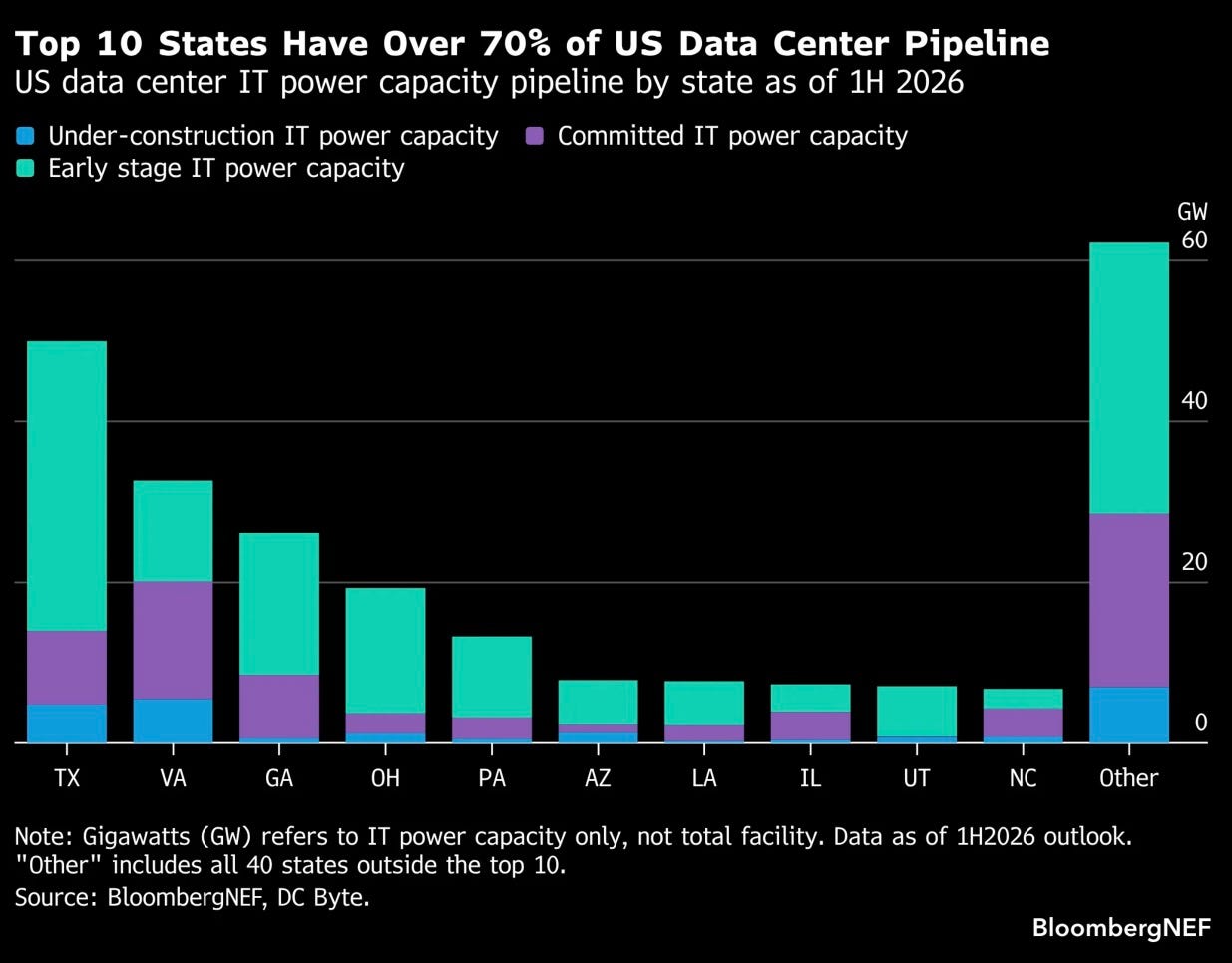
Source: Bloomberg
Gordon Johnson of GLJ Research believes that roughly 13 gigawatts of announced Texas data-center projects could face delays under a Hinojosa administration, with many potentially pushed back 12 to 18 months if she follows through on her proposed permitting moratorium. Texas accounts for roughly a quarter of all U.S. data-center capacity expected to come online by 2030, making this no small development.
Importantly, Johnson notes that Abbott already imposed a permitting pause, but while investors expected that pause to be lifted following a December audit, Hinojosa could simply keep it in place.
As Johnson puts it, “Delay isn’t death, but it is...(READ THIS FULL ARTICLE HERE).