


Trump Treasury Lining Up Private Debt Collectors To Seize Wages From Nearly 10 Million Student Loan Defaulters: Report
Trump administration officials are preparing to penalize millions of Americans in default on their federal student loans next year, The Washington Sun reported, citing five people familiar with the matter. The Treasury Department is moving forward with plans to hire private debt collectors, possibly as soon as November, three of the sources said, and those plans are unlikely to be announced before the midterm elections.
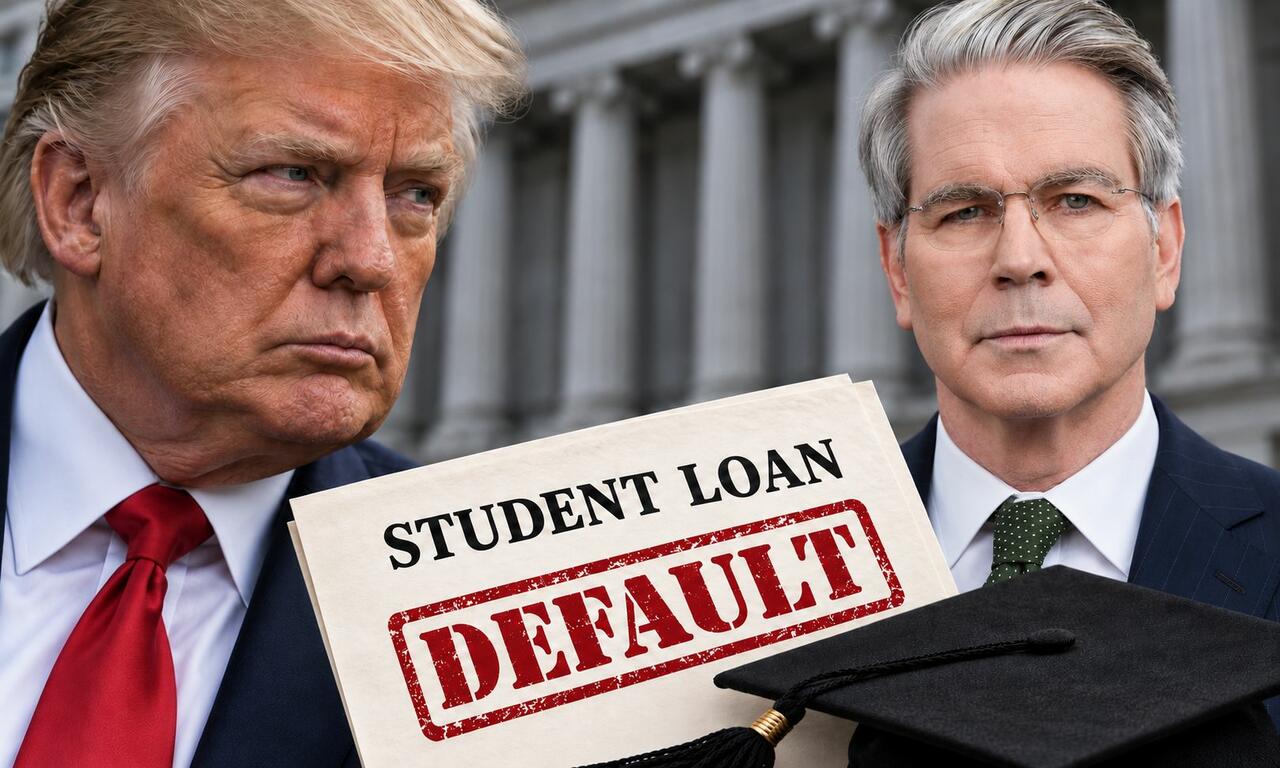
According to the Treasury's Sept. 30 release - there are more than 5 million borrowers who have been in default for over six years and another 5 million who entered default in less than a year.
The plan would revive collections the administration shelved this year. As we noted in January, the Education Department said it would begin garnishing wages in January, with up to 15% of a borrower's after-tax income at stake and about 1,000 notices expected the first week. That same month, however, ABC News reported that the department paused both wage garnishment and Treasury Offset Program collections - tax refund seizures included. Under Secretary Nicholas Kent said the tools "will function more efficiently and fairly" after reforms, and the department said it had collected roughly $500 million from defaulted borrowers before the pause.
According to the Sun, last year the White House Office of Management and Budget began helping the Education Department prepare to seize federal benefits and wages from defaulted borrowers, and Treasury officials blocked the effort, citing the economic cost of punitive measures against workers. Staff said they warned senior Treasury officials that scores of Trump supporters would be seriously hurt by going after the wages and benefits of people struggling to keep their jobs. "This is not who you think it is. The demographics are not good for us," one source said.
Some officials want to garnish benefits and wages for the current tax year, meaning the April 15, 2027 deadline, but the sources cautioned that it could slip again while Treasury makes sure its new Defaulted Loans Support Center is working. That online portal for rehabilitating or consolidating a defaulted loan launched Sept. 30. The administration's stated preference remains getting borrowers into voluntary payment plans. "It would be politically insane to do this before the midterms," one source said, "but 2027 probably makes a little more sense."
The government has two main tools; one seizes payments that follow taxes, such as expected tax refunds, Social Security payments, and the earned income tax credit and child tax credit. The other garnishes wages by requiring employers to send the money to the government. Newsweek noted that wages can be garnished up to 15% without a court order, citing the National Consumer Law Center, and that borrowers generally get at least 30 days' notice first.
OMB and Treasury declined to comment. The Education Department said: "We don't respond to fishing expeditions." IBTimes noted that no agency has responded on the record to the plans themselves, and no restart date has been announced.
Treasury's push last year to postpone collections has cost taxpayers about $5 billion so far, according to Marc Goldwein of the Committee for a Responsible Federal Budget, and the figure grows the longer the administration waits. "They've done the same thing they criticized Biden for," Goldwein said. Treasury's September release itself blamed the prior administration for the default pile-up, including its termination of contracts with private collection vendors, the same kind of contractors Treasury is now reportedly preparing to hire.
Advocates see the post-election timing as political opportunism. Michael Pierce, executive director of Protect Borrowers, said Treasury may not even have the data needed to certify the debts for collection, a legal prerequisite. "What comes next will be a catastrophe for families across the country," he said. The Center for American Progress estimates 9.5 million borrowers are in default, according to IBTimes.
