Extreme Markets: Welcome To Maximum Pain
Extreme markets
Extreme moves across the board. SPX futures are printing a massive hammer, semiconductor valuations have collapsed more than 40%, Korean memory stocks have been crushed and sentiment is approaching capitulation. Meanwhile, oil is suffering its worst four-day selloff since COVID, with systematic selling pressure mounting. The tension is building: extreme positioning and sentiment are creating the conditions for violent upside reversals, even as underlying market stress remains far from resolved.
SPX hammer
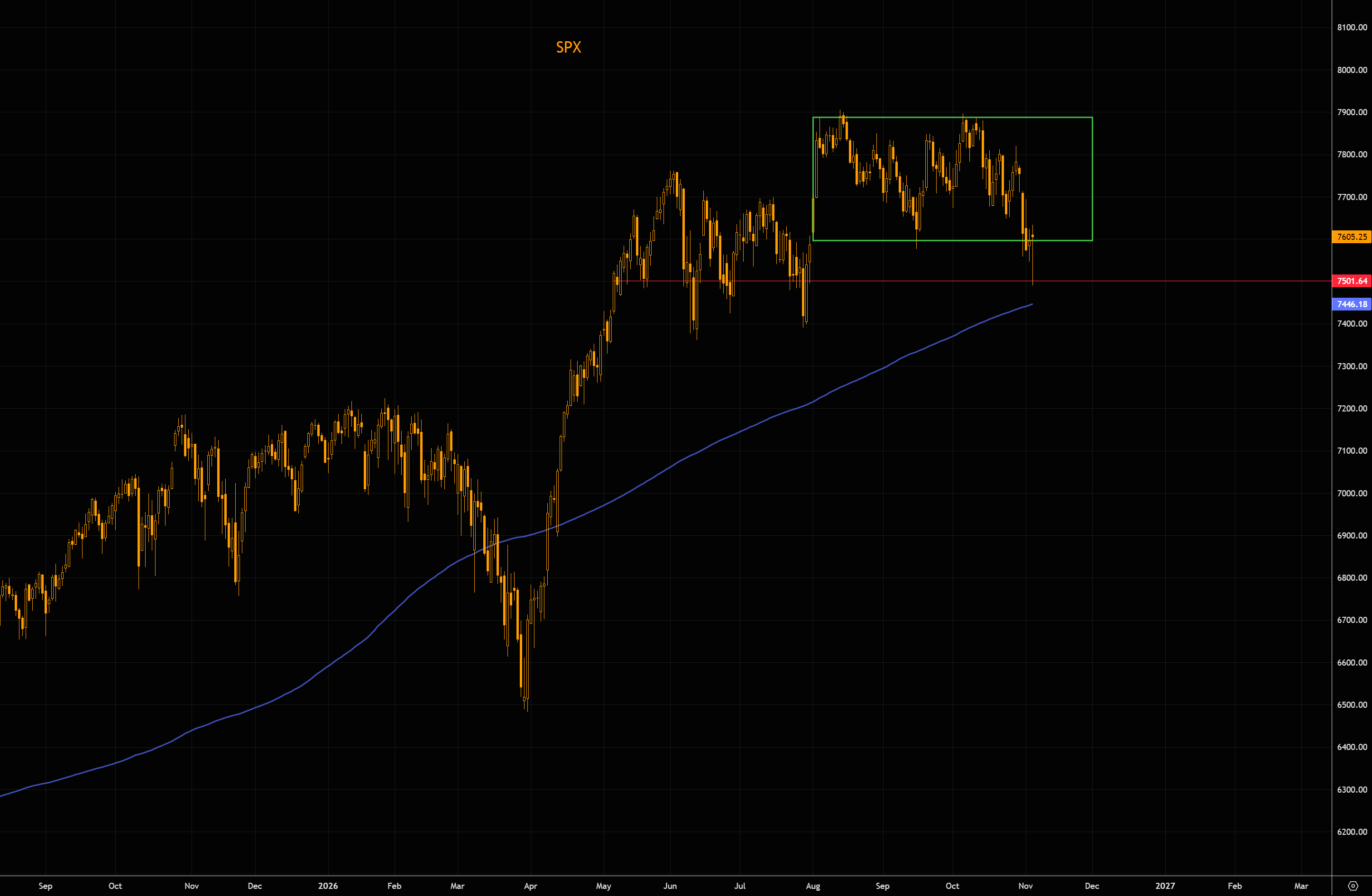
SPX futures are printing a massive hammer after an aggressive overnight selloff, reclaiming the range that has been in place since August. Note that futures came within touching distance of the 200-day moving average at the overnight lows.
The bigger picture? SPX is essentially flat since May, with no meaningful medium-term trend. Chasing momentum at range extremes has consistently been a losing strategy. Trading SPX has required a mean-reversion mindset for months. More here.
Source: LSEG Workspace
The great tech rotation
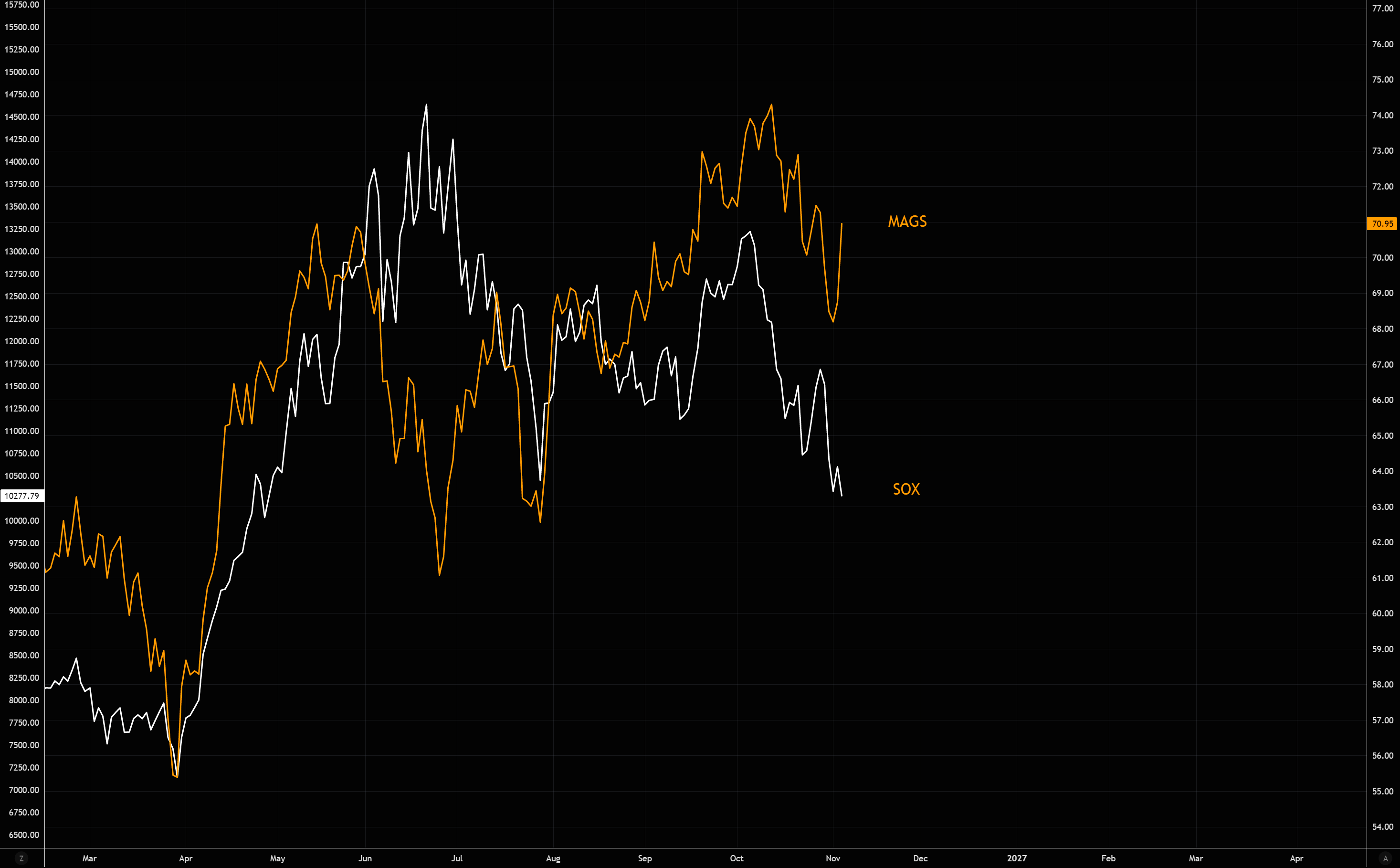
Goldman's trading desk highlights a clear rotation within tech, with hyperscalers outperforming by 350bps while semiconductors lag by 250bps as investors use them as a source of funds. The logic is interesting: restrictions on data center expansion could make existing compute capacity more valuable, supporting pricing power while reducing capex requirements and potentially freeing up cash for buybacks. Meanwhile, the broader AI complex remains under pressure, with AI Leaders down 500bps, power-related stocks down 600bps and data centers down 540bps. The market is increasingly distinguishing between the beneficiaries of AI infrastructure and those funding the buildout.
Source: LSEG Workspace
Has the damage been done?
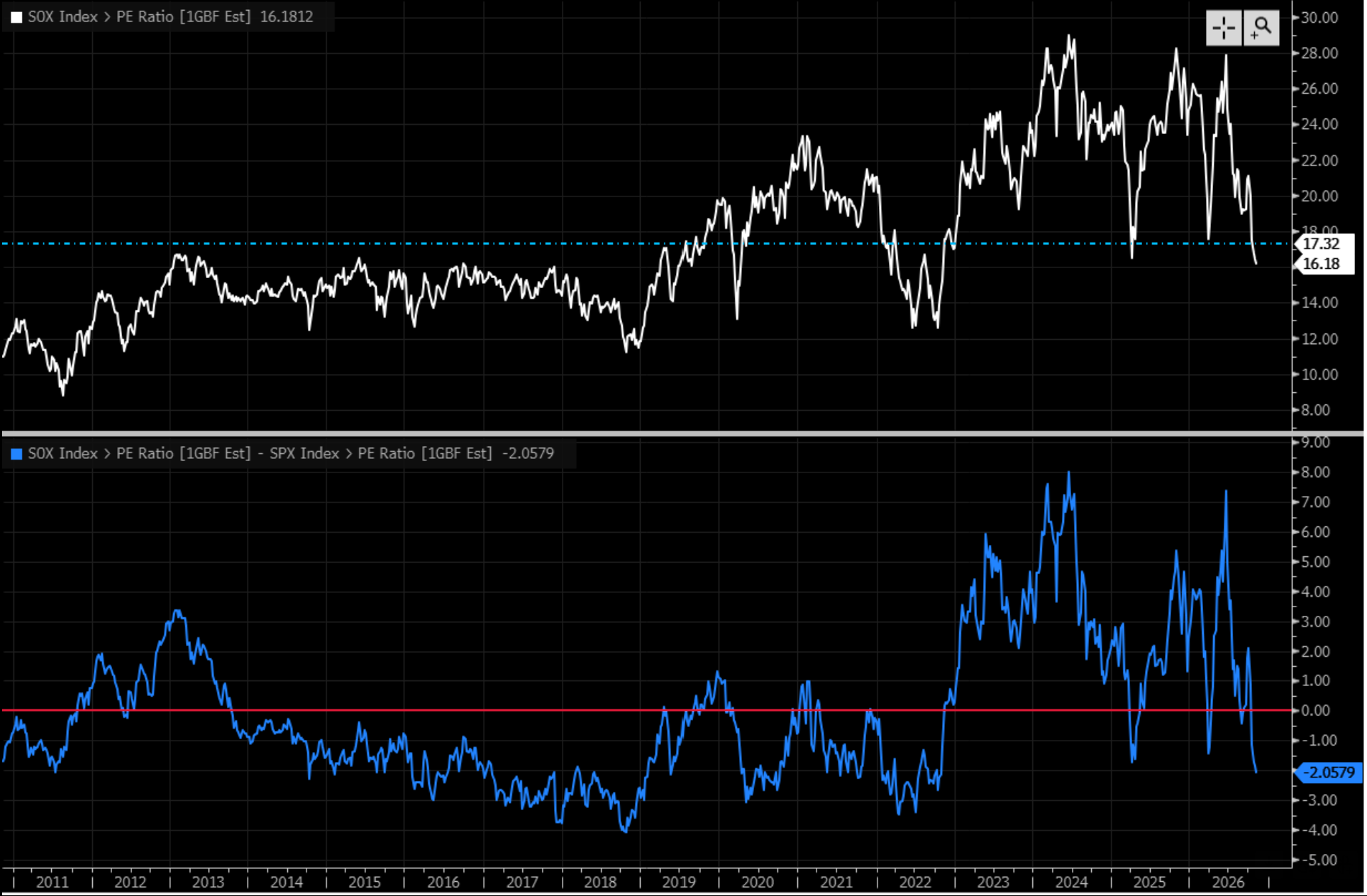
Goldman's Callahan highlights the extraordinary valuation reset in semiconductors, with forward P/E multiples collapsing more than 40% over the past two months, from 28x to just 16x. The SOX now trades at roughly a 2-turn forward P/E discount to the S&P 500, near the widest valuation gap seen in 15 years. With so much multiple compression already behind us, the key question is how much of the policy uncertainty and AI infrastructure risk has already been priced in. More here.
Source: GS/Bloomberg
Relative semis stress
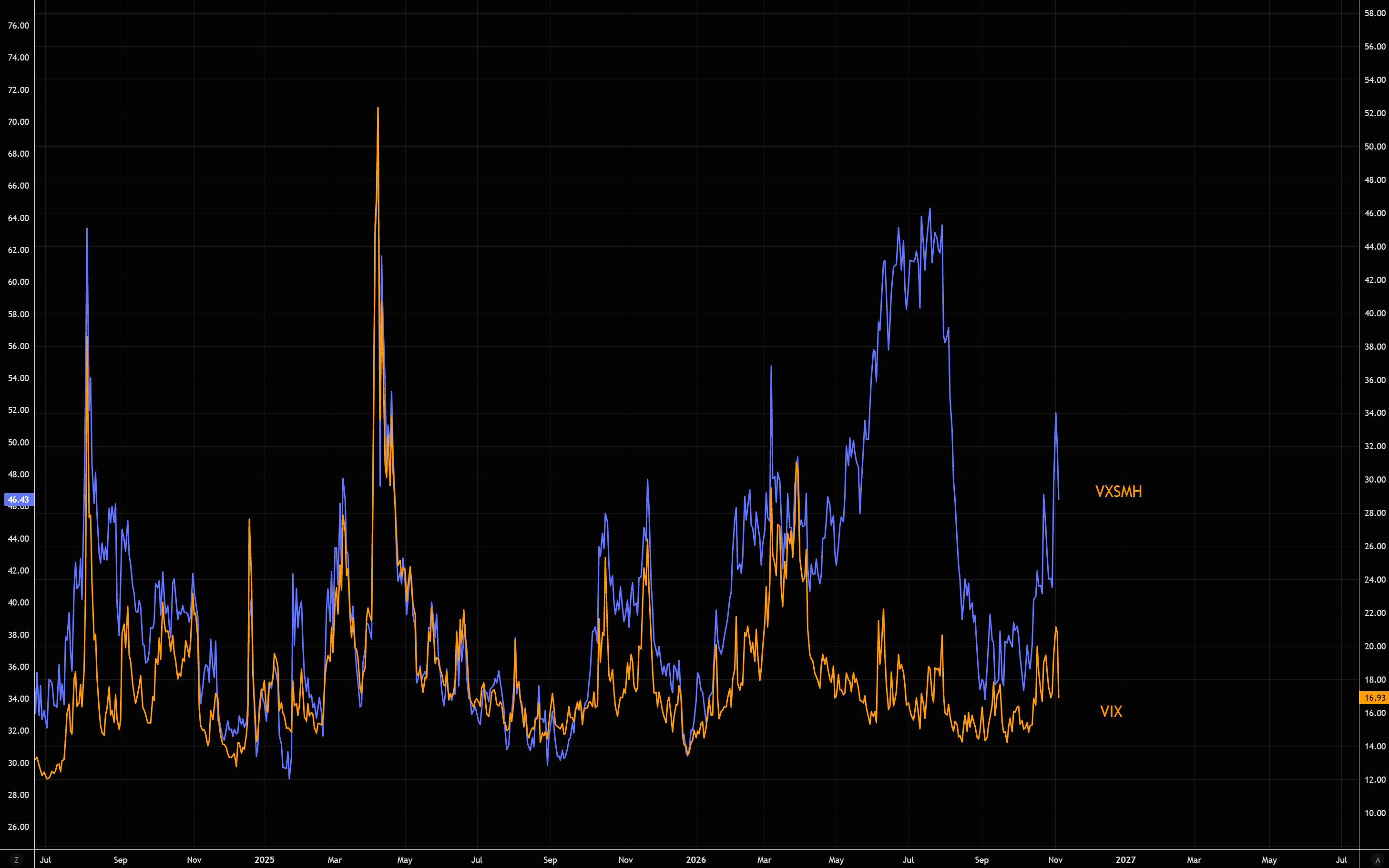
While the VIX is collapsing, semiconductor volatility (VXSMH) has barely budged, leaving a massive gap between the two. This is not what a healthy recovery looks like.
Source: LSEG Workspace
The memory massacre
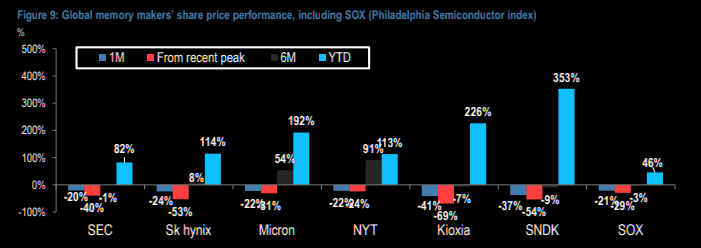
Memory stocks have been absolutely crushed. JPMorgan highlights that the sector has plunged 45% from its 2026 peak, compared with a 29% drawdown in the SOX. SK Hynix has collapsed 53% from its highs, while Samsung is down 40%. The market has gone from pricing an AI supercycle to aggressively discounting a memory downturn. The question is whether the selling has already gone too far. Latest note here.
Source: JPM
The midterm tailwind
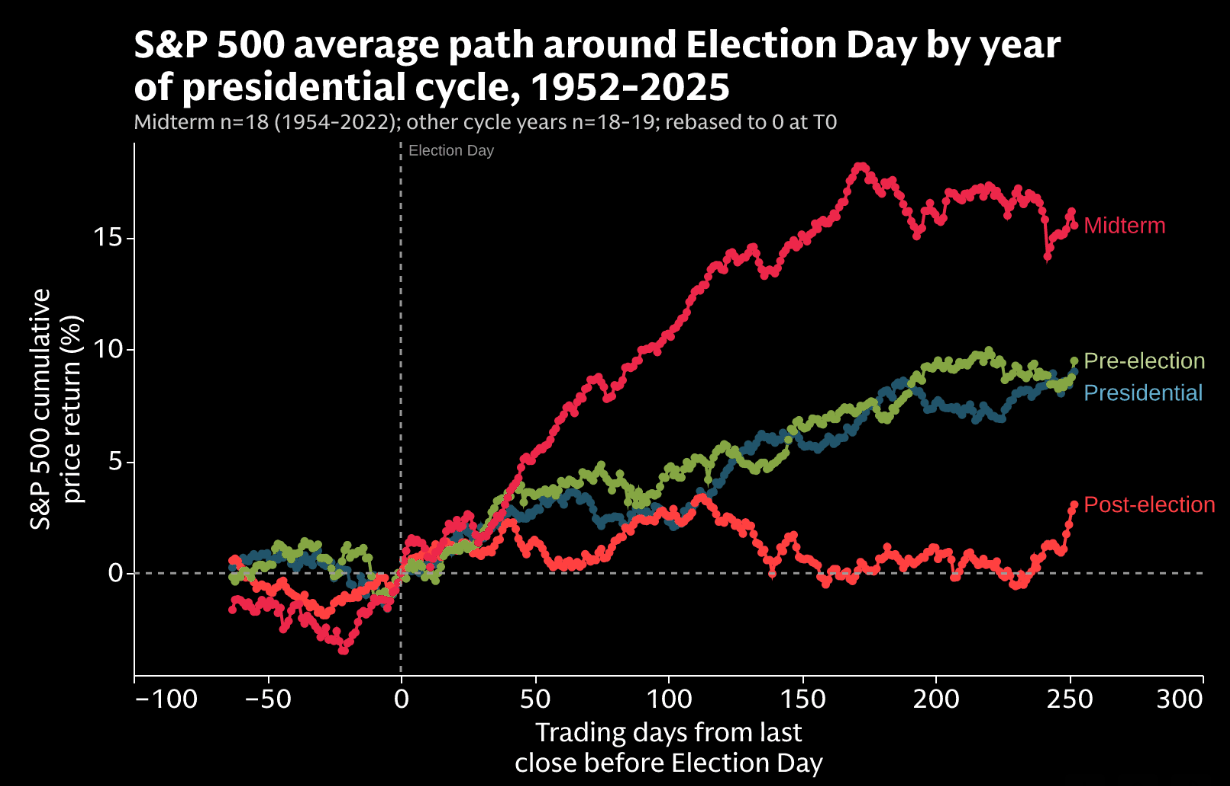
According to JPMorgan's Market Intelligence team, history suggests the US midterms could provide a much-needed boost to equities. Since 1990, the S&P 500 has delivered average gains of 5.4%, 11.4%, 12.5% and 14.7% over the following 3, 6, 9 and 12 months, with a 100% positive hit rate at 6, 9 and 12 months. Meanwhile, JPMorgan argues the recent de-risking is not quite capitulatory, with quant selling and elevated tech positioning still posing risks. However, widespread deleveraging and momentum exposure collapsing to just 30% of its peak suggest the stage may be set for an alpha rebound.
Source: GS
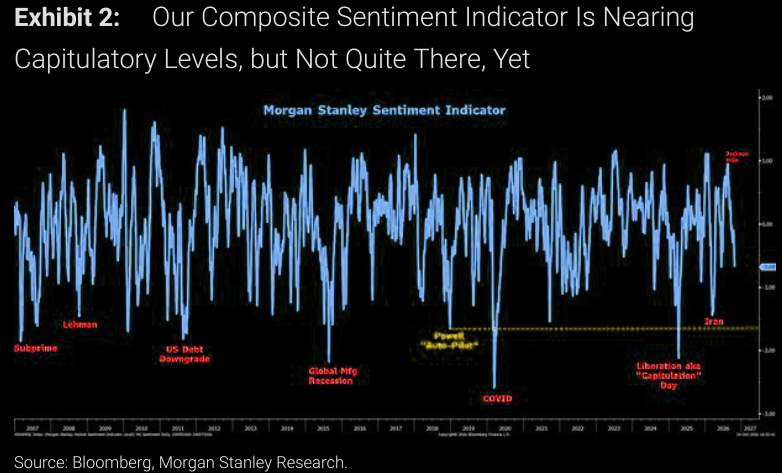
Sentiment nears capitulation
Another correction, another sentiment gauge flirting with capitulation without actually getting there. Morgan Stanley's Composite Sentiment Indicator is approaching the panic zone, but has yet to deliver the textbook -2.00 flush. The message? We haven't seen full capitulation, but markets don't necessarily need it to squeeze.
Source: Morgan Stanley
Beijing's put is back
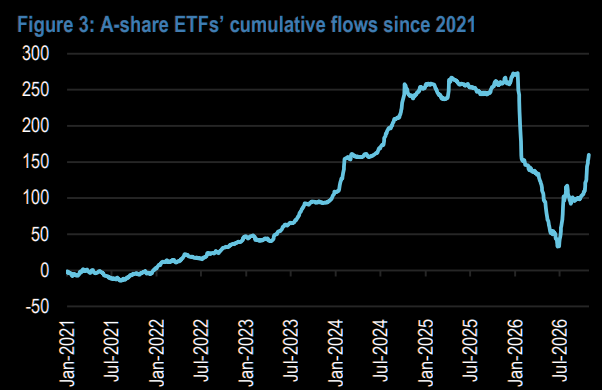
The timing is interesting. JPMorgan highlights two regulatory meetings on November 2 aimed at stabilizing Chinese equities, including efforts to expand capital-market support tools and improve stock buyback financing. There are also signs of government-backed buying returning to the market. JPMorgan sees an emerging policy floor, although sustained inflows are still needed to confirm a durable bottom. After a 20–30% correction, the policy put is becoming increasingly relevant. More here.
Source: JPM
Massive in oil
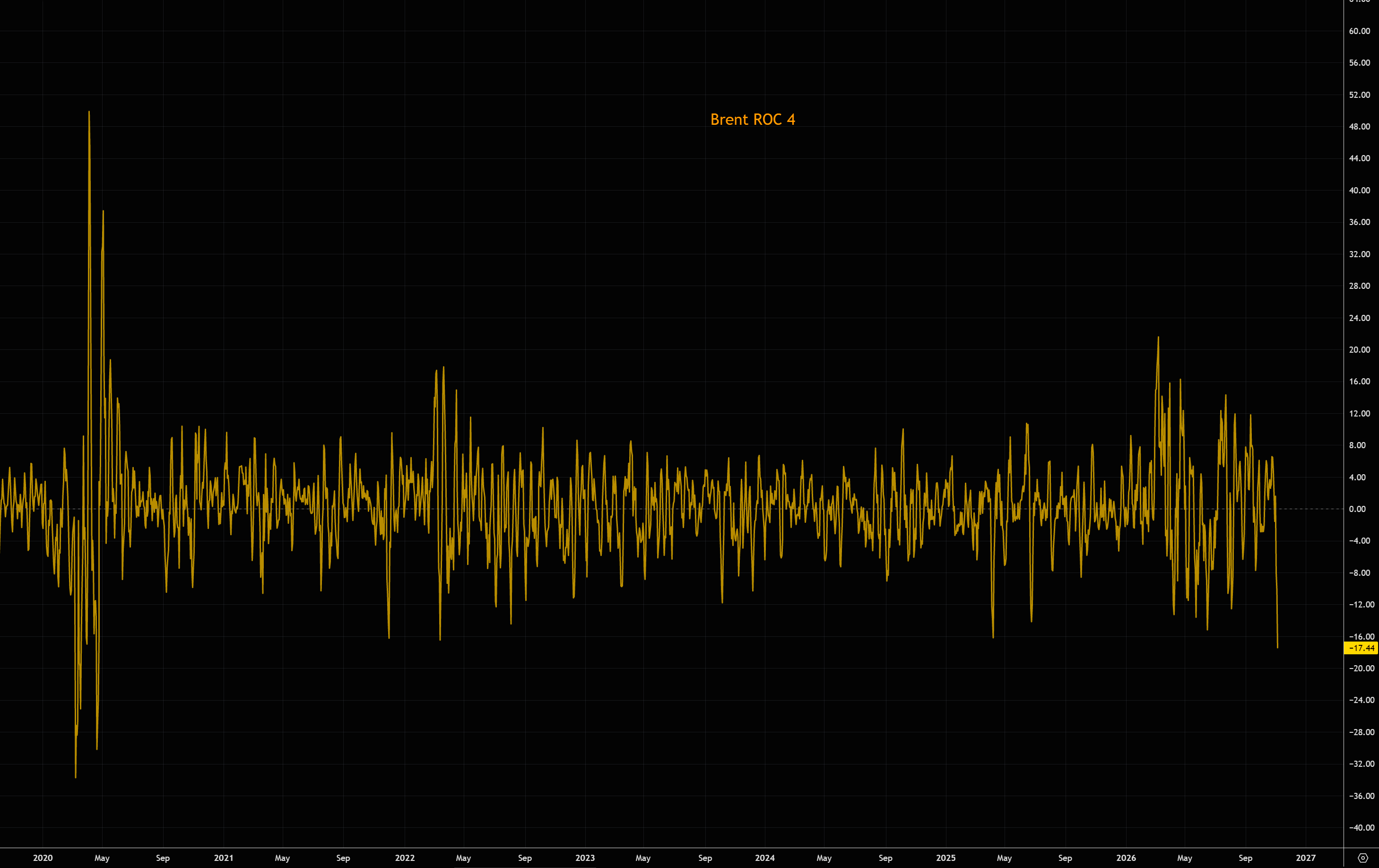
Brent is experiencing its worst four-day selloff since the COVID crash of 2020, when WTI futures briefly traded below zero. The speed of the unwind has been extraordinary.
Source: LSEG Workspace
Boom
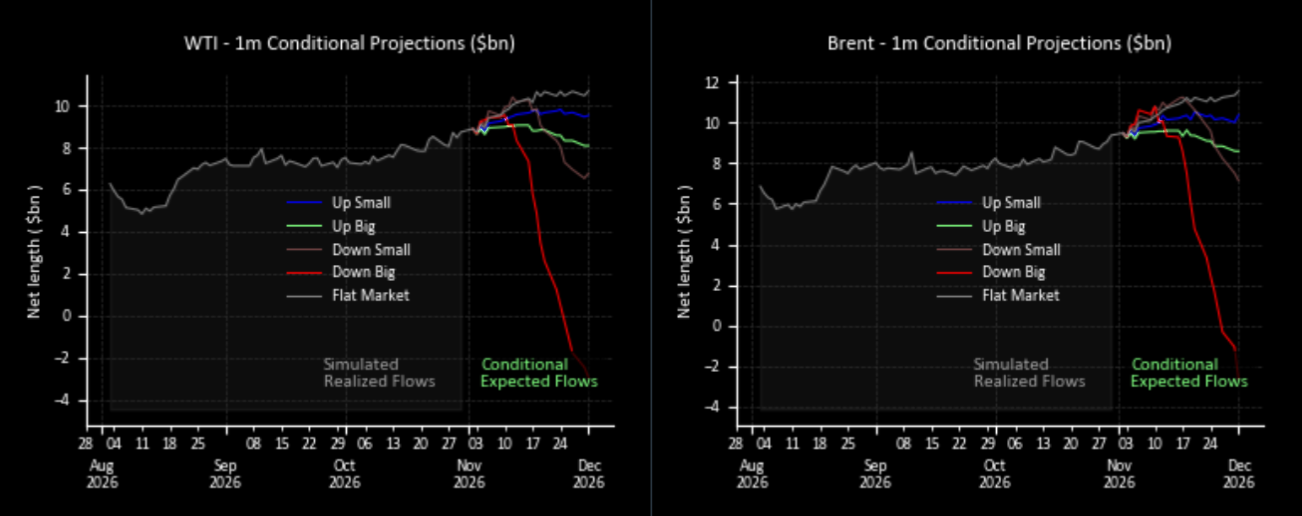
CTA downside convexity in oil is enormous. Stops have already been triggered, but given the speed of the collapse, much of the systematic selling may not yet have been executed. The risk is that forced liquidation adds further pressure to an already disorderly market.