




Sponsored Content
The gold market is quietly escaping central bank control

This week showed how sensitive the gold market still is to central banks.
First came reports that Poland’s central bank is considering selling part of its gold reserves to fund defense spending.
Then another headline: U.S. officials reportedly brokered a deal allowing Venezuelan gold to be sold into U.S. markets.
Gold prices slipped on the news.
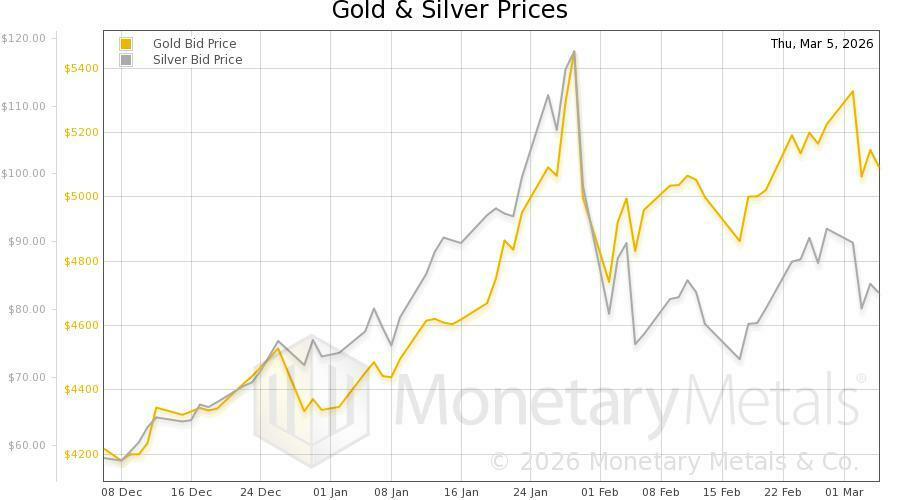
That reaction reflects how the market has thought for decades. Central banks buy gold; prices can rise. If they sell—or might sell—prices can fall.
But that dynamic may not define the gold market much longer.
A deeper shift is underway.
The emergence of globally available gold capital markets
This shift is visible in the early stages of a growing gold capital market that is available not just to large institutions and central banks, but retail investors and citizens globally looking to denominate and grow their wealth in gold.
Instead of simply storing metal in vaults, gold can be deployed into productive use while investors earn a return paid in gold.
Recent activity illustrates how this works.
Monetary Metals recently funded a 15,515-ounce gold lease to Jawhara Jewellers, enabling the company to finance their gold jewelry inventory in gold and pay a rental fee to the gold owners in more ounces.
Clients earn a yield on their gold, paid in gold.
No conversion into paper currency required.
This type of structure highlights a broader change: gold increasingly functionsing as productive financial capital, not just a passive reserve asset.
The personal gold standard
If this trend continues, the implications are significant.
Historically, gold standards were imposed by governments.
Today, something different is emerging.
Private investors around the world are beginning to:
• own gold
• earn yield on gold
• compound wealth in gold
In effect, individuals are building personal gold standards.
As this expands, the gold market becomes less dependent on the decisions of central banks.
A policy debate in Poland or a government deal involving Venezuelan gold are events that may still move prices in the short term.
But over time, the larger driver may be the steady accumulation of gold by private investors holding and compounding wealth in ounces.
Understanding the next phase of gold
These structural changes—and what they may mean for the gold market—are explored in the Gold Outlook Report 2026 from Monetary Metals.
The report examines the rise of gold capital markets, the emergence of yields paid in gold, and the growing global shift toward monetary assets as investors respond to long-term currency debasement.
For investors trying to understand where the gold market may be heading next, the bigger story may not be central bank headlines.
It may be the quiet expansion of private capital accumulating—and compounding—wealth in gold.
Download the 2026 Gold Outlook Report to explore the full analysis.
Download the full Gold Outlook 2026 report for free here.