




Sponsored Content
If this Company Solves The $125 Billion LFP Battery Supply Gap in North America, What is that Worth?
LFP Batteries Just Won the Chemistry War. Ford, Tesla, and Samsung Are Spending Billions to Build Factories. But There Is Almost No Domestic Source of Battery-Grade Phosphate in North America. First Phosphate Corp. (OTC: $FRSPF) Is Sitting on One of the Only Solutions -- and the CEO Has Put $1.8 Million of His Own Money Into the Stock.
Summary
First Phosphate Corp. (OTC: $FRSPF) owns one of the highest-purity phosphate deposits in the world -- a rare igneous source in Quebec ideal for LFP battery production. LFP batteries overtook nickel-based chemistries in 2025, now comprising nearly 75% of global production. China controls 92%+ of LFP supply and has restricted exports. North America faces a projected 0.8 million ton shortage of battery-grade phosphoric acid with essentially zero domestic supply. First Phosphate (FRSPF) has a CAD $1.59 billion NPV project trading at a CAD million market cap -- roughly NAV. The CEO has invested $1.8 million of personal capital at market prices. Just a $16.7 million non-repayable contribution. The company has already produced working LFP battery cells from North American minerals.
LFP Batteries Just Won -- and They Need Phosphate
The lithium iron phosphate (LFP) battery has become the dominant chemistry on the planet. In 2025, LFP overtook nickel-based batteries for the first time in history, growing 48% year-over-year to comprise nearly three-quarters of total global battery production. The reasons are straightforward: LFP cells are roughly 30% cheaper than NMC alternatives, they last significantly longer, they are safer (lower fire risk), and they eliminate dependence on cobalt supply chains. Every major automaker has committed: Tesla, BYD, Ford, Volkswagen, Stellantis, and Hyundai/Kia are all building LFP into their platforms.
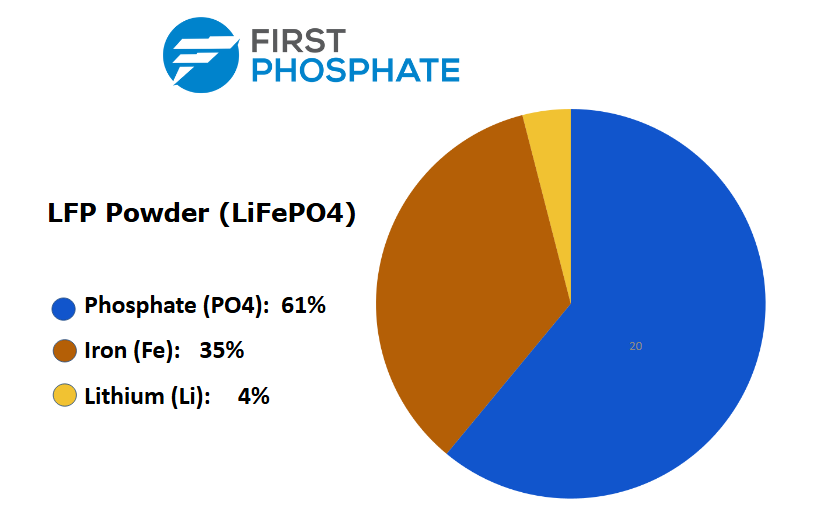
While hundreds of lithium companies compete for investor attention, phosphate — which makes up 61% of LFP battery powder compared to lithium's mere 4% — remains critically underrepresented. A handful of serious projects in development. As the battery revolution accelerates, one question demands an answer: where will all the phosphate come from?
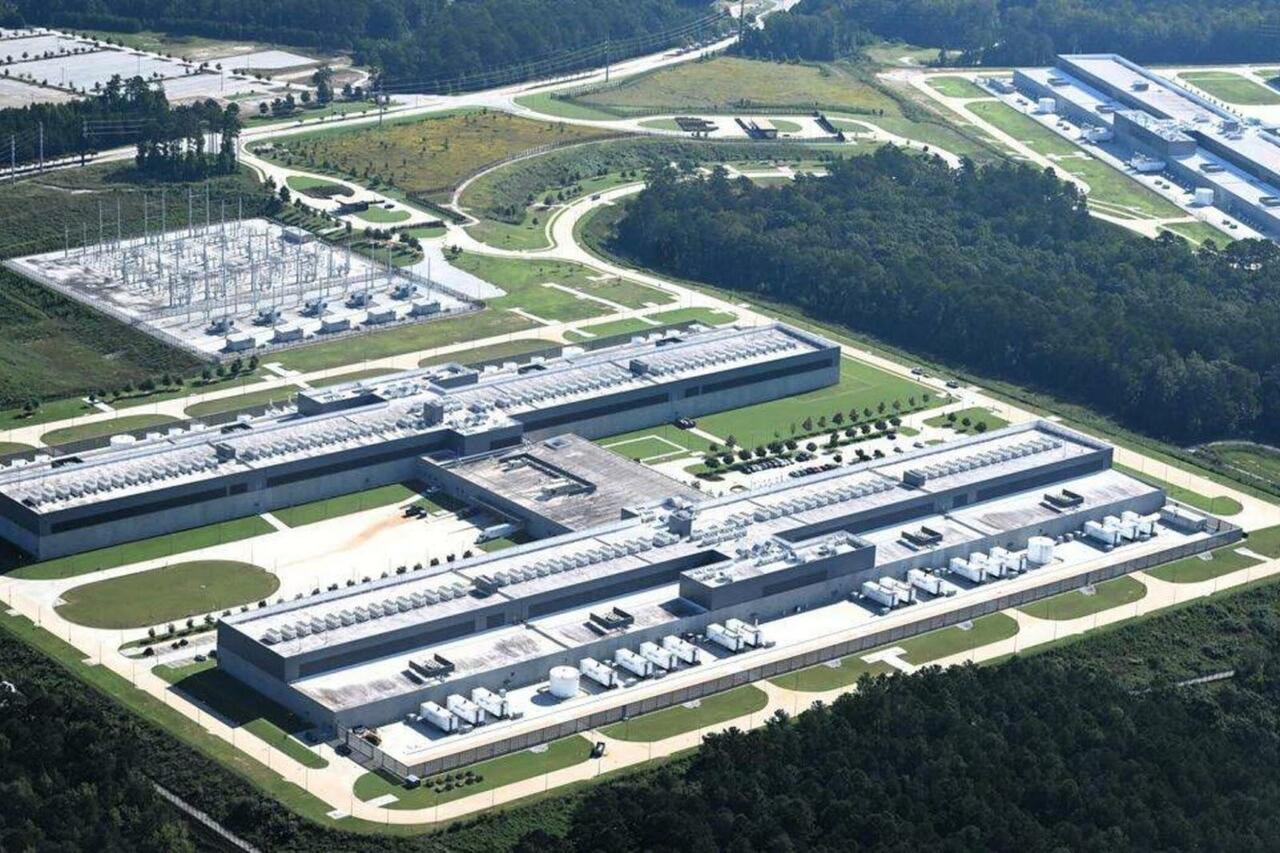
The shift accelerating beyond electric vehicles. As the Wall Street Journal reported this week, battery manufacturers across the U.S. are pivoting factories from EV production to grid-scale energy storage and data center applications using LFP chemistry. Ford is investing $2 billion to repurpose its Kentucky EV battery facility for LFP grid storage. LG Energy Solutions is converting a Michigan factory to produce LFP cells for Tesla's energy storage business at a cost of $4.3 billion. Samsung SDI announced a $1 billion LFP supply deal from its Indiana facility. Tesla's energy storage division generated roughly 30% gross margins last year compared to 18% from selling EVs, with revenue set to jump 45% this year. The Iran war's impact on fossil fuel markets is creating yet another catalyst for data centers and utilities to adopt battery storage over diesel and natural gas.
This year, around 41% of total U.S. battery demand will be for energy storage, including data-centers according to Benchmark Mineral Intelligence.
The global LFP battery market was valued at roughly $19 billion in 2024 and is projected to reach $124 billion by 2032 at a 25.6% CAGR. The market for purified phosphoric acid -- the critical feedstock for every LFP cathode -- faces a projected 0.8 million ton shortage. Seven major LFP cathode plants are under construction in North America and Europe. The question every one of them faces: where does the battery-grade phosphate come from?
China Controls 92% of the LFP Supply Chain -- and Just Restricted Exports
China manufactures over 92% of global LFP production capacity and accounts for nearly 88% of LFP battery shipments worldwide. This concentration extends across the entire value chain: cathode materials, phosphoric acid processing, and cell production. China recently restricted exports of rare earth and LFP battery materials, creating immediate urgency for Western-aligned supply chains. For LFP batteries specifically, China also controls 99% of cathode supply for the LFP chemistry used in grid-scale storage.
The United States imports 86% of its phosphate from the Middle East -- Saudi Arabia, Jordan, and Egypt. But this is fertilizer-grade sedimentary phosphate loaded with uranium, cadmium, and heavy metals. It is unsuitable for battery applications without extensive, expensive purification. North America has effectively zero domestic production of battery-grade high-purity phosphate. Current North American phosphate production is projected to decline by 61% by 2037. In November 2025, the U.S. government added phosphate to the Critical Minerals List. Canada added it in 2024. The strategic priority is clear.
The Begin-Lamarche Deposit: Why This Phosphate Is Different
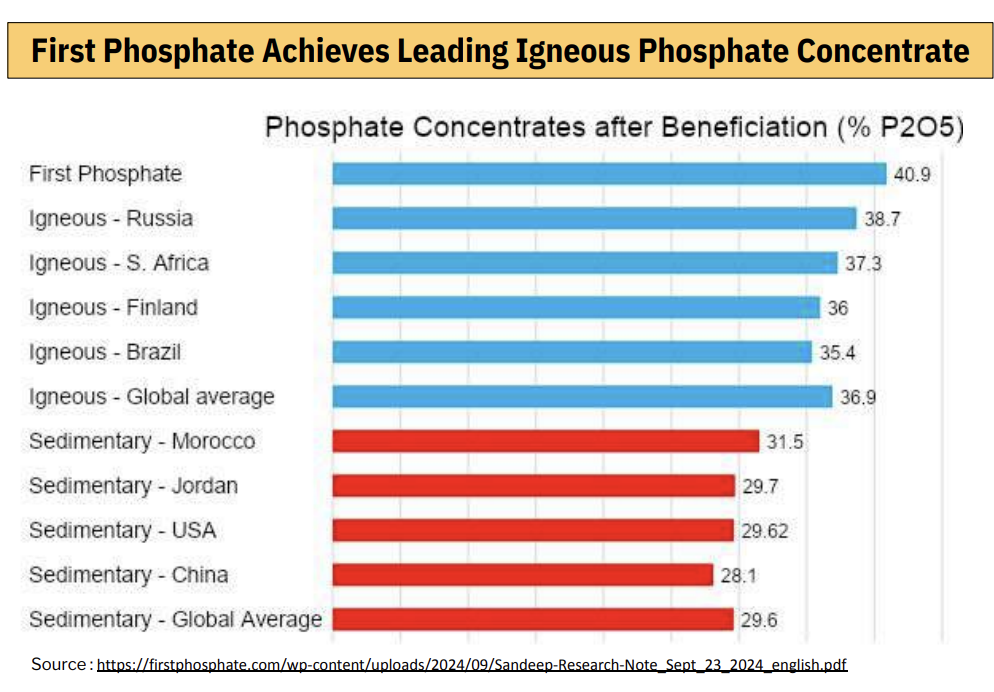
Roughly 95% of global phosphate comes from sedimentary deposits loaded with impurities that make them unsuitable for battery applications. Only about 5% is igneous. First Phosphate's (OTC: $FRSPF) Begin-Lamarche deposit in Quebec is recognized as one of the highest-purity igneous phosphate sources in the world. The deposit spans 2.5 kilometers with three distinct mineralized zones starting at surface and descending to 250+ meters depth, remaining open for expansion. The resource stands at 255.5 million tonnes at 6.01-6.49% P2O5, with the Mountain Zone containing intersections over 10% P2O5 and massive apatite veins outcropping at surface. Up to 90% of the concentrate can be converted into battery-grade purified phosphoric acid -- an exceptional conversion rate.
First Phosphate's (OTC: $FRSPF) December 2024 Preliminary Economic Assessment: CAD $1.59 billion after-tax NPV at 8% discount, 33% after-tax IRR, 2.9-year payback, 23-year mine life, projected annual peak revenue of US $362 million, and CAD $700 million in after-tax cash flow in the first three years. Capital costs are estimated at US $485 million. The company trades at approximately CAD million market cap -- roughly the project NPV. Most development-stage mining projects with comparable economics trade at 0.3-0.5x NAV.
Infrastructure, Vertical Integration, and Proof of Concept
First Phosphate (OTC: $FRSPF) sits 70 kilometers from the deep-sea Port of Saguenay via paved highway, with an MOU securing industrial land at the port for its planned phosphoric acid processing plant. A major intermodal rail terminal sits 55 kilometers away. Quebec hydroelectric power provides among the cheapest and cleanest electricity in North America. Saguenay is Quebec's fifth largest city with generations of mining expertise. This infrastructure advantage is worth hundreds of millions in avoided capital costs compared to remote mining projects.
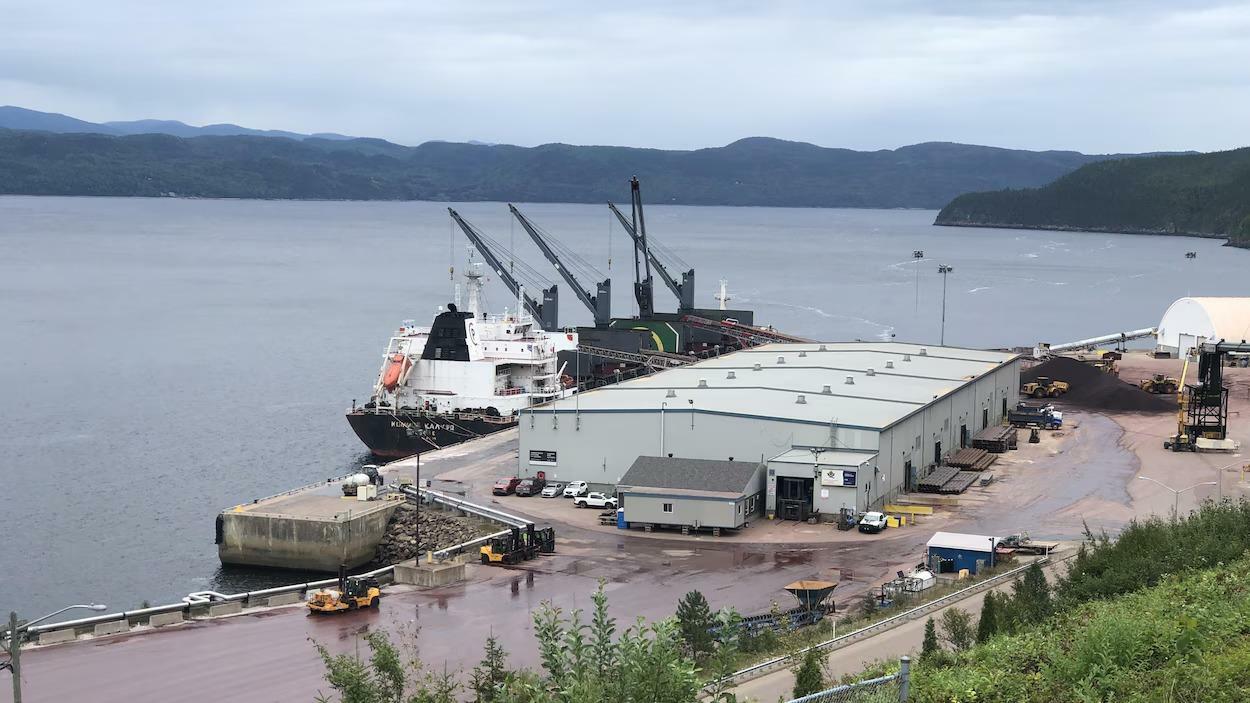
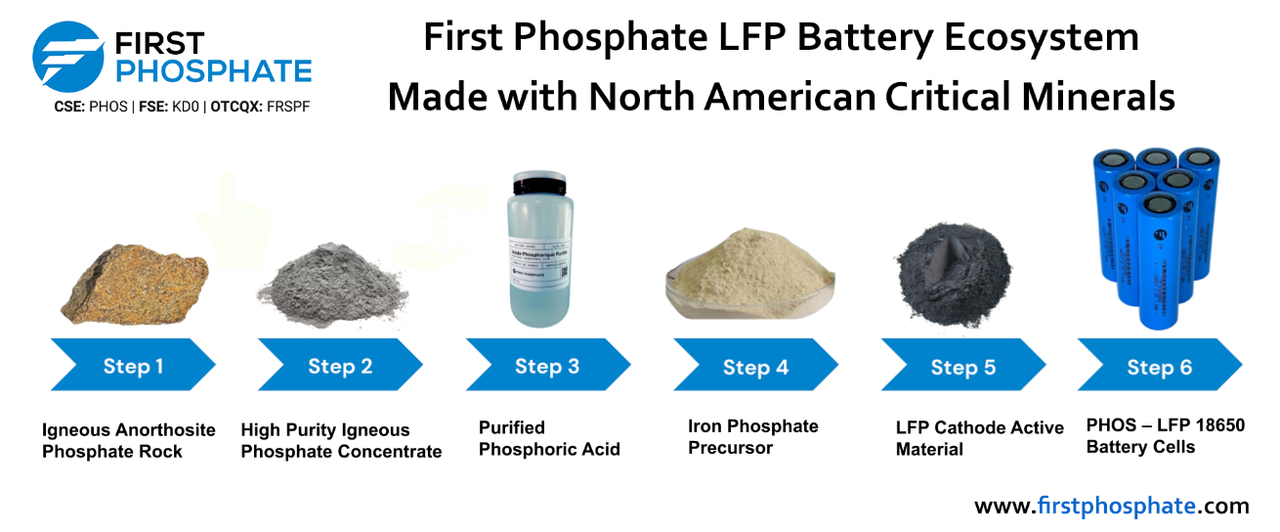
The company is building a vertically integrated mine-to-battery supply chain: phosphate concentrate from Begin-Lamarche, processed into purified phosphoric acid at Port of Saguenay, then converted to iron phosphate precursor and LFP cathode active material at a planned La Baie facility. First Phosphate (OTC: $FRSPF) has already produced commercial-grade LFP 18650 battery cells using 100% North American critical minerals -- believed to be the first time this has been accomplished. The company has definitive offtake agreements in place with pre-payment received, including a deal with American Battery Factory for 40,000 tons of LFP material annually starting 2028, and a technology partnership with the largest purified phosphoric acid producer.

Five Reasons First Phosphate (OTC: $FRSPF) Should Be on Your Watchlist
- The CEO has invested $1.8 million of his own money at market prices. John Passalacqua has purchased 2.872 million shares on the open market since May 2023 at prices available to every retail investor. He takes 100% of his CEO salary in stock -- zero cash. Management receives 50% of compensation in RSUs. The Board receives 100% in RSUs. Multiple directors are actively buying in the open market. Management only profits if the stock price increases.
- A $1.59 billion NPV project trading at 0.15x NAV in the fastest-growing battery chemistry on Earth. First Phosphate (OTC: $FRSPF) shows 33% IRR, 2.9-year payback, and 23-year mine life. Peak annual revenue of US $362 million. The LFP market is growing at 25.6% CAGR toward $124 billion by 2032. North America faces a 0.8 million ton shortage of battery-grade phosphoric acid with no domestic supply.
- Government funding is arriving and critical minerals designation unlocks billions more. On March 16, 2026, Canada signed a $16.7 million non-repayable contribution agreement with First Phosphate (OTC: $FRSPF). Phosphate was added to the U.S. Critical Minerals List in November 2025 and the Canadian list in 2024. The U.S. Export-Import Bank has expressed interest through a letter of intent. These designations unlock access to Canada's CAD $1.5 billion critical minerals fund and over $1 billion in U.S. DOE programs.
Proof of concept is done -- and billions in LFP factory investment is creating the customers. First Phosphate (OTC: $FRSPF) has produced working LFP battery cells from 100% North American minerals. Ford is building a $3.5 billion LFP plant. Tesla signed a $4.3 billion LFP deal. Samsung SDI committed $1 billion. CATL signed a $17 billion LFP contract. Seven major LFP cathode plants are under construction. Every one needs battery-grade phosphoric acid. First Phosphate has definitive offtake agreements already in place with pre-payment received.
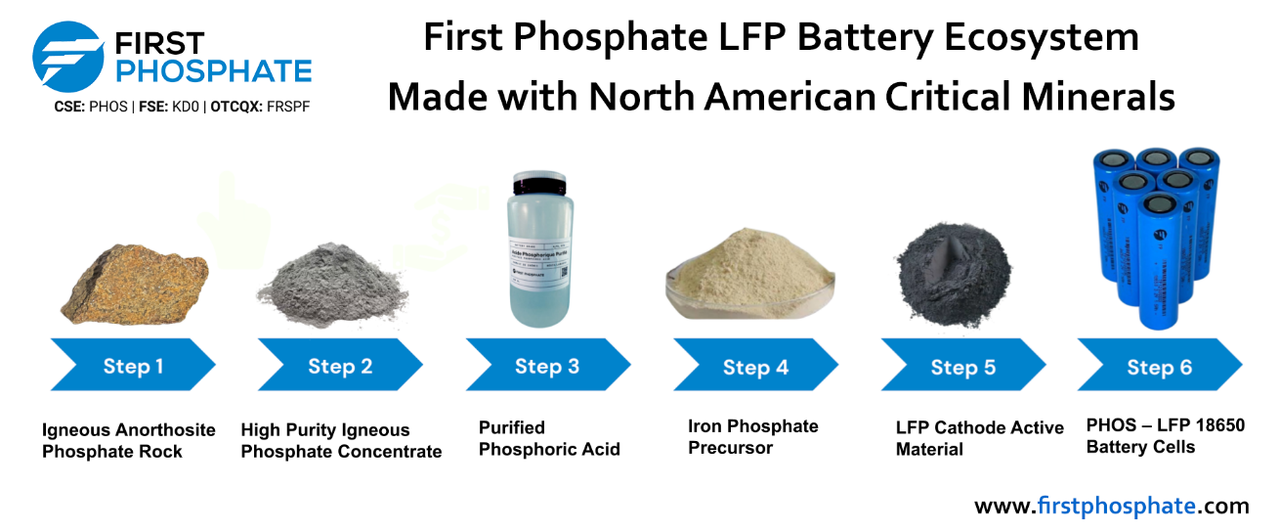
- A rare geological asset with infrastructure that eliminates the biggest risk in junior mining. Only 5% of global phosphate is igneous. First Phosphate's (OTC: $FRSPF) Begin-Lamarche deposit is recognized as one of the highest-purity sources in the world. It starts at surface, spans 2.5 kilometers, and remains open at depth. It sits 70 km from a deep-sea port via paved highway with cheap Quebec hydroelectric power and an established workforce. The feasibility study is fully funded and targeted for 2026. A 30,000-meter drill program is underway with results expected Q2 2026.