




Sponsored Content
One of the World’s Largest Bitcoin Miners Is Turning Gigawatts of Power Toward AI
Bitdeer’s latest operational disclosure shows the company operating at a very large scale: more than 63 EH/s of self-mining capacity and over 78 EH/s under management, making it one of the largest public miners in the world when measured by hashrate (a measure of computing power for mining). The company’s Bitcoin production is up roughly 430% year over year.
By leveraging its role as a semiconductor chip design company, Bitdeer has deployed over 314,000 mining rigs, of which 232,000 are self-owned. It plans to continue deploying more of its proprietary hardware throughout 2026, including its DOGE and Litecoin ASIC chips, which can generate more mining output with the same power capacity. Bitdeer’s production is not slowing down, as demonstrated by its new 188,000 square feet flagship U.S. facility designed to support manufacturing and assembly operations for its Bitcoin mining rigs.
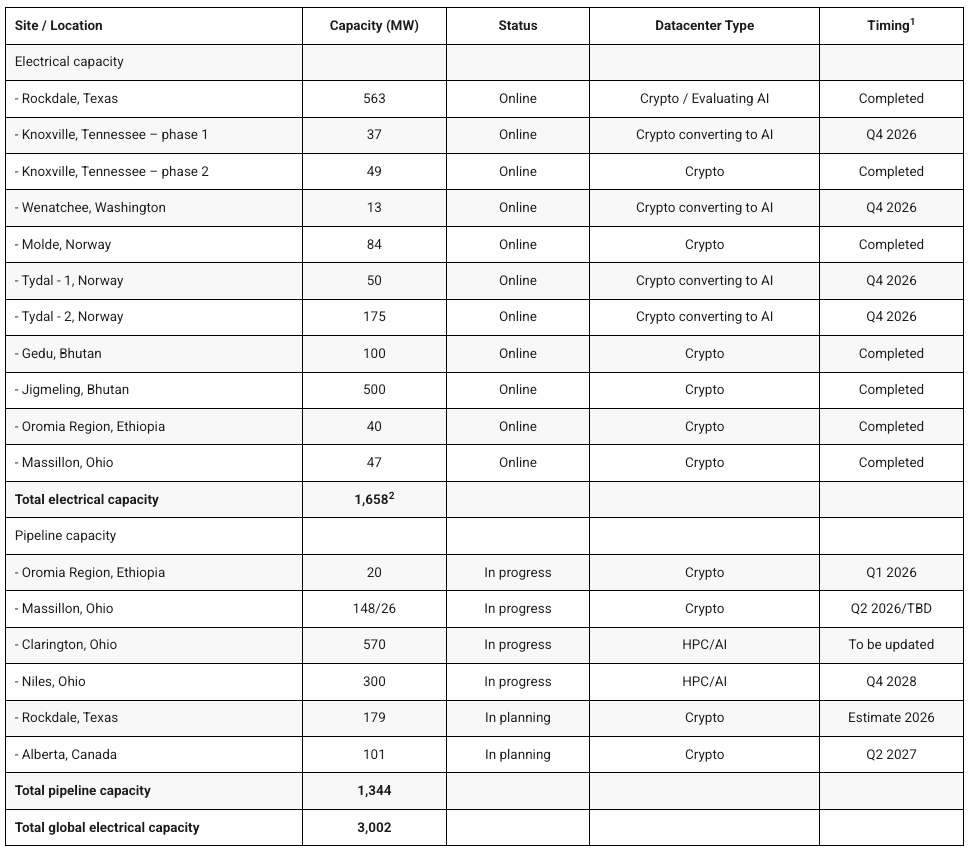
These large deployments and the company’s operational scale have allowed it to build out its own energy infrastructure, which accounts for 1.6 gigawatts (GW) of installed capacity and an additional 1.3 GW expected to come online in the next three years.
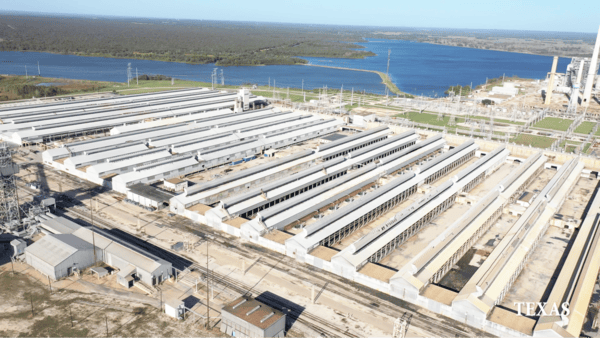
Secured power and deployed compute capacity are often evaluated differently when paired with emerging AI demand. Durability of power access, scalability of compute deployment, and long-term outlook matter more than the short-term variability that Bitcoin miners see as commodity-linked producers.
As the company builds out more power capacity by leveraging Bitcoin’s unique economics, Bitdeer has been entering the AI infrastructure space. Bitdeer’s sites in Knoxville, TN, Wenatchee, WA, and Tydal, Norway, which account for 275 megawatts (MW) of power capacity, are all expected to be fully converted into AI and high-performance computing by the end of the year. Over 1 GW is expected to be dedicated to AI by the end of 2028, which includes a 570 MW site in Clarington, OH.
Matt Kong, Chief Business Officer of Bitdeer, said:
"Bitdeer has increased its focus on HPC/AI co-location opportunities for several of its larger sites including, but not limited to, Tydal, Norway. This is a high priority for us and the goal is to sign long term leases for these locations as soon as possible.”
Bitdeer AI deployed its initial NVIDIA GB200 systems in Malaysia, consisting of 1,792 GPUs, and is in discussions with several potential hyperscaler customers, which could result in long-duration HPC colocation agreements.
Bitdeer has quickly climbed up the chart to become the largest hashrate operator among public companies by leveraging its proprietary chip and manufacturing stack, as well as by executing its multi-gigawatt energy strategy. The company’s thesis is that bitcoin mining acts as a bootstrapper of the AI revolution, with bitcoin revenue driving early-stage demand to build energy infrastructure until AI/HPC long-term requirements are met.
The scale of Bitdeer’s power capacity and deployed hashrate provides flexibility in how future workloads are allocated across sites and over time. Thanks to the unique nature of bitcoin mining, incremental conversion toward high-performance computing can be enabled without requiring entirely new site development. This approach can play a critical role as global demand for energy-intensive AI training and inference infrastructure continues to evolve.
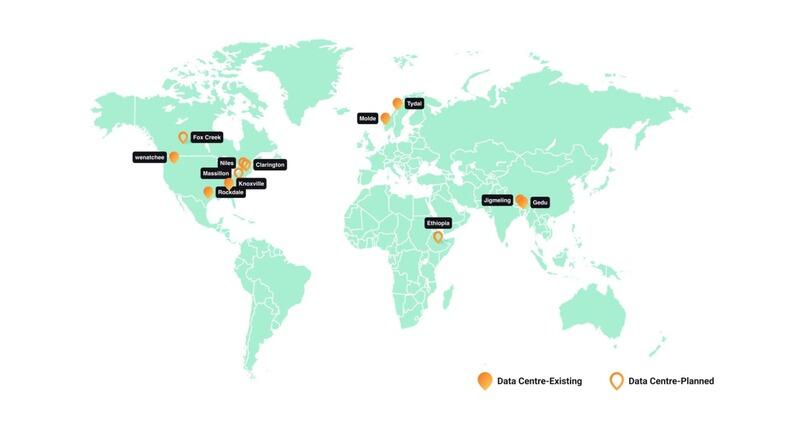
With data center infrastructure spanning four continents, 3 GW of total electrical capacity, and increasing vertical control over its hardware stack, Bitdeer operates with a structural profile that fundamentally differs from most participants across the bitcoin and AI compute ecosystems.