




Sponsored Content
Uranium Stock Backed By A $1.14 Billion Track Record - Can They Do It Again?
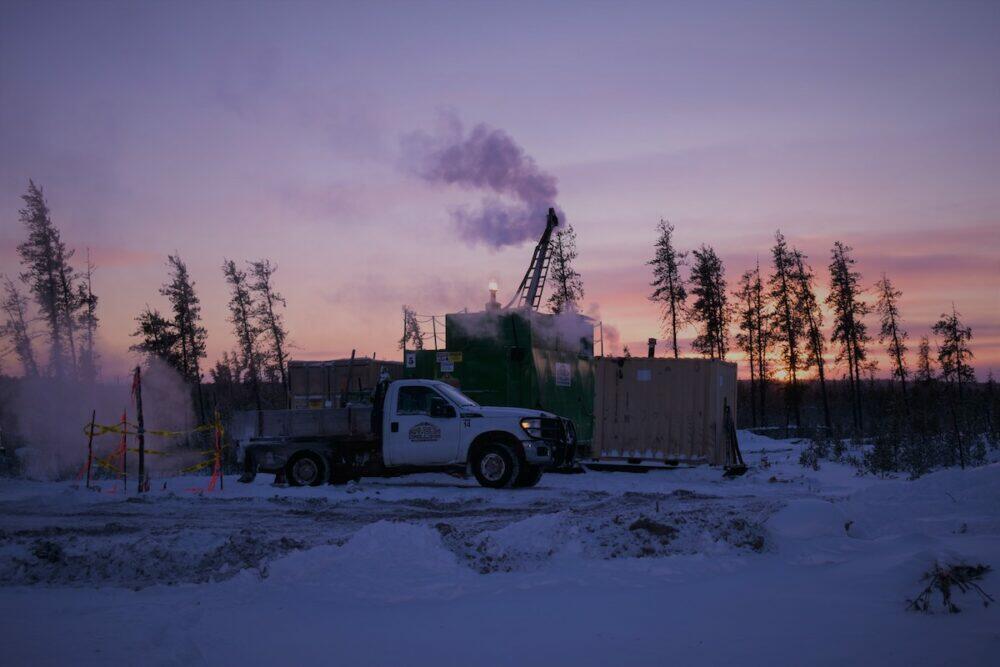
The Team That Built A $1.14 Billion Uranium Company Just Started Over — At just $10M Market Cap
TSXV: FFU | OTCQB: FFUCF — This content is disseminated on behalf of F4 Uranium Corp. and is sponsored advertising, not investment advice. Always conduct your own due diligence.
Summary: The management team behind four consecutive uranium discoveries in Canada's Athabasca Basin — including the Triple R deposit that sold to Paladin Energy for a reported C$1.14 billion — has spun out a new vehicle with 16 Athabasca Basin properties, a market cap just over $10m, and a summer 2026 drill season fully funded by a strategic partner. The company is called F4 Uranium Corp. (TSXV: FFU | OTCQB: FFUCF). It is pre-discovery, pre-resource, and priced accordingly. If you believe the team can find uranium a fifth time, the entry point is now.
The Fission Dynasty Nobody Is Talking About
There is a version of the uranium story the market already knows.
Cameco. NexGen. Paladin. The Athabasca Basin. High grades, tight supply, AI-driven power demand. Everyone knows the story now.
But nobody made money buying Cameco at a $20 billion market cap. The fortunes in uranium were made earlier — in the micro-cap explorers that became multi-billion-dollar acquisitions after a discovery that changed the equation overnight.
Fission Energy Corp. became one of those stories. So did Fission Uranium Corp.
Both were built by the same core team. Both produced major discoveries in the Athabasca Basin of Saskatchewan, Canada. Both generated extraordinary returns for investors who got in early. And Fission Uranium ultimately became a C$1.14 billion acquisition by Paladin Energy — one of the most significant uranium M&A transactions in recent memory.
That team is now running F4 Uranium Corp. (TSXV: FFU | OTCQB: FFUCF).
Today, F4's total market capitalization is just over $10 million.
That is not a typo.
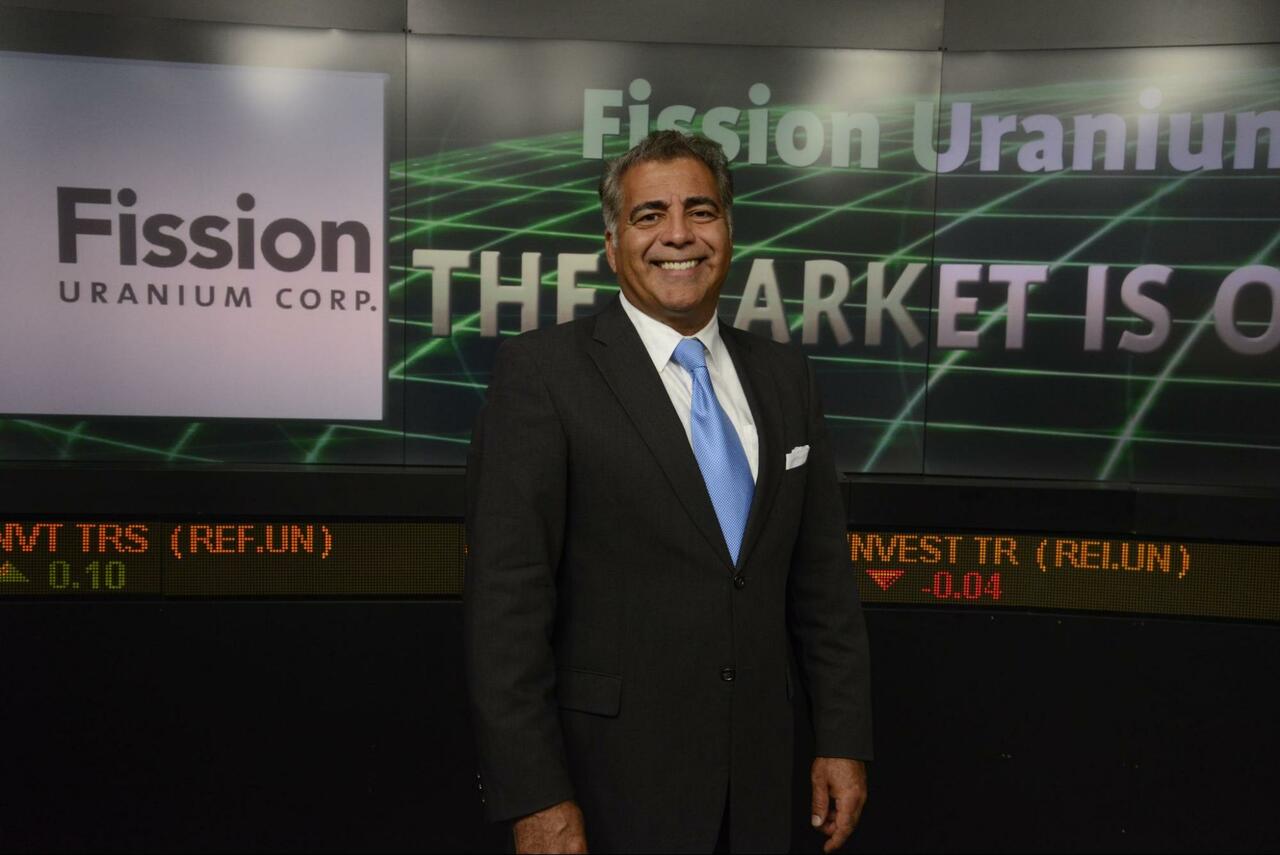
F4 Uranium’s Executive Chairman Mr.Dev Randwaha. He’s won The Northern Miner’s “Mining Person of the Year”, EY’s Entrepreneur of the Year (finalist), Finance Monthly’s “Deal Maker of the Year” and The Mining Journal’s “Excellence” award… source: https://www.devrandhawa.com/
6 Reasons F4 Uranium Could Be The Most Asymmetric Bet In Uranium Right Now
(Click to navigate)
- The Same Dynasty. A Fraction of the Price.
- 16 Properties in One Micro-Cap: Extreme Optionality
- Surrounded by Giants — The Best Address in Uranium
- Funded Exploration — No Shareholder Dilution
- Fresh Geophysics Pointing to Untested Targets
- A Proven Playbook: Spin Out Early, Discover, Sell to a Major
Reason #1: The Same Dynasty. A Fraction of the Price.
The name "Fission" means something specific in the Athabasca Basin.
It means discovery. It means shareholder value. It means a compounding track record that has now produced four major uranium finds in fifteen years — in the same geological district, using the same methods, with the same core people.
Here is the full scoreboard:
- Discovery 1 — J Zone, Waterbury Lake (2010): 12,810,000 lbs. U₃O₈ Indicated. Led to the eventual sale of Fission Energy Corp. assets to Denison Mines for $85 million.
- Discovery 2 — Triple R, Patterson Lake South (2012): 114,900,000 lbs. Indicated + 15,400,000 lbs. Inferred. Became Fission Uranium Corp. — ultimately acquired by Paladin Energy in a reported C$1.14 billion transaction.
- Discovery 3 — JR Zone, Patterson Lake North (2022): Maiden resource 11,801,000 lbs U₃O₈ indicated. Made through F3 Uranium Corp.
- Discovery 4 — Tetra Zone, Broach PW Zone (2025): Newest discovery, with mineralized plunge length more than doubling from 60 metres to 135 metres in recent drilling.
That is four discoveries. Two exits. Billions in value created.
The team behind all of it — Raymond Ashley (CEO), Sam Hartmann (President & COO), and Erik Sehn (VP Exploration), alongside Executive Chairman Dev Randhawa — is now applying the same playbook to F4.
The difference is the stage.
F4 is pre-discovery. That is the highest-risk, highest-reward position on the Lassonde Curve — and it is priced accordingly at just over $10 million.
The question is not whether the team can find uranium. They have done it four times.
The question is: at what price do you want to get in?
Reason #2: 16 Properties in One Micro-Cap — Extreme Optionality
Most uranium explorers are a one-property story.
One project, one drill program, one shot. If it works, you win. If it doesn't, the company either raises more money at a painful dilution or disappears.
F4 is structured differently.
F4 holds approximately 16 projects across the Athabasca Basin totalling 157,530 hectares, spanning the Western, Eastern, and Northern portions of the basin — each with a different geological thesis, a different set of drill targets, and a different risk-reward profile.
The full portfolio includes: Clearwater West, James Creek, Smart Lake, Todd Lake, Wales Lake East, Wales Lake West, Bell Lake, Bird Lake, Cree Bay, Grey Island, Henderson Lake, Lazy Edward Bay, Murphy Lake, Seahorse Lake, Beaver River, and Hearty Bay.
At just over $10M market cap, the market is pricing each property at just under 1,000,000.
A single high-grade intercept at any of these properties can re-rate the entire company overnight.
In uranium, that's not hope. That's how the math works. The Athabasca Basin is the highest-grade uranium district on Earth — grades run 10 to 20 times the global average. One hole that intersects the right structure at the right depth can change everything, as the team has already proven four times.
This isn't a bug in F4's structure. It is the entire thesis.
Sixteen shots on goal. Run by a team with a four-for-four discovery record. Trading at less than $1M per asset.
Reason #3: Surrounded by Giants — The Best Address in Uranium
Location is everything in the Athabasca Basin.
The Basin is large — roughly 100,000 km² — but the world-class deposits are clustered. Arrow. Triple R. Cigar Lake. McArthur River. Hurricane. Key Lake. These are the names that matter in uranium, and proximity to them dramatically increases the geological credibility of a junior explorer.
F4's properties are not in the middle of nowhere. They are in the neighbourhood.
Murphy Lake sits just 4.7km from ISOEnergy's Hurricane Uranium Deposit, 30km northwest of Orano's McLean Lake deposits, and 4km east of a Cameco drill hole at La Rocque Lake that hit 29.9% U₃O₈ over 7.0 metres — an extraordinary grade in any mining context.
Todd Lake sits within the Clearwater Domain, less than 10km south of F3 Uranium's Tetra Zone — the discovery that more than doubled in interpreted mineralized plunge length in 2025. More importantly, geophysics completed by F4 in 2025 seems to indicate the extension of the Patterson Lake Corridor, which hosts both the Arrow and Triple R deposits, continues onto the Todd property.
Wales Lake East and West are located approximately 20-25km southwest of Paladin's Triple R deposit — the very deposit that this same F4 team discovered in 2012 before Paladin paid a reported C$1.14 billion for it.
You don't get to choose your neighbours in mining.
F4 chose wisely.
Reason #4: Funded Exploration — No Shareholder Dilution
Here is the detail that even experienced investors miss.
In junior mining, the biggest killer of shareholder value is not a failed drill hole. It is the endless equity raises required to fund exploration — each one diluting existing shareholders by 20%, 30%, 40% as the company issues cheap shares to pay for the next program.
F4 has partially solved this problem at its most advanced property.
The company has signed a definitive option agreement with UraniumX Discovery Corp. (formerly Stearman Resources) allowing the partner to earn up to a 70% interest in the Murphy Lake property by spending $18 million in exploration expenditures.
That structure means: Murphy Lake — F4's most drill-ready asset, 4.7km from the Hurricane Deposit — gets drilled largely at someone else's expense. F4 retains a 30% carried interest while UraniumX funds the holes.
Drilling at Murphy Lake is scheduled to begin at the end of May 2026, funded entirely by UraniumX in accordance with the earn-in agreement. By mid-summer 2026, results from Murphy Lake will be in the market.
In junior mining, "who's paying for the drill" is half the story.
At Murphy Lake, the answer is: not F4 shareholders.
Flow-through financing further reduces effective exploration costs on other properties, allowing F4 to maximize drill targets while protecting the share structure.
Reason #5: Fresh Geophysics — Untested Targets, Modern Tools
Athabasca uranium deposits are invisible from the surface.
The Basin is covered by lakes, glacial overburden, and thick Proterozoic sandstone. You cannot walk up to an outcrop and take a sample the way you can in Nevada gold country. Uranium in the Athabasca hides under hundreds of metres of rock. The only way to find it is with geophysics — electromagnetic surveys, magnetotelluric profiling, ground resistivity work — followed by targeted drilling.
F4 has spent the past twelve months systematically surveying its properties with modern geophysical tools, and the results are pointing toward real drill targets.
Grey Island (13,929 hectares): In February 2026, F4 completed an airborne Mobile MT survey identifying multiple large-scale linear resistivity features — the electromagnetic signature of graphitic pelite structures, the same type of basement geology that hosts McArthur River, Cigar Lake, and Triple R. Grey Island has exactly one historical drill hole on its 13,929 hectares. This is a blank canvas with modern imagery now painted on it
Cree Bay: Limited drilling in 2019 intersected the Athabasca Unconformity at 565 metres — roughly 350 metres deeper than expected. When the unconformity is deeper than predicted, it signals a structural offset, precisely the fault-controlled environments where uranium-bearing fluids pool and concentrate. A September 2025 Mobile MT survey confirmed a broad resistivity-low zone through the heart of the property. Cree Bay lies along strike of an Orano/Geiger Energy joint venture 10km to the northeast.
Wales Lake: The maiden drill program in summer 2025 intersected conductive graphitic lithologies exactly where the geophysical models predicted — validating the structural approach. Only 3 of 150 VTEM conductors have been drill-tested to date.
Todd Lake: Mobile MT surveys have identified possible extensions to the Patterson Lake Corridor, which hosts the triple R and Arrow deposits which together contain approximately 500M pounds of Uranium. Ground geophysical work to develop drill targets is planned.
The technical architecture here is sound. This team has now run systematic modern geophysical surveys across its priority properties, built the target framework, and is methodically moving toward the drill.
Reason #6: A Proven Playbook — Spin Out Early, Discover, Sell to a Major
This is not the first time Dev Randhawa has done this.
In 1996, he founded Strathmore Minerals Corp. In 2007, he spun out the Canadian exploration assets into Fission Energy Corp. In 2010, Raymond Ashley's technical team made the J Zone discovery at Waterbury Lake. In 2013, the assets were sold to Denison Mines for $85 million. That was the F1 playbook: assemble the land, build the team, make a discovery, attract a major.
Fission Uranium (F2) ran the same play. The Triple R discovery in 2012 launched a decade-long development arc that ended with Paladin Energy acquiring the company for a reported C$1.14 billion. The same team. The same basin. The same blueprint.
F3 Uranium is mid-story — actively drilling its Tetra Zone discovery, JR Zone indicated resource estimate in late 2025 of 11,801,000 lbs U₃O₈ @ an average grade of 4.41% U₃O₈, including: 10,788,000 lbs at an average grade of 12.23% U₃O₈. F3 market cap today sits between $100-125M.
F4 Uranium was spun out from F3 on August 15, 2024. F3 kept Patterson Lake North — its two active discovery zones. F4 received everything else: 16 properties, 157,530 hectares, the same core exploration team, and a micro-cap valuation.
The spin-out at the bottom. The discovery in the middle. The acquisition at the top.
That is the playbook. It has worked three times in a row.
F4 is the early chapter of the fourth iteration.
The Simple Math: F3 vs. F4
At its core, the investment thesis for F4 comes down to one table.
3 properties | ||
F3 already has a resource. The market has priced in some of that story.
F4 has none of that priced in — which means the upside on a discovery is orders of magnitude larger relative to entry point.
At $0.16 per share, current shareholders are not paying for a discovery.
They are paying for the option on one — made by the same people who have done it four times before.
☢️ Why the Athabasca Basin Still Matters More Than Anywhere Else on Earth
Before concluding, it is worth asking the obvious question: does uranium still matter?
The answer, from every major energy institution on the planet, is yes — and with increasing urgency.
At COP28, the U.S. and more than 20 countries pledged to triple nuclear power capacity by 2050. Today, 438 reactors are operating globally — more than at any other point in history. 70 are under construction. 111 are planned. 318 more are proposed. New builds are at a 25-year high.
Meanwhile, demand is projected to rise 127% by 2030 and 200% by 2040, creating an estimated 240 million-pound deficit that will require new mine supply to fill.
On the supply side, Cameco has stated that an inflationary breakeven of $90/lb is needed to justify new production. Ian Purdy of Paladin Energy has described an annual deficit of 60 million lbs. per annum "out for the next decade." Grant Isaac, CFO of Cameco, recently said of the uranium market: "I have never felt better."
The Athabasca Basin hosts 13.2% of the world's uranium reserves, with grades running 10 to 20 times the global average. Saskatchewan was ranked the #3 jurisdiction globally for mining investment in 2023 by the Fraser Institute.
There is nowhere else on Earth that combines this grade, this jurisdiction quality, and this geological endowment.
F4's 16 properties are in that basin.
The Catalyst Calendar: What to Watch For
For investors tracking F4 in 2026, the events that matter are:
- End of May 2026: Murphy Lake drilling begins, funded by UraniumX
- Summer 2026: First assay results from Murphy Lake
- Summer 2026: Additional work programs at Todd Lake and Wales Lake
- Ongoing: Results from Cree Bay Grey Island target definition work
- Q4 2026: Potential resource estimate update for PLN Project at parent company F3 (Current market cap of $100-125M)
Each drill result from Murphy Lake carries binary potential. The property sits in one of the most prolific neighbourhoods in uranium, is funded by a strategic partner, and will be drilled by a team that has made this exact type of hole work four times before.
The Bottom Line
The uranium supply crunch that the market is now pricing into Cameco, NexGen, and Paladin was built on discoveries that happened when nobody was paying attention.
F4 Uranium is at that stage right now.
Before the resource. Before the headline drill result. Before the re-rate.
At a market cap of just over $10 million — spread across 16 Athabasca Basin properties, run by a team with four consecutive discoveries, with partner-funded drilling beginning in weeks — the market is pricing F4 as if the story is over.
The evidence suggests it is just beginning.
F4 Uranium Corp. TSX-V: FFU | OTCQB: FFUCF | FSE: X42 ir@f4uranium.com | 1-888-614-8238 | www.f4uranium.com
This content is disseminated on behalf of F4 Uranium Corp. and constitutes sponsored advertising. It is not investment advice. Investing in junior mining companies involves significant risk including total loss of capital. Always conduct your own due diligence and consult a qualified financial advisor before making investment decisions. The scientific and technical information in this article has been prepared in accordance with NI 43-101 and reviewed by Sam Hartmann, P.Geo., VP of Exploration, a qualified person for the purposes of NI 43-101.