




Sponsored Content
Why gold has beaten Bitcoin
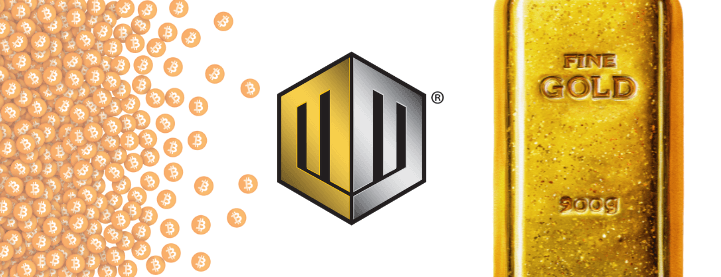
In monetary competition, there is only one decisive winner. Gold has demonstrated why it remains the superior monetary asset.
The global monetary system today is not defined by imminent collapse. It is defined by intensifying, asymmetric competition for monetary relevance.
In the currency arena, the U.S. dollar continues to dominate competitors such as the euro, yen, and yuan.
In the contest among monetary assets, gold remains king, continuing to outperform newer digital competitors, including Bitcoin and other cryptocurrencies.
The objective is not to declare winners and losers for ideological reasons. It’s to observe where global capital is flowing and where conviction has proven most durable.
Bitcoin’s tailwinds
Bitcoin entered the global stage with significant momentum. It received high-level political attention in the United States and increased institutional adoption through major asset managers and ETF issuers.
A government supported Strategic Bitcoin Reserve remains under public discussion, and preferential tax treatment has been proposed.
Retail investors and mainstream financial commentators embraced Bitcoin as a potential hedge against currency debasement.
Bitcoin was promoted as the new gold. “Gold 2.0”
Why gold remains the premiere monetary asset
Despite all these tailwinds, Bitcoin has not become the primary monetary asset for global savers.
Bitcoin has not displaced gold in any meaningful way.
The recent divergence in price performance alone does not explain this outcome.
The core issues Bitcoin has not resolved are trust, time horizon, and monetary function.
Gold remains the preferred asset for saving, storing, diversifying, and growing wealth across economic regimes.
In an environment marked by geopolitical fragmentation, questions surrounding Federal Reserve independence, rising sovereign debt, and a structurally weaker dollar, institutional capital has gravitated toward stacking ounces rather than stacking sats.
Gold’s 5,000-year monetary history matters. Its stock-to-flow ratio, global acceptance, and role as a reserve asset are established across cultures and political systems.
Bitcoin’s history, while significant in technological terms, remains short in monetary terms.
Gold adopted the best of crypto
Monetary primacy is not awarded on innovation alone; it is earned through sustained confidence across cycles and centuries.
Recent developments in the gold market show that many operational advantages associated with digital assets—faster settlement, digital transferability, improved liquidity—can be integrated with gold, reinforcing its monetary characteristics rather than replacing them.
Investors can now access gold in structures that combine technological efficiency with proven monetary value, including fractional ownership and income-generating opportunities.
Bitcoin is not dead, just monetarily irrelevant
Bitcoin is likely to persist as an investable asset class.
Dedicated “hodlers” will remain.
Bull and bear market cycles will continue in the crypto universe.
However, persistence as a speculative or alternative asset is distinct from broad adoption as a core monetary asset.
Gold functions as a non-expiring hedge against currency debasement and systemic risk. It does not rely on computing power, protocol governance, or regulatory favor to sustain its monetary role.
Gold’s value proposition does not reset with each cycle.
Global capital has signaled its preference. In an era defined by monetary competition rather than currency collapse, gold continues to command the deepest and most durable trust.
Monetary Outlook for 2026
The 2026 Gold Outlook Report is designed for investors who want to understand what is happening beneath the monetary surface—and what it means for gold and silver in the year ahead.

Download the full Gold Outlook 2026 report for free here.
© Monetary Metals 2026