





Judge "Highly Likely" To Grant Apple Injunction As OpenAI Fires Back With Its Own Theft Allegations
The judge overseeing Apple's trade-secret case against OpenAI said Wednesday he is "highly likely" to grant an injunction barring use of the iPhone maker's proprietary information, a potential setback for the ChatGPT maker's push into consumer hardware, Bloomberg reports.
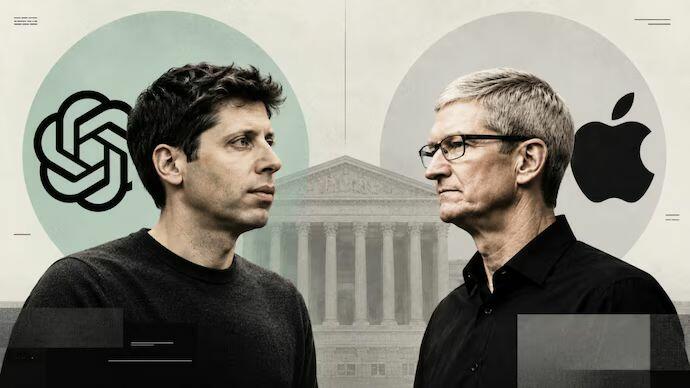
Ahead of the hearing, however, OpenAI delivered its own accusation: a former employee allegedly took confidential files about an unreleased OpenAI device before returning to Apple, then presented OpenAI's product plans to senior Apple executives. Apple says it found no evidence to substantiate the claims.
The companies that partnered two years ago to bring ChatGPT into Apple's software are now accusing each other of benefiting from the transfer of confidential hardware information. Apparently, the partnership did not include sharing the blueprints.
A Few Bad Apples
Speaking at Wednesday's hearing in San Jose, US District Judge Edward Davila signaled that Apple would likely receive an order preventing use of its proprietary information. But he was less enthusiastic about the company's request for a forensic inspection of all devices and repositories containing Apple trade secrets, describing it as a "huge ask," according to Bloomberg.
Apple attorney John M. Desmarais responded that the company would narrow its inspections to a limited group of former employees now at OpenAI.
"They don't have 400 bad apples, your honor, they have a few bad apples and know who they are," Desmarais said.
The distinction matters: Davila signaled likely preliminary relief, not a final judgment that OpenAI stole Apple's technology. His reported comments also did not amount to an order shutting down OpenAI's hardware program. The practical impact would depend on the terms of an actual injunction.
Apple sued OpenAI, hardware chief Tang Yew Tan and former iPhone engineer Chang Liu in July, alleging a scheme to obtain confidential information covering product design, manufacturing, component technologies, testing methods and its supply chain. Apple says that information is being used to help OpenAI enter the consumer hardware market.
OpenAI denies the allegations and argues that Apple is trying to restrain employees from joining a competitor, portraying "ordinary job interviews" as acts of trade secret misappropriation.
"OpenAI is developing a new family of devices designed for the AI era," the company said in an October court filing quoted by Bloomberg. "OpenAI has no need or desire for Apple's trade secrets."
Its defense also challenges Apple's account of how former employees accessed information. In an earlier public response, OpenAI said current Apple employees had asked Liu to help locate material for their own work. It blamed Apple's account-management practices for leaving former employees with residual access and said Tan had explicitly instructed his team not to use other companies' confidential information.
Those competing explanations are now headed for closer scrutiny. According to Reuters, Davila on Tuesday allowed Apple early access to certain OpenAI digital files and approved expedited depositions of three former Apple employees, including Liu and Tan.
OpenAI Says The Files Were Moving In Both Directions
In its new court filing, OpenAI alleged that an unnamed employee joined from Apple, worked at OpenAI for six months, then returned to Apple after sending more than 100 highly confidential files to personal accounts.
The materials allegedly included images of unreleased hardware, engineering and manufacturing data, supplier information and specifications for cosmetic finishes. Some transfers occurred just after midnight in Singapore on June 2, the employee's final day at OpenAI, the filing said.
OpenAI further alleges that the employee presented its product plans to Apple's senior leadership, including its vice president of operations in Asia. The company says it is concerned that its confidential work could influence Apple's upcoming products.
The filing asks for a case schedule that would allow OpenAI to investigate and, if necessary, pursue counterclaims. It does not itself establish that Apple used the information, nor does it constitute a completed countersuit.
Apple rejected the accusations. The company said it has policies preventing employees from using confidential information belonging to former employers and found no evidence supporting OpenAI's claims, Reuters reported. Apple also accused OpenAI of trying to distract from the evidence underpinning its own lawsuit.
A Hardware Fight With Trillion-Dollar Ambitions
The dispute lands at an awkward time for OpenAI, which is targeting a $1.4 trillion valuation and preparing to go public, according to Bloomberg. Hundreds of Apple employees have moved to OpenAI, turning a software partnership into an increasingly direct contest for hardware talent and expertise.
Bloomberg has reported that OpenAI's first consumer hardware product will be a doughnut-shaped smart speaker priced above $300. People inside the company view it as a distinct, AI-centered device rather than a copy of something Apple plans to release.
But a different-looking product would not, by itself, resolve allegations about the engineering, manufacturing or supplier information used to develop it. Conversely, hiring engineers who know how to build hardware is not the same thing as stealing their former employer's files.
That is the line this case will have to establish. For OpenAI, the immediate risk is an injunction whose scope could complicate its hardware development. For Apple, the new allegations threaten to turn a case about protecting its own secrets into a dispute over how both companies handle everyone else's.
The next generation of AI devices may be revolutionary. The fight over who took what on the way out the door is decidedly old-fashioned.