


French Budget Rejections Fuel Debt Crisis Fears As Yield Spread Over Germany Hits 15-Year High
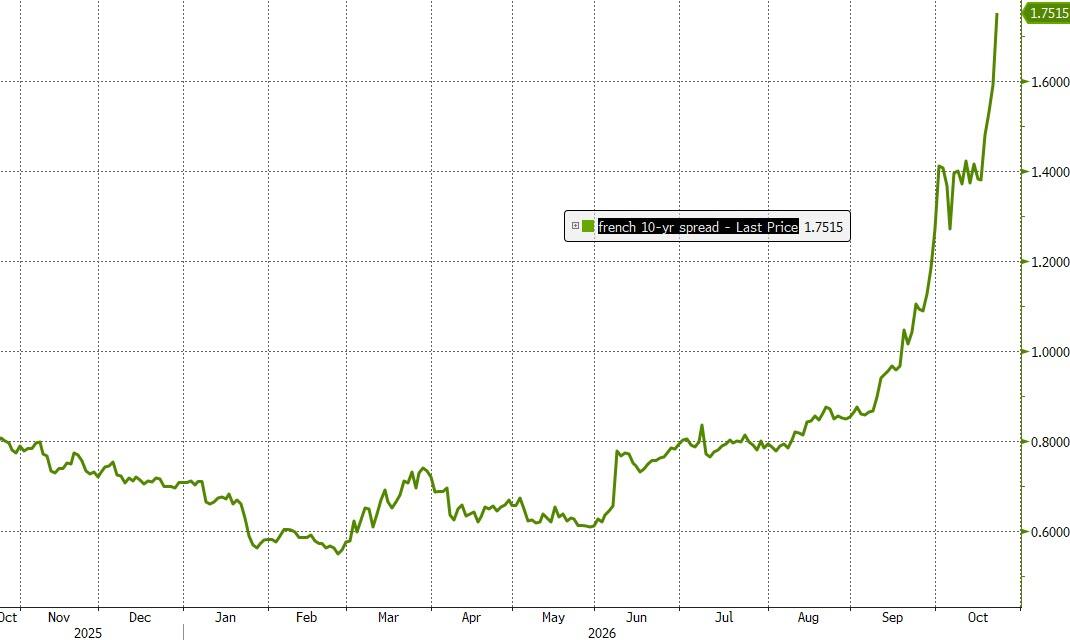
French government bonds sold off earlier today, pushing 10-year yields above 5% as budget concerns and social unrest sent the country's borrowing premium over Germany to its highest since 2011.
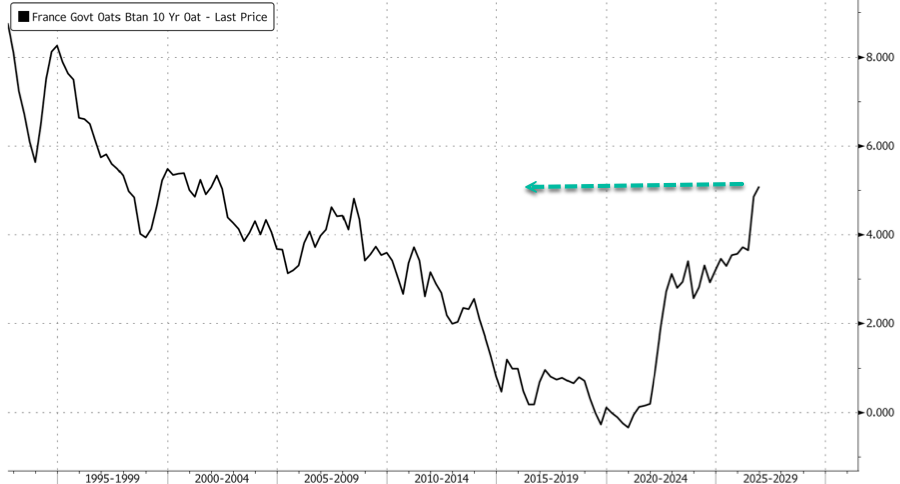
The French 10-year yield climbed to 5.11%, its highest since 2002, while the spread over equivalent German debt widened to 174 basis points, according to Bloomberg data.
Separately, across the Atlantic, the 10-year US Treasury yield declined to 5.07% as EU equities weakened and US stock futures fell on concerns about an AI bubble.
UBS macro strategist Simon Penn wrote in a note to clients that the surge in French yields and the widening spread were due to "budget rejections."
Penn added more color:
The French 10-year yield has opened Thursday higher, at 5.05%, up 3.6bp on the day so far. That's pushed the spread to Germany out another 5.5bp.
The news flow has moved away from street protests and back to the roots of the budget. The government isn't finding any takers for its budget proposals so far. Though full formal votes on the entirety of the budget are still to take place, this week has already seen MPs reject reduced spending measures.
News that the rejections mean some EUR10 bn of deficit reductions have already been cast to one side, and the most contentious budget matters are still to be discussed has raised further the prospect of budget failure.
A week ago the working assumption in the markets had been that MP's would vent their frustrations with budget measures but stop short of outright rejection. That is not proving to be the case. The bond market is hence reacting accordingly. The next threat comes later Thursday afternoon if MPs indicate today's proposals to cut spending are also to be rejected.
In a separate update, Penn said:
The biggest argument in the French parliament on Thursday is likely to be on the government's proposal to limit pension indexation. Under the current plan, only around one-third of pensioners, primarily those on lower incomes, would continue to receive full inflation-linked increases, with larger pensions facing partial indexation or a freeze. The proposal is one of the largest sources of planned savings and has already encountered significant resistance during the committee stage. Healthcare measures are also likely to attract intense scrutiny, with MPs debating changes aimed at slowing the growth of health and pharmaceutical spending. More broadly, the debate will test whether the government can preserve enough of its fiscal consolidation programme to maintain its target of reducing the overall public deficit to 5.0% of GDP in 2027 from an expected 5.4% in 2026.
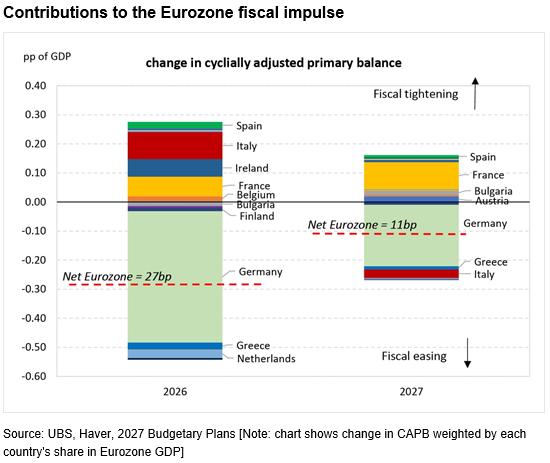
UBS global head of economics and strategy research Arend Kapteyn asked, "A Slowdown in European Fiscal Support?"
EU draft budgets suggest Eurozone stimulus drops sharply next year, but that assumes France delivers its planned tightening and it ignores the spending boost from the final RRF disbursements.
France's mounting debt load is reviving a familiar European nightmare: the potential for another sovereign debt crisis, 15 years after the last one scared parts of the eurozone for years. This time, the warning signs are flashing at the heart of the bloc, with investors demanding a much higher premium to finance one of Europe's largest economies, now combined with unfettered mass migration and social unrest, certaintly a new dynamic.
