





Iran's Fars Calls Reuters' Hormuz Reopening Story "Invalid" Ahead Of Trump's UN Address
Update:
- Iran's Fars Rejects Hormuz Reopening Reports As Brent Slides <$100 On Diplomatic Hopes
- Brent Tumbles On US Media & Aligned Outlets Pushing Rumored Diplomatic Efforts
Iran's Fars Rejects Reporting
Kyodo and Reuters published positive diplomatic headlines early Tuesday morning that sent Brent crude futures tumbling below $100 a barrel, but Iran's semi-official Fars News Agency denied them.
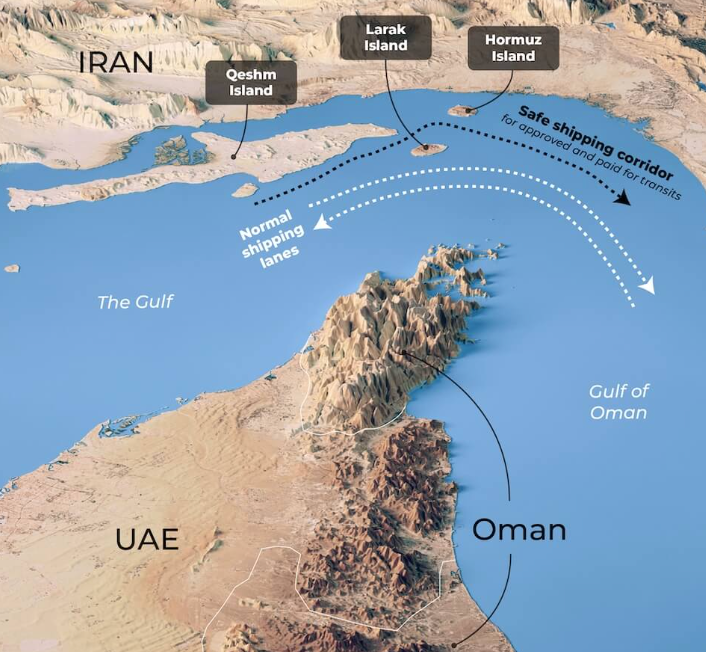
Kyodo and Reuters, citing Iranian sources, reported that Tehran could reopen the Strait of Hormuz within seven days if Washington eased US naval pressure on the Hormuz chokepoint and lifted its blockade of Iranian ports.
Fars called those two reports "invalid and incorrect."
Despite Fars' rejection of the reporting, US media and aligned outlets focused this morning on rumored diplomatic efforts to resolve the conflict ahead of President Trump's United Nations General Assembly address later today.
Brent crude remains below $100.
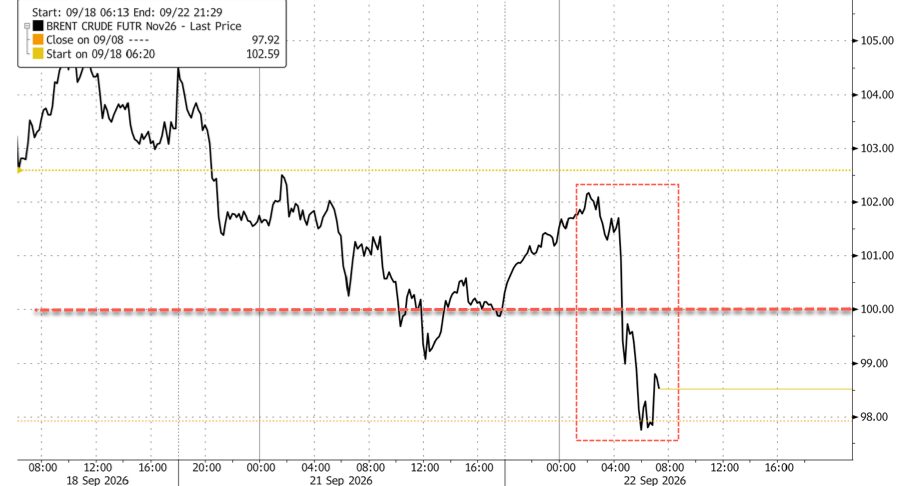
Brent Tumbles Below $100 After Report Says Iran Offers To Reopen Hormuz Chokepoint
Brent crude futures tumbled early Tuesday, as much as 3%, and slid below the $ 100-a-barrel level to the low $98 range after reports that Iran offered to reopen the Strait of Hormuz within one week if the Trump administration begins easing naval pressure in the critical waterway and ends its blockade of Iranian ports.
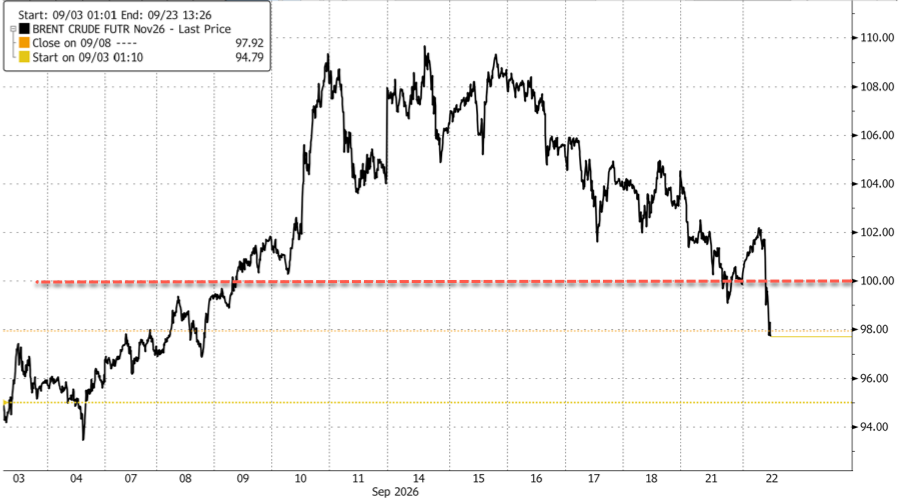
Tehran conveyed the proposal through intermediaries as part of efforts to revive negotiations and end the conflict, Kyodo News reported, citing a senior Iranian government official.
The offer calls for the US naval blockade of the critical waterway and Iranian ports to end in exchange for reopening the strait. This comes as Treasury Secretary Scott Bessent's economic war against Tehran has ramped up (read latest).
Here's more from the Japanese outlet:
The proposal, which has already been conveyed to Washington through mediators, calls for renewed talks aimed at reaching a permanent end to hostilities between the two countries, the official said.
Tehran plans to use the U.N. General Assembly gathering this week in New York to consult with countries acting as intermediaries.
The official ruled out a meeting between Iranian President Masoud Pezeshkian and U.S. President Donald Trump on the fringes of the gathering, but said progress toward an agreement remains possible.
"There is a possibility of moving toward an agreement," the official said, while adding that Washington must demonstrate "seriousness and commitment" if diplomacy is to advance.
Iran is seeking signs from Washington that it is prepared to return to negotiations and take steps toward an end to the U.S. military blockade of Iranian ports and a halt to military operations related to the Strait of Hormuz, the official said.
If such steps are taken, Iran is prepared to reopen the strategic waterway within seven days and return to the negotiating table, according to the official.
Hamad Hussain, senior climate and commodities economist at Capital Economics, was quoted by Reuters as saying this overnight development is a positive sign that diplomatic efforts may be working.
"There may also be other obstacles, such as the issue of tolls and fees, to overcome before a lasting solution can be achieved," Hussain added.
Later this morning, President Trump will address the United Nations General Assembly and meet with world leaders, likely discussing the Gulf conflict and Russia's war in Ukraine.
Despite another exchange of threats between Washington and Tehran on Sunday, Trump said he was open to meeting Iranian President Masoud Pezeshkian this week at UNGA. An Iranian official subsequently told Reuters that no direct meeting would take place.
Diplomatic movement appears to be happening under the surface to resolve the US-Iran conflict and the global diesel crisis. However, Ole Hansen, head of commodity strategy at Saxo Bank, does not expect much downside in Brent prices until transits through the maritime chokepoint increase, particularly shipments of refined products, where the real energy crisis lurks ahead of the Northern Hemisphere winter.
* * *
