


El Nino Warmth Crushes US NatGas Futs In 15% Weekly Rout
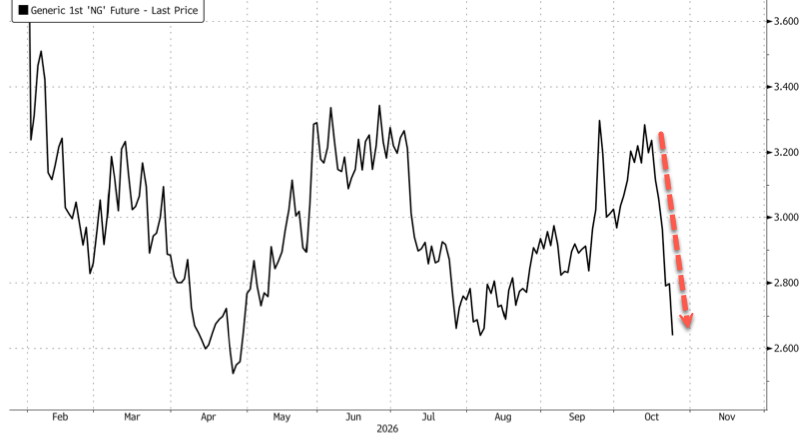
The impact of El Niño weather conditions appears to be bearish for US natural gas futures, as the fuel used to heat homes and power industry posted its largest weekly decline in eight months last week.
Temperatures in the 70s this November in the East? Seems possible 🌡️ https://t.co/2iISBbKWiX
— Ben Noll (@BenNollWeather) October 24, 2026
The November contract fell 5.6% on Friday to settle at $2.64 per million British thermal units, bringing its weekly loss to 15%, the largest since early February.
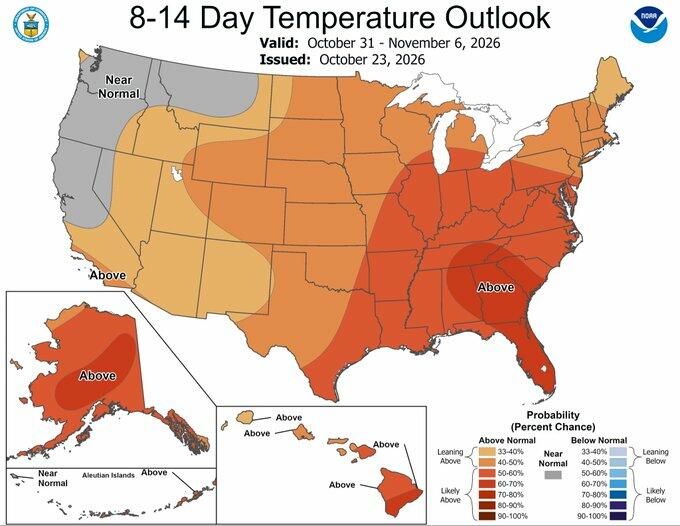
Weather forecasts for the Lower 48 show above-average temperatures through the end of the month and into early November.
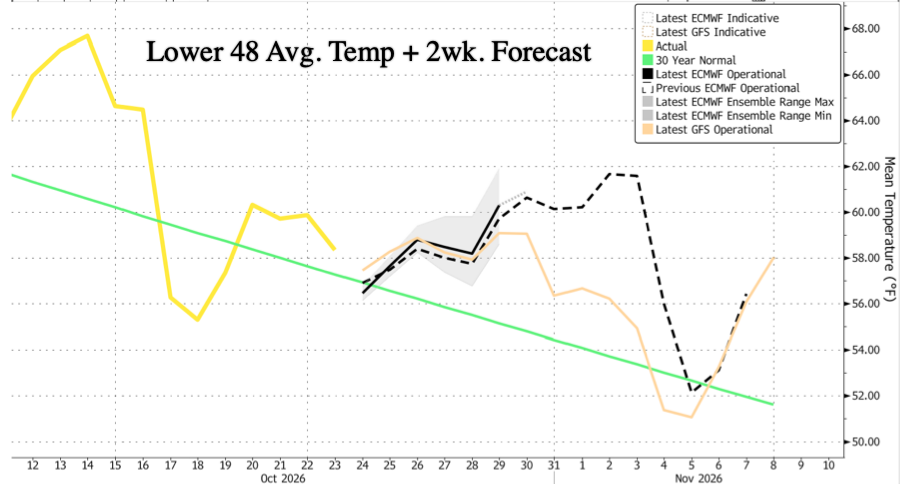
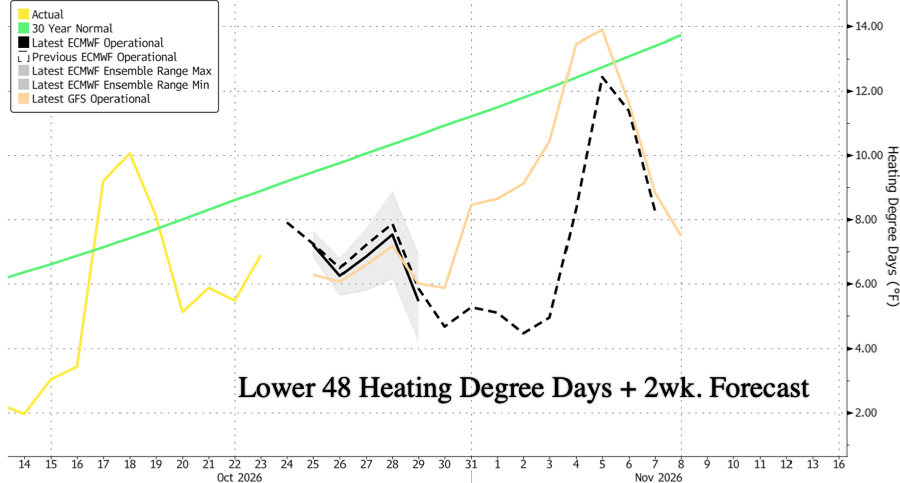
This has depressed heating demand.
Commodity Weather Group expects October and November combined to be the third-warmest period since records began in 1950, reinforcing expectations for a mild winter driven by El Niño.
BOK Financial Securities' Dennis Kissler said that NatGas production cuts may be needed to stabilize prices if warmer weather trends persist across the Lower 48.
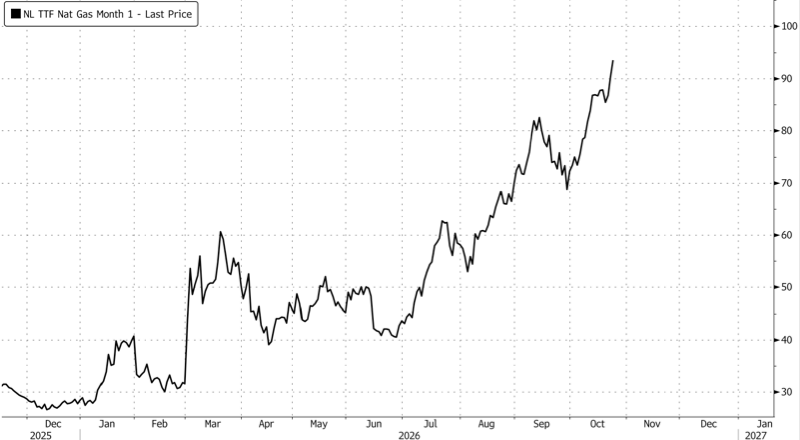
Across the Atlantic, European NatGas prices, as measured by the TTF benchmark, reached their highest levels since 2022, at around 93 euros per megawatt-hour on Friday, amid supply fears stemming from ongoing disruptions in the Strait of Hormuz.
Beyond maritime chokepoint fears, Europe is entering the colder months with NatGas stockpiles well below seasonal averages...
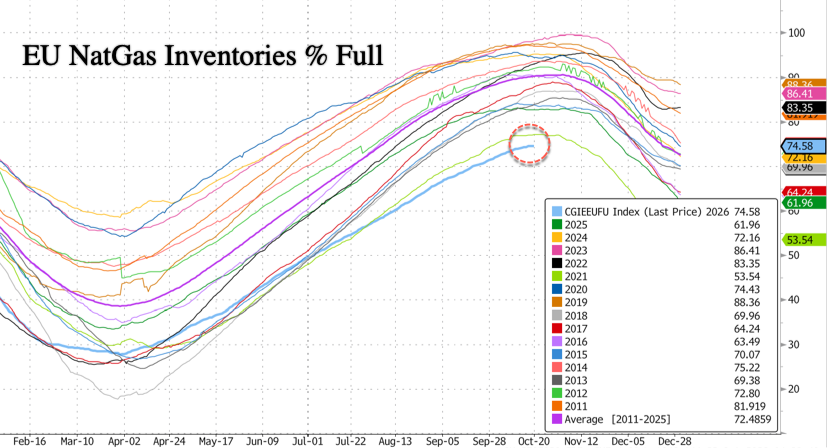
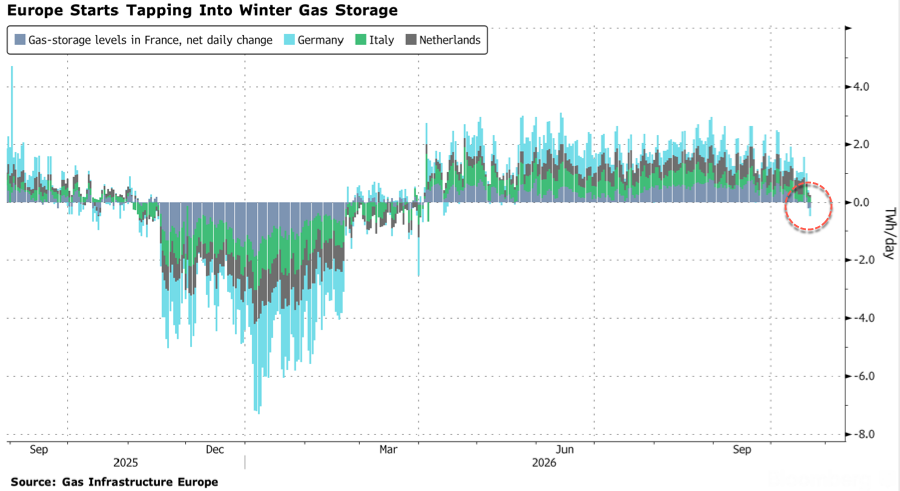
... and the withdrawal season has already begun.
Goldman Sachs commodities expert Daan Struyven warned earlier this week that EU natural gas prices could soar to 150 euros per megawatt-hour if Gulf LNG exports remain at just one-quarter of normal levels and a more severe winter boosts heating demand. The full report can be read here.
Natasha Kaneva, JPMorgan's head of global commodities research and a managing director, offered some good news for Europe: "The impact of El Niño is potentially bearish for natural gas through lower heating and power demand, given warmer, wetter and windier weather conditions."
European elites in Brussels who pushed climate crisis propaganda for years had better hopes for warmth, because a couple of cold snaps could dangerously draw down supplies, forcing EU traders to compete more aggressively with Asian buyers on international markets for LNG cargoes and bid up prices.