





Italian Energy Giant Eni Caps Fuel Prices As Refining Crunch Drives Costs Higher
Authored by Charles Kennedy via OilPrice.com,
Italian energy major Eni will cap fuel prices at its Enilive service stations beginning September 28 as tighter refined-product supplies and reduced European refining capacity continue to put upward pressure on pump prices.
The company said diesel sold through Enilive will be capped at €2.19 per liter, while petrol will be limited to €1.99 per liter. Eni said the caps are roughly €0.17 per liter below current average price levels.
The measure will initially remain in place for 30 days and could be extended through the end of 2026 depending on fuel-market conditions and supply trends.
Eni said the initiative is linked to excise-tax relief currently in force in Italy and is intended to reduce the impact of elevated fuel prices on households and businesses.
European fuel markets have faced renewed pressure from geopolitical disruptions, constrained refined-product availability and a long-term decline in regional refining capacity. Eni said nearly 30 European refineries have closed over the past 15 years, leaving the market more exposed when supplies tighten or imports are disrupted.
The Italian major said it has already been absorbing part of the increase in international fuel prices since March rather than fully passing higher wholesale costs through to recommended pump prices.
The latest intervention comes as European countries continue to grapple with the consequences of shrinking conventional refining capacity while attempting to transition toward lower-carbon fuels.
Eni is maintaining refining-related investments in Italy through its Enilive business, including its biorefineries in Venice and Gela. The company is also transforming its Livorno industrial site and other domestic facilities as part of a strategy focused increasingly on biofuels and lower-carbon products.
Those projects allow Eni to retain domestic processing capacity while shifting part of its downstream portfolio away from traditional petroleum refining.
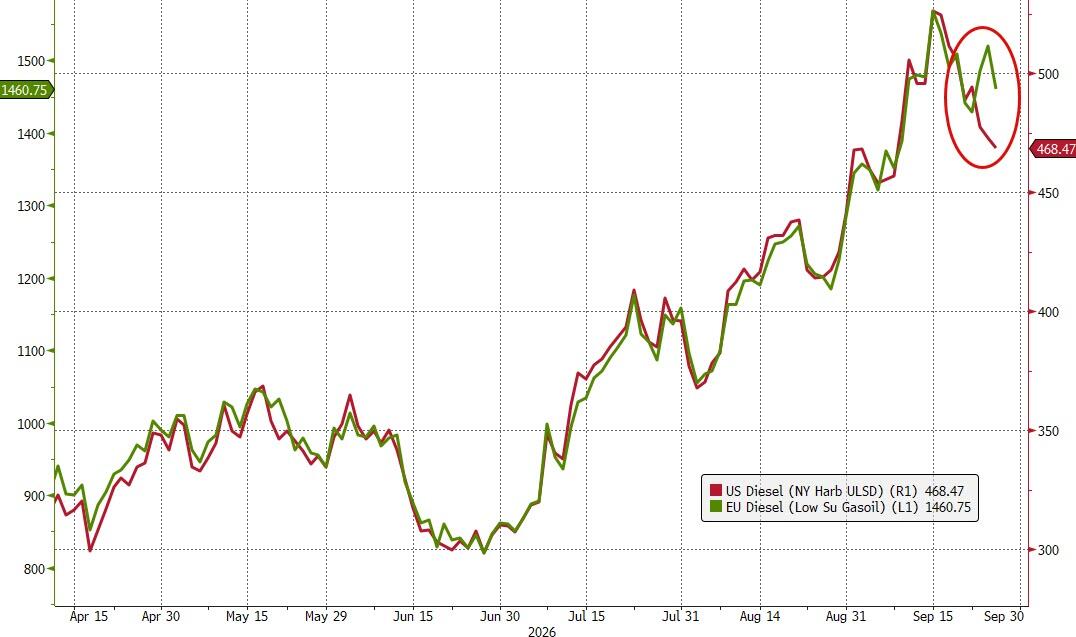
[ZH: Last week saw US diesel prices decouple (lower) from EU prices amid chatter of a US export ban...]
The price cap also illustrates the increasing pressure on European refiners and fuel retailers to balance volatile international product prices with government efforts to limit the impact of energy costs on consumers.