





Oil Rises After MidEast Attacks Spread And Escalate, Stoking Supply Fears
Summary
Several more tankers attacked in Strait Of Hormuz
IRGC claims it has complete control over the Strait of Hormuz
The Houthis have carried out yet another attack on Riyadh's international airport
IEA urges more diesel releases as global market tightens
President Trump said that Russia and Ukraine have agreed to an “energy ceasefire” effective immediately.
Oil prices rose at this evening's futures open after renewed escalation of attacks by Iran and its proxies in the Middle East.
WTI is pushing back up towards Friday's highs.
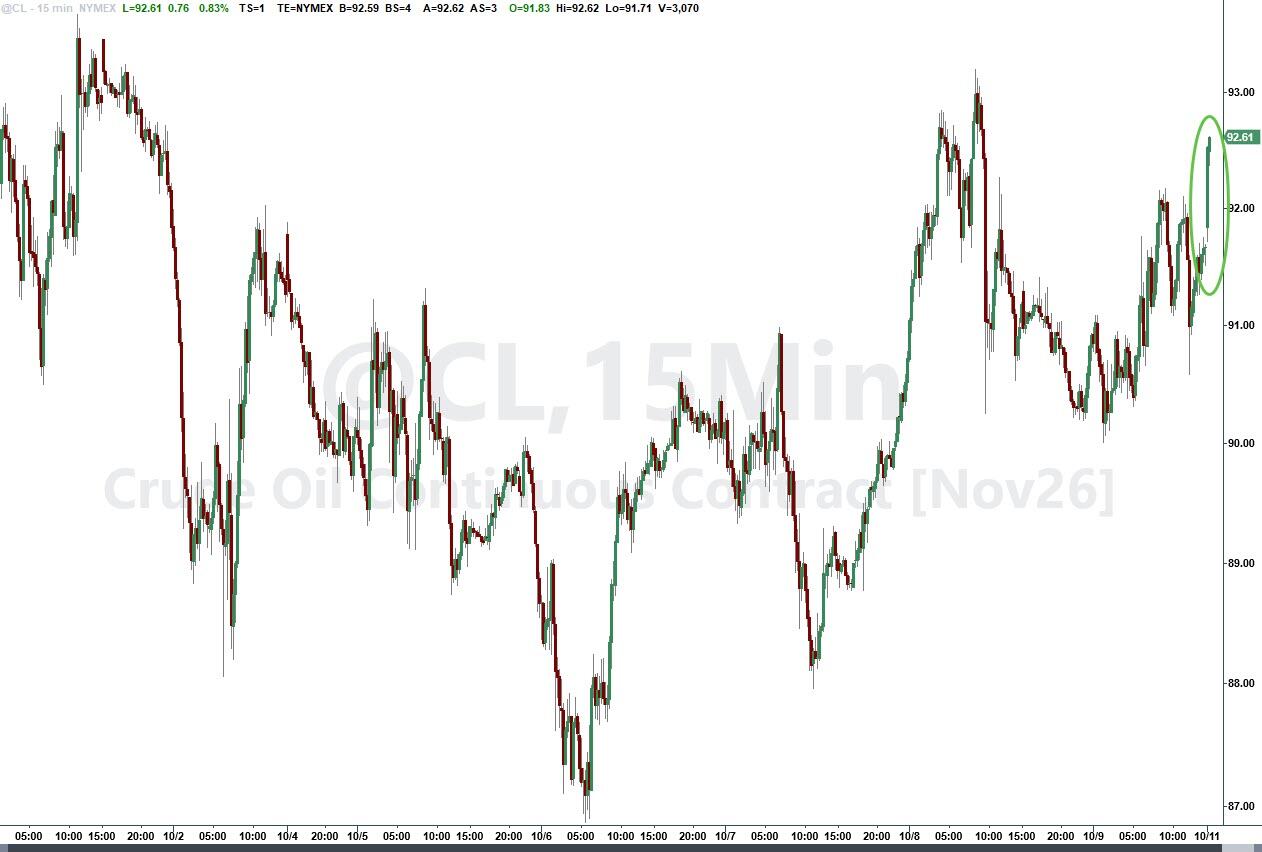
This move comes as President Trump claims that Russia and Ukraine have agreed to an 'energy ceasefire' which may just stabilize diesel prices around the world, but does nothing for exponentially rising tanker rates and the tightness in the physical oil markets.
Treasury markets are closed Monday, silencing the one cross-asset signal that typically anchors risk sentiment - meaning there will be no (cash) bond market verdict on what this weekend of renewed and re-escalated violence wrought.
“In quieter conditions, geopolitical headlines can often have an outsized impact,” Nick Twidale, chief market analyst at AT Global Markets in Sydney, wrote in a note to clients. But with the US inflation reading, several central bank speakers and the start of another US earnings season this week, “there will be plenty for markets to digest,” he wrote.
Dramatic Videos Show Several Tankers On Fire In Strait Of Hormuz This Weekend
Yet another tanker has been struck in the Strait of Hormuz on Sunday, which brings the total number to at least two or possibly as many as three suffering damage in the last 24 hours, chiefly from sea mines.
A slew of videos showing tankers striking mines have emerged on social media over the weekend, at a moment attacks on international vessels by Iranian forces are surging to wartime highs...
Iran’s IRGC Navy said a second supertanker struck a naval mine in the Strait of Hormuz, causing an explosion and engine-room fire. https://t.co/vatM26oaod
— Clash Report (@clashreport) October 11, 2026
Prior to this, Iran's Islamic Revolutionary Guard Corps (IRGC) had announced in a statement late Saturday that supertanker carrying crude oil suffered an explosion after colliding with a naval mine while "attempting to leave via the unauthorized route in the Strait of Hormuz" - also as reported in Bloomberg.
But one of the instances appears to have been a US attack on an 'unauthorized' vessel from an Iranian port, given the US military's Central Command said overnight into Sunday that a Panama-flagged cargo ship travelling from an Iranian port had been struck in the Gulf of Oman.
IRGC footage of 'violating supertanker BURNING in massive fire' after hitting 'naval MINE' Tanker carrying crude oil attempted to 'exit Strait of Hormuz through unauthorized route' 'Horrific fire is fate of any violating tanker that wants to ignore security and laws of Strait' https://t.co/Oqfzb8QMf1
— RTVisual (@RT_Visual_on_X) October 10, 2026
The strike was said to be aimed at the ship's engine room after it ignored warnings, with the Pentagon claiming to have taken steps at protecting crew members. And then, additionally:
On Sunday, a tanker leaving the Strait of Hormuz was hit by an “unidentified” projectile and damaged, the maritime organisation UKMTO said. The incident took place at 12:00 GMT (14:00 Prague time).
CNBC has noted amid this new surge in tanker incidents, "Since the Iran war began in late February, at least 24 sailors have died in attacks on 100 commercial ships in Hormuz, the Persian Gulf and Gulf of Oman, according to the IMO."
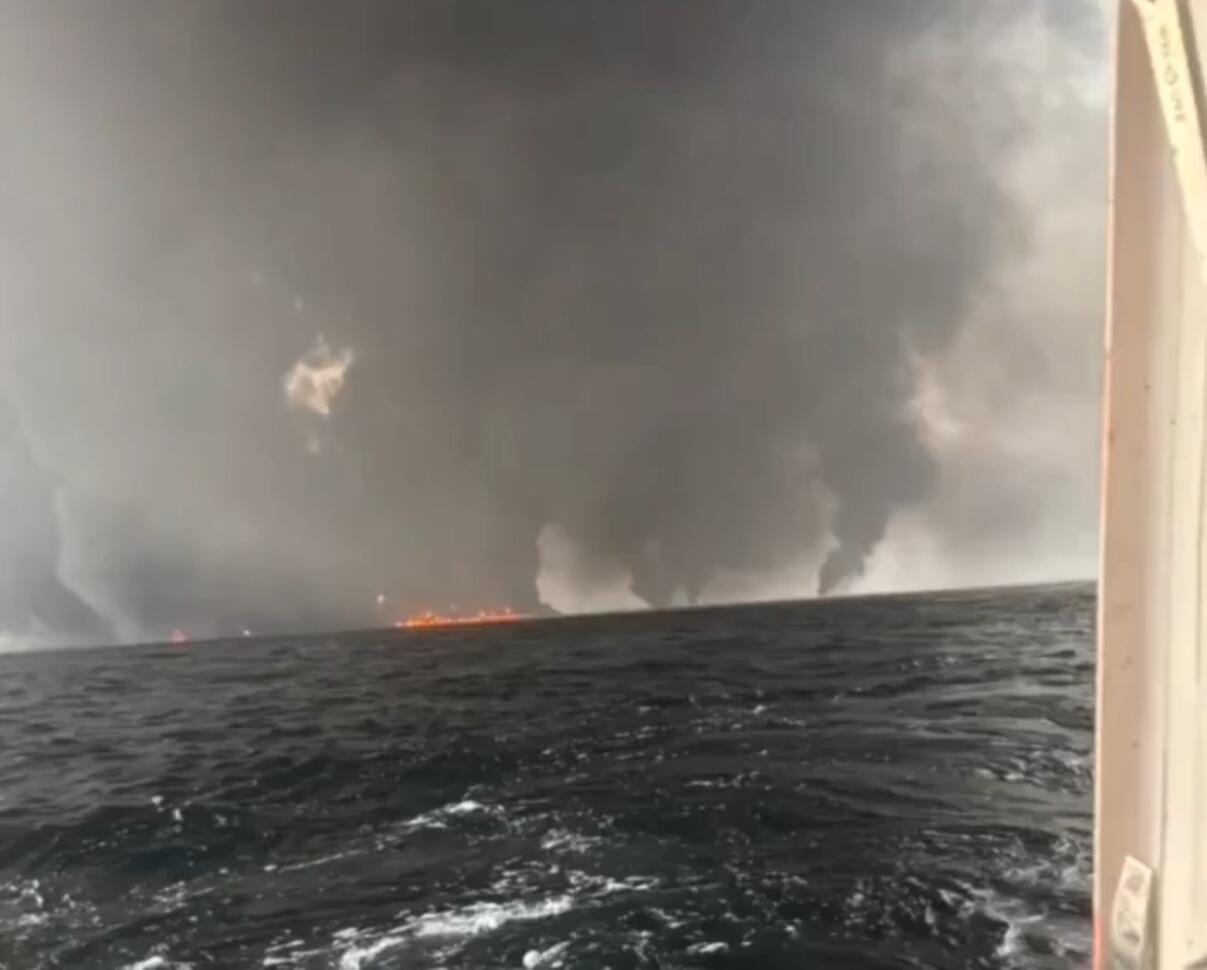
Just before this weekend, on Friday: "Gem No. 2, was hit by a projectile Friday off the coast of the UAE resulting in a fire onboard. The ship departed Ras Tanura, Saudi Arabia, in March and has remained in the Persian Gulf since the war began," according to Marisks.
The political affairs official of the Iranian Revolutionary Guard Corps Navy confirmed the imposition of complete control over the Strait of Hormuz, announcing the punishment of violating vessels.
Riyadh Airport Struck Again, A Day After Houthi Attack Killed 12, Including An American
The Houthis have carried out yet another attack on Riyadh's international airport - this one coming Sunday evening and leaving more people injured, after the day prior a Houthi missile strike on the travel hub left 12 people dead and over 300 injured. Regional reports say emergency crews battled a fire in the wake of the fresh attack:
A fire broke out at King Khalid International Airport in Riyadh on Sunday after an unidentified projectile struck the airport’s terminal 4 for passengers. Authorities are responding to the scene, the Coalition to Restore Legitimacy in Yemen reported.
Later on Sunday, the Kingdom’s civil aviation authority said the attack resulted in injuries and that damage assessment and safety checks of airport facilities were underway.
Houthi military spokesman Brig. Gen. Yahya Saree announced that these strikes in response to the "brutal Saudi aggression against our country and our people."
🚨 Saudi civil aviation authority says Dammam airport in the kingdom’s oil-rich Eastern Province was attacked Sunday evening
— Ahmed Al Omran (@ahmed) October 11, 2026
According to CBS News, "The airport remains closed on Sunday and Saudi Arabia moved Riyadh schools online amid the Houthis' latest threat." Apparently those among the injured are airport workers, and not travelers, as the airport remains closed and flights have been canceled or diverted. Additionally on Sunday:
IEA Urges More Diesel Releases as Global Market Tightens
The International Energy Agency urged members to speed up pledged diesel releases and consider supplying more as global markets tighten.
IEA Executive Director Fatih Birol urged governments that have yet to fully deliver oil stocks promised under the March collective action to accelerate those releases where possible, with priority given to diesel, according to a statement ahead of the agency’s Oct. 15 governing board meeting.
“Current market conditions merit immediate attention and can best be managed through continued cooperation among IEA members,” said Birol.
Collective action is necessary to support energy security and economic stability, he said, citing the renewed attacks on civilian and energy infrastructure in oil-rich Saudi Arabia.
Birol also encouraged all members - including those that have already completed their pledged releases - to assess whether further diesel releases are needed, and set out their scale and timing.