





Ramaswamy's Nuclear Startup Is Betting On A Reactor That Skips Enrichment
Vivek Ramaswamy may be busy running for governor of Ohio, but the nuclear startup he cofounded just became one of the most richly valued names in the sector without having shown the public so much as a design drawing.
Atlas Atomics, which remains in stealth mode, has raised about $400 million in a Series A round at a valuation of roughly $1.9 billion, Bloomberg reported on Thursday, citing people familiar with the matter. General Catalyst is leading the round, with Andreessen Horowitz participating.
SCOOP: Vivek Ramaswamy is backing and co-founding a new nuclear startup called Atlas Atomics. The company is raising about $400 million in new capital at a $1.9 billion valuation, led by General Catalyst + w/ participation from A16z. https://t.co/94L5Lb0mNR
— Natasha Mascarenhas (@nmasc_) October 8, 2026
Ramaswamy is a cofounder and backer, but the company is run by cofounder Kevin Gan, who spent more than 15 years investing in energy companies, most recently at Millennium and before that at D.E. Shaw. Its chief nuclear officer is Balendra Sutharshan, the former chief operating officer of Oak Ridge National Laboratory.
Atlas is also not entirely new to our readers.
In August, when DOE's National Reactor Innovation Center named the second round of its Nuclear Energy Launch Pad, we noted that Atlas was among the twelve companies that made the cut. Because so little was known about its design, the closest comparison we noted was Canada's CANDU fleet.
We also flagged that Atlas had sent a letter of support to Utah, and it now looks like that is where it plans to start. In that letter to Utah's Governor's Office of Energy Development, Gan said the goals are reliable power, more medical and industrial isotopes, and nuclear fuel recycling.
Heavy water, no enrichment
What sets Atlas apart from the crowd of microreactor and SMR startups is its choice of a heavy water reactor, the same family as Canada's CANDU and India's pressurized heavy water reactors.
Atlas hasn’t published its specifics, but the heavy water design family comes with a well-known set of features:
- No enriched uranium required. Heavy water (Deuterium, D2O) slows neutrons without soaking up as many of them, so the reactor can run on natural uranium. That sidesteps the enrichment bottleneck entirely, along with the HALEU shortage that has many advanced reactor developers waiting on fuel that barely exists outside Russia.
- No giant pressure vessel. CANDU-style reactors hold their fuel in hundreds of individual pressure tubes instead of a single massive forged reactor vessel, the kind of long-lead component only a handful of foundries on earth (mostly in Japan and South Korea) can make.
- Refueling on the fly. Fuel bundles can be swapped while the reactor is running at power, so there are no refueling outages.
- An isotope factory. Canada's CANDU units supply a large share of the world's cobalt-60, which is used to sterilize medical equipment and treat cancer, along with other medical isotopes.
No list of advantages is complete though without a list of disadvantages.
The fuel/supply chain catch
Skipping enrichment does not mean Atlas is free of supply chain problems. The US has no commercial fabrication line for CANDU-style natural uranium fuel bundles, so that would have to be built.
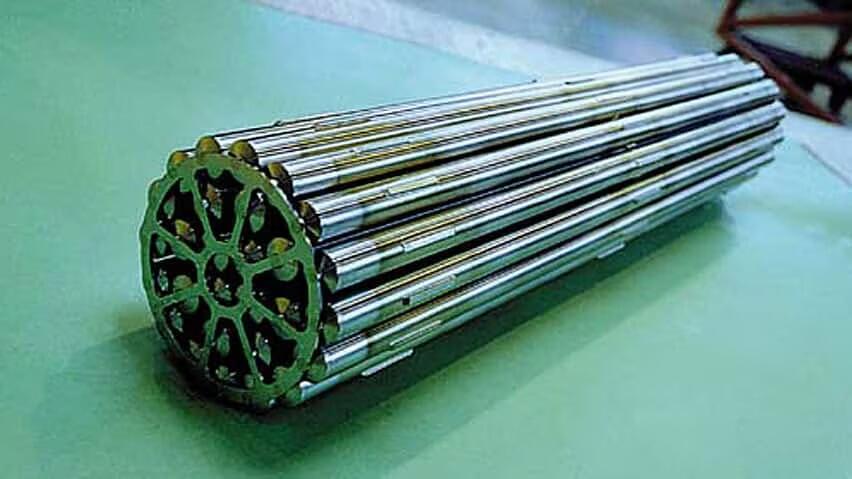
That doesn't necessarily put them at a disadvantage compared to the other advanced reactor developers in the space right now. Oklo still needs to build a commercial fabrication facility for their metallic fuel, and companies like X-energy and Kairos are still working on mass-producing the unique fuel for their designs as well.
Then there is the heavy water itself. Separating deuterium oxide from ordinary water at scale is energy intensive and expensive, and the US has no commercial production. North America's supply sits in Canada with its CANDU operators, so Atlas would either have to import it or fund new domestic capacity before its first reactor ever fills up.
The Canadians are coming
Atlas will also not have the US heavy water market to itself.
Back in June, AtkinsRealis, which licenses Canada’s CANDU technology, submitted a notice of intent to the Nuclear Regulatory Commission to begin licensing CANDUs in the US.
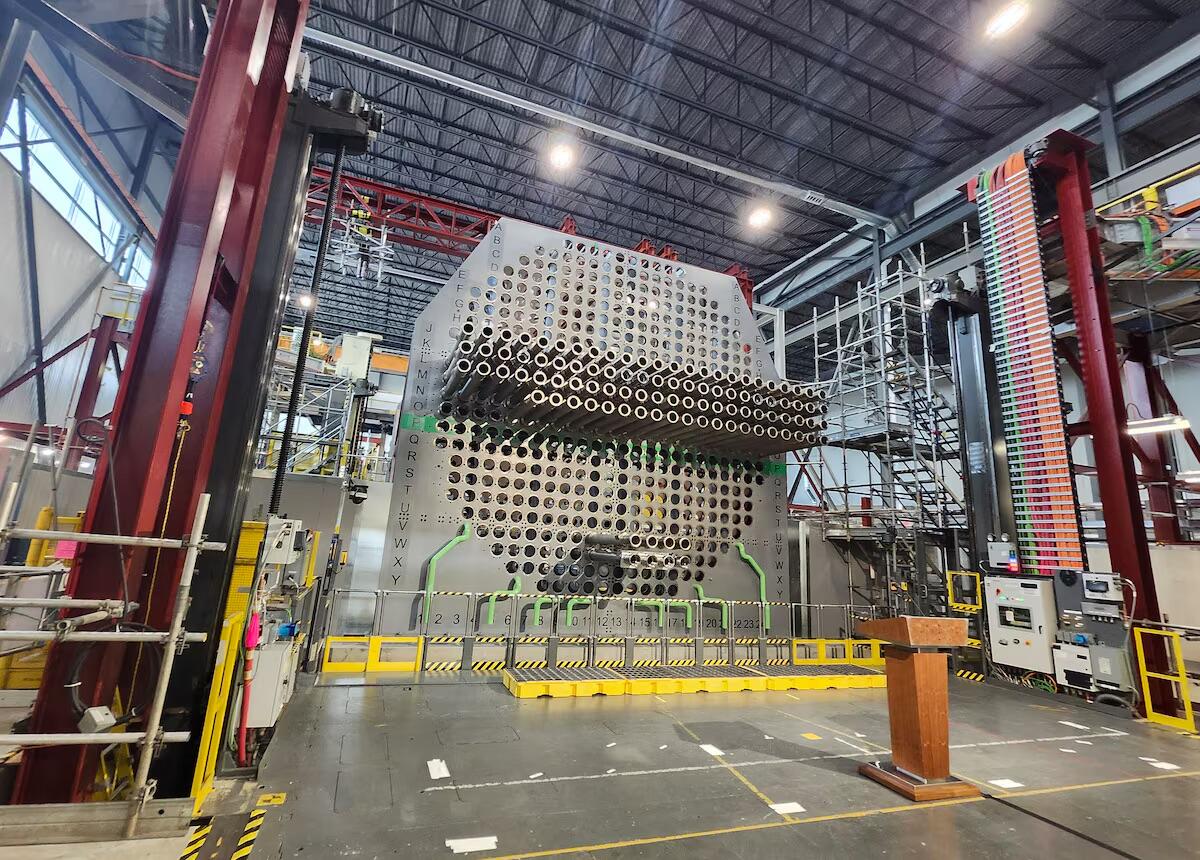
There's been no meaningful progress since the letter of intent, but their hat is in the ring. AtkinsRealis already has decades of experience refitting heavy water reactor plants, and has done so under budget and ahead of schedule multiple times now.
The money keeps flowing
The round is the latest sign that venture capital cannot get enough nuclear. Investors have poured $4.6 billion into U.S. nuclear startups this year, according to Bloomberg.
Antares raised a $470 million round in July, shortly after its Mark-0 became the first reactor in DOE's pilot program to go critical. Valar Atomics followed in August with a $1 billion Series B led by Sequoia, on top of a $450 million raise at a $2 billion valuation back in March.
With President Trump's executive order targeting a quadrupling of U.S. nuclear capacity by 2050, the money is not the hard part anymore.