Tanker Crews Running Hormuz Describe Risky Tactics: Lights Out, Sandbags Up, Hugging Coast
The Trump administration has been boasting of bigger than ever war time oil transit flows through the Strait of Hormuz, but it is happening still at great risk to tankers, captains, and crew members. American forces "have assisted thousands of ships through the Strait of Hormuz in recent months by providing coordinated protection," US Central Command has said in a statement.
Nothing about this has been 'easy' or smooth in terms of operations and security, even when vessels do make it through the strait without being targeted. Just the last eight days has seen a dozen or more international vessels targeted by drones - a trend which has gone underreported after a long stalemate in negotiations.
In coordination with the US Navy, commercial tankers are essentially forced to go 'dark' - literally with lights off and with their Automatic Identification System (AIS) off - just to keep oil and gas moving through the contested waterway. While this trend of a growing number of stealthy ships making passage is nothing new, transits over the last several weeks have become more steady and greater in volume.
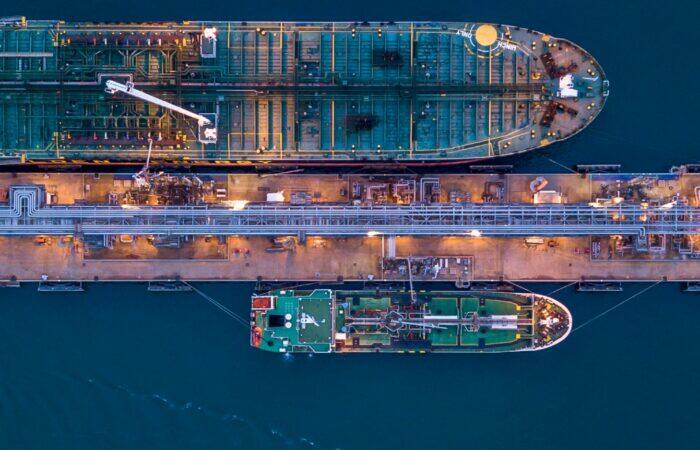
A recent Bloomberg report provided more color on what the ground reality looks like by interviewing ship captains and crewmembers. The report began, harrowingly: "The tanker captain summoned his years of experience when he saw the blast in front of him. He veered his 300-meter-long ship around the vessel ahead and could see a fire had started. He called the US Navy to tell them of the attack."
"His vessel is among the ships engaged in shuttle runs through the strait, ferrying barrels often at night and with strict instructions about what equipment can be used — no lights, no phones and with only one radar," the report continued.
The unnamed captain who is based out of the Philippines described the challenges of navigating a hostile waterway with no navigational lights, while largely relying on visually tracking the coastline and lighthouses (on the Omani side): "I'm just lucky because I still remember the traditional navigation, the old school."
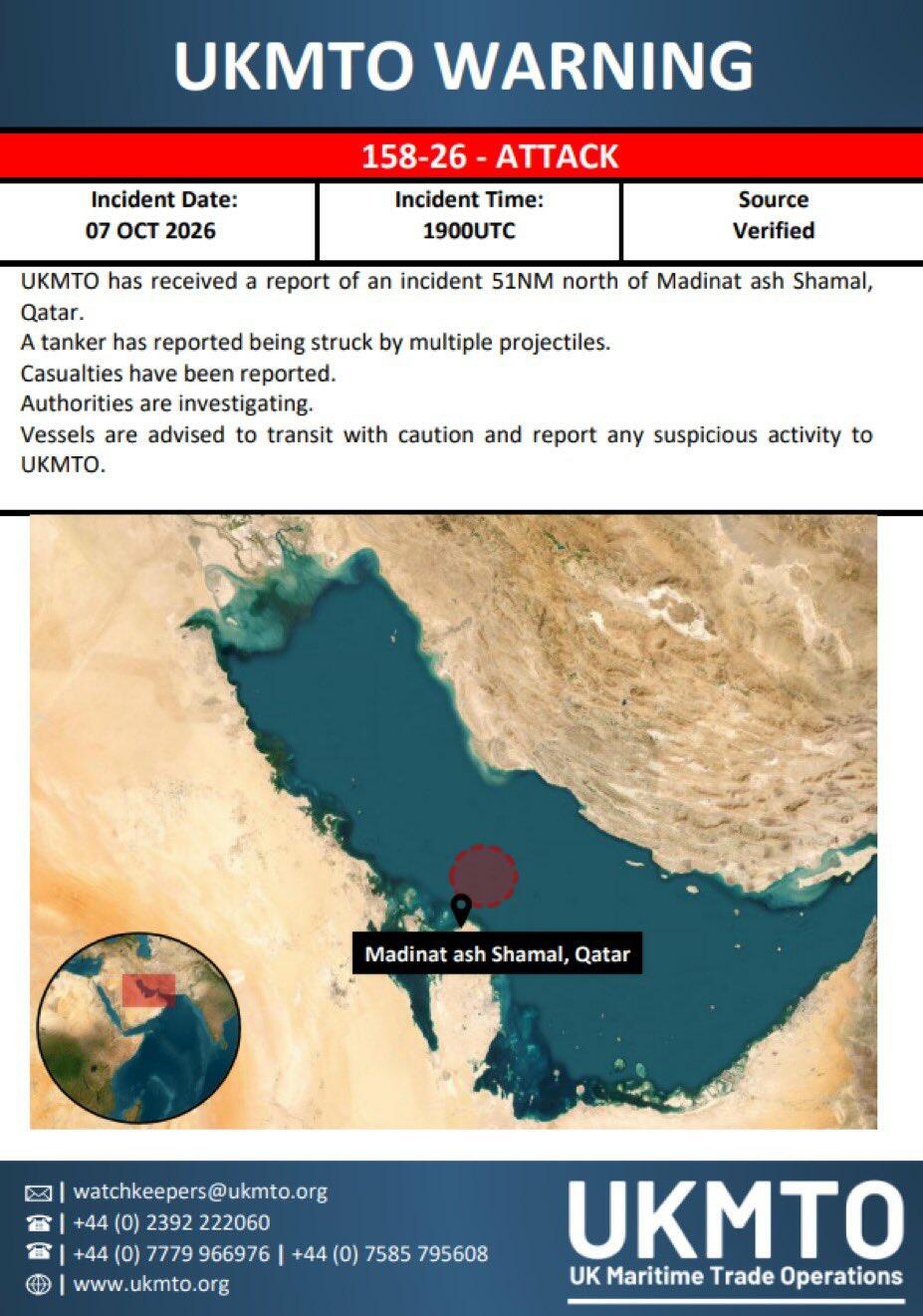
Wednesay (10/7): A tanker was hit by "multiple projectiles" about 51 nautical miles north of Qatar.
Ships have to treat the entire transit almost like a continuous emergency or fire drill, with pumps running and hoses at the ready - also after sandbagging the ship's most vulnerable areas in case of drone or missile attack.
The same captain described further:
On one occasion he saw what he described as a jet plane flying above them, and also a helicopter.
The radio silence while crossing Hormuz made his time at sea even more unusual, he said. The lack of noise on the radio was only punctuated by the chatter of more people than usual manning the bridge to watch out for attacks.
All the while, the vessel must carefully traverse along US Navy-provided routes and specific waypoints, often closely hugging the coastline while ensuring waters are deep enough for heavy tankers.
The report says it has become routine for vessels to check in with the US Navy every 30 minutes.
For the litany of risks, crews are being offered multiples of their normal salaries, with some shipowners reportedly offered as much as six additional months of pay for Hormuz shuttle runs.
Meanwhile, some of the latest from US Central Command (CENTCOM):
🚫 CLAIM: Earlier today, a general from Iran's Islamic Revolutionary Guard Corps claimed in media reports that "the Strait of Hormuz is closed" and his country has "full control over it." This is FALSE. ✅ FACT: Traffic is flowing through the Strait of Hormuz right now carrying commercial goods and energy supplies, including 20 million barrels of crude oil. The United States and regional partners clearly control the strait.
— U.S. Central Command (@CENTCOM) October 7, 2026
After exiting, these 'dark ships' eventually transfer oil onto tankers that take the cargoes to buyers in Asia or elsewhere. One recent report reviews of the complex process:
Much of the higher volume is made possible now by ship-to-ship transfers, notes Amir Handjani, an energy lawyer and public affairs executive, in an interview with RS. This is where private companies come into ports and with AIS transponders off, undergo the very risky and expensive task of transferring fuel cargo into government “shuttle” vessels that travel through the strait “dark” and then offload onto larger tankers in safer, open waters. Ship-to-ship is also used for shuttling through Hormuz bypass routes.
"It’s not moving without cost and without huge investment by the U.S. Navy. Is that sustainable?" Handjani posed in the report. "I don’t know, I guess anything is possible."
* * *
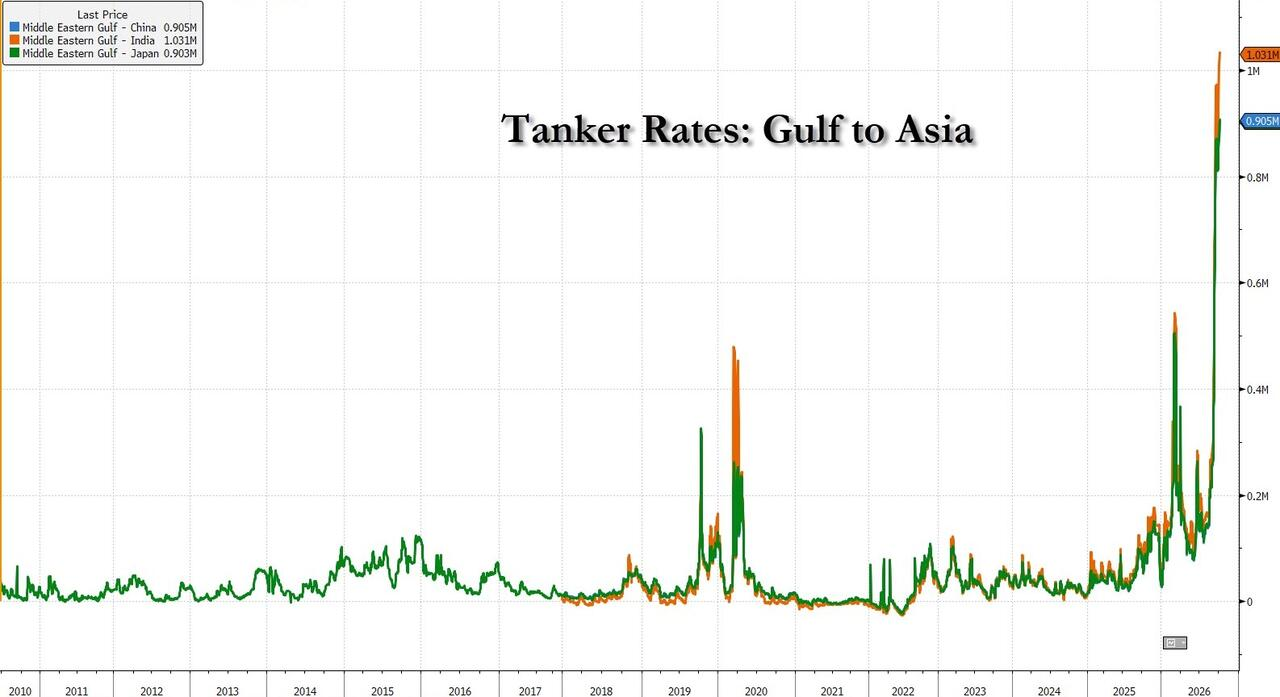
Needless to say, the Mideast chaos has sent crude tanker rates soaring.