





USDA Investing $180 Million For American Seed Sovereignty
Authored by Naveen Athrappully via The Epoch Times,
The U.S. Department of Agriculture (USDA) has announced a $180 million investment to launch the Seed Sovereignty Initiative for strengthening domestic agricultural security by protecting plant genetic resources.
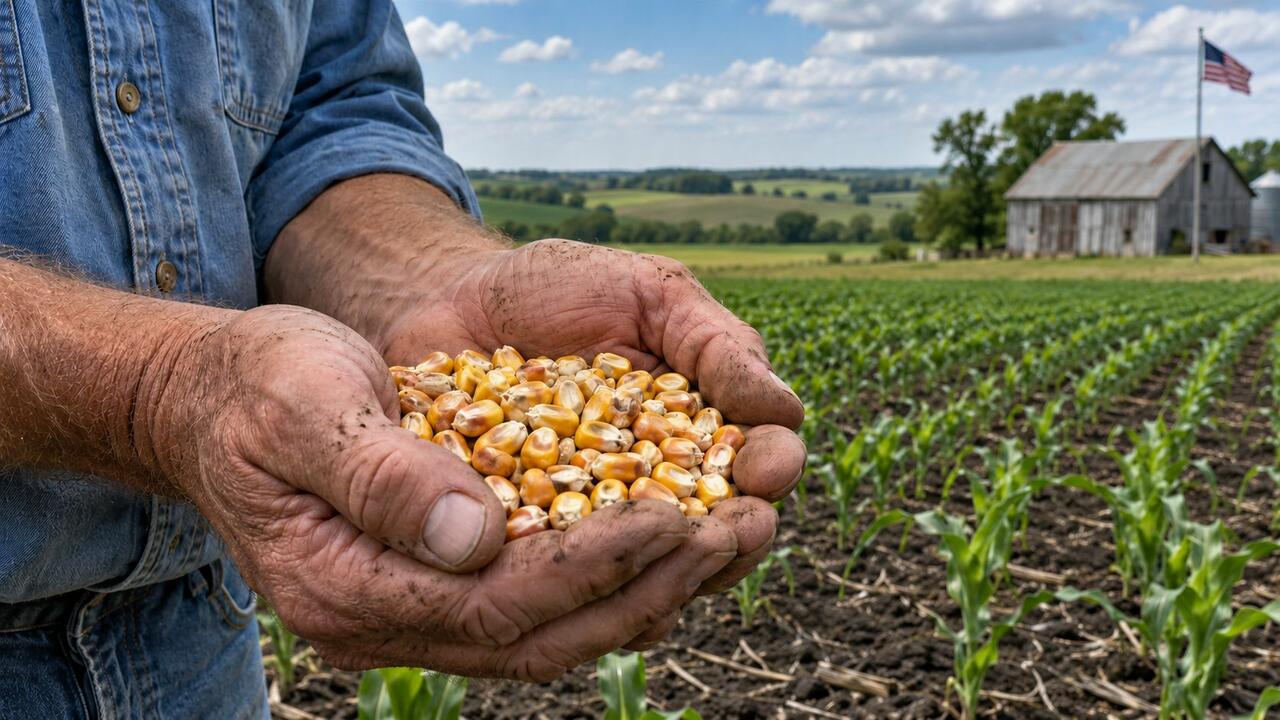
The USDA will use the funding to sequence the genetics of major crops to "unlock the tremendous potential of the plant genetic resources the United States holds and identify critical gaps," the department said in an Oct. 6 statement. Plant genetic resources can include seeds, plants, and plant parts.
Foreign competitors are acquiring and genetically sequencing plant resources from around the world while the United States is yet to sequence its own plant collections fully, the USDA said. Investment in the Seed Sovereignty Initiative aims to address this gap and reduce the risk of future foreign dependence on plant genetic resources.
The Seed Sovereignty Initiative will funnel investments into USDA's National Plant Germplasm System (NPGS), which houses more than 600,000 samples from more than 16,000 species. The department plans to characterize and sequence several NPGS collections over two years, using cutting-edge tech to identify valuable genetic traits, the USDA said.
The initiative will help in the development of new crop varieties that benefit American farmers and consumers and also help researchers respond faster to new pests and plant diseases, the agency said.
The initiative will ensure continued American leadership in agricultural productivity and innovation, strengthen U.S. food security, make producers independent of seed systems controlled by foreign groups, and preserve a domestic source of seeds and crop traits crucial for agriculture and exports, the initiative's website says.
"Since President Trump returned to office, he has made it clear that we are putting American farmers first. For too long, the future of our crops and our seeds has not been a priority. That changes today, because we cannot afford to depend on foreign adversaries for next year's crop," Secretary of Agriculture Brooke L. Rollins said in the statement.
"Today's announcement is another example of this administration focusing on the inputs our agriculture industry depends on and ensuring a future where our farmers are the most productive in the world."
The United States has seen large-scale seed commercialization over the past century, with seeds turning from a common good into a commodity, according to a 2024 study published in the journal Renewable Agriculture and Food Systems.
Consolidation in the private seed industry has made farmers increasingly dependent on commodity seeds while reducing crop diversity. Commodity seeds have become crucial for food production, with corporate control of the seed industry tightening, the study said.
At present, the majority of seed supply for almost every major row crop planted in the United States is produced by four companies - Bayer, Corteva, Syngenta Group, and BASF.
Out of these, only Corteva is headquartered in the United States. Bayer and BASF are based in Germany, and Syngenta Group is in Switzerland.
Concern Over China Connection
Syngenta Group has faced scrutiny because of its links to the Chinese Communist Party and the amount of farmland it owns in the United States. Although the company's Syngenta Seeds division has its North American headquarters near Chicago, Syngenta Group is owned by Chinese state-controlled ChemChina.
"Reliance on a small group of suppliers in any strategic sector creates vulnerabilities that are difficult to ignore, and the situation is no different in the case of seed for major field crops," national security lawyer Irina Tsukerman told The Epoch Times.
"From a national security perspective, the reality that much of the country's grain production flows from traits and breeding pipelines managed by a handful of actors is a clear signal that dependence has reached a level that warrants scrutiny."
On July 14, a group of lawmakers introduced the Fair Seeds for Farmers Act to tackle the issue of corporate control over seeds, according to a statement from the office of Rep. Jim McGovern (D-Mass.).
Under the proposed measure, seed companies would be banned from restricting farmers or researchers from experimenting, breeding, propagating, or saving seeds.
"The hyperconsolidation and commodification of seeds has eroded farmers' resilience and diminished the agrobiodiversity of crops cultivated in the US at an alarming rate," Nick Rossi, a policy specialist at the National Sustainable Agriculture Coalition, said in the statement.
The bill "takes an important step in curtailing corporate abuse of US Patent Law," Rossi said.
The bill has been referred to the House Committee on the Judiciary.
Autumn Spredemann contributed to this report.
* * * psst * * *
