


70% Of Moroccan Asylee Claims In Ceuta After Mass Entry Cite Persecution Over Sexual Orientation
Spanish police say about 70% of the Moroccans processed in Ceuta after July's mass entry have asked for asylum alleging persecution over their sexual orientation, according to El Periódico de Ceuta, which relays figures from National Police sources first published by the Spanish daily ABC. The number comes from unnamed police sources, not published statistics.
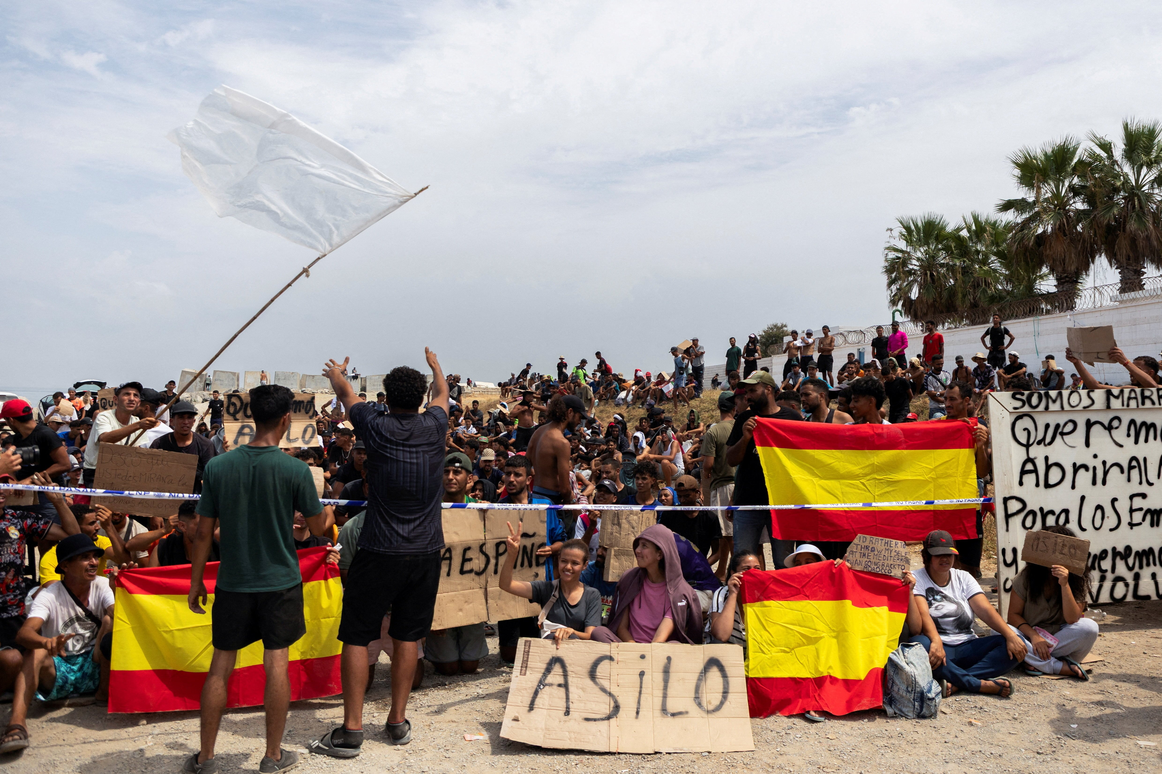
The paper says officers handling migration in the enclave see a shift from the economic or work reasons Moroccans usually gave, and that the claims have reshaped the caseload at the city's asylum office. Morocco-focused outlet Yabiladi reports that the sources suspect some applicants are being coached on asylum procedures as a way to stay in Spain.
Only five of those who arrived in the mass entries have so far won refugee status for persecution over homosexuality, El Periódico says. Spain's Office of Asylum and Refugees reviews each file individually, and the paper says investigators are still weighing whether each account is true.
Being gay is not enough by itself, Yabiladi notes: applicants must show a well-founded risk of persecution if sent back, judged on interviews, consistency, documents and conditions in Morocco, and without relying on stereotypes. Morocco criminalizes same-sex relations under Article 489 of its penal code, and the U.S. State Department says hundreds of men and women are prosecuted for it each year, per AP.
Neither report says how many claims sit behind the 70% figure. El Periódico describes it as a share of Moroccans attended after the entries, while Yabiladi calls it 70% of applications, so the denominator is unclear.
Some claimants have told their stories. An AP report on Oct. 11 quoted a gay man from Tetouan who left after his brother threatened to report him to police: "I left Morocco because being gay is so hard." AP said it could not independently verify the asylum claim of one interviewee. Police cleared the beachside tent camp in early October.
The scale of the July 30-31 entry is itself disputed. Spanish government estimates put the number who reached the city at 72,000, many swimming around the border fence, the Irish Times reported in August. The government counted 83 deaths and a human rights group 141. Most of those who crossed were sent back to Morocco, several thousand remain, and Yabiladi puts the number still in the city at about 10,000.
Interior Minister Fernando Grande-Marlaska has said none of the migrants will stay in Ceuta or travel to the mainland. Spain raised police and Civil Guard numbers in the city from 1,100 to 1,600, and Morocco put soldiers and extra fencing along the border. Madrid blamed traffickers, but the cause of the crossing has not been identified.