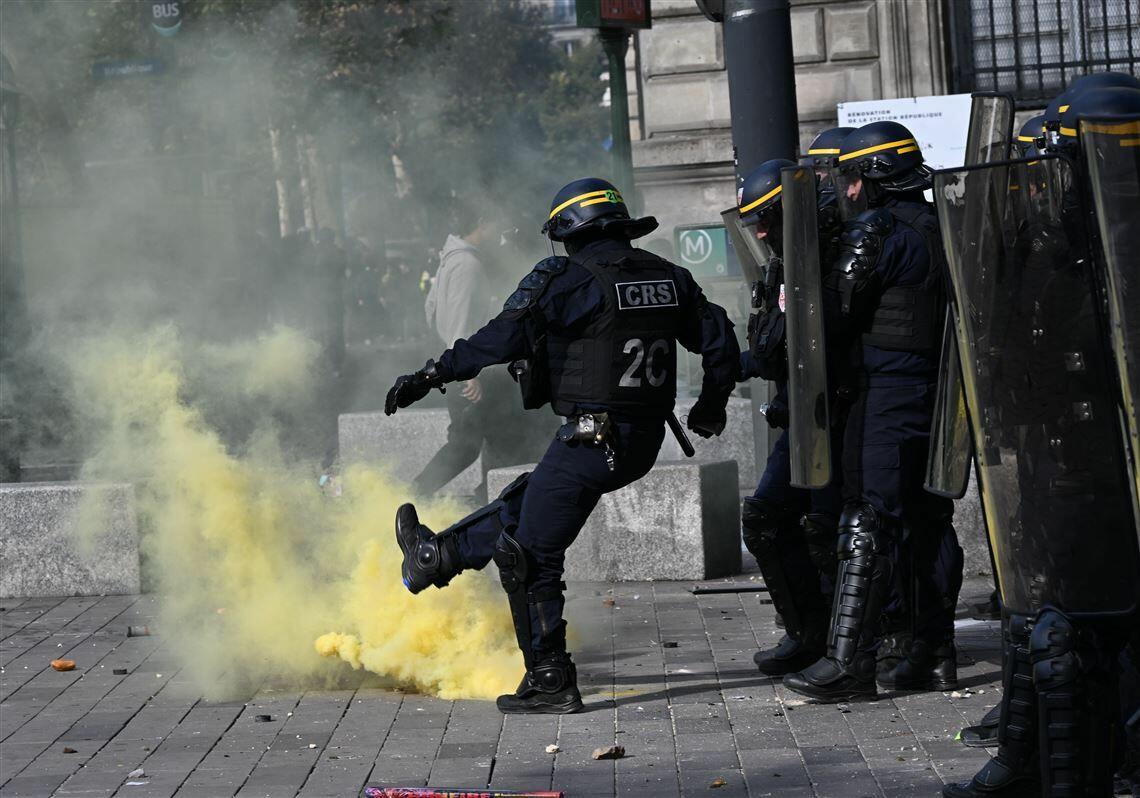
France Slaps 8PM Curfews On Cities As Interior Minister Admits Police 'Lost Control'; Macron Flees To The Gulf
France moved Monday to put riot-hit cities under curfew after Interior Minister Laurent Nuñez admitted that authorities had lost control of the streets in several major cities over the weekend. President Emmanuel Macron refused Nuñez's offer to resign and then left for a Gulf tour to secure fuel supplies.
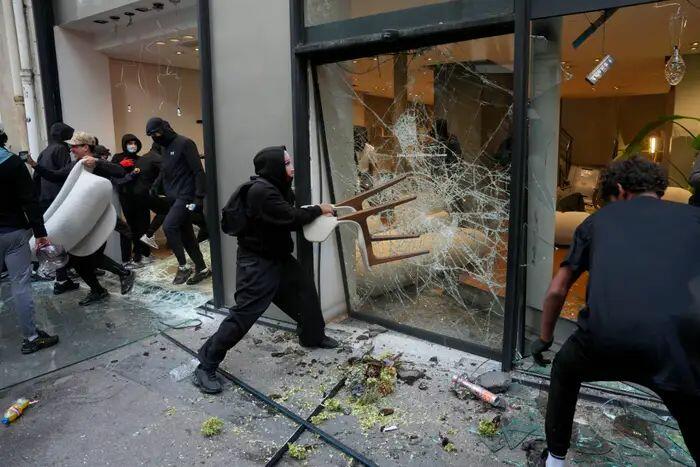
Prime Minister Sébastien Lecornu told prefects to impose "very limited" and "localized" curfews. According to France 24's live coverage, Lecornu ruled out a full curfew for Paris. He said a state of emergency could be declared "if necessary," but that curfews seemed better suited, adding: "I am absolutely determined to restore order." Marseille's prefect banned protests and gatherings from noon to 8 p.m.
By Monday evening, Lecornu's office had named the first towns, all in the northern Nord department. Lille, Douai, Wattignies and Denain will be under curfew from 8 p.m. to 6 a.m. on Monday and Tuesday nights, with each mayor's agreement, according to Franceinfo. Lille is where Nuñez said rioters broke into city hall, and Wattignies is one of its suburbs. Lille's Socialist mayor, Arnaud Deslandes, had refused earlier in the day to sign a curfew order, arguing that a late-evening curfew wouldn't match the hours the trouble broke out. Denain was already under curfew: its mayor ordered a weeklong curfew from 9 p.m. starting Sunday, after what the town said were fires, mortar fireworks and paving stones thrown at police by hooded rioters on Saturday.
🚨 ALERTE - L’APPLE STORE de Lille a été PILLÉ.
— Frontières (@Frontieresmedia) October 17, 2026
Protesters looting an Apple store in France
— International Leaks (@Internl_Leaks) October 19, 2026
#Europe #Macron
#France #Mexico #Brazil
#Protests #Spain #Ukraine
#ItalyProtests #Milan #Iran
#Marseille #Poland #Paris #FranceProtests #France #Riot #Riots #Lyon #ParisRiots #Europe #Albania #Internationalleaks #India #Uk
Nuñez offered his resignation Sunday. He told France Inter: "I submitted my resignation because I am responsible for everything that is happening." The Élysée said Macron refused "given the need for continued command of law enforcement in the current context." Macron has acknowledged failures in planning and intelligence-gathering, ordered full transparency about them, and asked for new policing tactics "as quickly as possible." Nuñez blamed "hordes of troublemakers and looters" and "far-left activists," and said hundreds of businesses had been looted: "You can't look shopkeepers in the eye."
The numbers keep climbing. Nuñez put the arrests at about 400 on Saturday evening, Lecornu later said 1,200, and the Interior Ministry now counts nearly 2,400 nationwide, with almost 1,000 police and gendarmes injured, seven seriously. Authorities estimated Monday that at least 3,000 businesses were damaged or looted. AFP's report on Macron's trip puts the weekend total above 2,500. Paris prosecutors say 855 people were arrested in the capital on Saturday and another 208 on Sunday. Lecornu said no one was killed, calling it "a miracle."
#Pillages à Lille, Lyon, Montpellier et Nice en marge de la mobilisation du 17 octobre : Apple Store pillé à Lille, commerces visés dans la Presqu'île lyonnaise, Foot Locker pillé à Montpellier, vitrine brisée à Nice.
— Agence FirstEye (@firsteyeoff) October 17, 2026
Vous étiez sur place ? Contactez First Eye.
In his Sunday address, Macron said "nothing justifies" what he called "unbridled" violence. He blamed "agitators from ultra-left fringe groups, joined by numerous delinquents," said he felt "anger and shame," and announced neither a state of emergency nor a curfew. Lecornu has since said a whole network could be mobilised to challenge the presidential election timetable. Jean-Luc Mélenchon's response was that the prime minister must name those involved and provide proof.
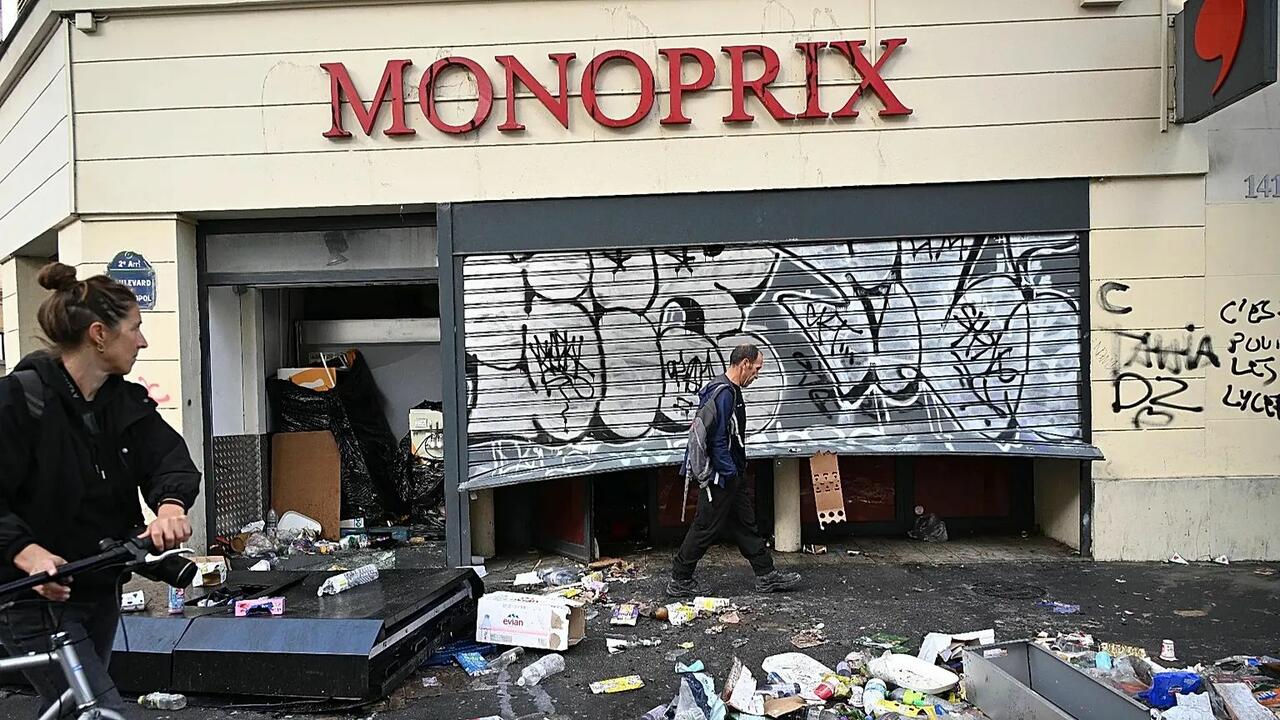
Macron's Gulf tour opened in Kuwait City on Monday, with the UAE, Bahrain and Qatar to follow by Wednesday. Executives from TotalEnergies and Engie are traveling with him to seek commitments on diesel and oil volumes, and the talks include moving pre-positioned kerosene and diesel from Oman to Réunion and Mayotte. Macron said the trip was needed to "secure our supplies," noting that demonstrators had raised fuel prices. Constitutional expert Benjamin Morel told AFP the tour could look like business as usual but might also seem out of touch and suggest a power vacuum. Francis Perrin of the French Institute for International and Strategic Relations does not expect it to move fuel prices, since Gulf states find firm commitments difficult while the region remains disrupted by the US-Iran war and the closure of the Strait of Hormuz.
The protests were called over the cost of living and conditions in schools, after weeks of student protests. The CGT union claimed 800,000 marchers on Saturday; Nuñez put the figure at about 550,000, including 110,000 in Paris. The violence has been severe: in Limoges the prefect said the town hall was "largely lost" to fire, and a 17-year-old protester reportedly lost a hand in Saint-Étienne, apparently to a police grenade. A prosecutor has asked the police watchdog IGPN to investigate; Nuñez said he could not confirm that. The Yellow Vest movement has called for another round of protests on Saturday, France 24 reported.
🇫🇷🔥 Limoges city hall set on fire by rioters at the end of the Oct. 17 protest; the bell tower collapsed and the prefect says the building is "largely lost"
— 🔥🗞The Informant (@theinformant_x) October 17, 2026
Rioters attacked Limoges' hôtel de ville late Saturday afternoon after the Oct. 17 cost-of-living march, breaking windows and setting fire to the ground floor; cars were also burned outside. Firefighters arrived shortly after 6 p.m., and the flames reached the roof around 7 p.m. and were still burning at 8:10 p.m. The 43-meter bell tower collapsed. Prefect Maurice Barate said the roof fell onto the lower floors except in the west wing and two-thirds of the facade had disappeared, calling the building "largely lost," a "heritage catastrophe" and a "deliberate act" by rioters. The 19th-century building, opened in 1883 and inspired by Paris's city hall, is a listed monument. Interior Minister Laurent Nuñez confirmed the fire; Prime Minister Sébastien Lecornu said "we will not be intimidated." Earlier in Limoges, fireworks mortars were fired at police near the A20 interchange, a police vehicle was burned and shops were looted. Reported by AFP, franceinfo, Europe 1 and Flash FM.
NOT CONFIRMED: Which artworks and decorations inside have been destroyed. Claims that works by Henri-Paul Motte, Jean-Joseph Weerts and Urbain Bourgeois are definitively lost have not been confirmed by officials, and no inventory has been published. I also found no figure on injuries or arrests in Limoges.
Saturday's national mobilization against the cost of living drew a very large turnout, with CNews reporting more than 550,000 demonstrators, while violence was concentrated in Paris, Lyon, Marseille and Limoges, including a brief break-in at Marseille's city hall.
The loss of a historic city hall turns a day of mostly peaceful marches into a symbolic national event and will dominate the political response. What to watch: the official damage and heritage assessment once the fire is out, arrests and charges for arson, the government's response including any new security measures, and whether the unions and student groups distance themselves from the violence.
Sources: AFP; franceinfo / France 3 Nouvelle-Aquitaine; Europe 1; CNews; Flash FM; Haute-Vienne prefecture; Interior Ministry.
A historic town hall in France's Limoges has been ravaged by fire after a day of violent protests across the country saw widespread arson, pillaging, and more than 1,200 arrests.
— The Telegraph (@Telegraph) October 18, 2026
The clock tower of the 143-year-old Hôtel de Ville building collapsed on Saturday night after rioters set it ablaze.
Read our full dispatch below 👇
Markets noticed. The French 10-year yield rose 12 basis points to 4.90% Monday, according to France 24. As we reported, French bonds and stocks dropped as the riots worsened, after we had described France entering a "point of no return" on Sunday.
Macron has refused an interior minister's resignation before. In October 2018 he turned down Gérard Collomb's first offer, citing confidence in him, and accepted a second one two days later.
Cover photo: A protester throws a cobblestone during an anti-government demonstration in central Tirana on October 17, 2026 (Photo by Armend NIMANI / AFP)
* * *