





Growing Division In Iran's 'Hardline Camp' Emerges Over Halting All Talks With US
It remains difficult to know what's really going on inside Iran, and to accurately assess the state of the country's internal politics, but Financial Times describes a situation of hardliners vs. moderates duking it out to see whether negotiations with the United States should continue.
The report comes well after President Trump and the White House have at various times alleged Tehran governance is 'fractured' and the state is even 'collapsing' - which seems exaggerated if not flatly false. Those more independent-minded analysts outside the mainstream suggest the opposite is the case - that it's Washington which can't stick to any of its red lines and keeps moving the goal posts on negotiations. After all Trump did keep unilaterally extending the ceasefire, and the US has not resumed the bombings even though Trump clearly threatened to (even with 'firm' timelines) as the Iranians sat back
"At the heart of the dispute, which has played out in parliament and state media, is a push by Iran's most hardline politicians to oppose the Islamic republic negotiating with the US over its nuclear program," FT writes.
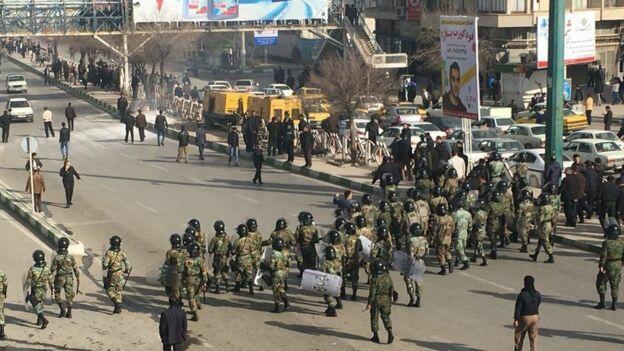
"Their primary target is Mohammad Bagher Ghalibaf, the veteran parliamentary speaker who led talks to US vice-president JD Vance in Pakistan earlier this month. Politicians linked to Paydari, an influential ultra-hardline faction, suggested that negotiators have not fully followed directives set by the new supreme leader Ayatollah Mojtaba Khamenei," the publication continues.
As for definitions, there's also the problem of the West imposing broad brush labels of 'hardline' and 'moderate' from afar, based fundamentally on speculation and we might say, circular logic. After all, any Iranian official who is against pursuing more negotiations - while understandably coming to the conclusion that Washington can't be trusted (after it bombed Iran twice during talks) - gets automatically labelled 'hardliner' by the MSM, and this also carries all kinds of implications overlapping with radical Islam.
But yes, there are clearly holdouts pushing for Tehran not to engage at all, to completely shutter communications, which would likely mean certain return to war:
"Negotiations are now pure damage and nobody should go for negotiations," Mahmoud Nabavian, a member of parliament close to the Paydari who accompanied Iran’s negotiating team to Pakistan, told local media.
And another key section from the report is in the following:
He [Nabavian] criticized inclusion of Iran’s nuclear programme in talks as a “strategic mistake” and implied this is not what the top leader sought. Another hardline politician, Ali Khezrian, claimed to state television that the supreme leader opposed continuing the talks.
Officials “should know that at this sensitive time their obligation is to thoroughly obey and carry out the guidelines of the supreme leader,” Nabavian said.
On Monday, 261 out of 290 MPs issued a statement supporting Ghalibaf and the other negotiators. However, prominent members of Paydari were absent from the list of signatories.
The longer the Hormzu standoff goes, and the more the anti-Tehran rhetoric flows out of the White House and from Trump on Truth Social, the more likely the Paydari faction and others are to influence broader numbers of Iranian leaders and sectors of the public.
Another source (Saudi-funded and Israeli-linked) says "The confrontation largely pits supporters of former nuclear negotiator and National Security Council member Saeed Jalili against allies of his longtime rival, parliament speaker Mohammad Bagher Ghalibaf, who recently led Iran’s delegation in talks in Islamabad."
There's also what war historians and analysts of military doctrine call the rally round the flag effect. This observable trend shows time and again that the more a country gets attacked and isolated, the more that the population rallies around the authorities - which are the only resistance to aggression - and at the same time the 'regime' and its institutions harden.
Trump's Iran war, now about to reach its nine weeks, has taken a somewhat predictable extended path with each side still locked into zero sum demands:
Good news from Reuters: Iran's government is showing signs of fracture after killing of Khamenei.
— Andrew Day (@AKDay89) March 7, 2026
The bad news: The senior commanders frustrated with interim government want a more hardline stance and aggressive war strategy. pic.twitter.com/HaWgSXlz3B
Thus far, US officials have at various (early) points predicted the overthrow of the Islamic Republic, but this has not happened; instead, Tehran is enduring and in the end may become less moderate than it was before. It seems to survive while waging asymmetric warfare to make the pain unbearable (whether economic or political) for Washington.