





Houthis Unleash Large Missile, Drone Barrage On Saudi Arabia, Target Riyadh Airport & Aramco Facility
Summary
Saudi-backed forces launch major counteroffensive with roughly 100 Saudi fighter jets supporting attacks along the Red Sea coast.
Mocha's status remains disputed: Government forces claim to have retaken the strategic port, while Houthis deny the loss.
Houthis announce major missile & drone attack on Saudi territory, including against international airport in Riyadh.
Houthi fighters reportedly seize homes of senior government figures, including Parliament Speaker Sultan al-Barakani's mansion.
Bab el-Mandeb is increasingly at risk, raising concerns for Red Sea shipping and the wider Suez trade route.
Houthis Launch Missiles/Drones On Saudi Territory
The Houthis have announced in the late evening (local) their forces have launched a large missile and drone attack on Saudi Arabia's territory. The group has announced it again targeted King Khalid Airport in Riyadh as well as the Aramco refinery in Rabigh.
Air traffic halted at Riyadh airport due to a Houthi attack, via Sabereen
An official statement also listed that Abha Airport, Khamis Mushait Airbase and sites in Najran and Jazan provinces in Saudi Arabia were targeted in the missile and drone wave.
On the other side, the Saudi coalition says it is engaged in operations across Yemen's Hodeidah governorate. It has some 100 warplanes for the operation, prior Monday statements indicated.
Monday witnessed Saudi coalition air strikes on Kamaran Island and al-Salif District in Hodeidah governorate, according to Al Jazeera.
Saudi Coalition Fighting to Retake Mocha, Bab al-Mandab Strait Region
Yemeni Saudi-backed forces have announced the takeover Mocha city, west of Taiz province, according to government-affiliated Saba news. While as yet unconfirmed, this would be a significant reversal as the Saudi-coalition seeks to regain the Red Sea coast, with air support from some 100 Saudi coalition warplanes operating overhead.
Coalition spokesman Maj. Gen. Turki Al-Maliki said 324 “high-value targets” had been destroyed since the operation began. “100 fighter jets participated at dawn today in Operation Dawn of Yemen,” Al-Maliki said in posts on X, adding that the coalition was providing round-the-clock air support to Yemeni armed forces on the ground.
"Saba quoted a responsible military source as saying that the joint forces engaged in clashes in a number of locations surrounding Mocha, during which various types of weapons were used, and which, according to the source, resulted in deaths and injuries among the Houthis, the capture of a number of their members and the escape of others," a regional source writes.
On Monday reports are emerging that the Houthis may have lost Mocha, in what would be a hugely symbolic setback if accurate:
Houthis just lost Mocha
— Zineb Riboua (@zriboua) October 5, 2026
However, some prominent regional watchers are disputing this:
The reports circulating on Saudi-affiliated channels about their forces controlling Mocha and Bab al-Mandab are false and baseless. This video is currently live from the city of Mocha. https://t.co/6C0POZWjQM
— ابراهيم ناجي Ibrahim Naji (@Ibrahym22Nagi) October 5, 2026
Meanwhile a US Embassy alert for Americans in Saudi Arabia...
“Due to the ongoing security situation in Saudi Arabia and the potential for aerial drone or missile attacks on Saudi Arabia, the US Mission strongly encourages all US citizens to remain vigilant and follow the guidance of national alerts released by Saudi Arabia’s Civil Defense,” it posted on X.
Mansion Seized: Saudi-backed speaker of the Yemeni House of Representatives
Iran-aligned Houthi forces have seized the home of Yemen's parliament speaker, Sultan al-Barakani, during a lightning advance south of Taiz that has also cut one of the government's most important remaining supply routes, according to reports.
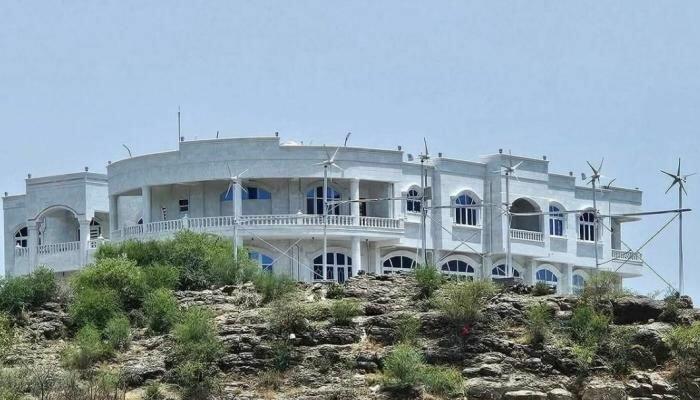
Multiple Yemeni and regional outlets reported Sunday that Houthi fighters entered al-Barakani's residence in Wadi al-Barakani, south of Taiz, and established positions inside. Al-Araby Al-Jadeed reported the seizure citing field sources, while Al-Ain placed the property in the Al-Ma'afer district and said the Houthis occupied it following heavy fighting with Yemeni forces and local residents. China's Xinhua subsequently quoted a Yemeni government official confirming that Houthi forces had captured the al-Barakani area containing the parliament speaker's house.
Aden Al-Ghad later published video which it said showed Houthi fighters entering the property. Footage circulated by the open-source researcher @war_noir shows armed men moving through a large reception hall lined with seating, then cuts to the white compound on the hillside.
#Yemen 🇾🇪: Ansar Allah (#Houthis) captured mansion of the Sultan Al-Barakani; Saudi-backed speaker of the Yemeni House of Representatives.
— War Noir (@war_noir) October 4, 2026
The Ansar Allah members who raided Al-Barakani's house appear to be armed with rather common Chinese Type 56-1 assault rifles.
Al-Barakani has served as speaker of the internationally recognized Yemeni parliament since 2019 and remains one of the most prominent political figures aligned with the anti-Houthi camp - so images of Houthi fighters inside his residence therefore make for obvious propaganda.
Taiz's Lifeline Is Cut
The Houthis' advance through southern Taiz governorate has severed the critical road network connecting Taiz with Aden, the temporary capital of Yemen's internationally recognized government.
The Critical Threats Project and Institute for the Study of War assessed Sunday that Houthi forces advanced through al-Safiyah and al-Mansora before capturing the strategically vital town of al-Turbah, citing geolocated imagery as well as Yemeni sources.
Al-Turbah sits at the junction of the two main roads connecting government front-line positions around Taiz with Aden.
CTP/ISW warned that Houthi control there will likely "severely constrain" the government's ability to reinforce and resupply forces across Taiz governorate.
Looks like the Houthis are now using fiber optic drones https://t.co/ZAjqwFnC4b
— Open Source Intel (@Osint613) October 5, 2026
Control of the roads south of Taiz could also deny government troops an obvious escape route if the Houthis continue closing the ring around the city.
The Houthis had already demonstrated that they did not need to physically occupy every junction to cripple the route. Earlier attacks damaged sections of the Taiz-Aden ground line of communication, forcing government forces onto increasingly limited alternatives. Fighting on the Taiz axis was already underway in the days before the house seizure: government troops firing on Houthi positions, and Houthi fighters claiming Jabal al-Habashi.
#Yemen 🇾🇪: A member of the PLC Forces opening fire against Ansar Allah fighters during the recent clashes on #Taiz Axis.
— War Noir (@war_noir) October 3, 2026
The PLC member is notably using a Belgian FN Minimi TR light machine gun — it was very likely obtained from UAE / Saudi-led Coalition stocks.
#Yemen 🇾🇪: Ansar Allah (#Houthis) reportedly captured Jabal Al-Habashi from PLC Forces on #Taiz Axis.
— War Noir (@war_noir) October 3, 2026
Ansar Allah members is operating at least one technical that appears to be armed with a possible KPV / ZPU 14.5x114mm heavy machine gun.
The Front Has Been Moving For Weeks
On September 10, we reported that the Houthis had seized the strategic port of Mocha as government forces abandoned positions along Yemen's western coast, dramatically increasing Houthi leverage over the Bab el-Mandeb shipping chokepoint.
The following days brought additional Houthi gains around the Red Sea coast and Bab el-Mandeb, while Saudi-backed formations struggled to stabilize the front. As we also noted, the group was accumulating actual coastal territory overlooking one of the most important maritime passages on the planet. By late September, the crisis had become serious enough that Yemen's Saudi-backed leadership was publicly calling for broader mobilization.
On Monday reports are emerging that the Houthis may have lost Mocha, in what would be a hugely symbolic setback if accurate:
Houthis just lost Mocha
— Zineb Riboua (@zriboua) October 5, 2026
As we reported Saturday, Saudi Arabia and Yemeni government forces were preparing a force potentially exceeding 100,000 troops for a major counteroffensive aimed at retaking the Red Sea coast and securing Bab el-Mandeb.
Saudi officials had again sought direct American military involvement, according to reporting cited at the time, but Washington declined to provide the airstrikes Riyadh requested as cover for the ground campaign, while leaving open intelligence and other support.
On Sunday, Presidential Leadership Council chairman Rashad al-Alimi declared that the government was moving from preparation to action. We covered his announcement Sunday as he ordered military operations intended to retake Houthi-held territory across Yemen.
The Counterattack Has Begun
Reuters reported that Saudi-backed Yemeni forces, supported by Saudi air power, had attacked Houthi positions around the Dhubab district overlooking Bab el-Mandeb and claimed to have seized several key positions, including the Dhubab airstrip.
The Houthis disputed the government's claims, and fighting remained underway. Later Monday, Information Minister Moammar al-Eryani claimed government forces had secured "effective control" of the Bab el-Mandeb Strait, which the Houthis called false, even as a government source said fighting continued at a military base near the strait. Video from the coast showed an Al Arabiya correspondent with government forces coming under what the outlet described as a Houthi ballistic-missile attack near the strait.
🇾🇪🇸🇦 | Un correspondant d’Al-Arabiya s’apprêtait à passer à l’antenne lorsque les Houthis ont lancé des missiles balistiques contre les forces du PLC avec lesquelles le journaliste est présent, près de Bab el-Mandeb.
— Arab Intelligence (@Arab_Intel) October 5, 2026
Reuters described Taiz as increasingly encircled as Houthi forces pushed toward al-Mawasit even while government troops launched their coastal counterattack.
The Associated Press likewise reported Monday that the Saudi-led coalition had intensified its air campaign as government forces began a major offensive along the Red Sea coast following the Houthis' latest territorial gains. The coalition said 100 fighter jets were backing the government's forces.
And Now The President's Residence?
On Monday, Xinhua cited Yemeni sources saying Houthi forces had entered the al-Aloum area of al-Mawasit district, where the family home of Presidential Leadership Council chairman Rashad al-Alimi is located.
Houthi-aligned media went further, claiming the residence itself had fallen. Video posted Monday shows fighters posing, praying, and celebrating outside a large multi-story building, with a Yemeni flag raised on the roof. @war_noir and Yemeni accounts identified the site as al-Alimi's family house.
#Yemen / #SaudiArabia 🇾🇪🇸🇦: Ansar Allah (#Houthis) captured the house of the Saudi-backed “Rashad Al-Alimi” — President of the Presidential Leadership Council (PLC) !
— War Noir (@war_noir) October 5, 2026
Ansar Allah fighters appear to be armed with AK-103 pattern assault rifles and common Chinese Type 56-1 rifles.
الحوثيين من أمام منزل الرئيس رشاد العليمي ومسقط رأسه في تعز.
— د.بن سعيد | Bin Saeed (@Bin_S_aeed) October 5, 2026
Reuters has not verified the reported seizure of al-Alimi's home, though UAE-based Erem News, citing local sources, reported Monday that Houthi fighters took the house, where his relatives live, without resistance.
Beyond Yemen
Yemen's war - comparatively frozen since the UN-brokered truce of 2022 - has suddenly erupted across multiple fronts.
Bab el-Mandeb connects the Red Sea and Suez route with the Indian Ocean. The Houthis have already demonstrated the ability to threaten commercial shipping using missiles, drones and unmanned vessels; territorial control around the chokepoint adds an entirely different dimension to that threat.
As we have has been documenting for months now, the Red Sea has also become increasingly important to Saudi energy exports as turmoil elsewhere in the region places pressure on alternative routes.