





Report Alleges Houthis Building Advanced Missiles With Help From China
It should come as no surprise that Iran maintains powerful allies even while under threat of US bombs, and as Washington sanctions have sought its complete isolation. Most obvious among these remain Russia and China - nations which have not necessarily sought to 'hide' or conceal political and even military support to Tehran.
The last several weeks have seen a new Iran conflict-related front opened up in the Middle East. Saudi Arabia and the Ansar Allah movement of Yemen (the Houthis) are now in a state of open war.
Houthi ballistic missiles are raining down on Saudi airports and Aramco facilities on a daily basis, resulting in a full-blown crisis for the kingdom, which is urging allies to come to its defense.
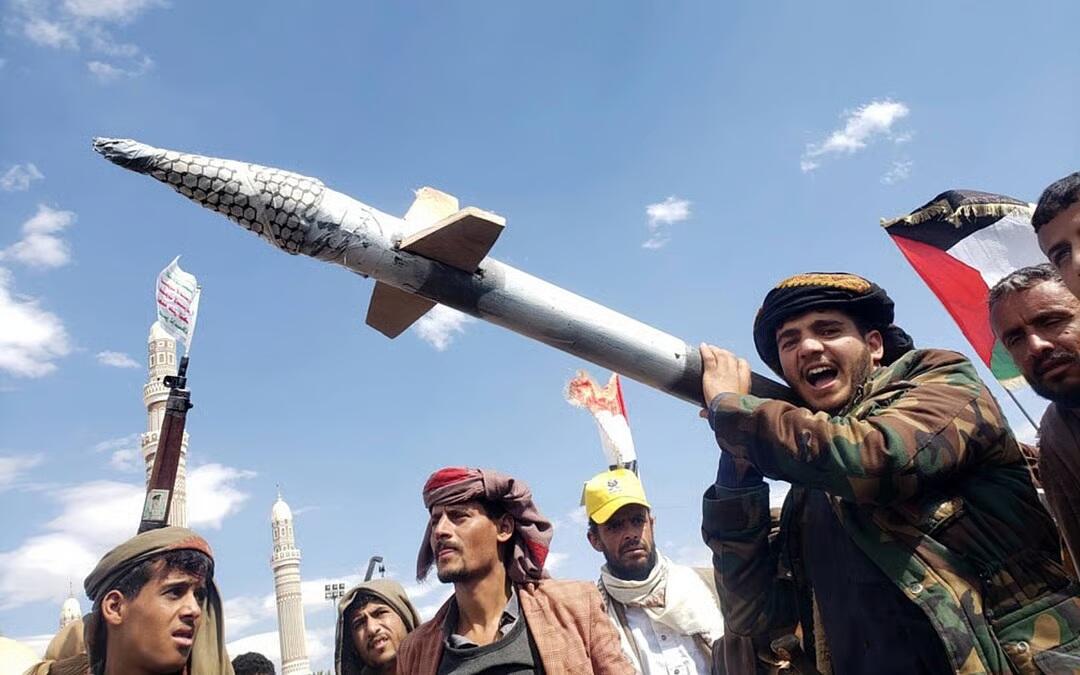
A fresh report in The Wall Street Journal finds that Chinese parts are becoming a key element of some new Houthi missile systems - weapons which have been a surprise and shock to the kingdom and its Western allies, given the number of impacts on targets of late.
"Houthi militants are attempting to produce their own advanced medium-range ballistic missiles using Chinese-delivered parts, a new report shows, a technological advance that would raise the threat posed by the Iran-backed group," WSJ writes.
The report relies heavily on the findings of an international weapons and conflict monitor:
The Houthis shipped in from a Chinese supplier a range of components needed to make a version of one of Iran’s most powerful weapons, the Kheibar Shekan Iranian precision-guided missile, said the report by Conflict Armament Research, a group that works in conflict zones and reports on the use of weapons and their supply chains. The Houthi missile would have a range up to about 1,200 miles, putting all of Saudi Arabia and Israel within reach.
Iran used the Kheibar Shekan—a cheap, mobile, precision weapon first displayed in Tehran in 2022—against American bases with some success during the war with the U.S. last spring, The Wall Street Journal has previously reported.
One caveat here might be to point out that Chinese components in complex electrical or even weapons systems are diffuse across the world - so it remains a big open question how 'direct' or not the supply chain might be in this case.
However, Conflict Armament Research has sought to answer this. "The local ambition of the Houthis for manufacturing is beyond what was previously assumed,” said Fabian Hinz, a senior analyst at the organization. "These types of parts are very specific, and producing them would have required design information related to the missile."
As for China's official stance on the ratcheting conflict, its foreign ministry on Monday condemned Houthi attacks on Saudi airports. "China condemns the attacks that caused heavy casualties and expresses serious concern over the intensification of the conflict," foreign ministry spokeswoman Mao Ning said.
"We call on relevant parties to avoid taking actions that escalate regional tensions, to resolve differences and disputes through dialogue and negotiation, and to achieve peace and stability in the region at an early date," Mao added. It would be an explosive and highly sensitive situation if Beijing were actually directly assisting a non-state actor like the Houthis in missile development. This is something China will likely vehemently deny.