





Taiwan's President Ratchets Anti-China Rhetoric In Party Speech: Must Resist 'Red Terror' Of Beijing
President Lai Ching-te said on Sunday that Taiwan must renew efforts to protect its democracy and never become part of China. He urged members of his Democratic Progressive Party (DPP) to oppose the "red terror" coming from Beijing.
The ruling DPP champions Taiwan's separate identity from China, and is working to combat what Lai called China's "legal warfare".
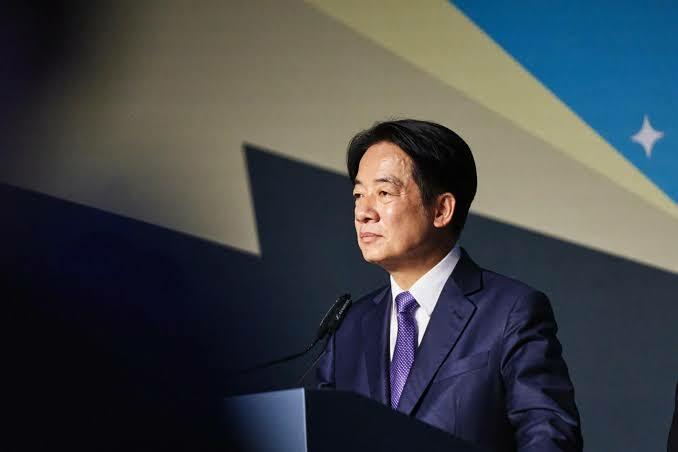
"I also expect comrades within the party to stand on the front lines, unite as one, and jointly oppose the threat posed by China's 'red terror' to Taiwanese society," Lai added, speaking in Taiwanese, rather than the main language of government, Mandarin.
"We must work together to protect our democratic and free way of life, and absolutely never allow 'democratic Taiwan' to turn back and become 'China's Taiwan'," he said.
"Regardless of ethnic group, regardless of who came earlier or later, anyone who identifies with Taiwan is a master of the country. Taiwan's future must be decided jointly by the 23 million people of Taiwan," he said.
One establishment US publication has held up a prime example of Beijing's "legal warfare" against an autonomous Taiwan in the following:
On March 12, China’s legislature adopted the Law on Promoting Ethnic Unity and Progress (Chinese; English translation), a sweeping new statute that codifies Beijing’s approach toward China’s 56 officially recognized ethnic groups. Substantively, the law enshrines a decades-long shift towards aggressive assimilationist policies. Structurally, it reflects a deepening merger of Party ideology and state law that is becoming increasingly prevalent under Xi Jinping.
This new law is the culmination of a policy trajectory that has been building for over a decade, dating back to the 2014 Central Ethnic Work Conference. Under Xi, Beijing is steering away from the post-1949 legal framework of nominal ethnic autonomy (albeit under tight Party control) imported from the Soviet Union. In its place, officials have steadily been pivoting towards what scholars have termed “second-generation ethnic policies”—an aggressive assimilationist approach that emphasizes a common Chinese national identity over accommodation of ethnic differences. Provincial and municipal authorities across China have enacted a wave of local “ethnic unity and progress” regulations in recent years, such as those in Xinjiang (2015) or Inner Mongolia (2021). The new national legislation elevates this approach to the level of a national statute governing all of China.
The new law’s core concept is captured in the term zhulao – to “forge” or “cast” metal – and its instruction that “forging the communal consciousness of the Chinese nation” is core to the Party’s ethnic policies. As James Leibold has pointed out, this phrasing reflects a hardening of Beijing’s political line under Xi Jinping – explicitly written into the Party’s Charter at the 19th Party Congress in 2017 – aimed at “melting” subnational and ethnic identities into a shared collective one.
Meanwhile, on a global stage Beijing has continued to present itself as the only peace guarantor and as a force for stability and is seeking 'Taiwan's willing participation' - at a moment the Middle East is on fire largely as a result of American policy and quickness to result to force and surprise attacks.
President Donald Trump suggests the United States might not come to Taiwan’s aid if China attacks, arguing that Taiwan “took” America’s advanced semiconductor business and should therefore pay more for its own protection. — @atrupar (July 2023)pic.twitter.com/WNMUZe6IUf
— The Intellectualist (@highbrow_nobrow) July 19, 2026
And yet, President Trump has of late publicly touted his personal relationship with Chinese President Xi Jinping as "amazing". Planned weapons deal with Taiwan have been indefinitely put on hold as Washington tries to repair relations with Beijing.