


Has Apple Peaked?
Submitted by QTR's Fringe Finance
There’s no disputing that Apple remains one of the greatest companies in the history of capitalism. Its products are still insanely popular, its ecosystem remains one of the most powerful competitive advantages in modern business, and its stock continues to enjoy the kind of institutional affection that most publicly traded companies could only dream of.
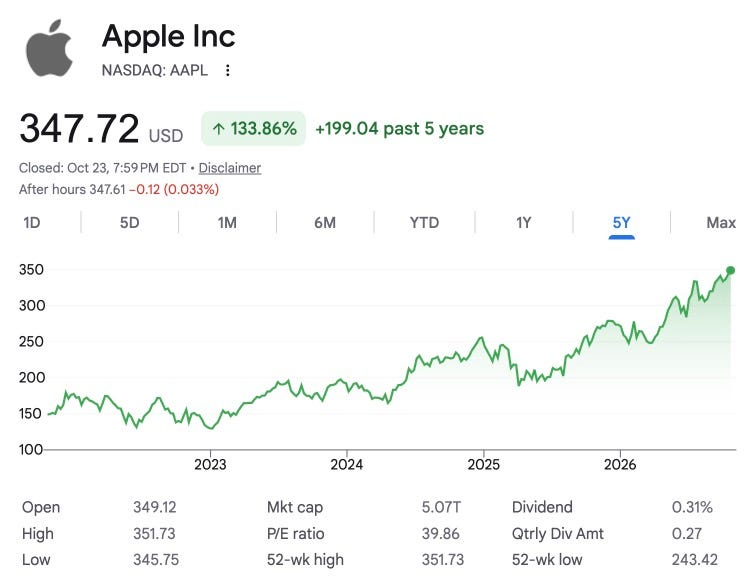
Shares are up roughly 28% year to date and 133.8% over the last 5 years, the company continues to generate enormous amounts of cash, and Wall Street still treats Apple as financial royalty. And much of that reputation has been earned. 12 years ago when I was still writing on Seeking Alpha I called it “the perfect stock for anyone”.
“No matter what you’re looking from in a long position, Apple can fit that mold and provide long-term gains,” I wrote in 2014. Split adjusted it was trading about $20 per share at the time, so it’s up about 15x since then.

Look at how different the world was back in 2014. Google, Microsoft and Apple were trading with PE ratios of 15x, 15x and 13x respectively. Part of my argument back then was multiple expansion to 16x to 20x earnings. I’ll pause for laughter.
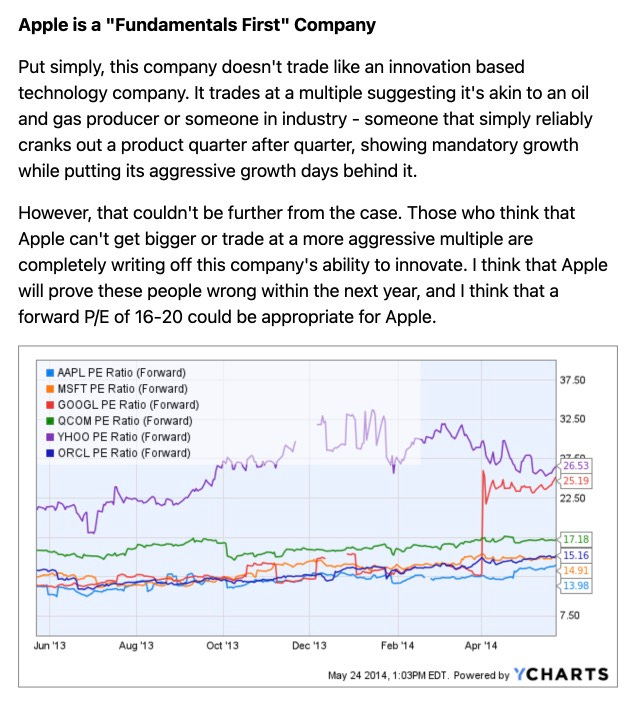
Today, Apple trades at 40x earnings. And seems to be out of good ideas.
In those 12 years since my 2014 piece. I really didn’t say a truly bearish word about Apple, but for some complaints about the company’s lack of innovation that I will bring to a head in this article.
Over the last quarter century, Apple has built an ecosystem so indispensable to its customers that leaving it feels less like switching products and more like moving to another country.
But at roughly 40x earnings, Apple is no longer priced like a mature consumer technology company. It’s priced like a company that can do virtually no wrong, despite a growing body of evidence that it is, in fact, doing plenty wrong. Not in ways that are going to bankrupt the company or suddenly convince hundreds of millions of loyal iPhone owners to abandon their devices, but in smaller, subtler ways that suggest something fundamental has changed inside Cupertino.
And while I recognize that criticizing Apple has been a fantastic way to look like an idiot for most of the last two decades, I think investors would be wise to start paying attention.
Back in June, I wrote an article called Apple’s Aura Is Starting To Crack, arguing that the company’s greatest competitive advantage might be beginning to erode. At the time, I wrote: “The story here isn’t that Apple is failing. The story is that for the first time in decades, it no longer looks infallible.”
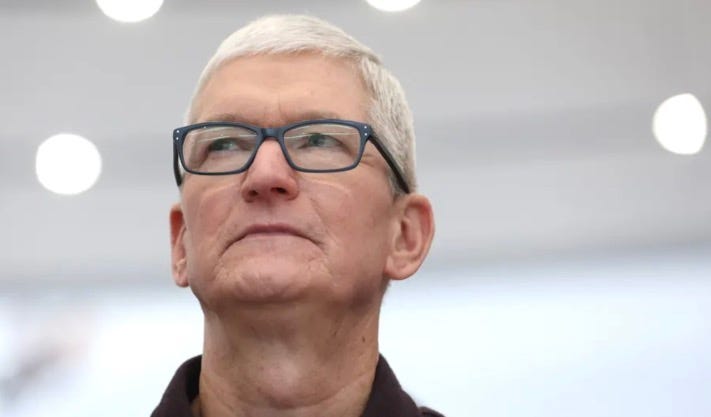
I explained that the warning signs of corporate stagnation are often subtle: a missed technological shift, a disappointing product launch, or a culture that gradually moves from leading to reacting. Four months later, I’m increasingly convinced those cracks are becoming visible in the very products Apple is supposed to make best.
The latest example is the iPhone Duo, Apple’s entry into the foldable smartphone market. After looking at this thing, I’m beginning to wonder whether anybody at Apple remembers what made its products special in the first place.
For context, I worked at Apple during the original iPhone launch in 2007 and have followed the company closely since the 1990s, through its darkest days, Steve Jobs’ return, and its transformation into a multitrillion-dollar giant. What always distinguished Apple wasn’t necessarily its technology, but its taste. Jobs and Jony Ive were obsessive about design, making products that looked and felt exactly as they should. Every curve, seam, and button had a purpose. The best Apple products never looked like engineering compromises. They looked inevitable.
The original iPhone was perhaps the best example. It wasn’t the first smartphone, but next to the BlackBerrys, Palm Treos, and Windows Mobile monstrosities of the era, it looked like something from another planet. I remember being floored when I first used one in the store. The icons looked painted onto the screen, and the touchscreen felt flawless compared to anything else available.
One product looked like the future. Everything else looked like it belonged in a 1980s Soviet department store. That was Apple’s magic. It didn’t need to be first because, when it finally arrived, it made everybody else look like they’d been wasting their time.
Which brings me back to the iPhone Duo.
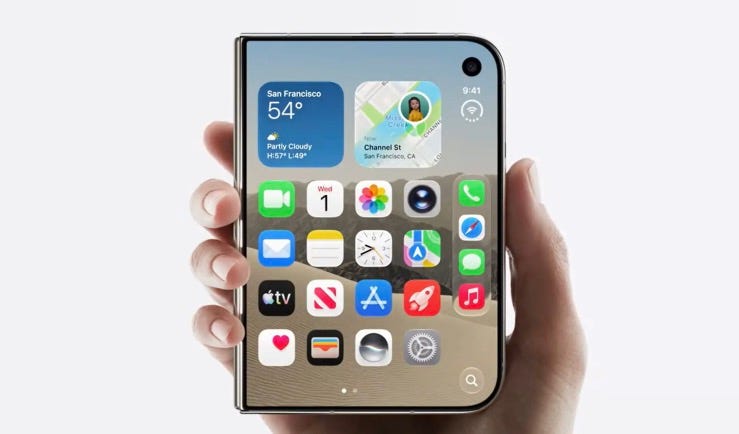
Closed, I can’t help but look at this thing and wonder what the hell happened to Apple’s design standards. The device looks uneven, awkward, and clunky. It lacks the clean, effortless symmetry that used to define Apple’s industrial design. Open it up, and you’re greeted by a visible crease running down the middle of the display, precisely the sort of compromise I would have expected Apple to refuse to ship until it had figured out how to eliminate it in the past.
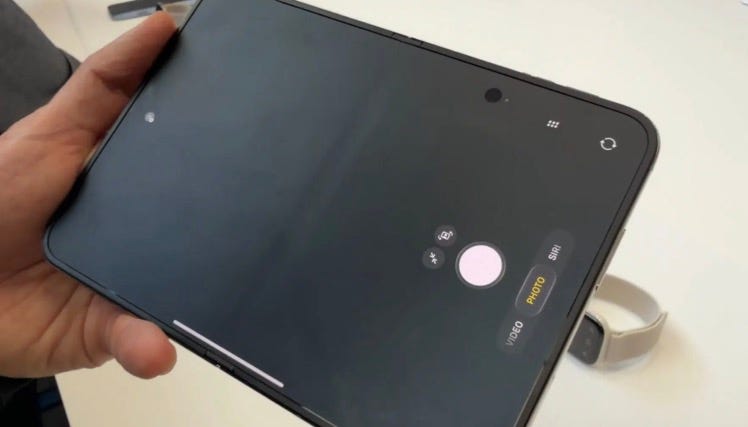
Instead of looking like the definitive Apple interpretation of a folding smartphone, it looks like something Samsung might have rushed to market several years ago.
I understand that foldable phones present difficult engineering challenges and that hinges, flexible displays, batteries, cameras, and durability all involve compromises. I’m also willing to concede that the Duo may sell extremely well, particularly given the almost religious devotion of Apple’s customer base.
But that doesn’t change my impression of the product. I find it almost impossible to imagine Steve Jobs and Jony Ive sitting around a conference table, looking at this design, and enthusiastically giving it their blessing. My suspicion is that the first person who brought it into the room would have been instructed, perhaps not particularly politely, to come back when it was finished.
Apple used to wait for competitors to make their mistakes before entering a category with something so polished it made everything else look obsolete. The iPod, iPhone, and Apple Watch weren’t first to market, but Apple made each category more intuitive, attractive, and desirable.
With the Duo, however, Apple seems to have embraced the same awkward design compromises that have plagued foldables for years. The engineering may be extraordinary, but the finished product looks like a compromise, something that once seemed incompatible with Apple’s design philosophy.
And it’s not the first time I’ve felt this way. The Duo reminds me of another product I suspect Apple’s old leadership would have sent straight back to the drawing board: the Vision Pro. I’ve criticized it since before launch, not because the technology isn’t impressive, but because I’ve never understood why ordinary people would want to regularly strap that ridiculous contraption to their faces.
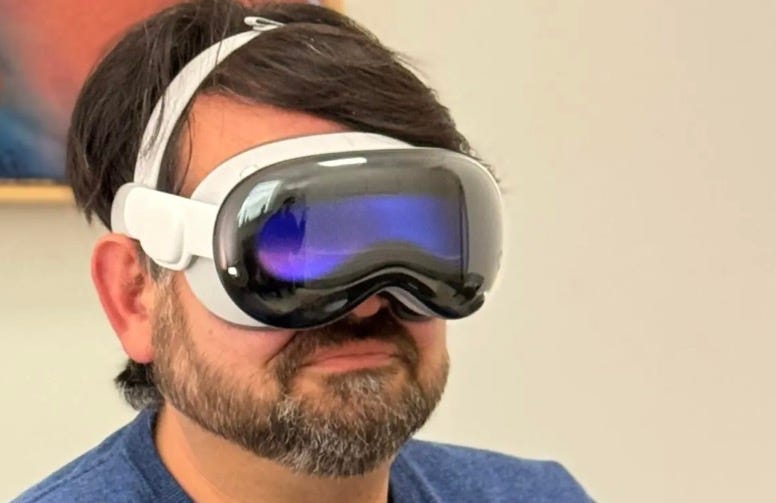
As I wrote in February 2025, I wouldn’t be caught dead walking around wearing one, regardless of how impressive the experience might be. I joked that the thing could transport me into an augmented reality Playboy Mansion where the Eagles were winning the Super Bowl on the TV. I still wouldn’t want to be the asshole sitting on his couch with a computer strapped to his forehead.
And then there was the external battery pack. Think about the absurdity of that for a second. The company that spent decades obsessing over removing unnecessary wires, buttons, ports, and visual clutter had developed a $3,499 headset that required users to wear a bulky computer on their faces while carrying a separate battery connected by a cable. I’m sorry, but I cannot envision Steve Jobs looking at that setup and saying, “Perfect. Ship it.”
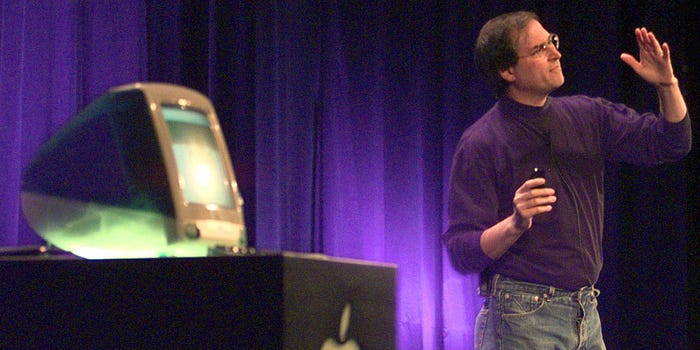
Commercially, the product has also struggled to demonstrate the mainstream demand that characterized Apple’s greatest hardware successes. Industry estimates have pointed to relatively modest sales volumes compared with the iPhone, Watch, or AirPods, while reports of reduced production plans and disappointing consumer interest reinforced the impression that Vision Pro remains a niche product.
Apple doesn’t disclose unit sales separately, so I wouldn’t pretend anybody outside the company knows precisely how the economics have worked out. But I think it’s fair to say the headset has hardly become the next iPhone. For a company that built its reputation on turning complicated technology into products everybody suddenly wanted, that’s a meaningful disappointment.
The larger problem is that Vision Pro and the Duo seem to reflect a similar shift in philosophy. Apple increasingly appears willing to mistake technical sophistication for genuine innovation. The company can undoubtedly build impressive things, but the question is whether those things actually make people’s lives easier, simpler, or better. That’s a distinction I think Steve Jobs understood better than almost anybody in modern business.
Great technology wasn’t enough. It had to be useful, intuitive, beautiful, and desirable. Otherwise, you were just building an expensive science project and hoping the marketing department could convince people they needed it.
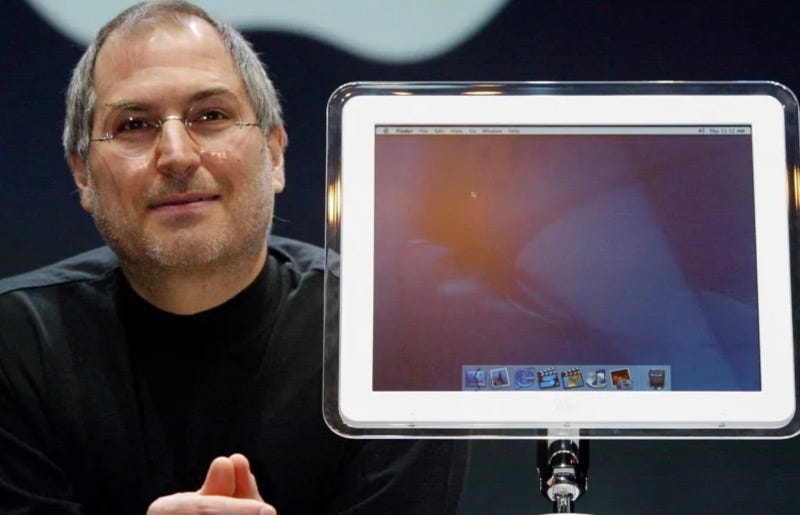
And if questionable hardware decisions were Apple’s only problem, I might be inclined to overlook them. But these developments are occurring while Apple is also struggling to establish itself as a leader in what may be the most important technological shift since the introduction of the smartphone: artificial intelligence.
I’ve been writing about Apple’s AI shortcomings for almost two years. In February 2025, I published The Market’s Mirror, Exhibit “A”, describing an interaction with my HomePod that was so embarrassingly stupid it almost felt like satire. While washing dishes, I asked Siri how many days were in February. Instead of answering a question most elementary school students could handle, Siri informed me that it couldn’t help and offered to send search results to my phone.
This was happening while Silicon Valley was busy explaining how artificial intelligence was about to revolutionize medicine, science, programming, finance, and virtually every other aspect of human civilization. Meanwhile, my Apple device apparently needed to consult the Library of Congress to figure out whether February had 28 days.
And while the interaction was funny, it was also revealing. Apple’s digital assistant had been around for more than a decade, yet the company was being embarrassed by AI products from competitors that had spent a fraction of that time building consumer-facing assistants. OpenAI was rapidly expanding ChatGPT’s capabilities, Google was integrating Gemini throughout its software ecosystem, and Anthropic was building increasingly sophisticated tools for coding, analysis, and professional workflows. Apple, meanwhile, was struggling to deliver the more personalized, context-aware Siri experience it had been promising customers.
To be fair, Apple has made progress with Apple Intelligence, and its emphasis on privacy and on-device processing is a legitimate differentiator. There’s also a reasonable argument that Apple doesn’t need to build the world’s most powerful foundational model to succeed in AI. It could ultimately become the primary consumer distribution platform for AI developed by other companies, much as it has successfully monetized technologies it didn’t invent.
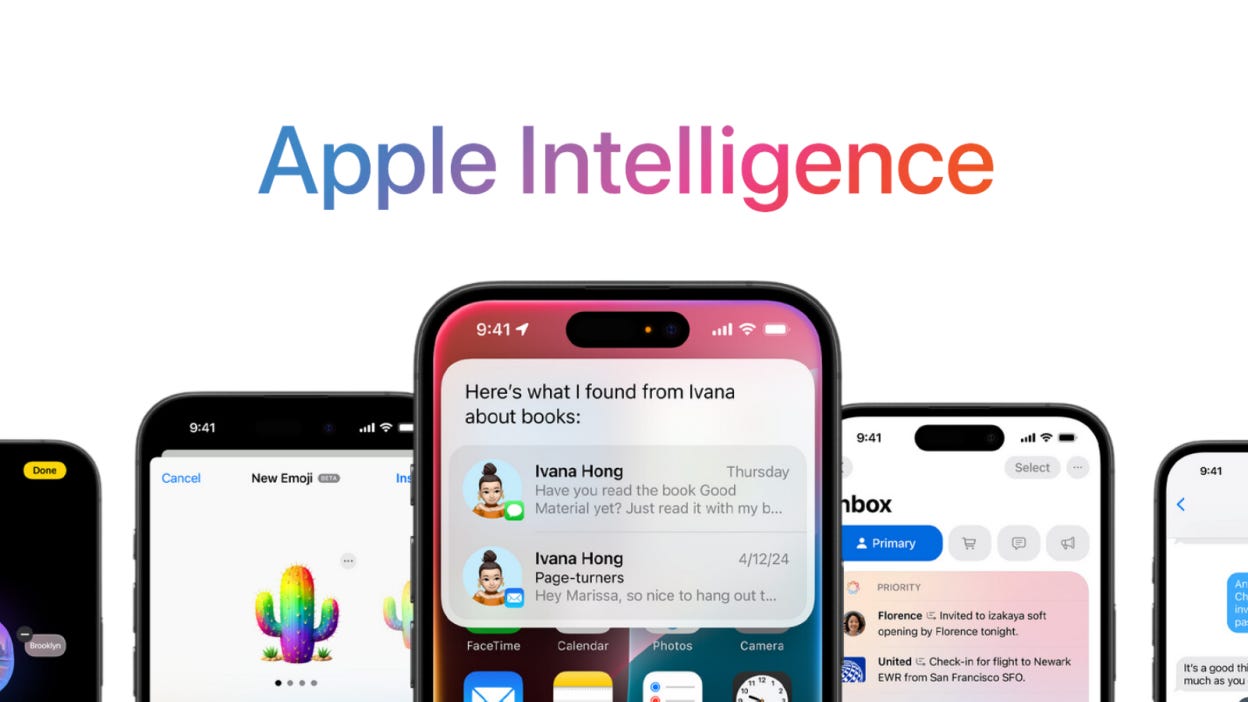
But that strategy comes with its own questions. If the most important intelligence running on an iPhone increasingly comes from somebody else’s models, how much of the economic value will Apple ultimately capture? And if competitors can offer comparable or superior AI experiences across different hardware platforms, does Apple’s ecosystem become more valuable or less differentiated over time?
These aren’t trivial questions for a company trading at 40x earnings. Apple has an enormous installed base, proprietary silicon, a deeply integrated operating system, and hundreds of millions of customers who already trust it with their digital lives. If any company should have been positioned to make artificial intelligence genuinely useful in everyday life, it was Apple.
Yet much of the most consequential innovation has come from elsewhere, leaving Apple in the unfamiliar position of responding to a technological revolution rather than defining it. Meta’s Ray Ban’s are leading in wearable glasses. OpenAI and Anthropic are leading in AI, though I think a bubble burst is coming soon for AI. And soon, someone could come for the golden goose and dethrone the iPhone.
Under Tim Cook, Apple became an extraordinary operating machine. Cook deserves enormous credit for transforming the company into a global financial juggernaut, expanding its services business, strengthening its supply chain, and creating an ecosystem that produces recurring revenue on an almost unimaginable scale. His tenure will go down as one of the most financially successful in corporate history.
But there’s a reason he’s leaving now.
None of these complaints, taken individually, should be enough to change an investor’s thesis on Apple. The problem is their accumulation. The awkward foldable phone, the unwieldy headset, the AI delays, the questionable software gimmicks, and the growing sense that the company is more interested in adding features than refining experiences all point toward something worth examining. It’s possible that Apple is gradually losing the extraordinary design judgment that once made it almost impossible to confuse its products with those of its competitors.
And that brings me back to the stock, because ultimately that’s where this becomes particularly interesting.
At 40x earnings, investors are paying $40 for every $1 of annual profit Apple generates, representing an earnings yield of just 2.5%. That’s a remarkably aggressive valuation for a company of Apple’s size and maturity, particularly when its most important hardware category operates in an increasingly saturated global smartphone market and its next major growth opportunity remains uncertain.
Apple is still an extraordinary cash generator, and its services business provides meaningful recurring, high-margin revenue. But the existence of a great business doesn’t automatically justify any price investors are willing to pay for it. That’s something the market has a funny way of remembering every few years, usually after forgetting it completely during the preceding bull market.
If Apple’s earnings remained unchanged and its valuation contracted from 40x to 30 times, the stock would fall 25%. At 25 times earnings, the decline would be 37.5%. And at 20x earnings, investors would be looking at a 50% haircut without the company losing a single dollar of annual profitability.
Of course, earnings won’t remain static, and Apple could grow into its valuation over time. But that’s precisely the point: at this multiple, the company needs to continue delivering exceptional results simply to justify the price investors are already paying. Any deterioration in growth expectations, competitive positioning, or investor enthusiasm could create significant downside, even if Apple remains one of the most profitable businesses on the planet.
And because Apple is one of the most widely owned stocks in the world, that potential downside isn’t confined to people who deliberately decided to buy its shares. Its valuation is embedded throughout the American financial system through index funds, retirement accounts, mutual funds, and ETFs.
In September 2023, I wrote that Apple could become a potential black swan for the broader market, not because I thought the company was going bankrupt, but because its enormous market capitalization, widespread ownership, and increasingly aggressive valuation created a dangerous combination. At the time, Apple was trading closer to 30x earnings, and I was already questioning whether the market had become too comfortable assigning an exceptional multiple to a company whose growth prospects were becoming less obvious.
Three years later, with the valuation even more demanding, I think that concern deserves renewed attention. A company doesn’t have to implode to become a serious problem for shareholders. Sometimes all that has to happen is for investors to stop believing it’s infallible. And when that company represents such an enormous portion of major equity indices, a shift in perception can have consequences far beyond the individual stock.
85% OFF FOREVER IF YOU SUBSCRIBE TODAY: I am again offering an 85% discount to anyone that wants to become a Fringe Finance annual subscriber today. It’s a discount you can keep and stays applied for as long as you wish to remain a subscriber: Get 85% off forever
To be clear, I’m not suggesting Apple is finished, that the iPhone is going away, or that its ecosystem is about to unravel. Hell, despite all the criticism I’ve written about Apple, I still use its products every day, and if you forced me to choose one technology ecosystem to live in for the next decade, I’d probably still choose Apple’s.
But that’s part of what makes this situation interesting. I can simultaneously believe that Apple remains one of the greatest businesses ever created and that it’s beginning to lose some of the creative discipline that made it great. I can appreciate the extraordinary financial accomplishments of Tim Cook’s tenure while questioning whether the company has maintained the industrial design and product innovation standards that characterized the Jobs era.
And I can recognize that Apple will probably continue making enormous amounts of money while wondering whether paying 40x earnings for that privilege makes any sense whatsoever.
In my June article, I wrote that Apple hadn’t jumped the shark, lost its edge, or surrendered its crown, but that the first cracks in its aura were becoming visible. Now, I think an AI crash is in the works for the broader market.
Looking at the Duo today, I’m beginning to wonder whether I was being too charitable. The product may sell well, and the engineers responsible for it may have accomplished something genuinely remarkable, but it doesn’t strike me as the kind of beautiful, uncompromising hardware that once made Apple the envy of the technology industry. Add the Vision Pro disappointment and the company’s struggles in AI, and I think there’s a reasonable argument that Apple’s reputation for flawless execution is increasingly resting on achievements from a different era.
For most of the last 25 years, Apple was the company that entered markets late and made everybody else look stupid. Lately, it seems increasingly content to enter markets late and ask consumers to accept many of the same compromises everybody else has already made.
Maybe Apple will rediscover that discipline. But the stock market has already given Apple considerably more than the benefit of the doubt. At 40 times earnings, investors are paying for continued greatness as though it were practically guaranteed, even as the company’s recent product decisions give us increasingly legitimate reasons to question that assumption.
Apple is still benefiting enormously from the innovation that made it great. I’m simply becoming less convinced that it’s innovating at the same level today. And while that might be an acceptable problem for a company trading at 15 or 20x earnings, I think it’s a much bigger problem for one trading at 40x.
--
QTR’s Disclaimer: Please read my full legal disclaimer on my About page here.