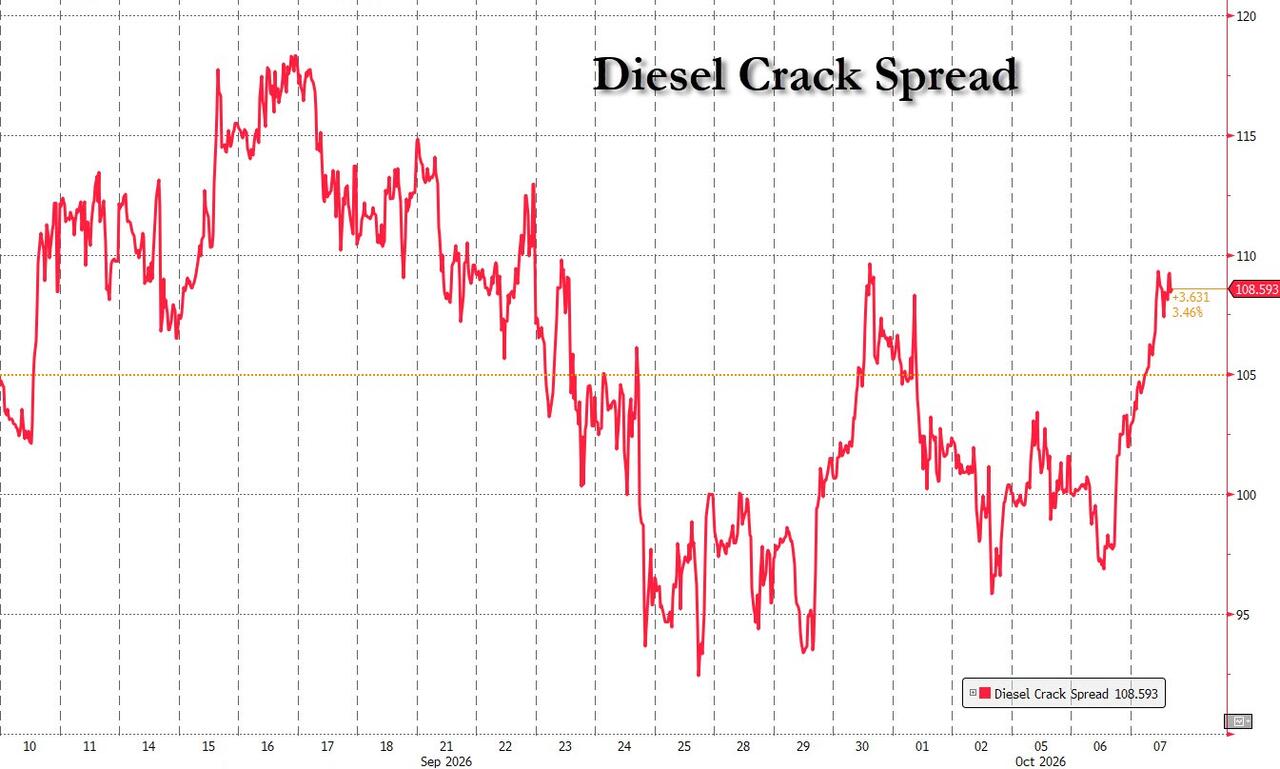
Oil Drops Despite 3.1 Million Drop In Crude Inventories, Diesel Spikes
Oil prices were largely unchanged, trading near session lows, after today's DOE inventory data affirmed the latest downbeat API prints from Tuesday afternoon, showing that the crude draw in the last week was even bigger than what API reported (-2.1MM), and far worse than the +1.9MM expected increase, printing at -3.186MM, the biggest draw in 6 weeks.
API
- Crude -2.1mm (vs +1.0mm last)
- Gasoline -1.4mm (vs +3.0mm last)
- Distillates +0.5mm (vs -0.3mm last)
- Cushing +0.9mm, (vs +0.2mm last)
DOE
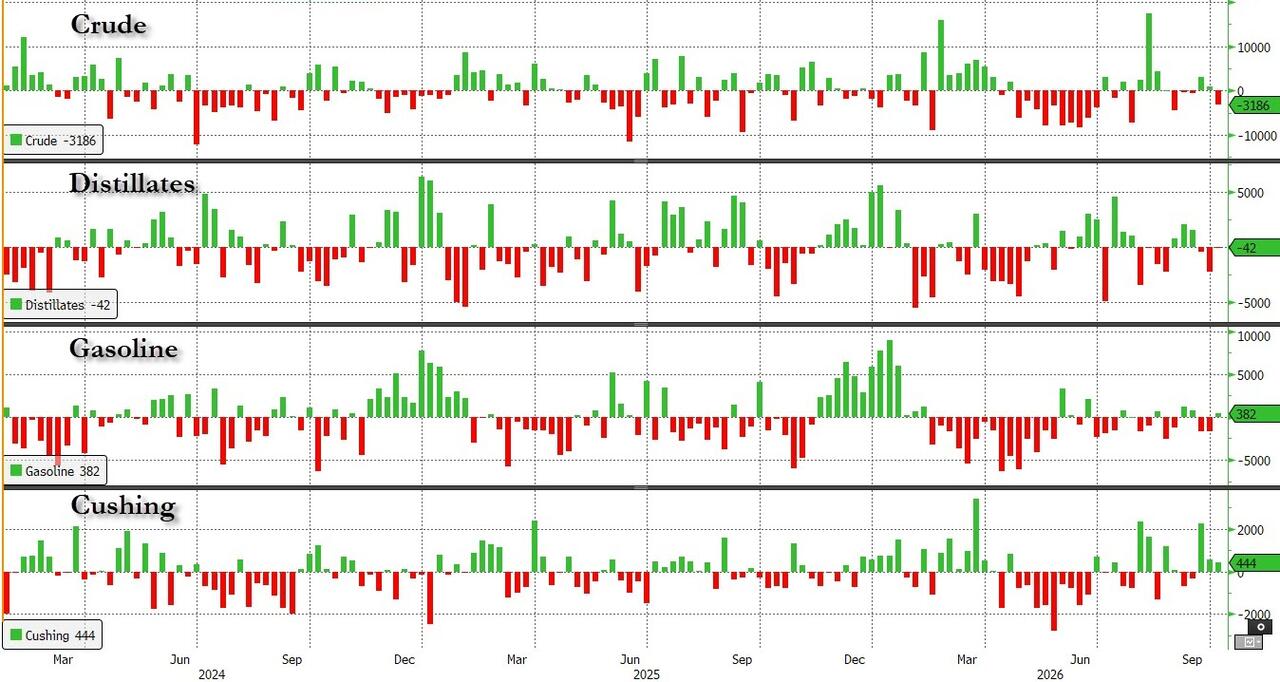
- Crude -3.186mm, the biggest drain in 6 weeks, and far below the exp. +1.915MM
- Gasoline +382k
- Distillates -42k
- Cushing +444K
And visually:
The decrease in commercial crude stockpiles was boosted by another 784,000 barrels withdrawn from the Strategic Petroleum Reserve.
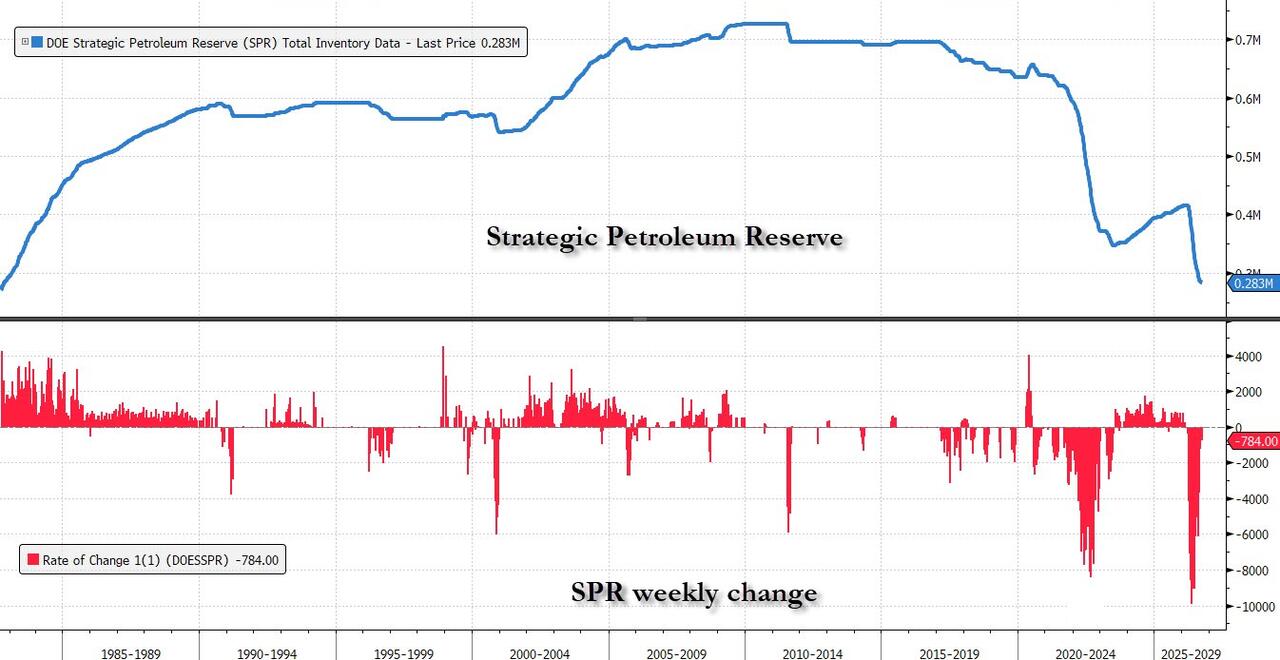
That increased the overall nationwide crude draw to 3.97 million barrels in the week leading up to Oct. 2. A total of 132.5 million barrels of crude has been taken out of the SPR since late March under a program to release 172 million barrels as part of a relief plan from the International Energy Agency aimed at lowering energy costs.
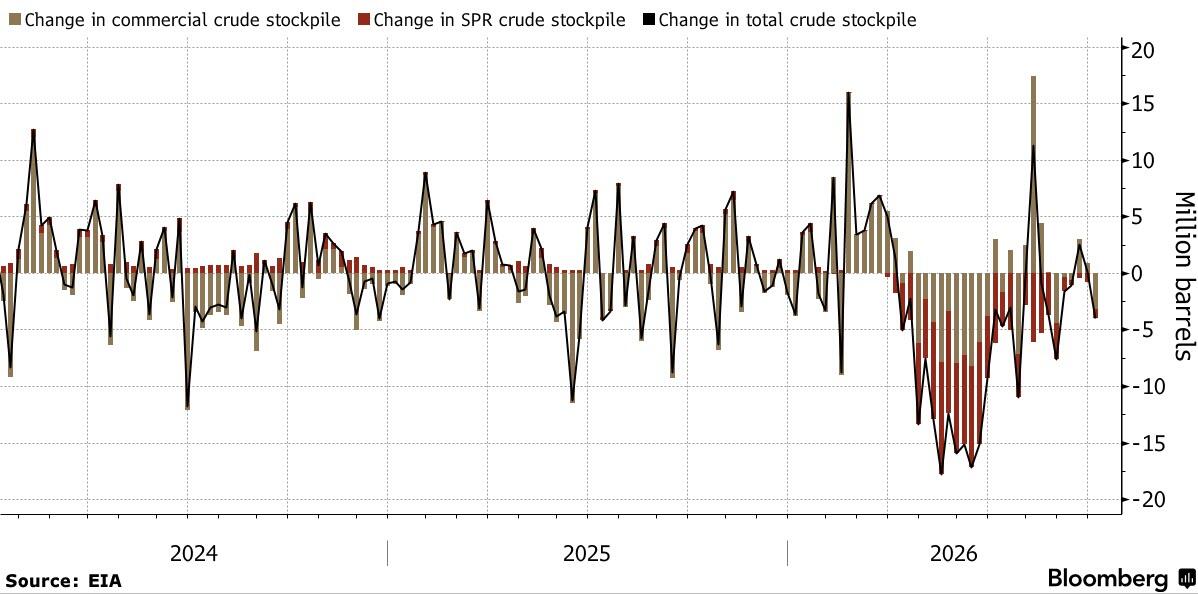
Meanwhile, Cushing stockpiles rose for the third consecutive week to 24.7 million barrels. That has inventories at the hub at the highest since May and even further away from the 20-million barrel mark generally seen as “tank-bottoms.”
Some more details from the report: distillate fuel stockpiles were down 42,000 barrels, while gasoline stockpiles rose around 380,000 barrels. Diesel futures are little changed, but gasoline futures appear to be selling off on the news, erasing most of the day’s gains to trade around $3.31 a gallon.
West Coast crude imports surged to the highest level since August 2025. There are a few potential reasons for that, but it’s likely tied to Middle East cargoes that loaded during a recent pause in hostilities. Imports into PADD 5 are now at about 1.6 million barrels a day and shipments last week rose by the most since April 2021.
With diesel spreads not too far from all time highs, and forcing refiners to pick between gasoline and diesel, the all important refinery crude runs rebounded following three weeks of drawdowns. Crude processing increased by 223,000 barrels a day and now are back to the highest on record for this time of the year.
And speaking of gasoline, Bloomberg suggests that the 1.4mm drop was less bearish than it seems. The additions to stocks occurred exclusively on the East Coast. Meanwhile in a reversal of last week's drop to all time lows, Midwest gasoline stockpiles posted a modest recovery, rising by just over 600K.
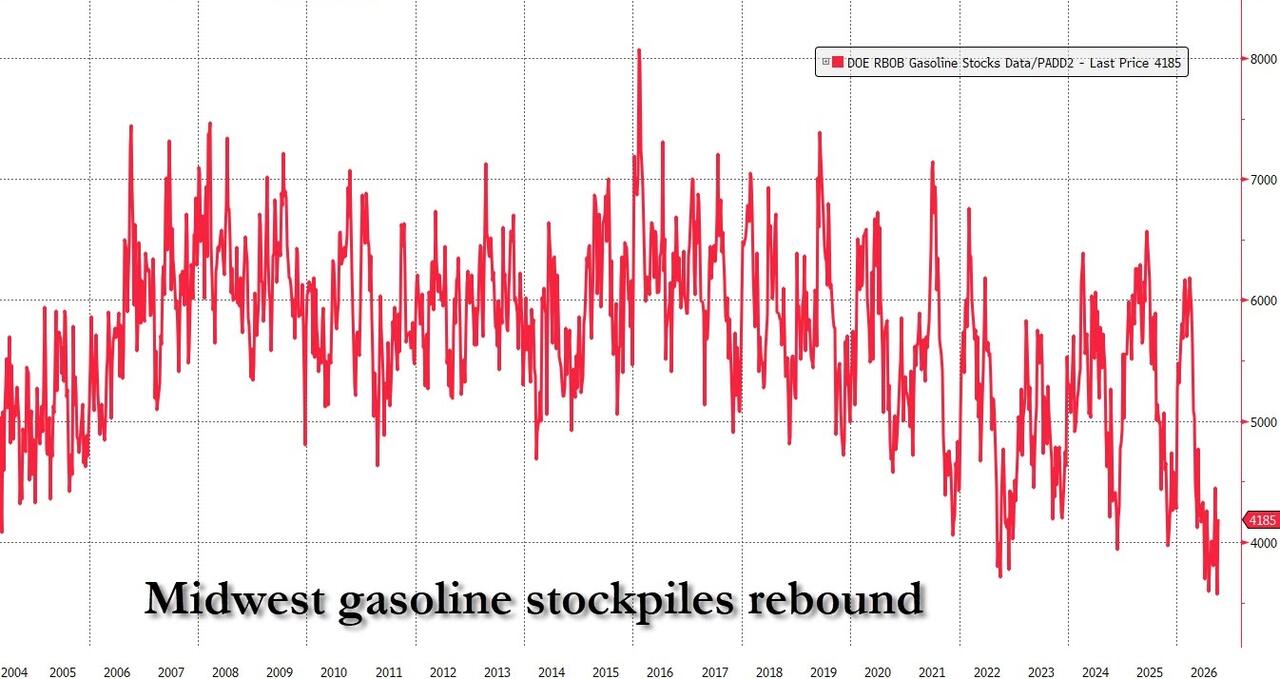
On the Gulf Coast, where the bulk of gasoline production occurs, stockpiles are at their lowest since September 2017.
Digging in a little further: The bulk of the gasoline stockpile additions occurred in the Central Atlantic, which encompasses Maryland, New York and Pennsylvania. The addition was considerably smaller in New England, and stockpiles actually fell in the Lower Atlantic states.
Also worth noting is that among all the talk of a diesel export ban, diesel exports surged 235,000 barrels a day to 1.76 million barrels a day. That’s the highest readout since August, and sets a new seasonal record. Meanwhile, diesel supplies on the East Coast ticked down once again last week. They’re now back where they were in early September and still sitting at the lowest they’ve ever been on record heading into the fall.
On the other side of the table, crude production rose to a new high of about 14 million barrels a day last week, up by 24,000 barrels a day from the previous week, and keeping pace with the recent surge in oil drilling rigs. Rebalancing the weekly numbers against the monthly figures published in the latest Short-Term Energy Outlook added “less than 50,000 barrels a day” to last week’s number. This increase came as one more rig was put into operation, according to Baker Hughes.
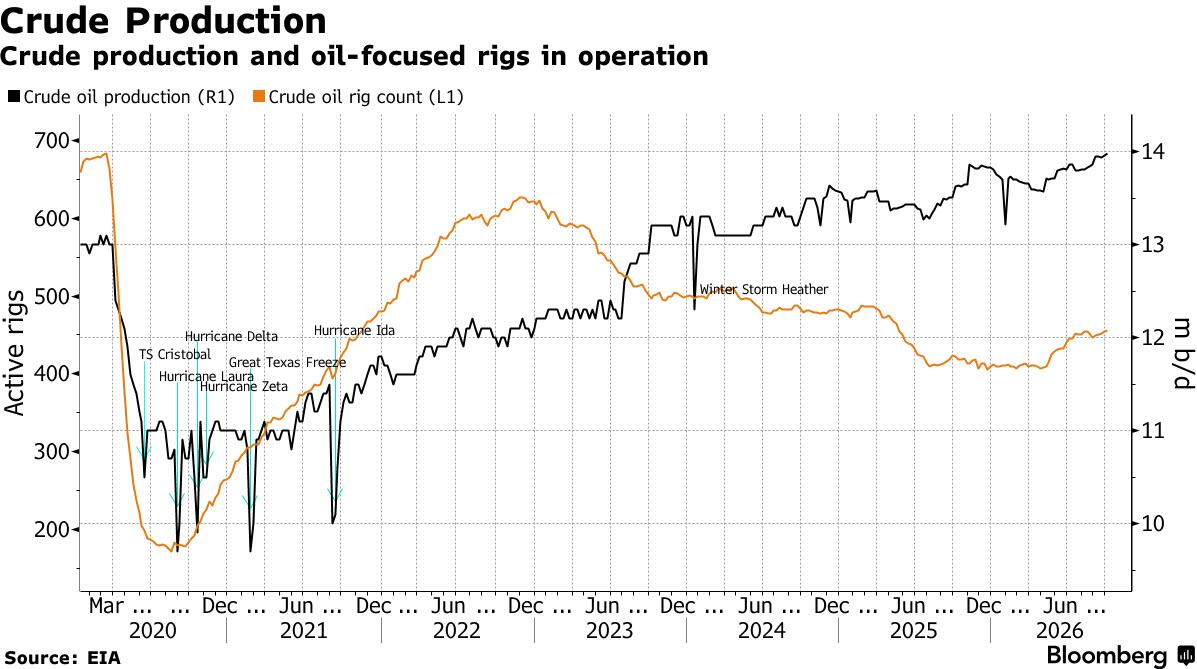
Summarizing today's data, via BBG:
- Total crude and products exports soared to the highest since late May, returning to a seasonal record. The increase was driven largely by crude shipments, which climbed to the highest since mid-September. October-loading volumes are expected to trend higher compared with September, as refiners in Asia and Europe sought to lock in US supplies following the mid-September shutdown of Saudi Arabia’s East-West pipeline.
- Gasoline stockpiles rose around 380,000 barrels with much of that occurring in the Central Atlantic, which encompasses New York and Pennsylvania. But on the Gulf Coast, where the bulk of gasoline production occurs, stockpiles are at their lowest since September 2017. Gasoline imports remain well below seasonal norms, but they ticked up last week. Those imports are particularly important to the East and West coasts, which have less refining capacity overall.
- Refinery crude runs rebounded following three weeks of drawdowns. Crude processing increased by 223,000 barrels a day and now are back to the highest on record for this time of the year. Midwest crude processing bounced back big time but is still below last year’s levels. It’s an indication that fall refinery maintenance is heavier than in previous years.
WTI futures edged lower to trade near session lows of $89.50 even as the EIA data indicated that US crude stockpiles fell 3.2 million barrels. Still, stocks at the key hub in Cushing, Oklahoma, expanded slightly, easing some concerns of glaring physical market tightness. Gasoline stockpiles also rose, though as Will pointed out earlier, that may be less bearish than it appears.
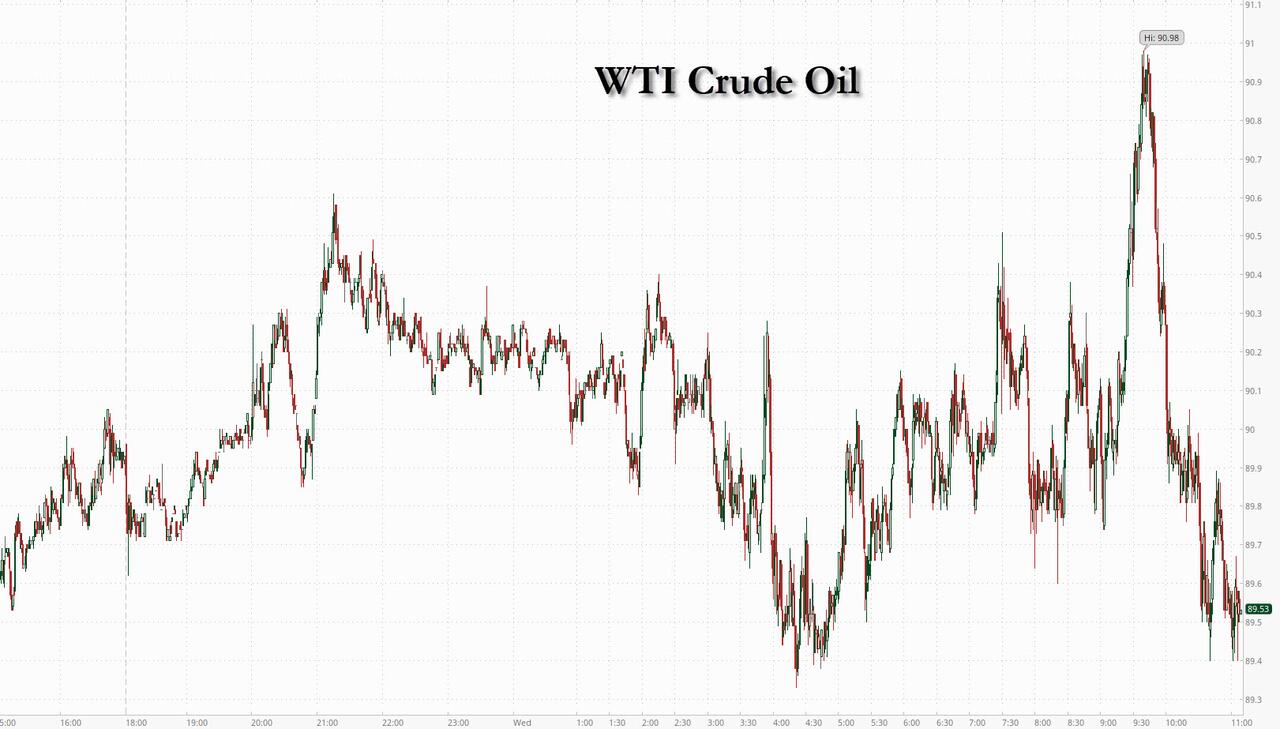
But while oil dropped, far more concerning is that diesel led the US energy complex higher, rising about 3% on the day to trade at $4.72 a gallon, while diesel crack spreads are now well above where they were when Trump announced the latest emergency release from the Diesel reserve. It’s the kind of futures price that creates serious headaches for anyone who needs to buy diesel for their truck or tractor.