





Record Plunge In Real-Estate Job Opening Sends JOLTS Sharply Lower, Hints At Ugly Jobs Report
After five straight months of JOLTS beats earlier in the year, including two blowout prints for April and May and zero misses since 2025, the June JOLTS report was a surprising miss (despite the previously discussed surge in government job openings). One month later, the July JOLTS report made it two misses for two, when the US reportedly had 7.271 million job openings, modestly below the consensus estimate. Fast forward to today when moments ago the BLS reported that in August the number of job openings dropped from an upward revised 7.335 million (which ironically would have been a beat to last month's estimate), to 7.079 million...
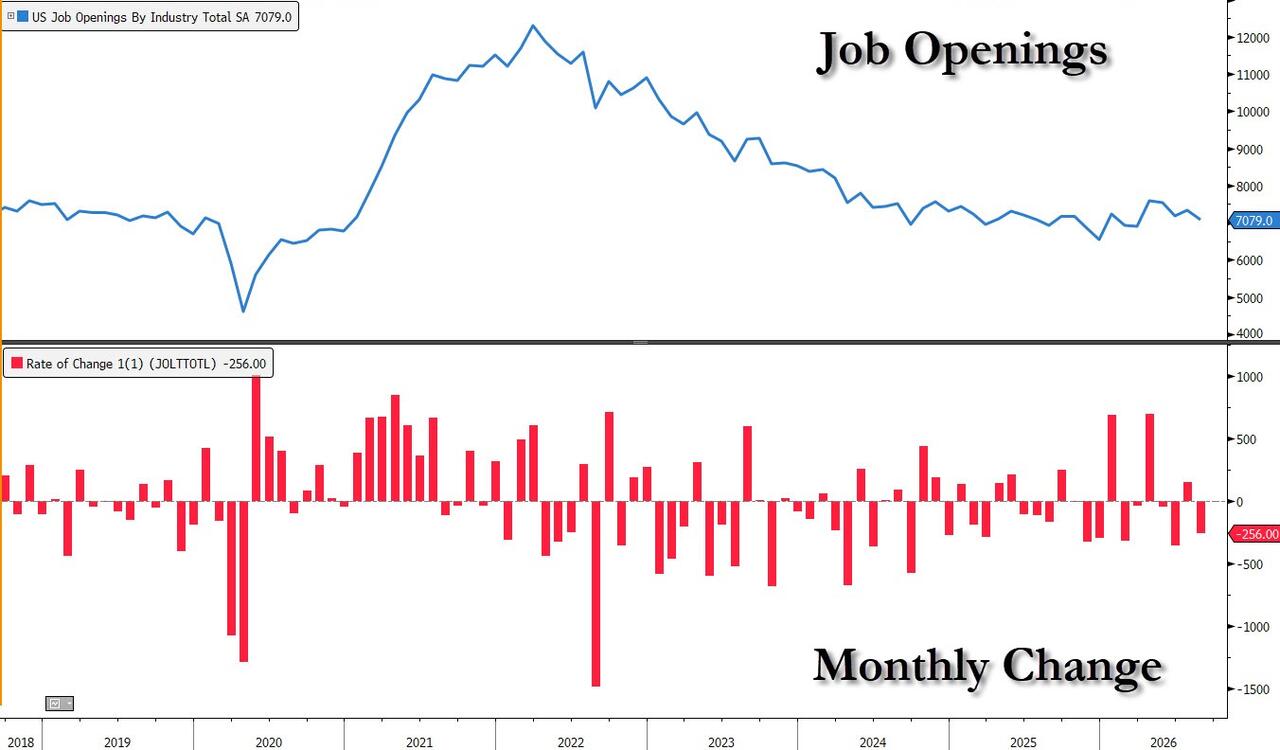
.... missing the consensus estimate of 7.228 million for the third month in a row.
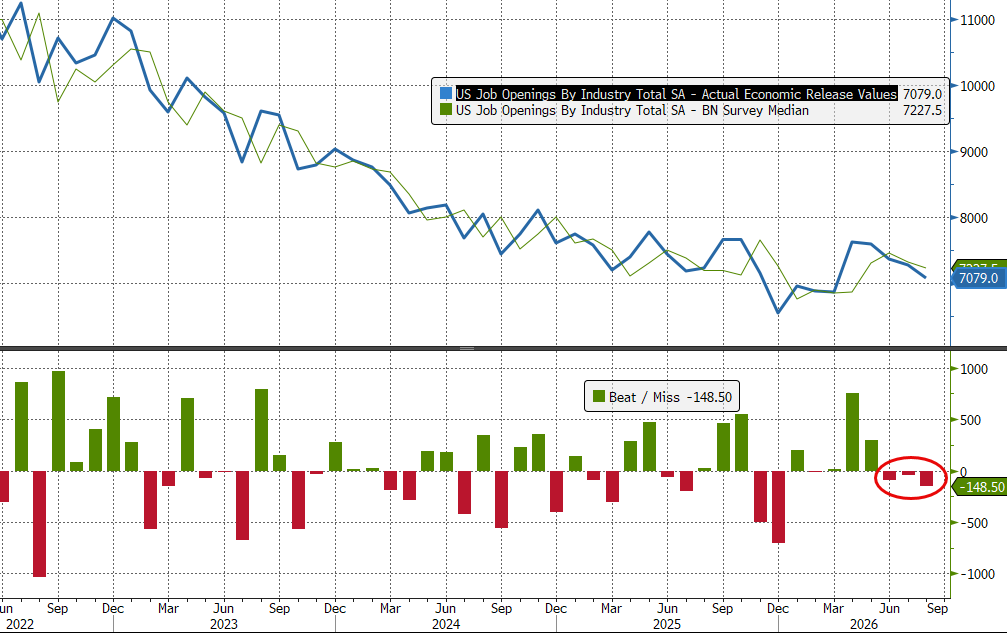
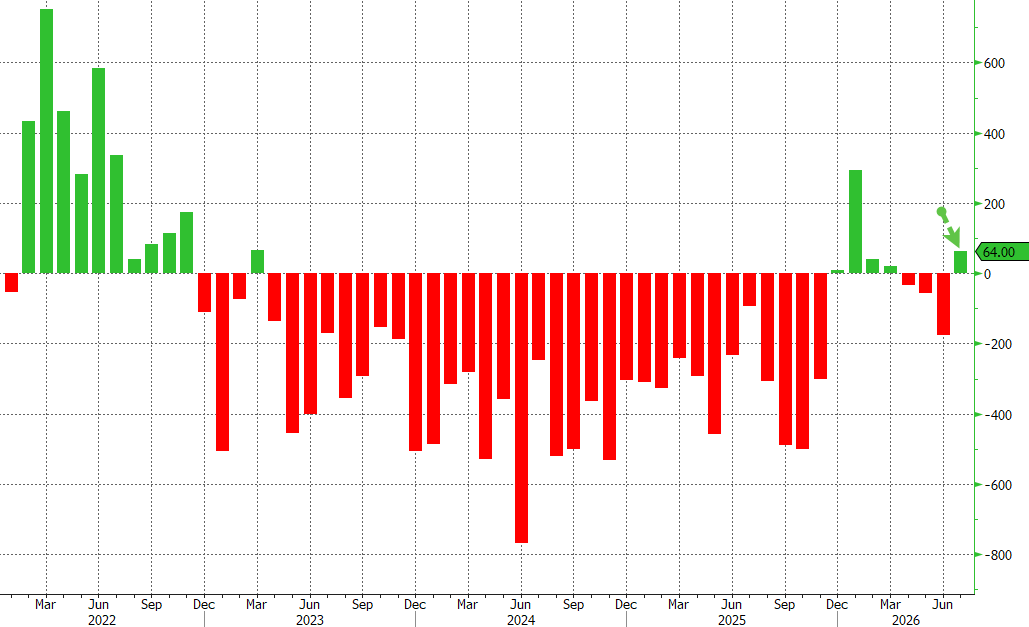
Notably, this was the first upward revision to the data after three months. Of course, nobody can possibly forget the three straight years of negative revisions between 2023 and 2025...
Where did the openings come from? According to the BLS the number and rate of job openings were little changed at 7.1 million and 4.3 percent, respectively. As shown in the table below, there were gains in trade, information, leisure and hospitality job openings, offset by declines in construction, manufacturing, professional/business services, and private education job openings.
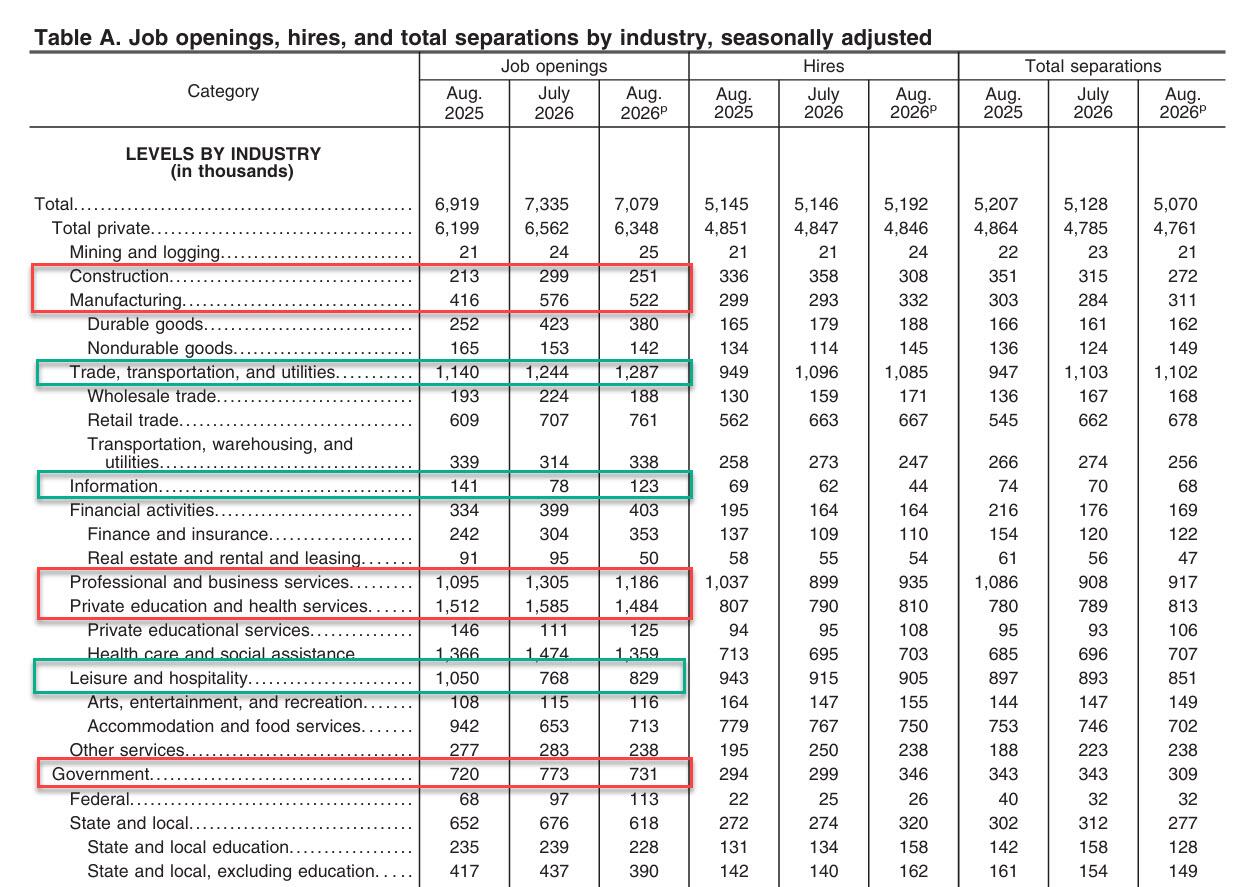
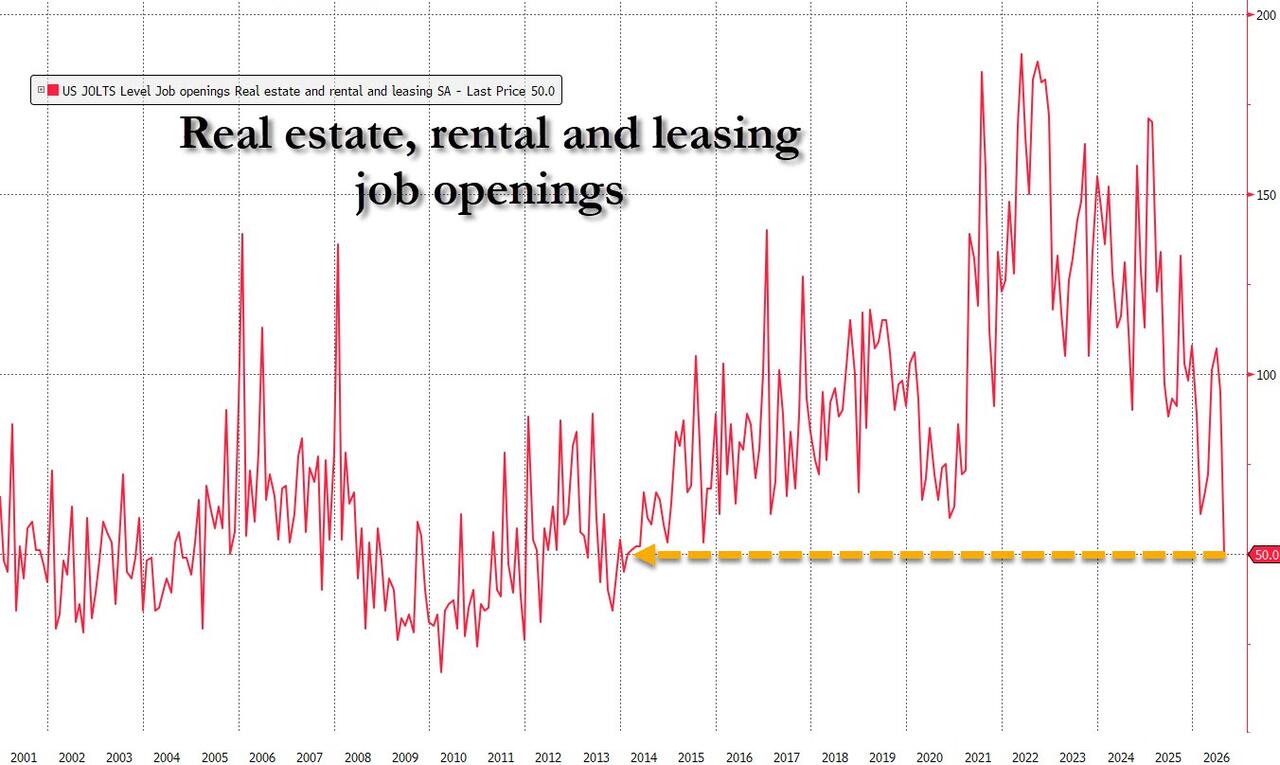
The most notable category, however, was real estate and rental and leasing job openings, which plunged by almost half, dropping to just 50K in August, the lowest since Feb 2014.
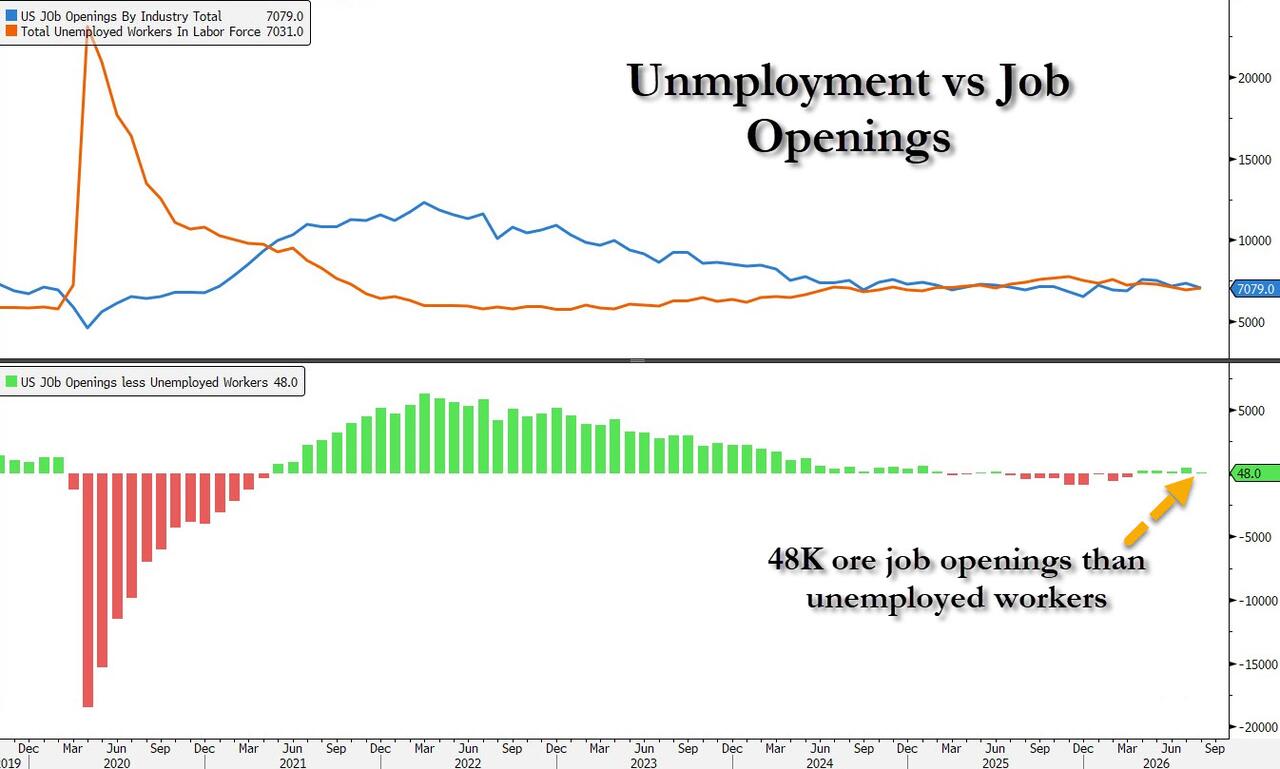
The August rise in job openings was juxtaposed with an overall drop in July employment, which meant that after 9 months of labor surplus which ended in March, and after 4 months of modest improvements in the number of excess job openings, we are back to being on the verge of having fewer job openings than unemployed workers, as the August surplus tumbled to just 48K from 419K the month before, and a concerning development for the broader labor market which according to most other measures continues to fire on all cylinders.
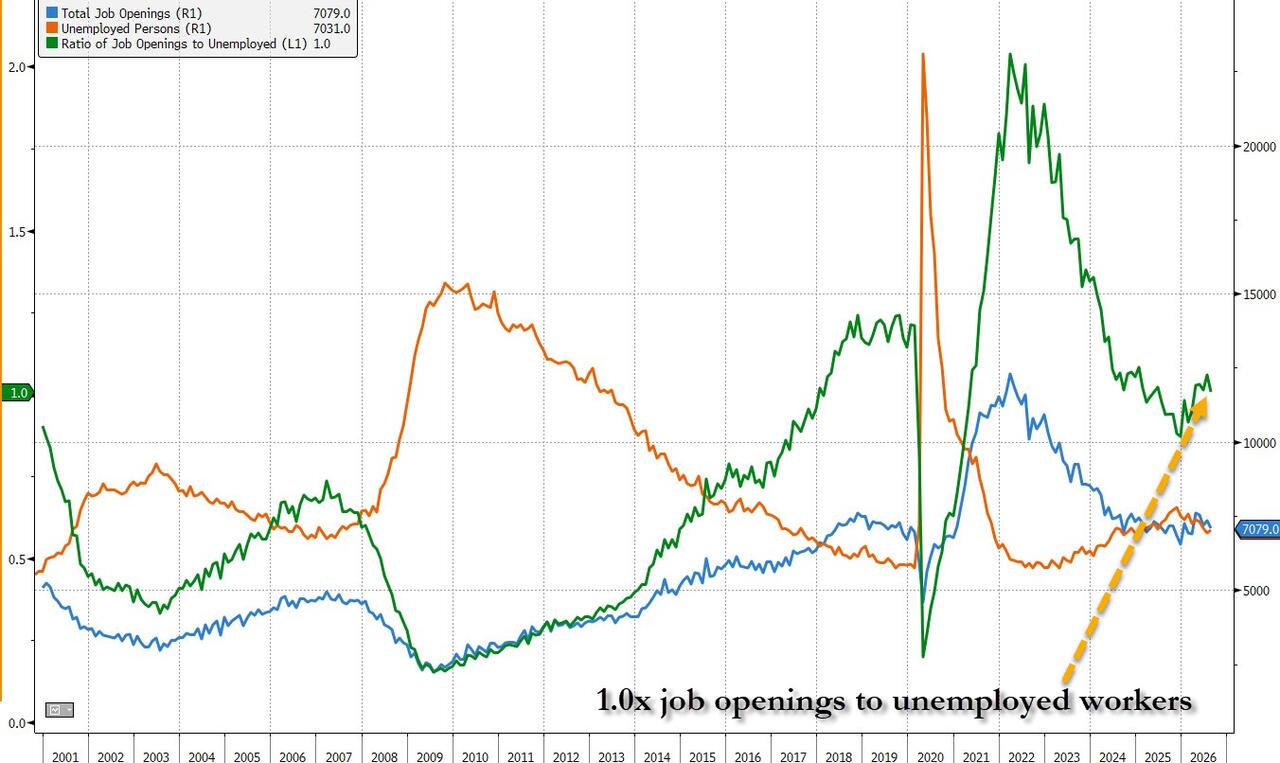
The latest JOLTS data also means that after rising as high as 1.1x in July, the ratio of job openings to unemployed dropped back down to 1.0x.
While the job openings number was far weaker than expected for the third time this year, in July we also saw continued weakness in quits offset by a small bounce in hires. In August the number of Quits - or the "take his job and shove it" indicator - dropped by another 23K to 3.066MM from 3.089MM indicating a drop in confidence that better jobs await elsewhere; at the same time hires rose modestly by 46K, from 5.146MM to 5.192MM.
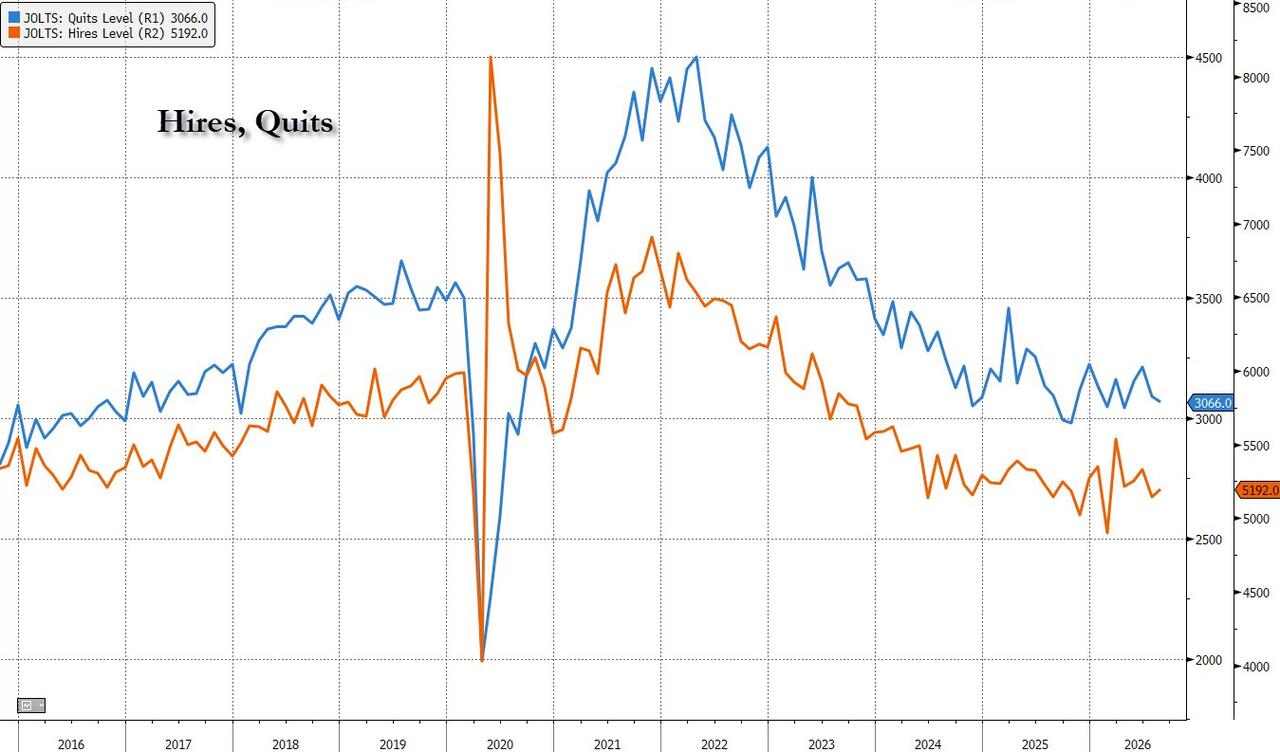
It goes without saying that disappointing job openings (which tumbled after an upward revision) while quits slump and hires barely rise, leads one to scratch their head how weak the labor market truly is.
In any case, since this hires number feeds directly into the payrolls calculations (after netting out separations) this explains why the August payrolls report surged by 162K (at a time when the hires less separations print was 122K). And since the JOLTS implied number is far weaker than that, having printed negative for a third month in a row, we expect the August payrolls report this Friday to be yet another catch down, and will likely be much lower than the 162K increase reported last month.
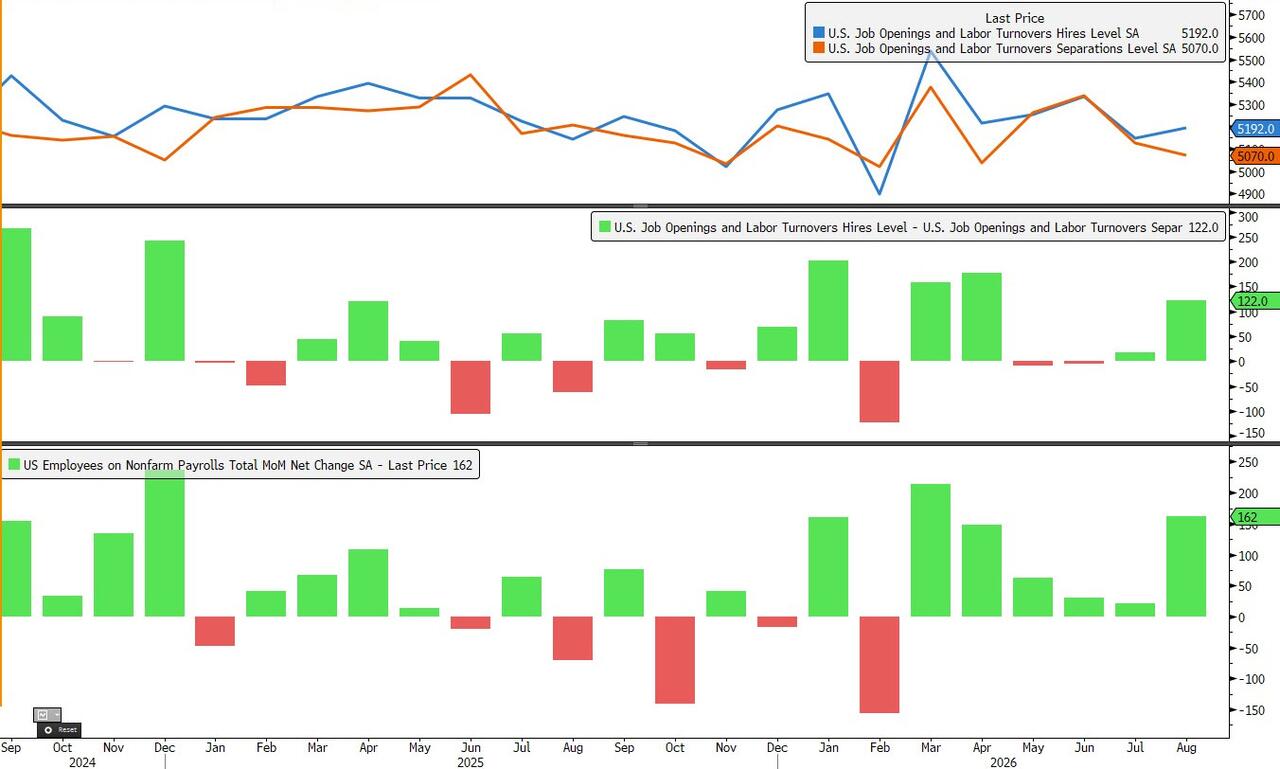
Overall, this was a weak JOLTS report, with weakness in both openings and quits, and shows that after some significant strength in the early part of of 2026, US labor market is now hitting an air pocket and this could translate into another notable miss in this Friday jobs report.