Trevor Milton Is Back And Wants To Produce AI Powered "Fully Autonomous Corporate Jets"
Trevor Milton, founder and former CEO of the now-bankrupt Nikola, is trying to mount a "comeback story".
Through social media, interviews, and bold public claims, Milton once convinced investors that Nikola was on the verge of delivering breakthrough technology with trucks. Now he's going to attempt the same in the aircraft business, according to a new report from the Wall Street Journal.
He has reemerged in the aviation sector through his involvement with SyberJet, a company focused on developing a small business jet known as the SJ30. The aircraft itself is not new; its design dates back decades and has changed hands multiple times through bankruptcies and restructurings. SyberJet acquired the program and has since promoted plans to bring the jet into full-scale production, emphasizing its speed, range, and efficiency relative to competitors in the light jet category.

Milton’s involvement has drawn attention because it places him back in a leadership context tied to capital-intensive, technology-driven manufacturing—an environment similar to the one in which he previously operated.
SyberJet’s core asset, the SJ30, is designed to fly faster and higher than many comparable business jets, with a focus on long range and fuel efficiency. The aircraft has received FAA certification in the past, but production has been limited, and the program has faced persistent financial and operational hurdles. The company’s current strategy centers on securing sufficient funding and industrial capacity to restart manufacturing and deliver aircraft to customers.
The company has also outlined ambitions to expand beyond the existing SJ30 platform, including potential future aircraft development and broader participation in the private aviation market. These plans depend heavily on capital access, supply chain execution, and the ability to convert interest into firm orders—challenges that have historically constrained the program. As with many aerospace ventures, timelines have proven difficult to meet, and progress has often been slower than initially projected.
Milton’s reappearance at SyberJet comes at a time when private aviation demand has seen periods of strength, particularly following the pandemic-driven shift toward private travel. However, translating demand trends into sustainable aircraft production requires significant operational discipline and long-term investment. The company’s path forward will likely hinge on whether it can stabilize funding and demonstrate consistent manufacturing output.
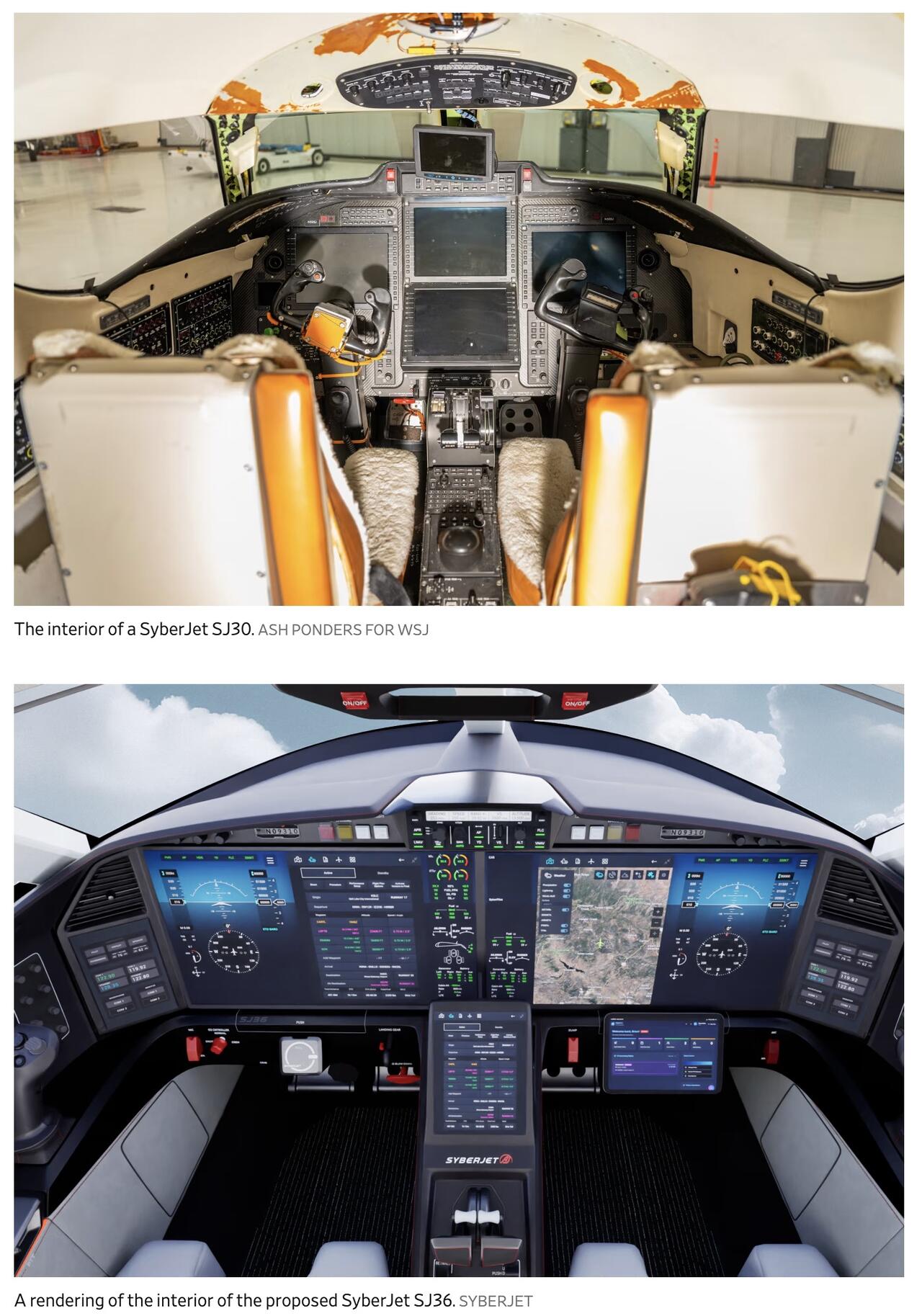
Milton has described SyberJet as more than just a traditional aircraft manufacturer, outlining ambitions to integrate advanced software and artificial intelligence into both aircraft operations and the broader private aviation ecosystem. He has suggested that AI could be used to optimize flight performance, maintenance, and routing, as well as to enhance the customer experience through more automated and efficient service models.
From WSJ:
He said the avionics the company is developing will integrate some level of AI and that he hopes “to display that in the coming one to two years to the public.” He said he wants SyberJet eventually to be the first to produce fully autonomous corporate jets. “Eventually everyone is going to have to do what we do, but they’re probably just going to buy our platform,” he said.
In public statements, he has also pointed to longer-term plans that extend beyond the existing SJ30 platform, including the potential development of new aircraft and aviation-related technologies. These claims position SyberJet not simply as a jet producer, but as a technology-driven aviation company, though many of these initiatives remain conceptual and dependent on future execution.
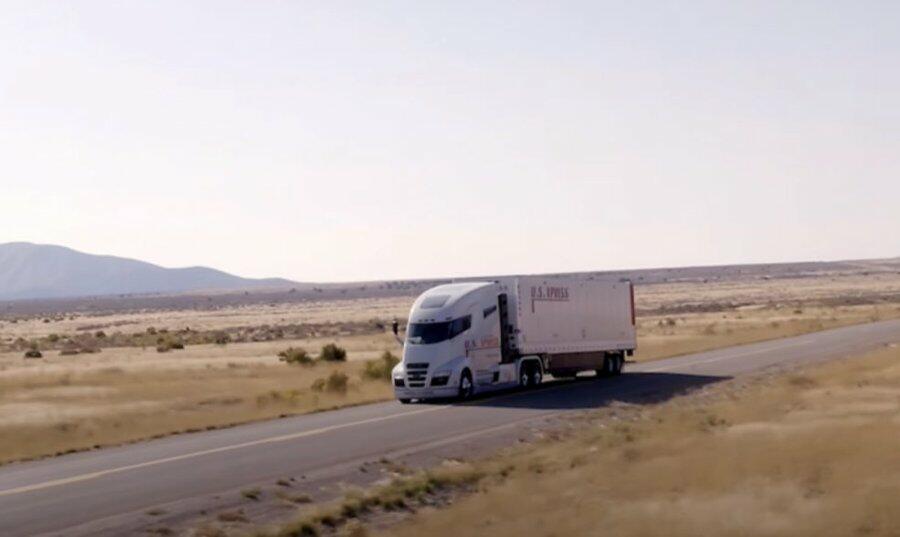
Nikola was first exposed by short seller Nathan Anderson, founder of Hindenburg Research, after the startup released a 2020 promotional video, which showed its Nikola One truck rolling down a hill to simulate full functionality.
In 2023, a jury found Milton guilty of lying to investors about Nikola's electric and fuel cell semi-truck technology and sentenced him to four years in prison. He was then pardoned by Donald Trump and attempted to sue both CNBC and Hindenburg Research, but his lawsuit was thrown out in December and costs were awarded to both CNBC and Hindenburg.