


Watch Crypto For The Next Black Swan
Submitted by QTR's Fringe Finance
We all just saw what happened with Nvidia and Jensen Huang. Completely unexpected. Almost nobody saw it coming. And the ultimate fallout is still very much an open question.
Plenty of questions remain unanswered, including some raised by a short seller back in May about Alice Huang’s connection to Jensen…and more importantly, additional allegations about Nvidia’s business operations. Those questions are still hanging in the air, and it’s far from clear whether the worst of the revelations are behind us.

Just hours before Jensen admitted to the affair, I had posed a hypothetical question: Is it possible he could be forced to resign? What seemed like a longshot Sunday morning now seems like a question worth asking.
My game theory map was that when a powerful, seemingly untouchable CEO is forced out, sometimes that’s when the real dirt starts to come out. The departure of a key man can create the conditions for things that were previously hidden, ignored or simply unquestioned to suddenly see the light of day.
That hasn’t happened at Nvidia. At least not yet. And there’s no guarantee it will. But the broader point is worth considering.
And if I follow that same spider sense, the one that asks where something completely unexpected could suddenly go very wrong, it leads me to one place: crypto.
Democrats increasingly see crypto as a Republican issue. It’s closely associated with Trump, his family and the broader GOP ecosystem. In some respects, it’s become something of a political piggy bank. And if Democrats regain power, it’s not difficult to imagine them suddenly rediscovering their deep and abiding concern for investor protection and financial stability.
Funny how that works, right? But then there’s also something else that’s caught my attention. The CFOs of both Strategy and Binance announced their departures just nine days apart from each other.
On October 29, Strategy disclosed that its CFO, Andrew Kang, was resigning effective November 5. Kang had informed the company of his decision just three days earlier, citing personal reasons. The company said there were no disagreements over its operations, policies or practices, and Kang will remain in an advisory role through the end of December. His former page on Strategy’s website is already down.
Nothing necessarily sinister there. But an unexpected departure of the finance chief at the world’s largest corporate holder of Bitcoin, a company whose entire strategy revolves around accumulating an extraordinary amount of a highly volatile asset through increasingly elaborate financial engineering, is at least worth noting.
Then, on November 7, Binance announced that its CFO, Kaiser Ng, was stepping down after more than five years with the exchange. Just nine days earlier, Binance had reportedly suffered a staggering $6.3 billion hack, described as the largest crypto theft in history. The company pledged to make customers whole, while the attack was attributed to North Korean hackers.

Binance says Ng’s departure had been planned for six months and that he’s leaving to pursue a new venture. His replacement, Justin Yek, comes from payments company Airwallex.
Fair enough. But a CFO leaving days after a multibillion dollar hack is the kind of coincidence that tends to get my attention. Particularly in an industry where the words “everything is fine” haven’t always aged especially well.
I’m not alleging any wrongdoing by Ng or Kang, but I am haunted by the echoes of Sam Trabucco. Trabucco, Alameda Research’s former co-CEO, who was implicated in the use of FTX customer funds to finance corporate transactions but was never criminally charged, publicly announced his resignation on August 24, 2022, less than three months before FTX’s collapse in November 2022.

But look, these departures could be entirely unrelated to events at their respective companies. There is no evidence that either executive left because of financial irregularities or undisclosed problems.
But two CFO departures from major crypto names in less than two weeks, one at the world’s largest corporate Bitcoin holder and the other at the world’s largest crypto exchange, with a massive hack thrown into the mix? Well…you certainly can’t blame me for noticing it, right?
And given crypto’s illustrious history of transparency, impeccable governance and absolutely nothing ever going wrong, perhaps it’s worth paying attention.
One of the great lessons of financial history is that problems tend to stay hidden when asset prices are rising and money is plentiful. Bull markets can paper over an extraordinary number of cracks. Investors don’t ask too many questions. Regulators don’t always feel compelled to dig. And businesses that might struggle under more difficult conditions can keep operating as though everything is fine.
It’s amazing how many business models look brilliant when the underlying asset keeps going up. But when prices start falling, liquidity tightens and the political winds change, things can get interesting. Or, just ugly.
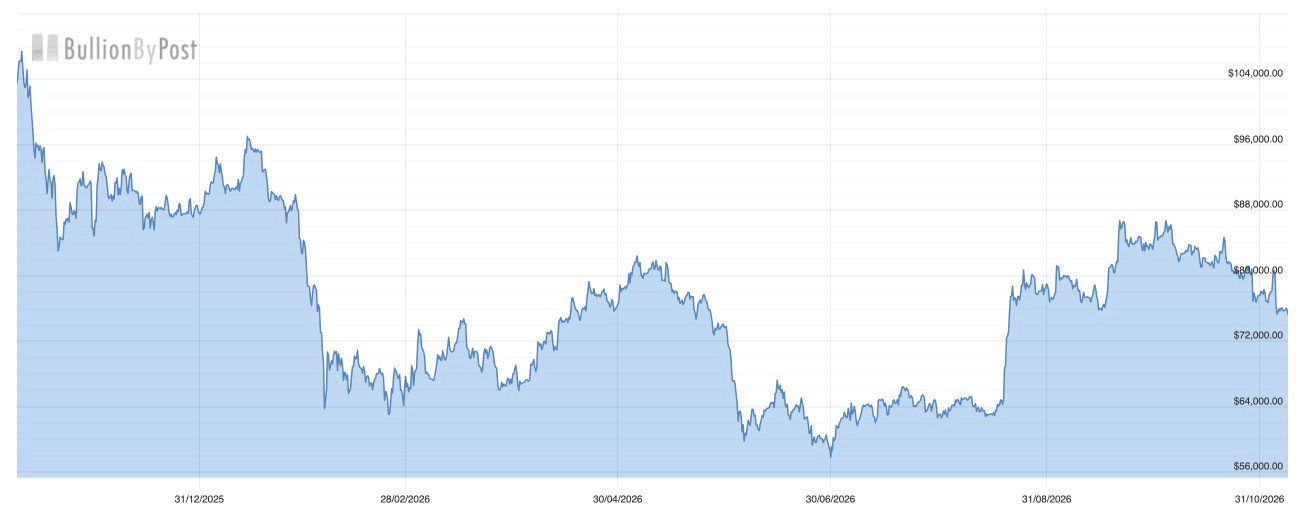
Bitcoin, 1 Year
Now imagine a scenario in which the market keep crashing. Crypto prices continue moving lower at the same time that regulation shifts from a powerful tailwind to an equally powerful headwind.
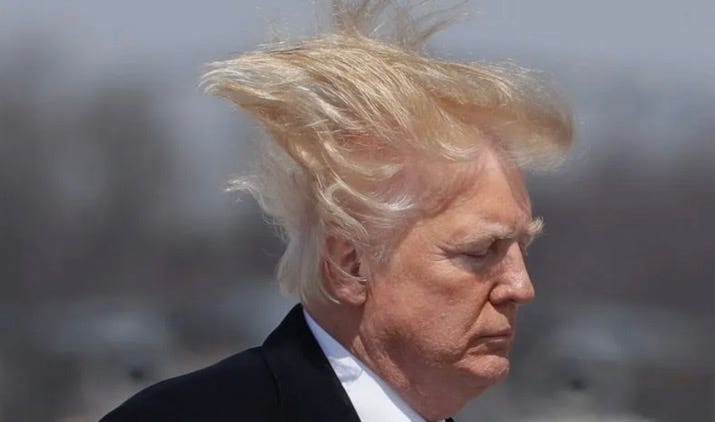
The economics change. The scrutiny intensifies. Investors start asking harder questions. Counterparties become less trusting. And people who once had every incentive to keep quiet may find new reasons to talk. That’s when the proverbial wig gets blown off the industry’s head, and we finally get to see what’s been hiding underneath.
I’ve also been skeptical of Tether for a long time. Even after they recently secured an “audit” that I raised critical questions about. Not because I know there’s something wrong, but because the sheer size and importance of the stablecoin, and the central role it plays in the crypto ecosystem, make the consequences of any unexpected revelation potentially enormous.
If regulators decide to start looking more aggressively under the hood of companies like Tether, who knows what they’ll find?
Maybe everything is exactly as it should be. But would it really be shocking if something ugly emerged from an industry that has already given us Luna, HEX, FTX and Celsius?
Those are four names I came up with in about five seconds. And they barely scratch the surface of crypto’s history of spectacular collapses, alleged misconduct, questionable business models and outright fraud. Quite a track record for an industry that was supposed to revolutionize trust.
The point isn’t that another collapse is inevitable, or that any particular company is hiding something. It’s that the industry’s history makes it difficult to dismiss the possibility of more surprises.
85% OFF FOREVER IF YOU SUBSCRIBE TODAY: I am again offering an 85% discount to anyone that wants to become a Fringe Finance annual subscriber today. It’s a discount you can keep and stays applied for as long as you wish to remain a subscriber: Get 85% off forever
What makes the current setup especially interesting is this. The next crisis might not begin with a collapsing token. It could begin with a resignation, a regulatory inquiry, an unexpected disclosure, or some seemingly minor event that nobody initially thinks is important.
That’s how these things often work. The market focuses on price while the real story is developing somewhere else entirely. And by the time everyone understands what’s happening, it’s often too late.
So while investors are busy debating where Bitcoin bottoms, when the next rally begins and whether the crypto bull market is over, I think there’s a different question worth asking. What happens if the next big development in crypto has nothing to do with the price of Bitcoin at all?
What if it’s something nobody has modeled, nobody is positioned for and nobody even knows to worry about yet?
We just got a reminder from Nvidia that the unexpected can arrive very quickly, even in the companies and industries investors think they understand best. My spider sense says the next place to watch for black swans is crypto.
Because when prices start falling, regulators start digging and key executives start leaving, sometimes you discover that what looked like a financial revolution was something considerably less revolutionary.
And given this industry’s history, I wouldn’t be remotely surprised if there are a few more skeletons waiting to come tumbling out of the blockchain.
--
QTR’s Disclaimer: Please read my full legal disclaimer on my About page here.