





The Solar Health Effect
Those who pierce the veil of political theatre and hollow promises grasp a darker, immutable truth: it is not presidents or parliaments that steer the course of history—it is the great, merciless cycles. And towering above them all, burning with ancient authority, stands the Sun. For centuries, it has been the silent orchestrator—an invisible hand that stirs the winds of commerce, fans the flames of war, and unleashes plagues upon empires. The solar cycle is no mere scientific curiosity; it is the hidden metronome of civilization’s rise and fall.
As the Sun descends once more toward a looming minimum—likely beginning as early as July 2025—the world begins to convulse. Revolutions spark like dry tinder. Streets swell with rage. Acts of terror tear through the fabric of civilized order. These are not random eruptions—they are ritual, recurring, rhythmic. A familiar drumbeat echoes through time, one that has haunted civilizations at every solar peak. We’ve seen this script before—empires faltering, economies shattering, societies turning in on themselves—all under the watchful eye of a restless star. History, it seems, is not only repeating—it’s being supercharged by the Sun.
But the Sun’s influence doesn’t stop at politics or markets. It reaches deeper—into flesh, into mind, into the shadowy corners of the human soul. Increasingly, science confirms what the ancients sensed: the Sun’s fury touches us on a cellular level. When solar storms rage across the cosmos, heart attacks spike, strokes multiply, and mortality climbs. It’s as if the body, wired to this celestial rhythm, cracks under its pressure. Even solar flares—those violent flashes of cosmic wrath—have now been linked to sudden heart failure. And the mind fares no better. Under geomagnetic assault, our darker instincts stir. Homicide rates rise. Tempers ignite. Impulses grow wild and erratic, as if the Sun were not merely a giver of life, but a provoker of death. This is not metaphor. This is not myth. This is the Sun, our star and sovereign, blazing not just in the sky—but in our blood.
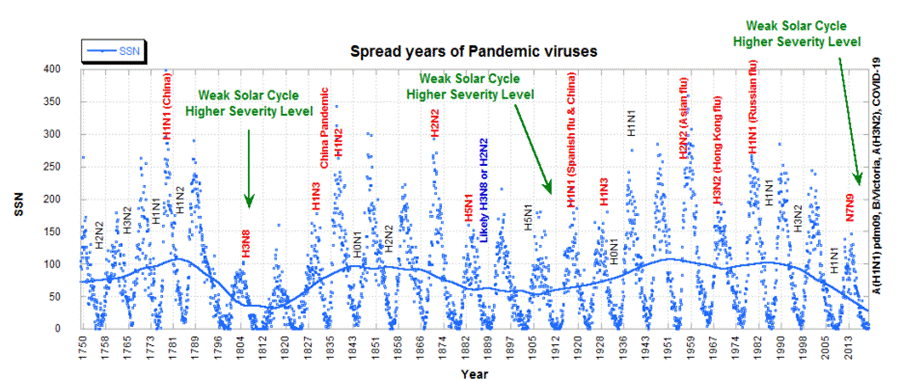
https://absb.researchcommons.org/cgi/viewcontent.cgi?article=1621&context=journal
Long before labs, masks, and PCR tests, people already knew one thing: when the weather gets cold, so do your chances of catching something nasty. Flu season hits like clockwork every fall, and by summer, the germs go on vacation—just like everyone else. It’s not magic, just biology and a bit of bad luck. Cold air dries out your nose, everyone’s packed indoors breathing recycled air, and your immune system’s running low on vitamin D and sunshine. Add in the fact that winter lacks virus-zapping UV rays, and voilà—germ paradise.
History backs it up too. From Roman plagues to modern flu spikes, epidemics have followed the seasons like geese heading south. It’s not a conspiracy or divine punishment—it’s nature’s schedule. Ignoring it is like being surprised by snow in January. So next time sniffles start flying in winter, don’t panic—just pass the tissues and remember viruses have a calendar too.
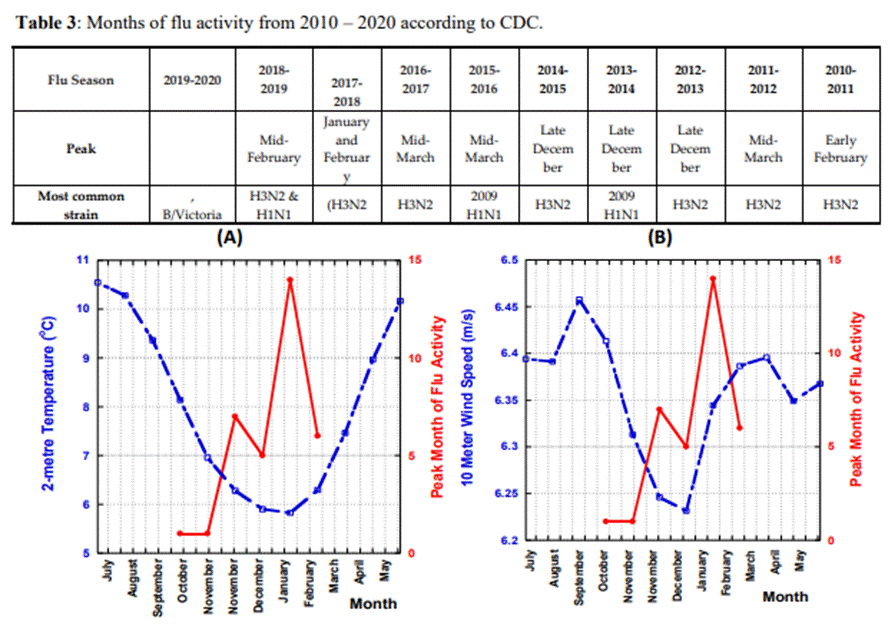
Based on these seasonal patterns, a not-so-shocking conclusion can be drawn, pandemic viruses are like bad fashion trends… they always come back. Looking at the greatest viral hits by subtype and their big debut years, it turns out, not all viruses follow the same tour schedule.
Some subtypes like H1N1, H2N2, and H3N2 are repeat performers, popping up so often we could practically write a formula for their encore. Others? Let’s just say they’re more “one-hit wonders,” which makes their comeback tour a bit harder to predict.
And then there are the newbies—H7N9, Victoria, and of course, COVID-19. They’ve only had one major showing so far, but don’t let that fool you. Genetically, they might just be the distant cousins of the original viral rockstar: the Spanish flu (possibly H3N8 or H2N2 with a disguise and new haircut). So yes, pandemics do have a rhythm… unfortunately, it’s not one we can dance to.
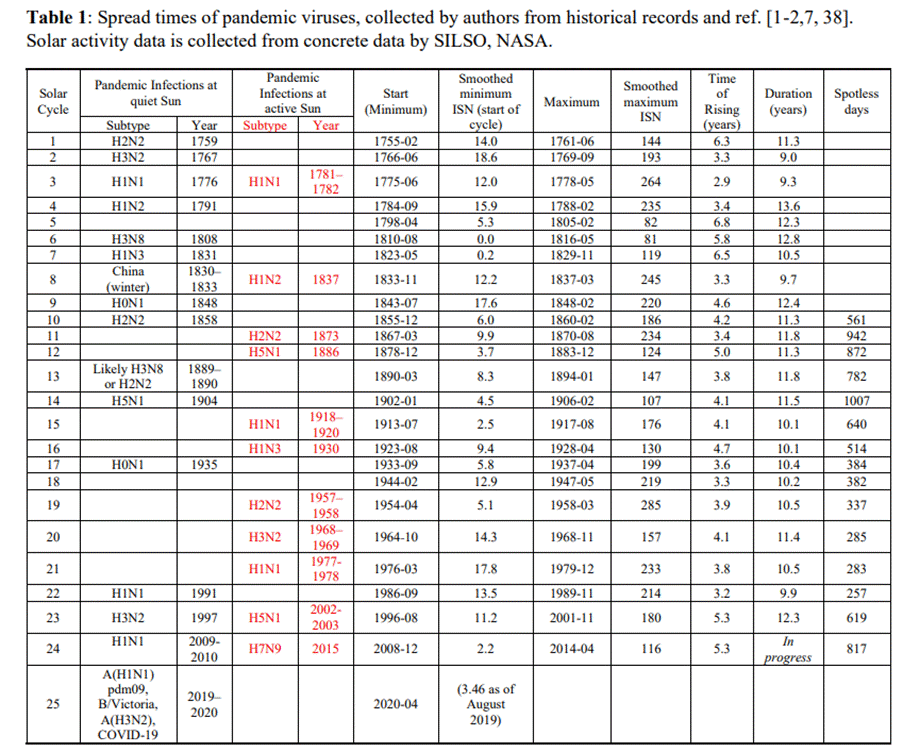
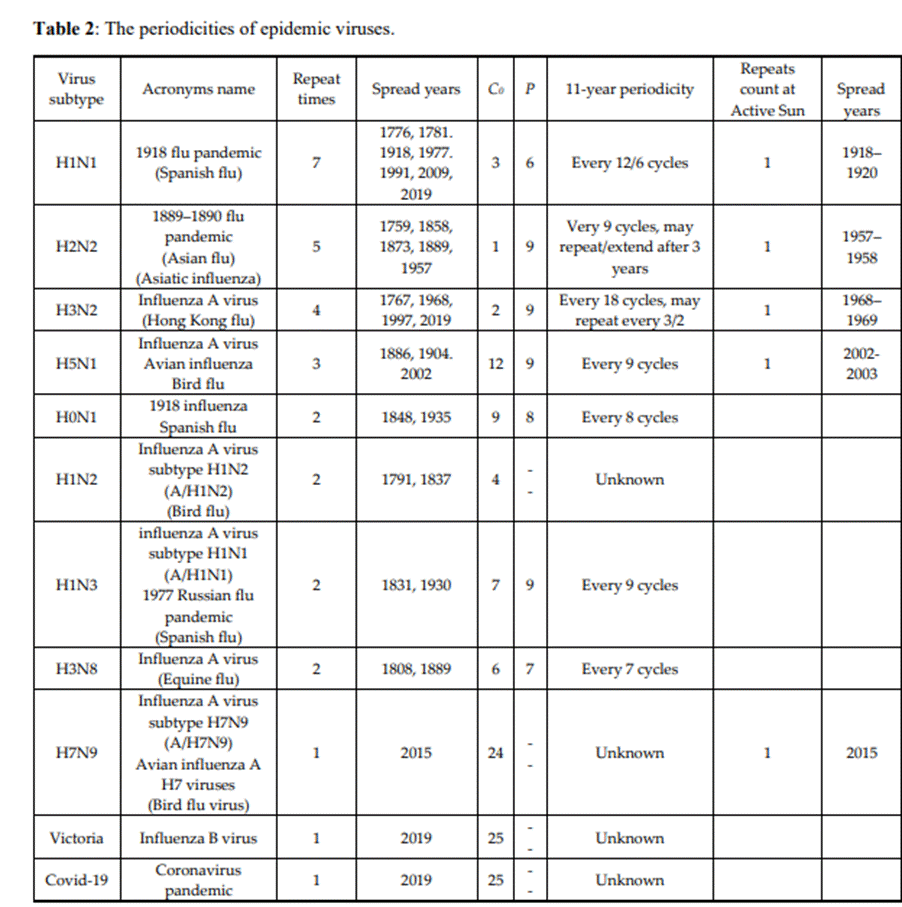
Most pandemic virus subtypes seem to follow a cosmic calendar—popping up every nine solar cycles, or roughly every 100 years. H3N2 is the exception, with an 18-cycle gap, but half of that is MIA in the data, so let’s just assume it got lost in space and call it nine too.
So, pandemic cycles fall into two camps:
· The Nine Solar Cycle Club: Includes H2N2, H5N1, H1N2, H1N3, H3N8, H7N9—and honorary members like Victoria and COVID-19, which may be Spanish flu reboots with a few genetic plot twists (especially COVID, thanks to its spike protein remix).
· The Twelve Solar Cycle Soloist: H1N1 stands alone here, though for safety, let’s assume it might show up after just six—consider it the early bird of pandemics.
Of course, all of this depends on the accuracy of the solar cycle, which has a few gaps. But with enough solar math, we can estimate the next viral surprise by mapping solar cycle start dates—just don’t expect the Sun to RSVP on time. Solar minimums are fashionably late, often stretching over two years. Still, we’ll pick a date and roll with it. Because when it comes to predicting pandemics, close enough is the new precise.
No matter how you frame it—solar cycles, war, unrest, or migration—the brutal truth remains: Migration + War = Disease on a deadly scale. History doesn’t just whisper this—it shouts it.
Take the Spanish Flu. We all learned it was a terrifying pandemic, but few realize it was turbocharged by World War I. The war didn’t just help spread the virus—it built the perfect delivery system. With millions of troops crisscrossing the globe, packed into trenches, trains, and troopships, with little food and no proper healthcare, the virus had a VIP pass to every continent. The result? Up to 100 million dead—eclipsing the 20 million lost to the war itself.
This isn’t just a one-time tragedy. It’s a recurring pattern. Wars have always been disease accelerants. In fact, before the 20th century, disease killed more soldiers than bullets. Fast-forward to modern conflicts—Syria, Yemen—and we see the same playbook: collapsing infrastructure, mass migration, and the resurgence of old killers like cholera, polio, and measles. The formula is tragically simple: War destabilizes, migration scatters, and disease follows. The Spanish Flu didn’t become the deadliest pandemic by accident. It was made deadly by the chaos of war—and we’d be foolish to think it won’t happen again.
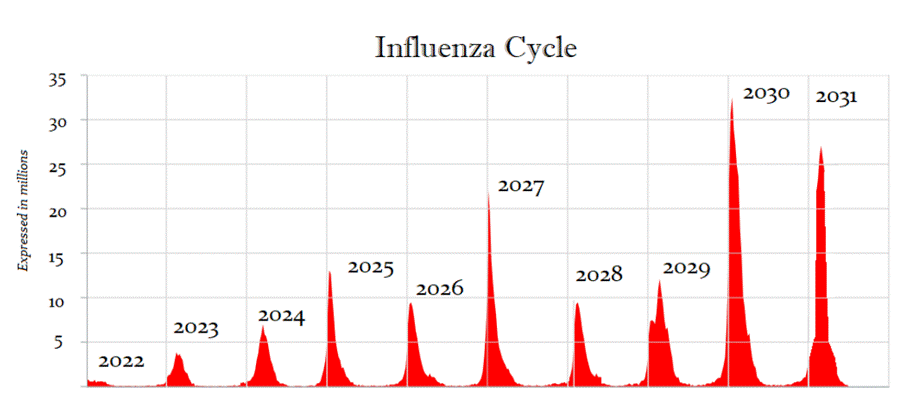
Emperor Lucius Verus’s triumph over the Parthians may have earned him a shiny victory coin—but it also earned Rome one of the deadliest pandemics in history. His eastern campaign, especially the siege of Seleucia around 165–166 CE, is widely believed to have unleashed the Antonine Plague (aka the Plague of Galen) on the Roman world. Ancient historians like Cassius Dio and Ammianus Marcellinus didn’t mince words: the disease erupted in Mesopotamia, swept through the legions, and hitched a ride back to Rome with the “victorious” army.
The result? A full-blown empire-wide pandemic. The plague didn’t just linger—it scorched the Roman provinces for years, maybe even decades, killing millions and gutting the military. Even Emperor Marcus Aurelius wasn’t spared, dying in 180 CE, likely from the very disease that followed his co-emperor’s return from glory.
History doesn’t just rhyme—it coughs and spreads. Fast forward to the modern era, and we find ourselves staring down eerily similar patterns. COVID-19, whether the product of sloppy lab work or scientific overreach via gain-of-function research, has reminded the world just how fragile the global system can be when viruses go viral.
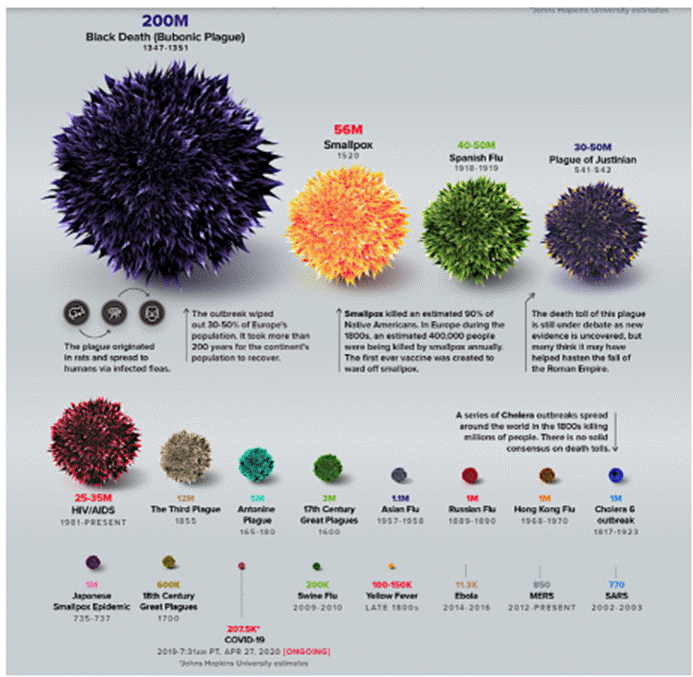
Now imagine lighting the fuse of World War III on top of that. According to current cycle projections, we may be heading into Phase I around 2029, with Phase II unfolding by 2032, and a final, far more destructive chapter not long after. The warning signs have been there for centuries. Girolamo Fracastoro wrote in 1546—well before germ theory existed— “There will come yet other new and unusual ailments in the course of time… And this disease will pass away, but later it will be born again and be seen by our descendants.” Well, here we are. Descendants. Witnesses. And maybe, just maybe, we’re repeating history with better tech and worse timing.
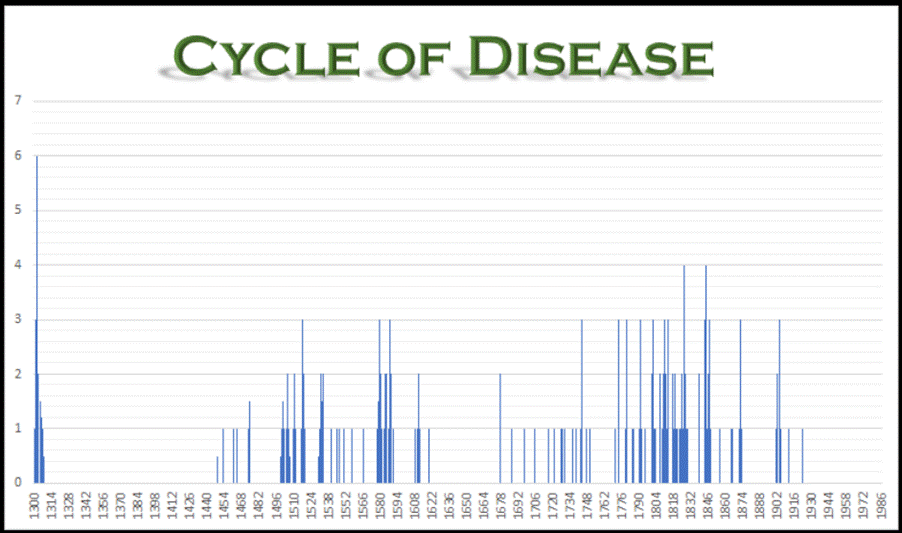
The year 2032 marks more than just the end of another economic cycle—it is the Sixth Wave in a powerful 51.6-year sequence, totalling 309.6 years. But there’s a deeper rhythm beneath it all: six such waves form a greater cycle—1,857.6 years long. And each ending, like a clock striking midnight, brings a reckoning. The last time this 309.6-year wave ended, the world was engulfed in chaos. The Great Plague of Marseille (1720–1722) ravaged France, becoming the deadliest epidemic of that century. At the same time, smallpox swept through the colonies, with Boston’s 1721 outbreak sparking bitter controversy over inoculation—eerily echoing today’s vaccine divisions. From 1700 to 1725, war was everywhere. The Great Northern War and the War of the Spanish Succession tore Europe apart, redrawing the global power map. Russia rose. Britain emerged. Sweden and France were left bleeding and spent. Disease followed war, as it always does. Typhus and camp fever—spread by lice, bred in filth—claimed thousands of soldiers and civilians alike, as borders shifted and empires clashed.
But the warning signs go back even further. The previous great wave, peaking in 1413, brought the Black Death—a plague that halved Europe’s population. It too followed war: the Mongol siege of Crimea, where diseased corpses were hurled into cities. Fleeing merchants carried the plague across Europe, sealing the fate of millions. Now, as we near the end of another grand cycle, the Sixth Wave, history’s rhythm grows louder. War, disease, collapse—the pattern is ancient, and unforgiving. A 50% population decline isn’t speculation. It’s precedent. We are not exempt. We are next.
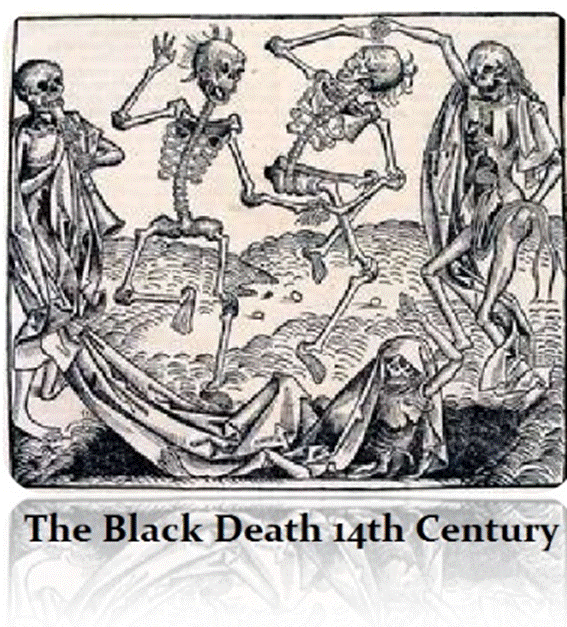
The Black Death, which struck during Edward III’s reign (1327–1377), wiped out an estimated 30–50% of Europe’s population. But beyond the bodies it left behind, it exposed a darker constant: human nature never changes.
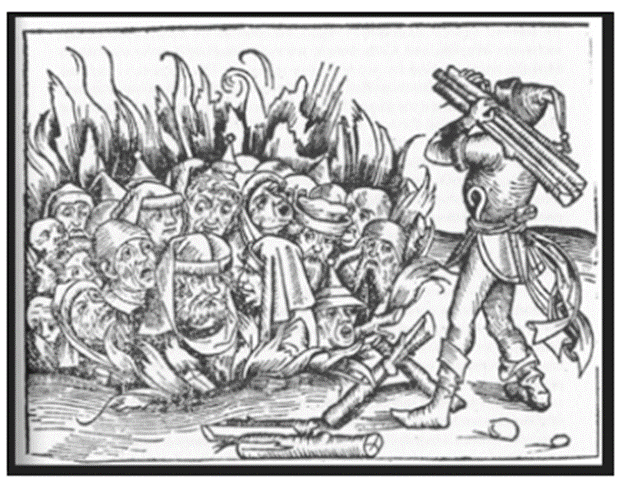
During COVID, dissenters were branded as dangerous—the unvaccinated, demonized, excluded, and silenced. In the 14th century, it was the Jews who were cast as the plague’s villains. Accused of poisoning wells and spreading disease, they were hunted down, forced to wear distinctive clothing, and burned alive—over 2,000 massacred across France and Germany between 1348 and 1350. The infamous badge of identification Hitler later imposed? History shows he simply revived what was first used during the plague.
The division didn’t fade. A century later, the same scapegoating would fuel the Spanish Inquisition, as the social fracture never healed. Even monarchs who saw the Jews' economic value couldn’t stop the tide of hatred that had been unleashed.
COVID was different only in detail, not in spirit. Society once again split into camps—compliant vs. defiant, vaccinated vs. unvaccinated. Travel was restricted, freedoms revoked, and anyone who refused the state-sanctioned narrative was cast as a threat.
Plagues don’t just kill bodies—they carve fault lines into society. The Black Death did it. COVID did too. And as the next crisis emerges, the same divide-and-rule playbook will return—this time with governments more empowered and less tolerant. We’re not just reliving history. We’re repeating its darkest chapters.
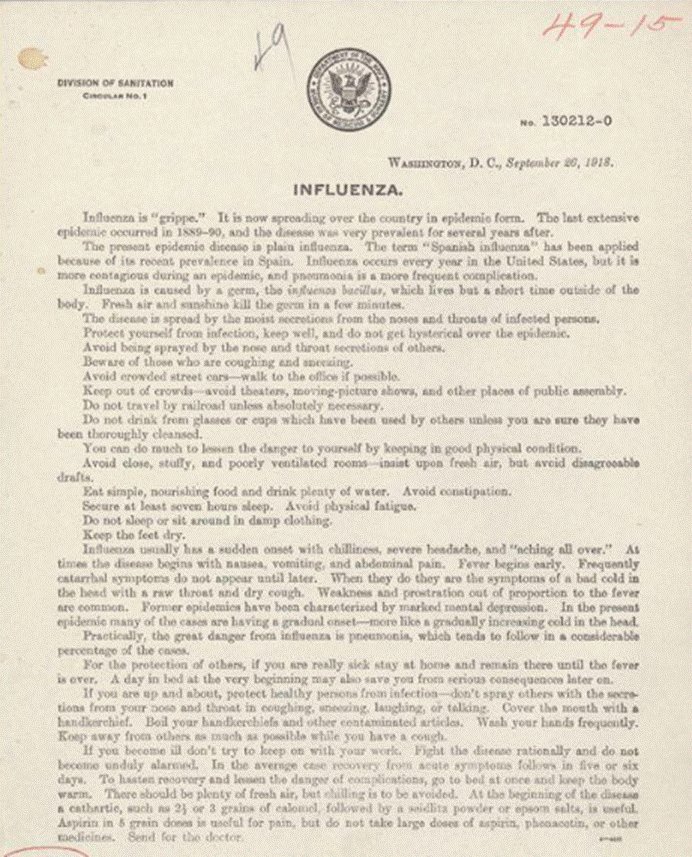
1918 is remembered as the year when officials actually believed people could handle a pandemic without losing their minds. Their advice? Simple and rational: avoid those sneezing on you, wash your hands, get rest, eat well, and enjoy some fresh air. And best of all, don’t get hysterical. How revolutionary.
Fast forward to COVID-19, and suddenly that sensible approach was tossed out the window. Instead of fresh air, we got lockdowns. Instead of calm, we had panic. Cash became a deadly weapon, and going outside was practically a crime. The message wasn’t “fight the disease rationally”—it was “submit to authoritarian control disguised as public health.” So yes, in 1918, governments said “stay calm and carry on.” In 2020, it was more like “stay scared and stay inside”—because who needs reason when you have lockdowns and digital surveillance?
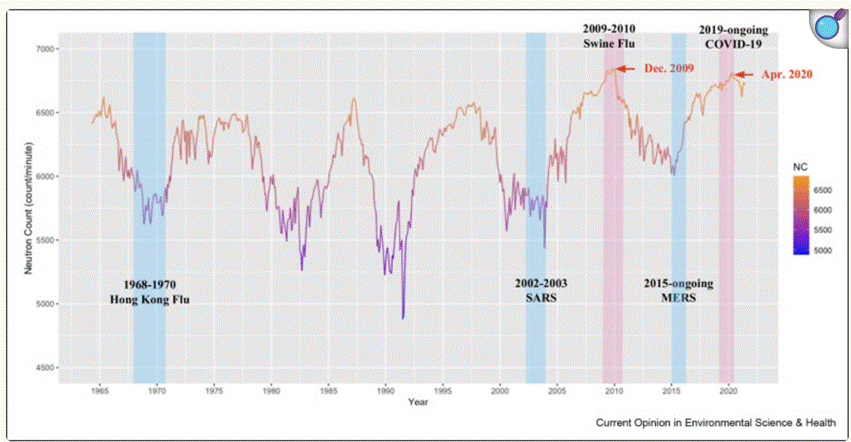
COVID-19 stands as one of the defining pandemics of the modern era—a ruthless assault on the respiratory system that claimed countless lives before vaccines supposedly turned the tide. With a fatality rate hovering around 4% in its unmitigated early days, this virus emerged from the shadows of nature or most likely from an obscure lab in the Wuhan region. Yet, the origins remain shrouded in mystery. What sparked this viral inferno? Why did SARS-CoV-2 mutate with alarming speed, unleashing new variants that challenged human defences? Scientists have uncovered links between COVID-19’s spread and environmental factors—ultraviolet radiation can slow its advance, while pollutants fuel its fire, and rising temperatures may hold some measure of protection.
Still, crucial questions linger: What truly triggered the outbreak? Can we ever control these forces that drive viral evolution and explosive transmission? The answers may determine not only our survival but the future of humanity in a world forever shadowed by invisible enemies.
https://pmc.ncbi.nlm.nih.gov/articles/PMC8855047/?utm_source=chatgpt.com
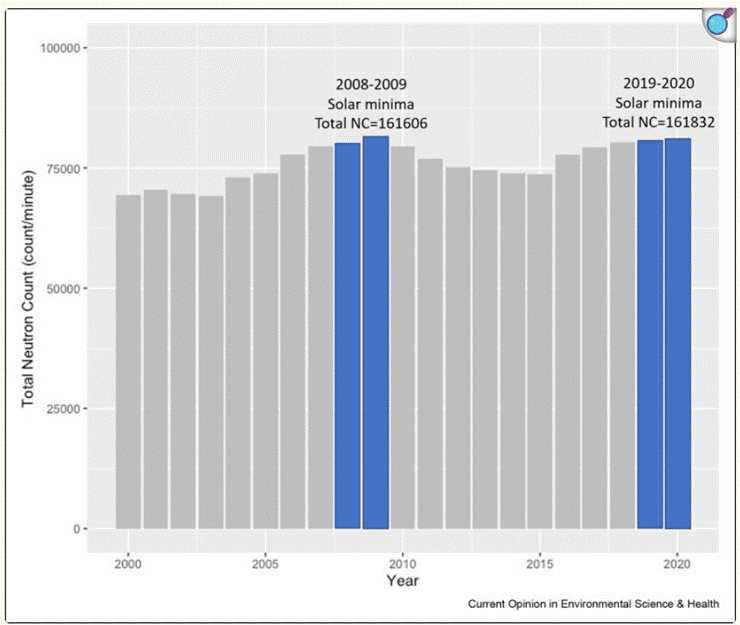
Cosmic rays, measured by neutron counts (NC) per minute, reached a peak of 6813 in April 2020, coinciding with the onset of the COVID-19 pandemic. Interestingly, an even higher peak occurred in December 2009 (NC = 6844), the highest since 1964. The 2008–2009 peak remained elevated (NC > 6800) for nine months (April to December 2009), while the 2019–2020 peak lasted only one month (April 2020). Despite this difference in duration, the cumulative neutron counts were remarkably similar: 161,606 for 2008–2009 and 161,832 for 2019–2020. Statistical analysis showed no significant difference between the two datasets (n = 24, p = 0.60), suggesting comparable cosmic ray activity during these solar minima.
Read more and discover how to trade it here: https://themacrobutler.substack.com/p/the-solar-health-effect
If this research has inspired you to invest in gold and silver, consider GoldSilver.com to buy your physical gold:
https://goldsilver.com/?aff=TMB

Disclaimer
The content provided in this newsletter is for general information purposes only. No information, materials, services, and other content provided in this post constitute solicitation, recommendation, endorsement or any financial, investment, or other advice.
Seek independent professional consultation in the form of legal, financial, and fiscal advice before making any investment decisions.
Always perform your own due diligence.