





Ad Bellum ‘Trump’ Parare
By now, anyone not glued to TikTok or baptized in the Church of Keynes should know two basic truths: EVERYTHING IS ENERGY, and EVERYTHING MOVES IN CYCLES. Yes, even the economy – shocking, right.
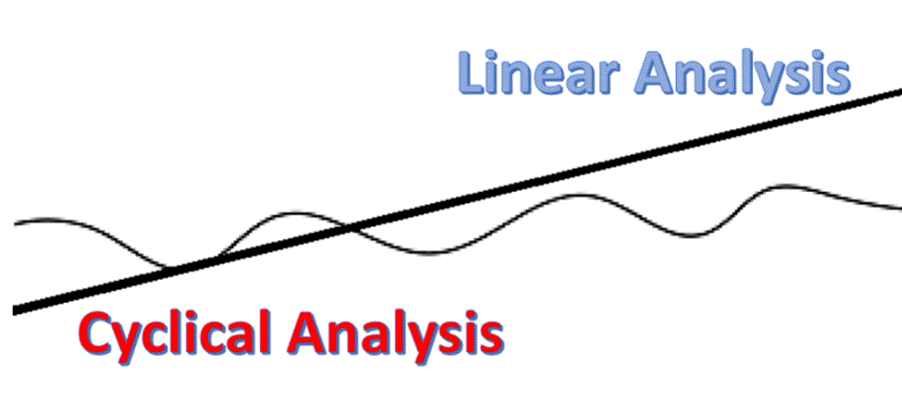
The business cycle is like the economy’s version of a mood swing: it goes from boom (expansion) to ego trip (peak), to hangover (contraction), and finally to bust (trough) before repeating the drama. Rinse, repeat, forever.
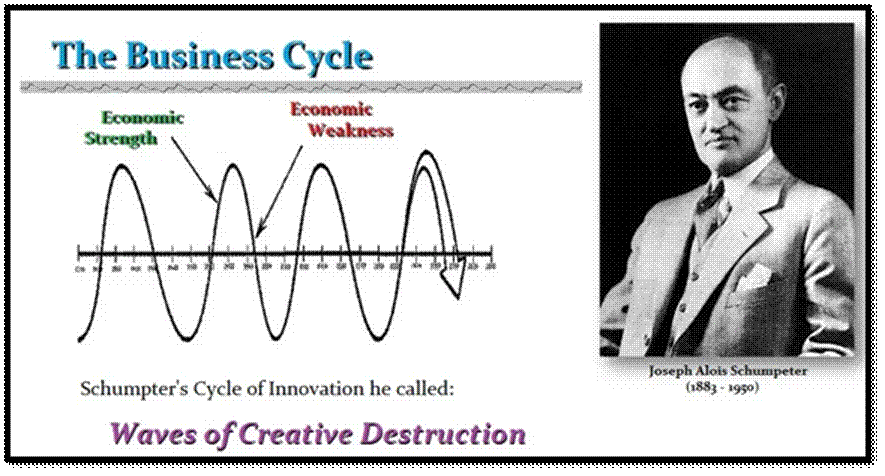
Enter Schumpeter, capitalism’s favourite philosopher of chaos. He didn’t blame recessions on bad luck or central banks – no, he saw them as economic detox. In his world, innovation comes in waves that shake up the system, kick out the lazy incumbents, and make room for shiny new ideas. Sure, it gets messy, but that’s just capitalism clearing its throat.
Recessions? They’re just capitalism’s way of spring cleaning.
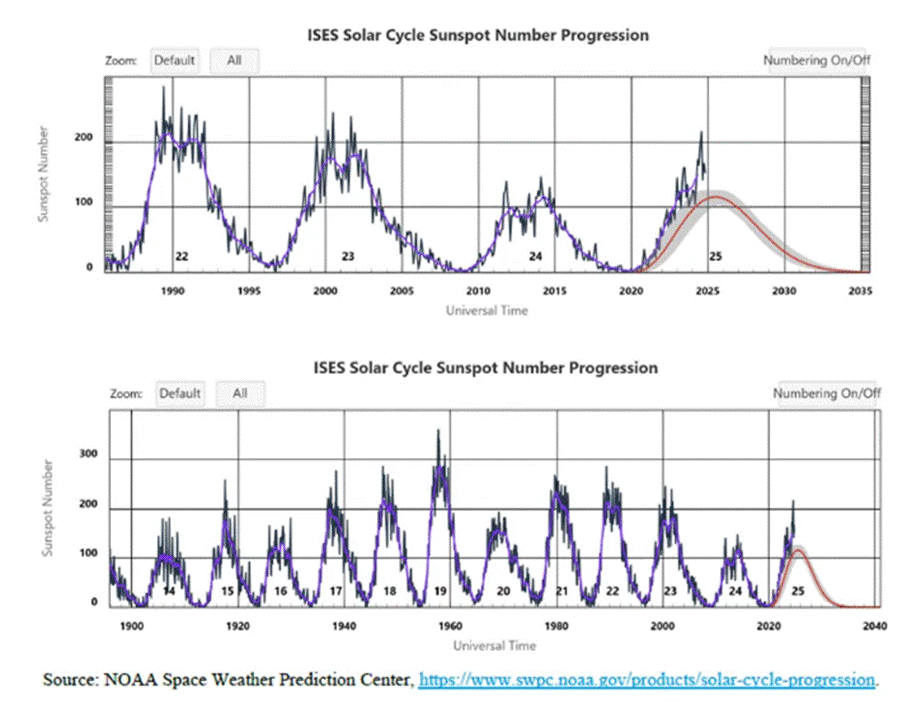
As if the business cycle wasn’t enough of a rollercoaster, Mother Nature decided to throw in another one: the solar cycle—an 11-year cosmic mood swing where the Sun basically goes from chill to "rage mode" and back.
At solar maximum, our star becomes a drama queen, tossing out sunspots, solar flares, and plasma tantrums like it's auditioning for a sci-fi thriller. Satellites get frazzled, GPS gets lost, and power grids have mild panic attacks. Bonus: the auroras get fabulous. Then comes solar minimum, when the Sun takes a nap, space weather mellows out, and investors start understanding that sunspot charts impact stock market crashes and political revolutions. So yes, not only is Wall Street driven by FOMO and Jerome Powell’s mumblings—it might also be reacting to sunburns from 93 million miles away.
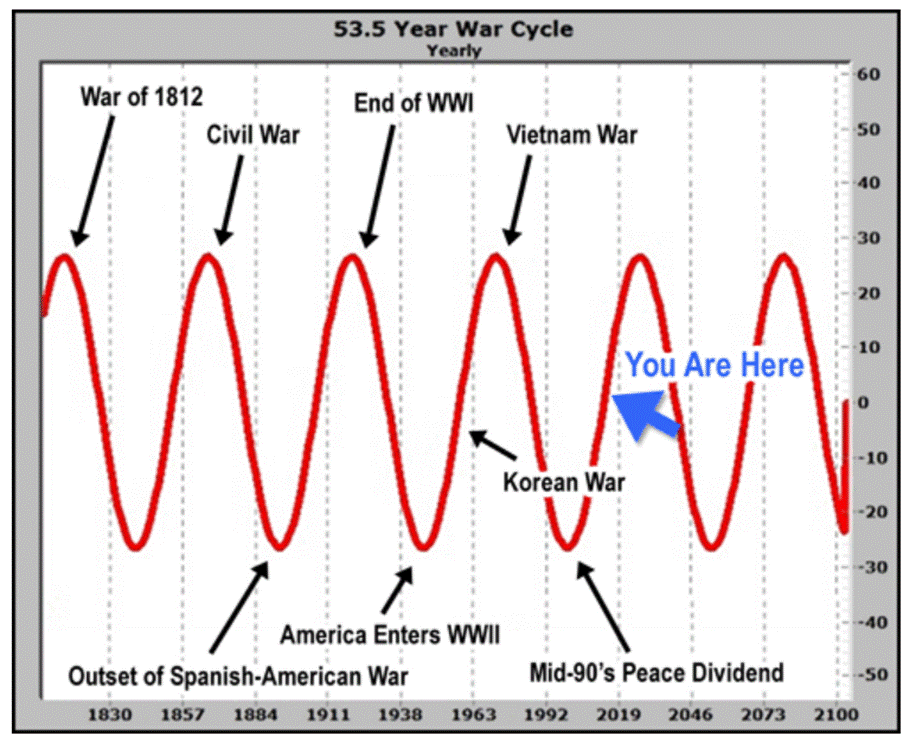
Beyond the solar cycle, the war cycle is a powerful force shaping economic history. Events don’t occur at random—they follow patterns. Three key war cycles stand out: 8.8, 17.7, and the dominant 53.5-year cycle.
The 53.5-year cycle has tracked geopolitical upheaval with surgical precision:
War of 1812
The Civil War
End of WWI (1918)
U.S. entry into WWII
It rose again during the Korean and Vietnam Wars and bottomed in 1995, at the heart of the so-called "Peace Dividend"—a brief pause following the collapse of the Soviet Union and China’s economic opening. Since then, the cycle has turned upward. Its momentum is accelerating, with the next peak projected in 2027.
https://mikesmoneytalks.ca/very-serious-stuff-war-cycles-hit-this-year-prepare-now/
The 17.7-year cycle has also mirrored pivotal flashpoints with striking accuracy: the Spanish-American War, the Panic of 1907, Korea, and Vietnam. It turned sharply upward in 2014, projecting escalation by 2019—a forecast that proved uncannily accurate. This cycle, like the longer one, runs like clockwork. War doesn’t emerge from chaos—it follows a script. The next crescendo isn’t a question of if, but when. And the clock is ticking.
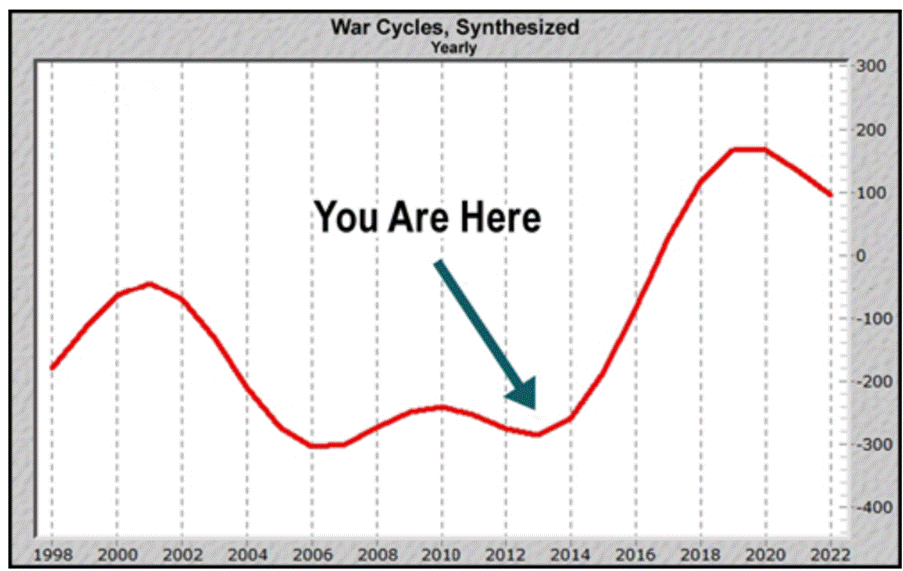
The world is on the brink of a violent turn in the war cycles, with escalation building through 2025 and beyond. The nature of the conflict is uncertain, but the possibilities are numerous and severe: renewed terrorism, civil war in Europe, mass unrest in the U.S., war in the Middle East and Eastern Europe, a China–Japan clash over the Senkaku Islands, territorial disputes in the South China Sea, cyber warfare, or full-scale currency wars—or all of them at once. Tensions are already boiling China against the U.S., North Korea against both the U.S. and Thailand against Cambodia, Malaysia against Singapore. The market impact will be massive. U.S. equities may surge, gold and commodities could enter powerful new bull phases, interest rates will likely rise, and bond prices may collapse. This coming storm will either strip the unprepared of their wealth—or make others richer than Midas.
War cycles also sync with commodity booms. When conflict erupts, prices spike—every time. The war in Ukraine is just the latest dot on a well-worn curve. Those who ignore these cycles do so at their own peril.
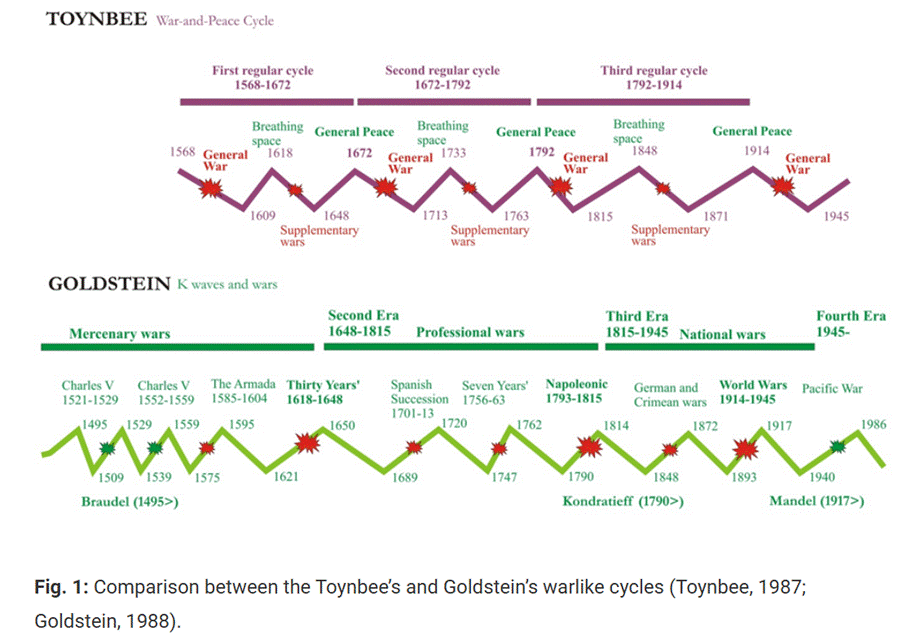
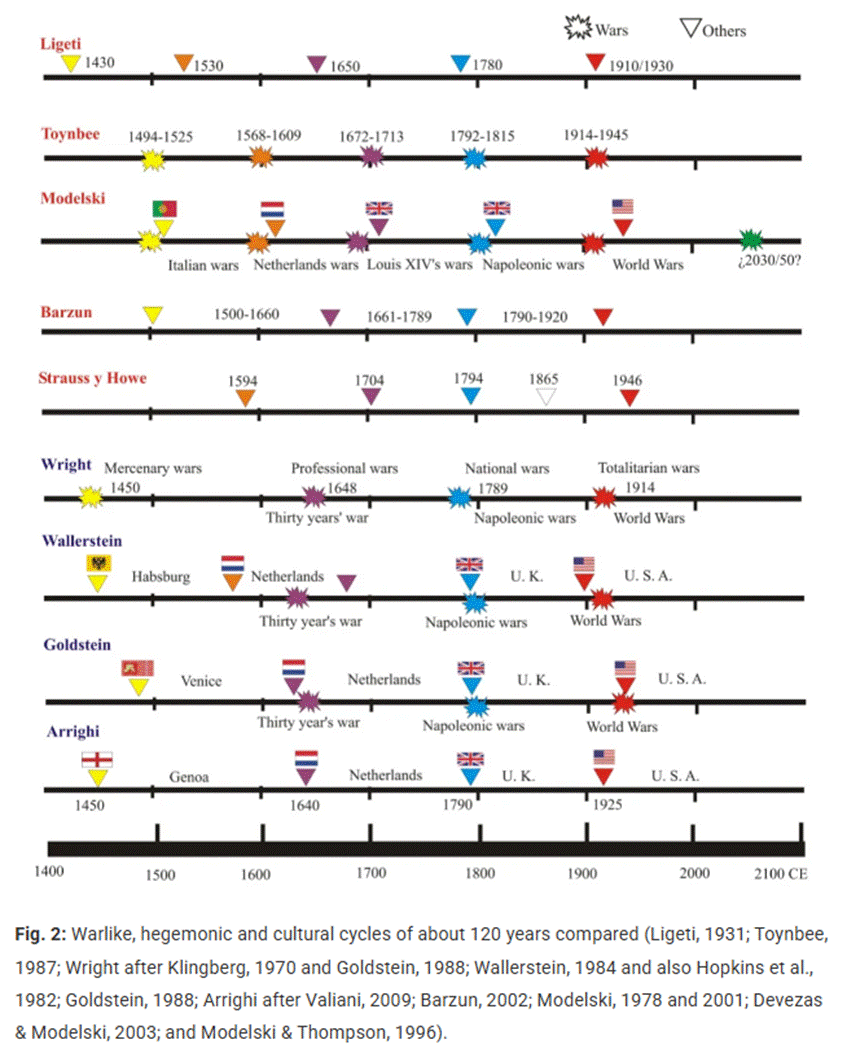
Throughout history, there has been a clear link between major military conflicts and long-term, or secular, uptrends in commodity prices. Periods of rising commodity prices consistently align with increased frequency and intensity of global warfare. While we last explored this connection over centuries, recent geopolitical and market developments make this an ideal moment to revisit the pattern. Multiple researchers have identified a recurring 120-year war cycle, with remarkable agreement on key historical flashpoints: the two World Wars, the Napoleonic and French Revolutionary Wars, the wars of Louis XIV, and the Thirty Years’ War. Even further back, conflicts such as the Hundred Years' Wars (in several incarnations), the Punic Wars, and the Syrian Wars also conform to this ~120-year rhythm. These cycles suggest a striking continuity, not only across early modern European history—from Louis XIV to Napoleon to Hitler—but even deep into antiquity. The question that remains: are these ancient and modern war cycles truly connected by a common historical force, or are we simply observing echoes of chaos repeating across time?
In his book ‘War Cycles, Peace Cycles’, Richard Kelly Hoskins illustrated a clear relationship between commodity price trends and global conflict. His chart, spanning 260 years, shows that major wars tend to erupt during secular uptrends in commodity prices, which he labelled “war cycles”, while downtrends aligned with periods of relative calm, or “peace cycles.”
The logic is compelling: war fuels shortages, government spending, and economic disruption, all of which push commodity prices higher. Destruction of infrastructure also creates a surge in raw material demand during post-war rebuilding, while rising commodity costs in turn exacerbate global tensions, creating a feedback loop of conflict and inflation.
The current war cycle began with the secular low in commodity prices in 1999, and has since been marked by a steady escalation in conflict: from 9/11 and the Afghanistan and Iraq wars, to the Arab Spring, Syria, Libya, the rise of ISIS, Russia’s growing confrontation with the West, starting in the 2022 invasion of Ukraine, and more recently the Israel–Hamas war and Houthi attacks in the Red Sea as well as the 12-days Israel Iran war.
At 25 years and counting, this war cycle is approaching the historical average of 33 years. If the pattern holds, we could see another 8 years of rising commodity prices and deepening geopolitical instability. The cycle is far from over.
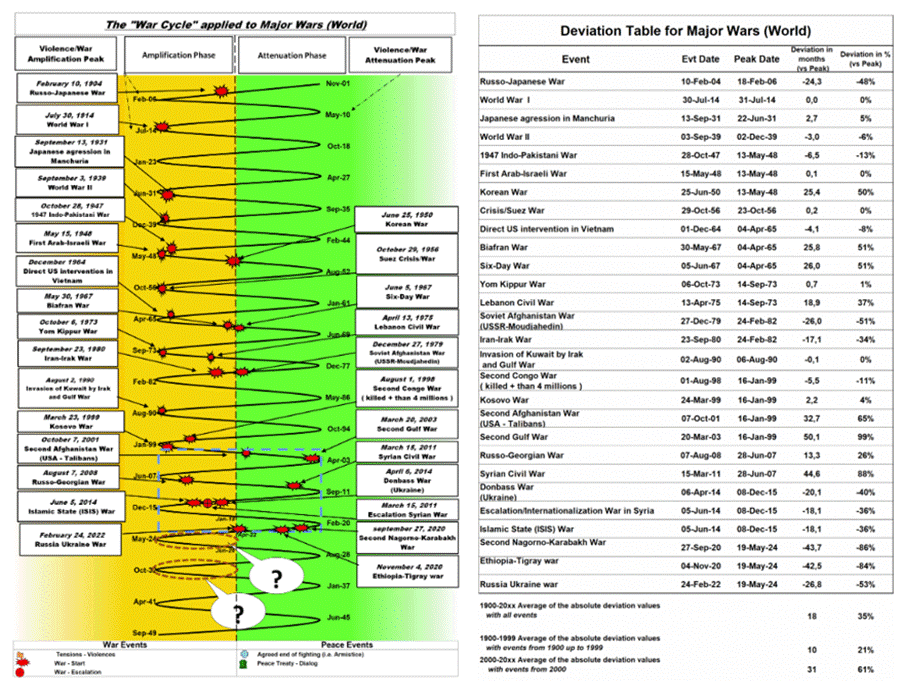
https://horlogedelinconscient.fr/en/war-cycle-in-world-context
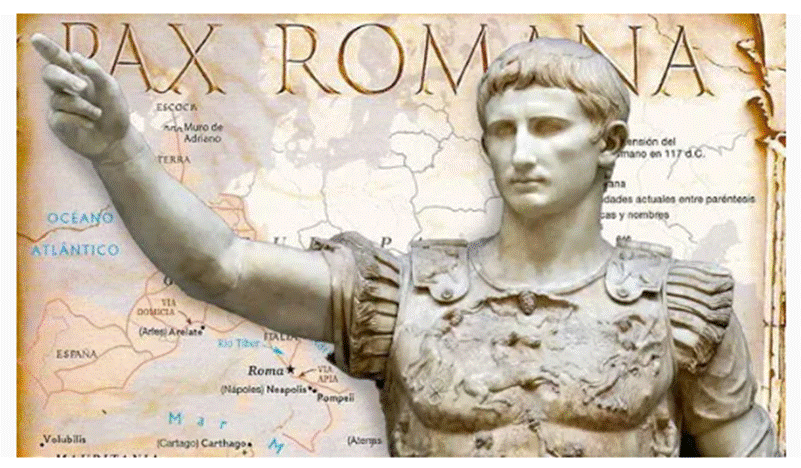
Augustus Caesar—Rome’s first emperor—rose from civil war’s ashes to forge the Pax Romana, a brutal peace forged by the sword. After defeating Mark Antony and Cleopatra at Actium in 31 BCE, Augustus crushed Rome’s internal chaos and secured its borders through relentless military campaigns. The month of August bears his name, a tribute to his conquests and iron will. He reshaped Rome’s power structure, blending republic and monarchy, while building a civil service, stabilizing currency, and securing trade routes. Though peace wasn’t instant—fighting raged in Hispania and the Alps—Augustus’s iron grip ultimately imposed order. His propaganda was ruthless: closing the Gates of Janus to mark peace, and commissioning monuments like the Ara Pacis to broadcast his dominance. The Pax Romana, lasting until 180 CE, brought prosperity and expansion under successive emperors but was always the product of war’s harsh discipline, not mere diplomacy.
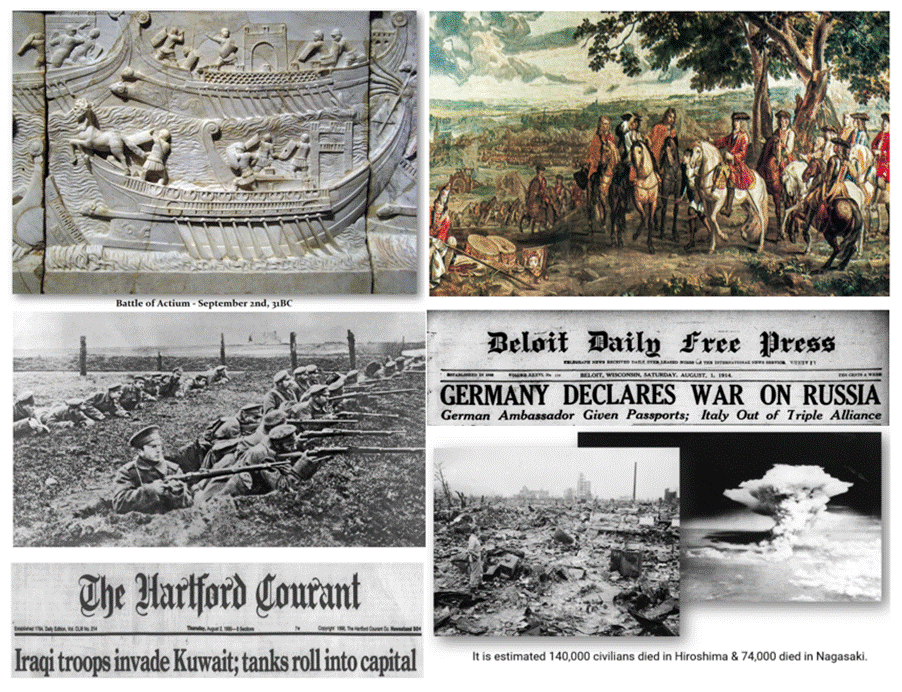
August has long been the month when war flares ignite and history is forged in blood. The legendary stand of 300 Spartans at Thermopylae (480 BC) took place in August, where Valor met overwhelming odds. Hannibal’s crushing victory at Cannae (August 2, 216 BC) reshaped the fate of Rome. August’s shadow loomed over the Battle of Actium (31 BC), the decisive clash that ended the Roman Republic and birthed the Empire.
Centuries later, August bore witness to the Battle of Maserfield (642 AD), shifting power in Anglo-Saxon England, and the preparations for the Norman invasion before Hastings (1066). The Wars of the Roses turned on August 22, 1485, at Bosworth Field, crowning Henry Tudor. Marlborough’s triumph at Blenheim (August 13, 1704) halted French ambitions in Europe.
August’s bloodletting did not end there: Tannenberg (August 26–30, 1914) crushed Russian forces in World War I’s opening salvo, while the brutal siege of Stalingrad began in August 1942, a turning point in World War II. The atomic horror rained down on Hiroshima and Nagasaki on August 6 and 9, 1945, sealing a devastating chapter. The “Miracle on the Vistula” saw Poland repel Communist Russia on August 15, 1920, and the Warsaw Uprising erupted on August 1, 1944, a desperate bid for freedom. August 1, 1914, ignited the First World War as alliances snapped into conflict, while August 2, 1990, marked Iraq’s invasion of Kuwait, sparking the Gulf War.
From ancient to modern times, August has been a crucible of war’s fury—a relentless reminder that in this month, the fires of conflict burn brightest.
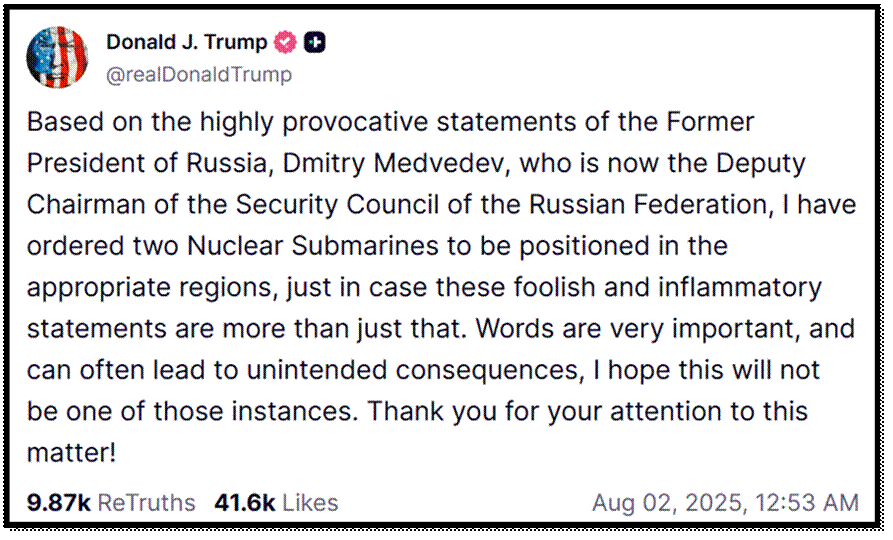
In the theatre of recurring cycles, while the foot soldiers of Keynesian delusion and the loyal rank of state-sponsored propaganda cling to their false idols—propped up by the plutocracy that installed them—those who understand the cadence of history won’t be surprised. The Self Appointed ‘Peace Maker in Chief’, formerly dubbed the ‘Bully in Chief’, has now completed his transformation into the ‘Warmonger in Chief’. Right on cue, August 1st, 2025, was chosen as the launch date for escalating tensions to nuclear brinkmanship with the ever-reliable Russian bogeyman. This wasn’t diplomacy—it was a declaration.
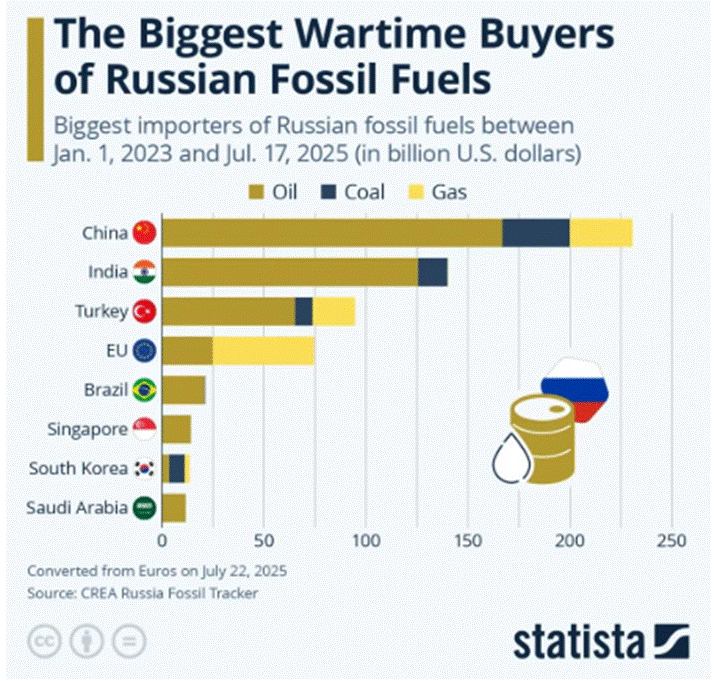
The Manipulator-in-Chief, blinded by imperial arrogance, continues to wield the U.S. dollar like a blunt weapon, failing to grasp that his economic terrorism fuels the rise of BRICS and the de-dollarization of the Global South. In true ‘Trumperialist’ fashion, he threatens 100% tariffs on nations purchasing Russian oil—an empty gesture of economic warfare targeting China, India, and Türkiye. These nations, driven by energy security and sovereign interest, will keep ignoring his ultimatums, as Moscow’s exports remain resilient. Despite sanctions, Russia has rerouted fossil fuel flows toward loyal partners: China, India, and Türkiye. Meanwhile, the fragmented Western bloc—rattled by inflation and energy shortages of its own making—continues to import Russian energy through loopholes and hypocrisy. Senator Graham’s crude threat—"We’re going to crush your economy"—only echoes the desperation of a fading empire. Stalin would have called it what it is: bluff without backbone.
The 'Regime Changer In Chief' s crude threat—"We’re going to crush your economy"—only echoes the desperation of a fading empire. Stalin would have called it what it is: bluff without backbone.
The imperialist West’s feeble sanctions aim to strangle Russia, but India and China’s continued oil purchases only strengthen the Russia-China-India axis. These hollow threats, including a proposed 100% tariff, seek to weaken the mercantilist Global South but will fail. The Malthusians of the North Atlantic Terror Organization may greedily count their wealth, yet the Global South’s revolutionary will remains unbreakable. Current sanctions are weak, with enforcement even weaker, and only ruthless discipline from Washington’s puppets might have any impact—though such actions risk sparking inevitable conflict with the thriving BRICS bloc. Meanwhile, Russia’s special military operation presses on, crushing fascist forces and defending the motherland. The people endure, their spirit unyielding. The enemies will fail; victory of the new axis is certain under the watchful eye of the state and its people’s strength.
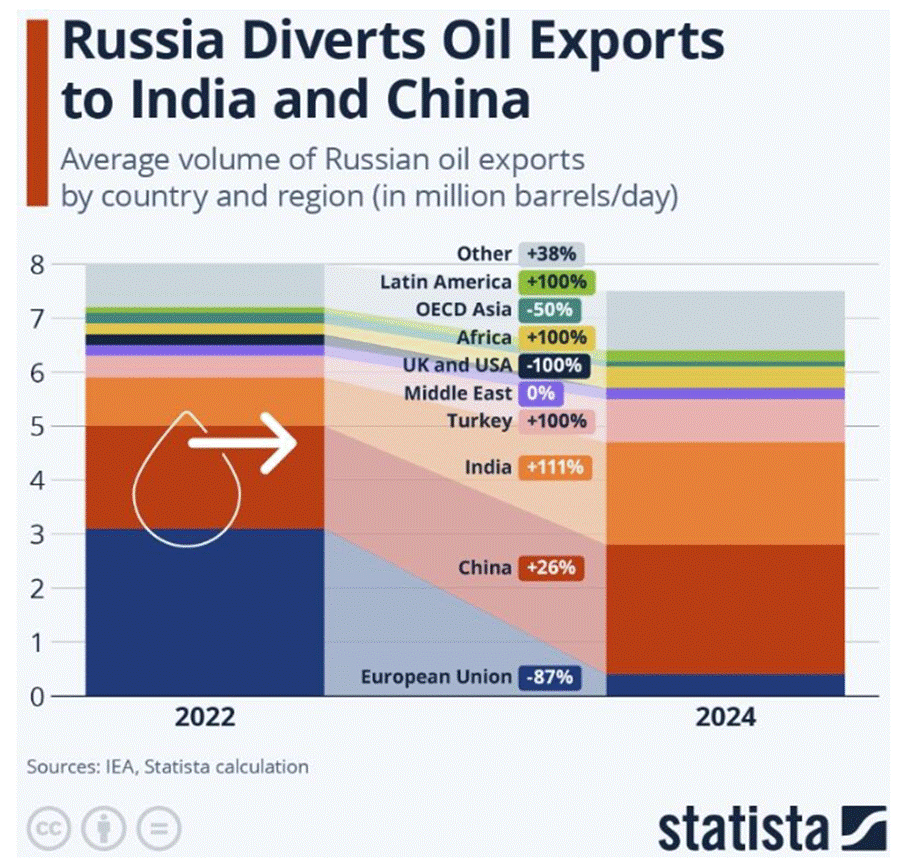
President Trump, ever the diplomat, announced a charming 25% tariff on India starting August 1 for stubbornly buying Russian oil. Because, of course, while India is “our friend,” it’s also been too busy building walls with “the most obnoxious trade barriers” and cozying up to Russia for military gear and cheap energy—exactly when everyone’s asking Russia to just stop the war in Ukraine.
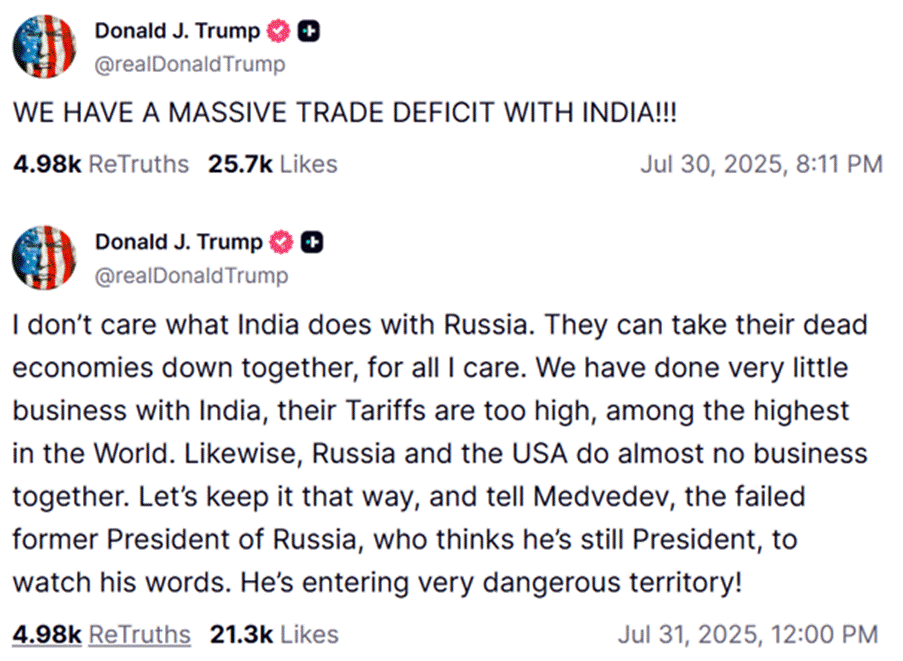
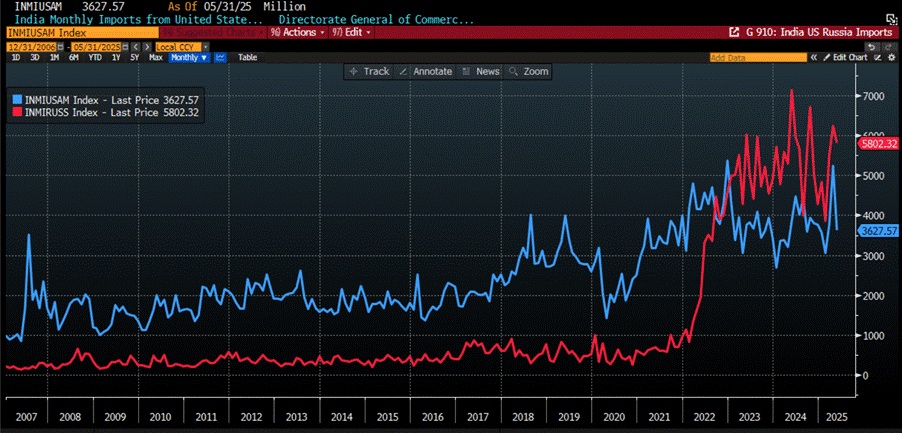
India’s oil imports from Russia exploded since 2022, snapping up barrels at a discount to resell to anyone willing to wink at sanctions. From a mere 68,000 bpd pre-war to over 2 million bpd at peak—because why pay more when you can get a bargain? Now, nearly 40% of India’s crude comes from Russia, at $10–$20 cheaper per barrel than Middle Eastern oil. A no-brainer, right? Meanwhile, US-India trade hits $118 billion, with the US running a $45 billion deficit. So, sure, slap a 25% tariff and threaten billions in lost revenue and jobs in autos, jewellery, electronics—you name it. Other Asian exporters might get a boost, but China’s still buying even more Russian oil, and the rest of Asia can’t quite fill the gap.
Yes, India might pay $6–$10 billion more annually if forced to buy pricier oil, but hey, that’s the price of playing hardball. India says it’s committed to “mutually beneficial” trade with the US, probably smirking behind closed doors. The US wants to pick apart BRICS, but those nations are laughing, knowing they’ve grown beyond Western puppeteers. Tariffs? Old news.
India Monthly Imports from the US (blue line); Russia (red line) in billion USD.
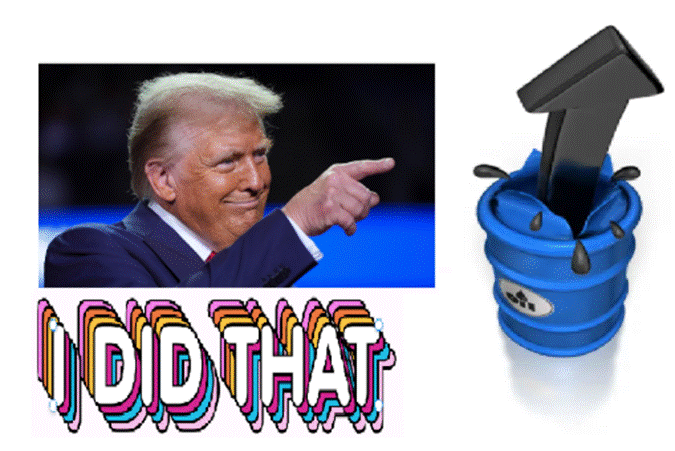
Ah yes, The Manipulator In Chief’s Putin playbook—channelling his inner FDR, right down to the oil embargo dream sequence. Just like Roosevelt poked the bear in 1941 and got a date with Pearl Harbor, the Malthusian Neocons are crossing their fingers that isolating Russia economically will produce a similar bang. Never mind that half of Russia’s oil sails merrily through the high seas on a "Shadow Fleet," or gets rebranded via India and Türkiye as if origin stories are optional. Meanwhile, the self-appointed Peace Maker In Chief ’s tough-guy deadline—10 days for Putin to make peace—has all the weight of a toddler’s ultimatum. Sure, oil prices might pop, Europe might crash, and Russia might slightly flinch—but collapse? Cute. Even the Gulf states can’t patch this up fast enough. In the end, all the tenant of the White House is doing is recycling the same genius sanctions logic that backfired spectacularly birthing BRICS, breaking Germany, and convincing China to start cashing in U.S. Treasuries. Weaponizing the dollar was such a power move… until everyone else decided to stop playing.
Read more and discover how to trade it here: https://themacrobutler.substack.com/p/ad-bellum-trump-parare
Join The Macro Butler on Telegram here : https://t.me/TheMacroButlerSubstack
You can contact The Macro Butler at info@themacrobutler.com
If this research has inspired you to invest in gold and silver, consider GoldSilver.com to buy your physical gold:
https://goldsilver.com/?aff=TMB

Disclaimer
The content provided in this newsletter is for general information purposes only. No information, materials, services, and other content provided in this post constitute solicitation, recommendation, endorsement or any financial, investment, or other advice.
Seek independent professional consultation in the form of legal, financial, and fiscal advice before making any investment decisions.
Always perform your own due diligence.