







The End of Free-Market Capitalism and The U.S. Debt-for-Equity Swap
The U.S. Search for Investors
"Domestically, it is simply nationalizing businesses in a corporatist mindset. It is a move towards state controlled capitalism, like China. And it may work. It may be necessary, even if only temporarily. But that is exactly what it is. There is nothing free-market or democratic about it.
Authored by GoldFix, ZH Edit
Contents
- The Loss of Bond Market Attraction
- Historical Precedent and the Postwar Model
- The Imperative to Retain Capital
- The Role of Foreign Direct Investment
- The End of Free-Market Capitalism
- Otherwise We “Adjust”
The Loss of Bond Market Attraction
If the United States can no longer attract sufficient foreign capital into its bond market, the ability to subsidize spending and investment comes under direct threat. Without new inflows, policymakers are left with limited choices. This Problem stated as an Either/Or proposal:
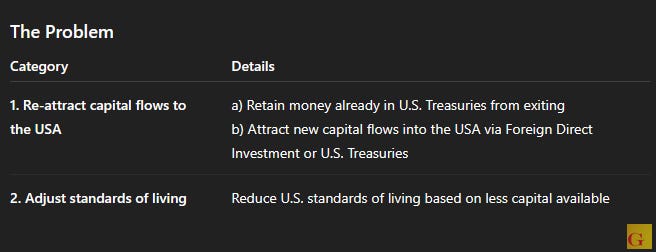
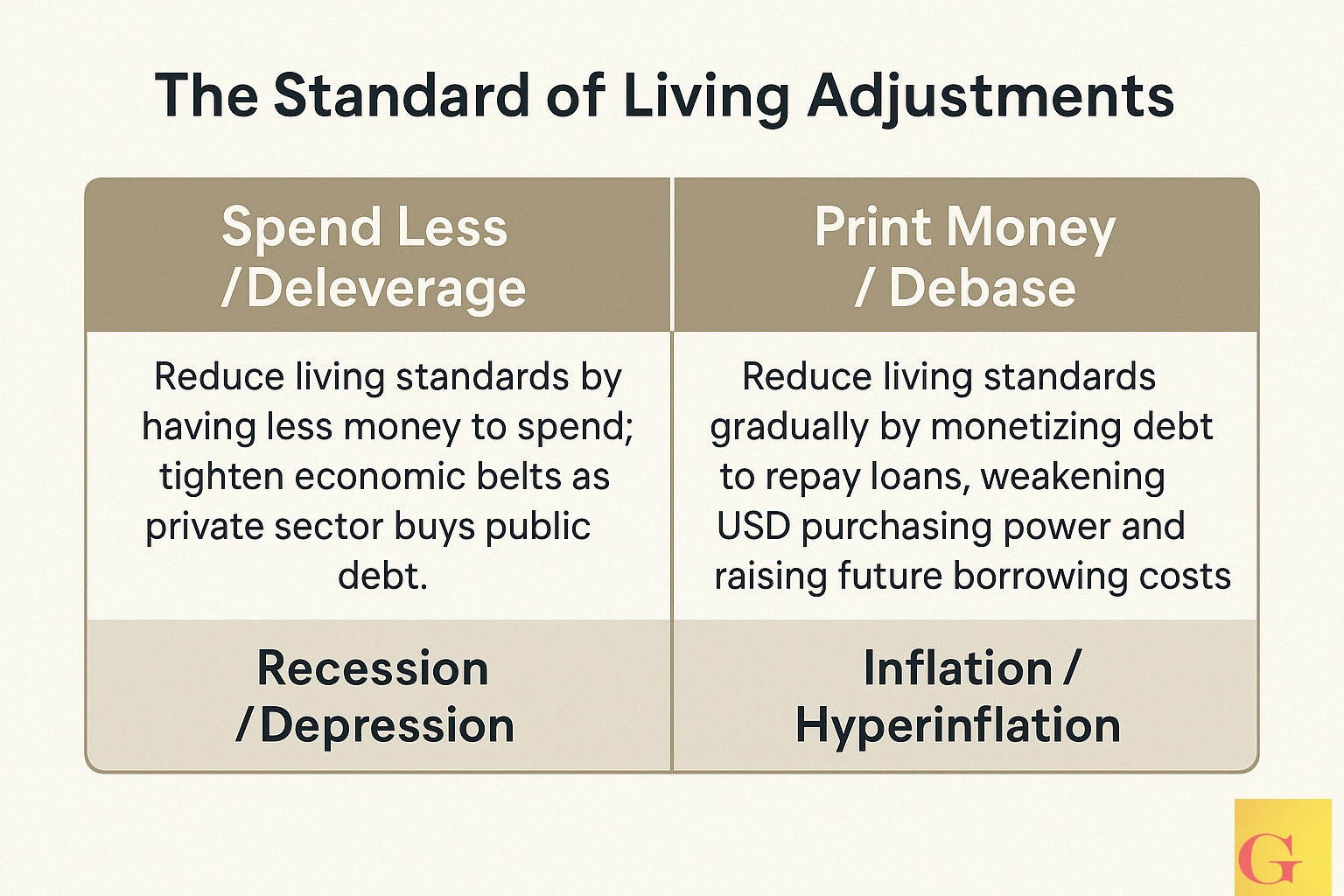
Failing to re-attract capital flows in number 1 above necessitates Adjustments. The first adjustment option is to spend less, which requires belt-tightening and leads to a significant (possibly steep) decline in the standard of living, potentially resembling conditions of the Great Depression.
The second option is to monetize the debt. This would involve printing money to replace absent lenders, debasing the currency, and inflating away the problem. In this scenario, living standards decline slower over time (and more chronically) because the currency buys less, not because the government spends less.
The Third Way, The Proper Way
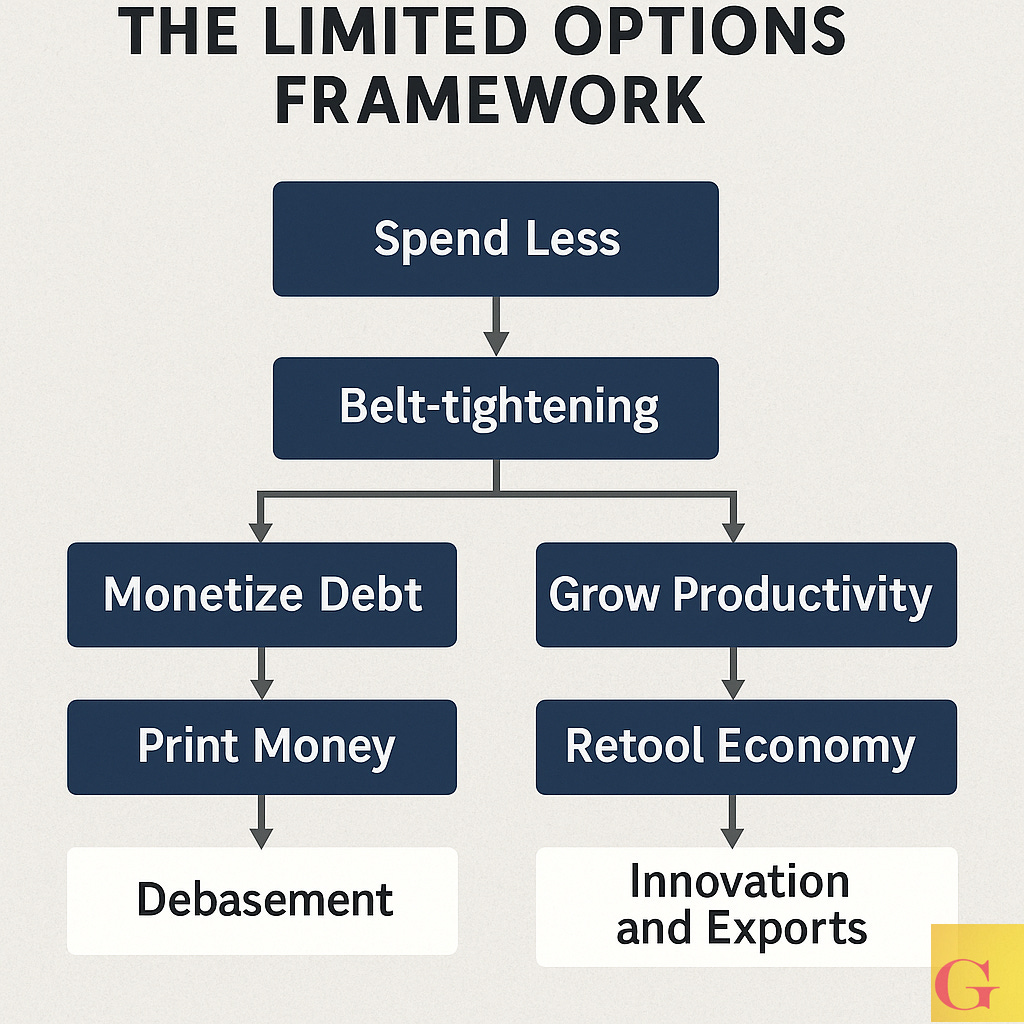
Growth requires the U.S. economy to produce goods and services the rest of the world demands at a premium to existing optiuons. This model envisions using investment to retool the economy so that it can accommodate the current/rising debt burden through innovation and output. This is what rebuilding a manufacturing base is, in essence. The USA needs to get off the couch, stop slacking, and create (get) a better paying job.
“Financially, we either borrow less and tighten our belts or we monetize the debt and debase the currency. Economically, We have to go to work”
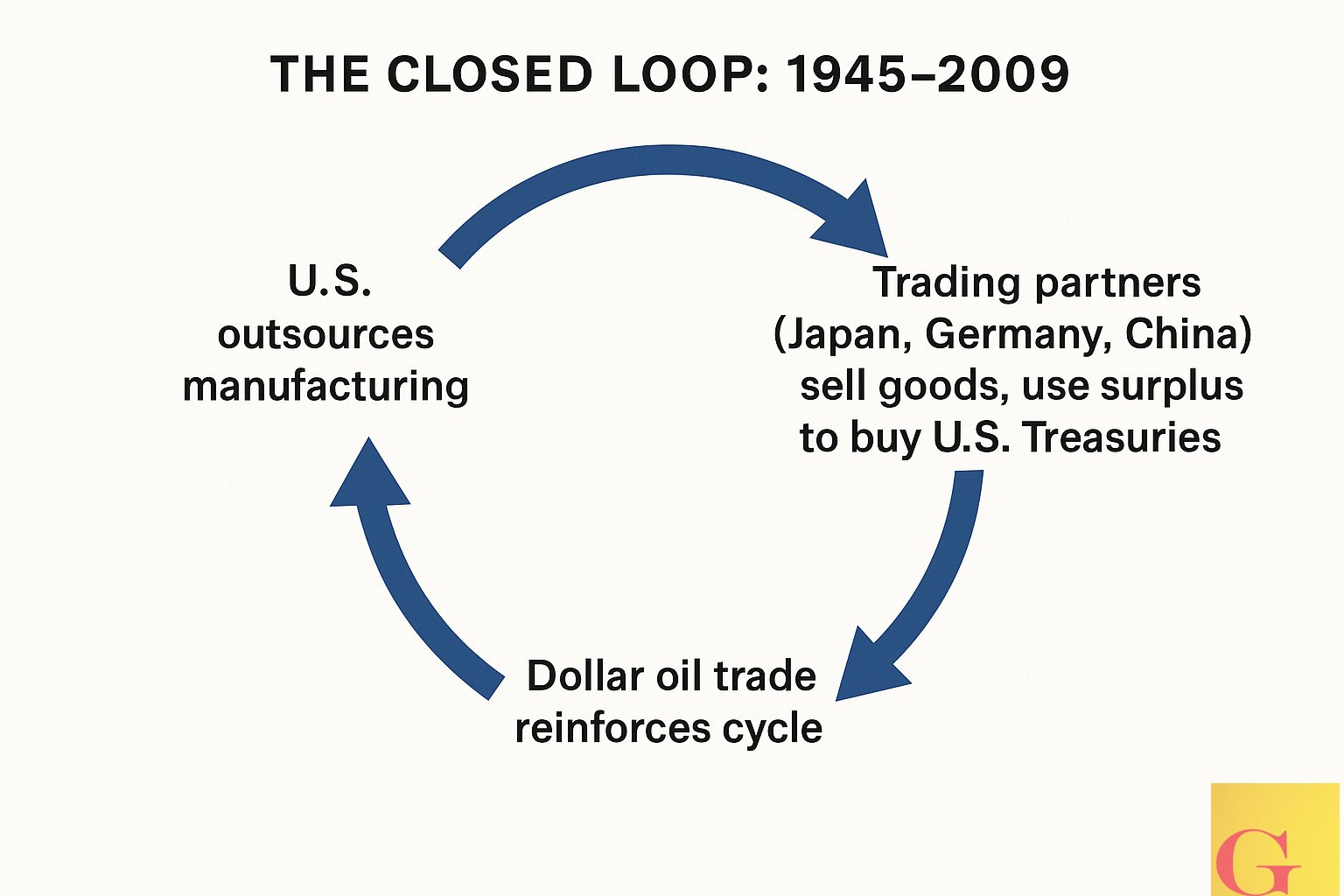
Circling back for just a minute to describe how the USA attracted foreign money to its shores to begin with. Namely, how the USA attracted so much capital which it is now in danger of losing Restated: How the US attracts buyers of U.S. debt. This part is relevant as the method will be somewhat recycled to re-attract investment going forward, whether it be in the form of foreign bond purchases or direct investments.
Historical Precedent and the Postwar Model
After World War II, the United States created a closed loop with its trading partners. American manufacturing dominated initially, but as the country lost competitiveness due to higher domestic SOL and labor costs, production was outsourced abroad. The nations that received outsourced manufacturing (Japan, Germany etc) sold goods back to the U.S., and in return, they purchased U.S. Treasuries. As their Stanndards ofliving rose, other nations became the manufacturing bases (Korea, Taiwan etc). The system was reinforced by the dollar’s role as the currency of oil trade. China became the most notable participant in this model after Nixon’s deal with Mao leading to it eventually being integrated into the global economy as its biggest manufacturer, and a buyer of US Bonds. Now they want to renegotiate that deal. We need a new buyer of our debt who will loan us the money we’ve become accustom to borrowing. But…
“There may be ideal candidates, but it is more like a trading block: some from this guy, some from that guy.”
More Investments in Corps Incoming
— VBL’s Ghost (@Sorenthek) August 18, 2025
To convince other nations to do FDI, the US has to give them assurances (above and beyond the ones they got with UST). we will protect their investments especially if we’re directing them. as the MP on a SWF type entity
We will in turn demand… pic.twitter.com/dtWyOwKZmZ
The Imperative to Retain Capital
If foreign capital continues to exit the U.S. bond market in large amounts (and no new global money replaces it), the immediate priority becomes preventing the outflow. In a normal functioning market, this would be managed through higher interest rates to keep money here, yet in practice, structural solutions are required since this would not likely be an orderly adjustment given the US debt burden.
Restating the Problem above:
- Re-attract capital flows to the USA
- Retain money already in UST from exiting
- Attract more new capital flows into the USA via Foreign Direct Investment or UST.
Stablecoins are being represented as one such mechanism, allowing Treasuries to be treated as collateral rather than sold outright for alternative uses. This process transforms government bonds into a form of money, slowing the exodus of funds from the U.S. financial system.
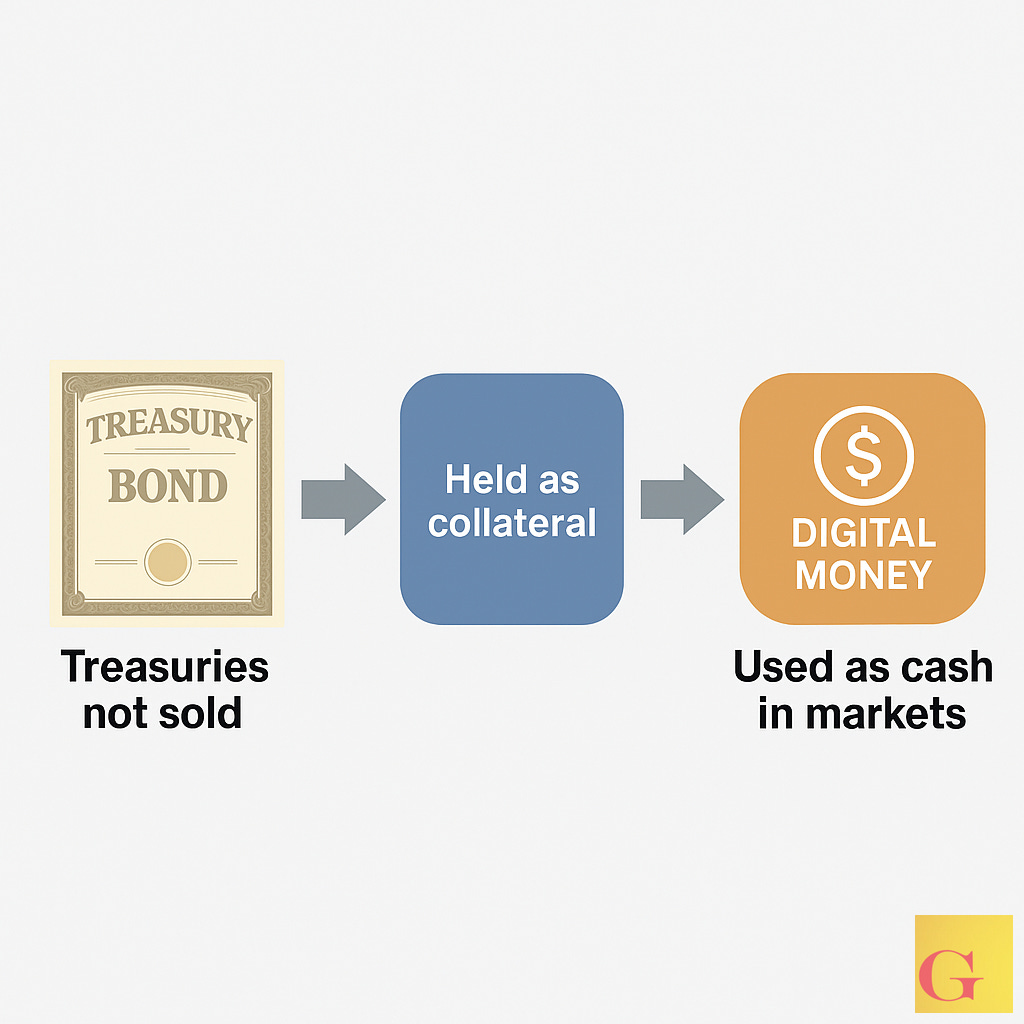
The principle is straightforward: it matters less whether money is placed in Treasuries, equities, or factories. What matters most is that the money remains within the United States. In achieving that , domestically created resources (our own money) have less to adjust beyond being shuffled to different investments. The sum total of money in the US economy remains stable and the US Standard of living can continue.
Bottom Line: Debt, equity, or some hybrid like a convertible bond.. we don’t care the form of investment. We just need the money or we’re going to have to use one of those “adjustments” listed above.
The Adjustments:
- Spend Less/Deleverage:(Recession/Depression)
- Print Money/Debase: (Inflation/Hyperinflation)
That is what a crisis will look like if it were to come. Choosing how to die economically.
The Role of Foreign Direct Investment
“Foreign direct investment is not like buying stocks. It is committing to an investment in the country.”
Once existing capital is retained, the next challenge is attracting fresh inflows. Treasuries no longer serve as the obvious safe-haven hedge against inflation or debasement, leaving policymakers to rely on equity-like arrangements with greater upside potential. Even if they did hedge tjhose risks still, the trigger for the perception change was confiscation of Russian reserves in 2022 which added something never before experienced to US custodianship: Counterparty risk and confiscation risk. The USD is no longer as good as gold as it was once perceived to be.
Continues here
Free Posts To Your Mailbox
