


Extreme Fear in Stocks
Welcome to MktContext! I am a professional money manager, trader, and investor who has been timing and beating the market for over a decade. We specialize in predicting market direction by studying the economy and market signals. Join 10,000 subscribers at MktContext.com in improving your portfolio returns — it’s free!
Another wild week in stock markets. Last Monday, the S&P500 gapped up and rallied hard, on news that the longest government shutdown would be ending. But that was not enough to prevent fierce selling on Wednesday and Thursday.
On Friday, the market gapped under the all-important 50-day moving average, before rallying back the entire day. This kind of whipsaw price action is signaling the next turn for stocks.
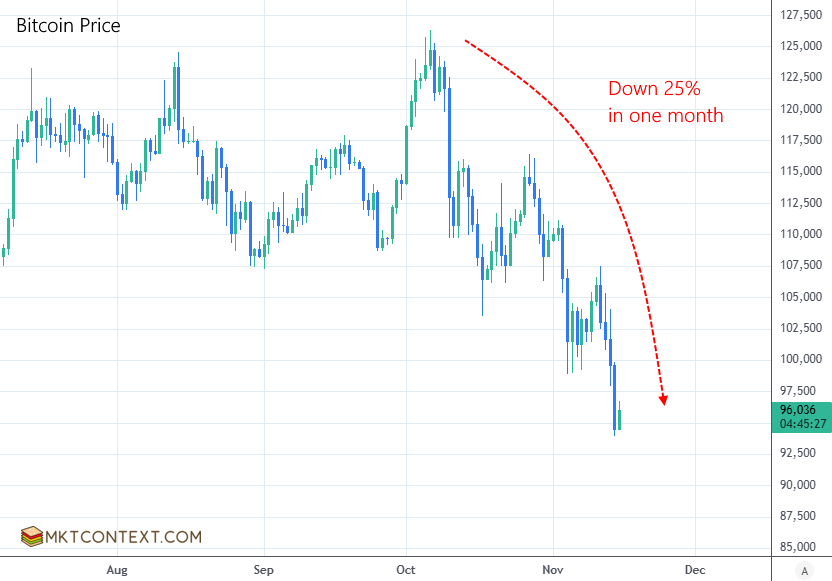
We’ve seen a lot of carnage lately in the tech market, first in unprofitable tech and now in mega caps. We’ve also seen a massive pullback in crypto since October. Bitcoin price is down -25% from highs:
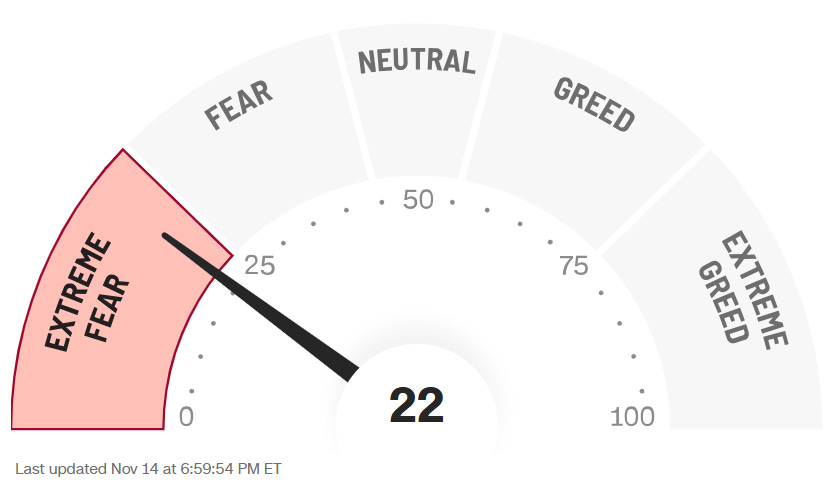
Sentiment is very negative out there. In fact, the Fear and Greed Index is registering extreme fear!
Wall of worry
Over the past two weeks, a strong bearish narrative has emerged, driven by three key challenges. Firstly, there’s growing doubt about the long-term payoff from the wave of AI spending. Companies have poured billions into new infrastructure and chip capacity, often financed through rising debt. But the return on this investment remains uncertain, and now investors are questioning whether the pace of AI spending is sustainable at all.
Secondly, rate cuts from the Fed have become less certain. Earlier optimism about a December cut and a dovish stance into 2026 has faded as more Fed officials express mixed views on inflation and policy. The split commentary has left markets unsure about the timing and speed of easing. Investors need lower rates to support higher stock valuations. Here are the rate cut odds for December:
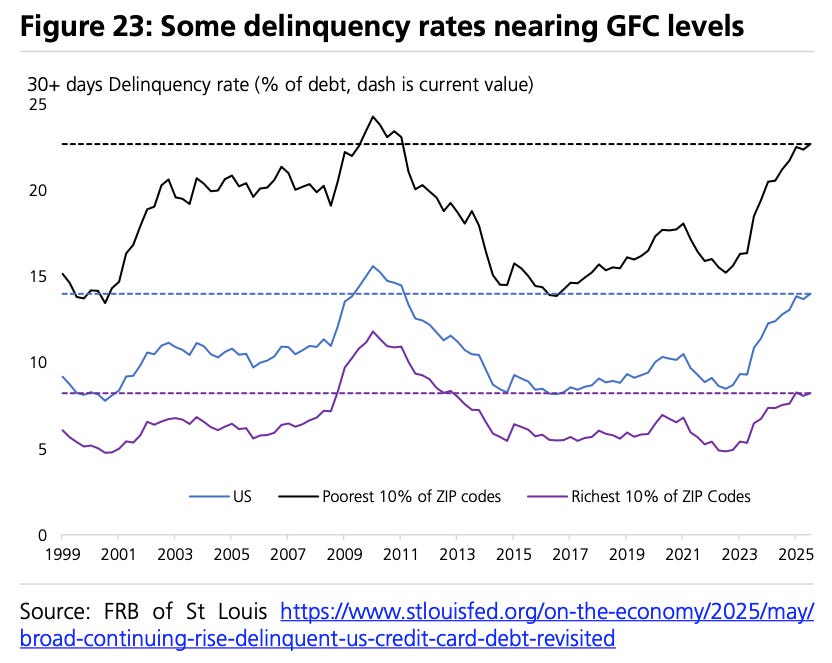
Thirdly, uneven US economic data. Job growth is stalling, and indicators tied to lower-income households (e.g. consumer confidence and credit delinquencies) have softened. Chart below is delinquencies by cohort; lowest incomes (black line) is near 2008-highs, while high earners (purple line) is only modest. These trends are raising concerns about the durability of economic growth heading into 2026.
While all three appear to be valid concerns on the surface, none are immediate problems for the economy/markets. We see AI spending remaining uncomfortably high, fueling economic growth as the Fed inevitably cuts.
Bull markets often climb a “wall of worry”. This happens because the clouds are cleared as time passes and it becomes apparent that the risks won’t derail long-term growth. The presence of skepticism and caution actually help sustain a healthier, more grounded bull market and prevents excess euphoria. Therefore, it is reasonable to acknowledge the risks but remain cautiously optimistic as long as fundamentals remain intact.
To read the rest of this article, and to see our portfolios and get more market timing content, head over to MktContext.com and subscribe today!