





AI's Civilizational Shockwave
History’s grand winners weren’t just the guys with the biggest biceps or the shiniest gold—they were the ones who figured out the best hacks. Forget armies; the real power move was better hardware. Bronze and iron turned small-time tribes into full-fledged empires by supplying superior spoons and swords. The Phoenicians were just extreme early adopters of better ships (read: ancient Amazon Prime logistics). The Greeks used geometry and nice architecture as a flex, while the Romans were basically the world’s first successful road construction company, using engineering to keep their empire from having a massive logistical meltdown. Every time, someone invents a better widget—from the stirrup to the printing press—and suddenly, the old dominant civilization is left holding a fax machine while the new kid is rocking the latest smartphone. Tech has always been the ultimate cheat code for global domination.
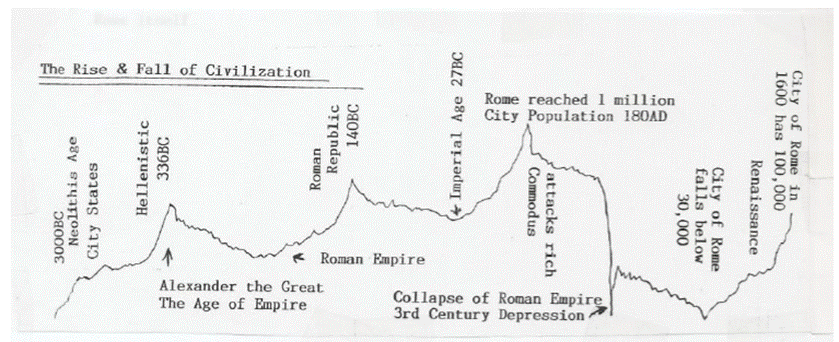
The Industrial Revolution wasn’t just a revolution; it was the moment Britain decided to become the world’s unmatched factory outlet. They basically said, “You know those things you like? We can make them cheaper, faster, and in terrifying quantities.” Does it sound familiar for those living in the 21st century?
Thanks to steam, coal, and a whole lot of clunky machines, the UK became the ultimate volume producer, making everyone else’s manufacturing look like a kid’s lemonade stand. All that cash started pouring in, allowing them to build a navy big enough to demand everyone use their stuff. The result? They didn’t just participate in the global economy; they ran the whole show, laying down the rules of trade and finance. It was less “Pax Britannica“ and more “UK: Now Controlling Global Output and Shipping Lanes. Don’t touch our markets.”
During the Pax Britannica, the Great British Pound (GBP) was less a currency and more the exclusive VIP pass to global trade. Britain’s navy scared everyone just enough to ensure London became the world’s financial club, making the GBP the only money anyone bothered to keep in the piggy bank. The UK’s best move? Adopting the Gold Standard in 1821—a fancy way of saying, “We promise this money isn’t just printed paper.” Backed by industrial might and a whole lot of empire, the GBP was consistently rock-solid and highly valued because, frankly, the entire world needed it just to keep the economic gears turning. It was the currency equivalent of being the only person with the Wi-Fi password.
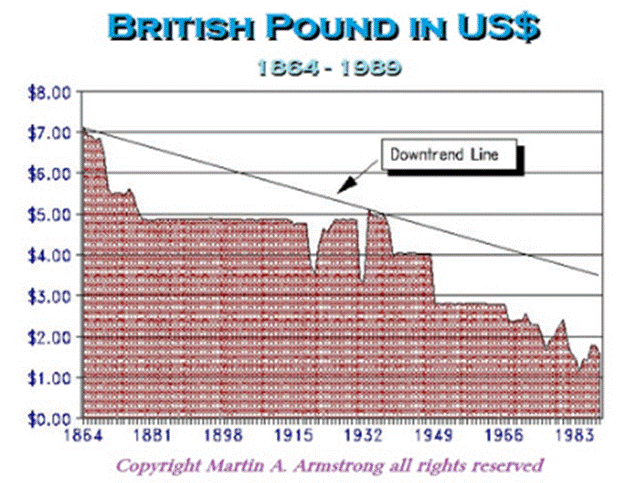
The Mandate of Finance is easily lost when one prioritizes Warfare over Wealthfare. The esteemed Great British Pound (GBP), having maintained its noble rank for a century, suffered a profound loss of face not from a clever rival, but from the immense dishonor of two costly family quarrels (the World Wars). The venerable Exchequer, burdened by unseemly debt—especially that owed to the young, upstart nephew across the ocean—was compelled to abandon the Gold Standard. This lack of discipline was a great blow to trust, causing the world to question the Pound’s integrity. Thus, as ancient wisdom foretells, when the established lord cannot maintain order and solvency, the center of prosperity shall naturally migrate. The bold American cousin, having wisely kept his homeland untouched and his factories humming, used the Bretton Woods Edict of 1944 to install his own Dollar as the new Son of Heaven in the financial realm, concluding the GBP’s long, stable reign with a regrettable fiscal collapse.

https://www.federalreservehistory.org/essays/bretton-woods-launched
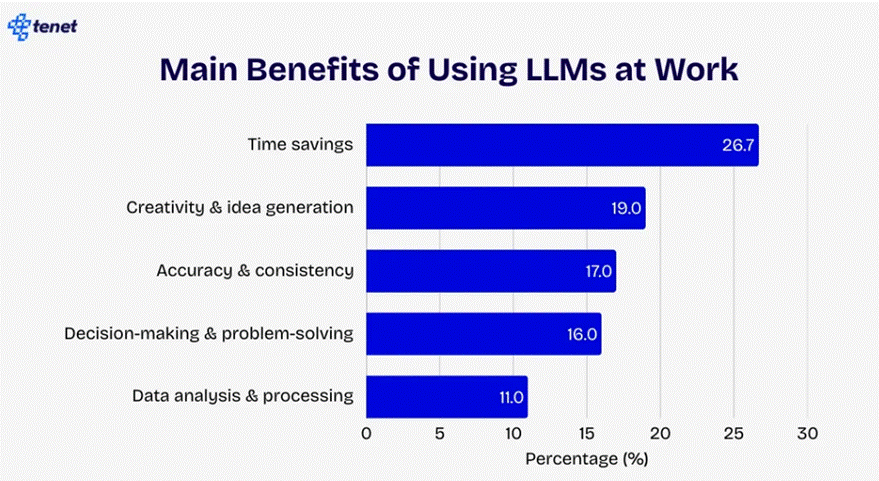
Civilizational progress is not only of being about fancy tech; it has also always been about who has the best spreadsheet and the fattest wallet. The real golden rule for LLMs may be very simple: If you launch a business powered by glorified probabilistic autocomplete, you are training for the unemployment line. The LLM market is an unprecedented financial spectacle, projected to soar to over $82 billion as companies continue to misallocate capital toward digital autocomplete. While an absurd 88% of professionals claim these tools improve their “work quality” for simple tasks like emails and brainstorming, the statistics quietly confirm the persistent, unaddressed flaws: 35% of users worry about endemic inaccuracies, and studies show pervasive racial and gender bias. This trend proves that the widespread, routine adoption of market leaders like ChatGPT (which holds a massive 74.2% share) is built on a foundation of boundless user optimism and low-stakes applications, happily ignoring the deep ethical and reliability potholes in the technology.
https://www.wearetenet.com/blog/llm-usage-statistics
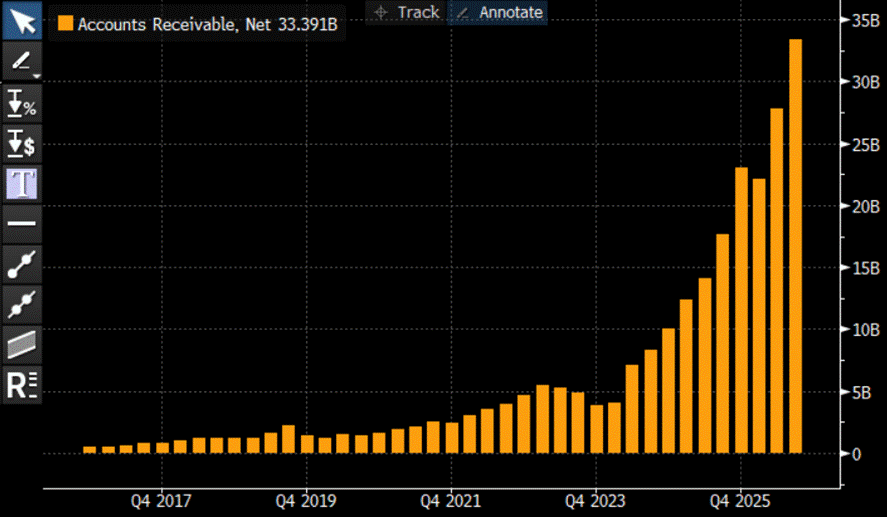
So why the insane boom in expensive chips and data centers? Simple: it’s less about end-user demand and more about companies selling GPUs to their friends (and themselves) via loans, investments, and magical accounting. Let’s not mince words: this is a classic case of channel stuffing, not a sustainable, profitable ecosystem. When this party ends—and it will, violently—we will witness the single largest, most spectacular destruction of misallocated capital in modern history, all because we chose building hallucination machines over boring, necessary things like cheap energy and decent plumbing. The shame of it all is practically an artistic statement.
Nvidia Quarterly Accounts Receivables.
The profound failing of the West lies in its utter forgetfulness of the Ancestral Mandate. Citizens take for granted the middle-class necessities—from the warmth of the boiler to the swiftness of the road—that form the very capital stock bequeathed by generations past. There is no institutional respect, no filial piety, for the immense labor required to construct this functioning civilization. All these having been methodically destryoed by Keynesian polices instaured by the Educated Yet Idiots who have been in the leadership of the west since World War 2 and which goals have been to enslaved their citizens into increasingly communist policies to ensure that they will stay in power.
Consider the speed of true progress: India may achieve the modern prosperity of 480 million souls in a mere decade—a feat of quantitative human welfare unmatched in history. Yet, while such real achievement occurs, Western discourse is choked with frivolous ideology: loud debates over big government and restrictive policies that actively harm the essential capital (the infrastructure and energy that are the fabric of society).
True wisdom, therefore, is not found in chasing fleeting new technologies, such as the distracting LLM AI, which merely shrinks the true foundation. The path to rectifying the civilizational imbalance and expanding genuine welfare is simple, yet often ignored: Prudence demands investment in cheap energy and reliable plumbing. That is the humble, useful groundwork upon which all great societies must stand.

Source: The MacroStrategy Partnership.
Western tech “leaders” suffer from a hilarious delusion: that their latest code sprint will single-handedly solve human mortality, with one visionary predicting LLMs will double lifespans within two years and we all know it won’t. This chronic confusion stems from conflating civilization—the boring stuff like capital allocation and functional infrastructure—with shiny technology.
The reality is simple: civilization’s progress is powered not by the newest algorithm, but by the disciplined deployment of money. This entire Large Language Model (LLM) circus, from the expensive chips to the hallucinating chatbots, is actually running civilization backward because it’s fundamentally value-destructive; it burns precious surplus that should be funding things that actually work. The whole enterprise is a spectacularly mismanaged bubble, representing a record-shattering misallocation of US capital (4x the idiocy seen before the GFC), and it is absolutely destined to burst in a glorious, self-immolating fireball of debt and vaporware.

Source: The MacroStrategy Partnership.
While not being a caveman, but being a humanist looking for the good of hunanity, everyone should care less that a technology exists (like the perpetually “next big thing” graphene or those cute 3D-printed plastic busts) and more about whether it’s actually useful.
The key rule is simple: The most useful tech trumps the latest tech. Productivity expert Robert Gordon nailed it with the ultimate philosophical query: “What would you rather have: an iPhone or a toilet?” Since most of us are currently indoors and despise gardening with a small shovel, the answer is still clearly the porcelain throne.
Sure, Apple charges more for the phone than the entire annual output of global plumbing manufacturers and makes more profit than all of them combined, but that just means the toilet market is competitive and the phone market is a monopoly. While the iPhone delivers minor joy, the humble, cheap toilet provides civilization-defining consumer surplus. Economically speaking, the device everyone carries in his pocket is a luxury; the device that handles your waste is a necessity, and society extracts far more real value from the cheap porcelain than from the expensive glass slab.
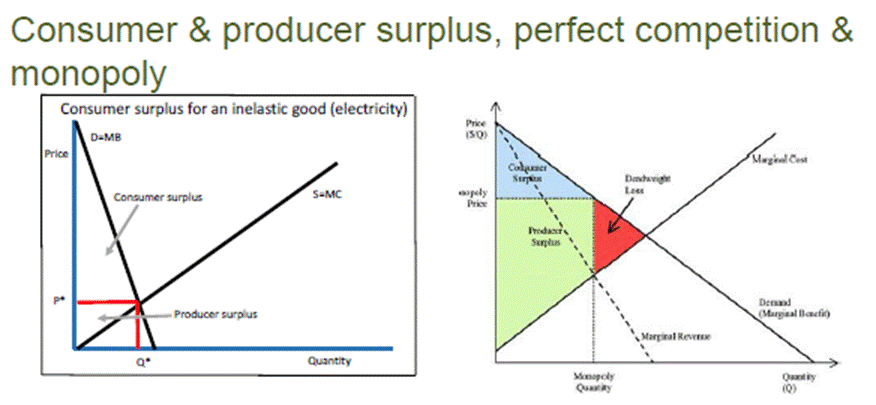
The greatest talent of Big Government is its uncanny ability to take perfectly cheap energy and, through a baffling concoction of taxes, regulations, and turn it into spectacularly expensive energy. This spectacular incompetence, particularly on display in Europe, is the primary driver of economic decline, essentially forcing civilization to put itself into reverse.

https://www.nrdc.org/stories/why-your-electricity-bill-high
Here’s the real economic secret: prosperity is just maximizing happy customers and fat profits using cheap energy. This delightful overflow lets society build the “Magic Battery”—that wonderful Capital Stock that pays back forever, like the self-watering gardens of the Aztecs. When society has its foundational needs met—cheap homes, cheap food, cheap power, and functional toilets—it actually thrives.

https://fourstringfarm.com/2014/04/01/the-floating-gardens-of-aztecs/
The crucial final test, then, is simple: Do those ridiculously promoted, energy-guzzling LLM AIs—those noisy, probabilistic parrots—actually create any of this precious surplus, or are they just expensive, digital lawn ornaments distracting us from the real work?
Let’s perform a thought experiment—the kind that gives venture capitalists nightmares.
Imagine a benevolent trillionaire builds a perfect, brick-for-brick replica of Manhattan right inside the Sahara. What happens? Does the new city instantly generate the original’s $1.5 trillion GDP? Absolutely not. Why? Because buildings don’t cook Nobu; skilled people do. Without the trained human capital, the subway would grind to a halt, the lights would flicker out, and the banks would shutter in two months flat.
This reveals the secret to the Capital Stock’s magic: it must be deployed by people who actually know what they’re doing—people whose thrift and skill earned them the right to allocate capital. By the invisible hand of Adam Smith, their selfish motivations organically create the common good. The tragic flaw of LLM AI is that it is the New Manhattan of Tech. A managerial elite, several steps removed from actual productivity, decided this technology must be useful and tried to impose it on society. Take “vibe coding”—the hyped promise that anyone could build an app by just typing requests. Users tried it, found it couldn’t actually work, realized they lacked the skills to fix the broken code, and promptly quit. The resulting 40% drop in users for leading vibe coding apps proves the point: A useless tool, however expensive or advanced, is just a shiny, digital ruin.
Read more and discover how to trade it here: https://themacrobutler.substack.com/p/ais-civilizational-shockwave
Visit The Macro Butler Website here: https://themacrobutler.com/
Join The Macro Butler on Telegram here : https://t.me/TheMacroButlerSubstack
You can contact The Macro Butler at info@themacrobutler.com

Disclaimer
The content provided in this newsletter is for general information purposes only. No information, materials, services, and other content provided in this post constitute solicitation, recommendation, endorsement or any financial, investment, or other advice.
Seek independent professional consultation in the form of legal, financial, and fiscal advice before making any investment decisions.
Always perform your own due diligence.