







The Gold Economy The West Pretends Doesn’t Exist
Gold isn’t for speculation everywhere.
In countries like Turkey, gold is still used for savings, banking, accounting, and long-term financial security. While the West treats buying gold as a trade, entire economies continue to rely on it as money.
In this episode, Keith Weiner of Monetary Metals and Gökhan Yilmaz of AgaOne explain how gold functions inside real financial systems, why inflation forces people back to tangible assets, and what Western investors consistently misunderstand about gold’s role in the global economy.
Follow Monetary_Metals and AgaOne
Transcript
Ben Nadelstein:
Welcome back to the Gold Exchange podcast. My name is Ben Nadelstein. I’m joined by our good friend CEO and founder of Monetary Metals, Keith Weiner, and our guest for today, Gökhan Yilmaz.
He’s the co-founder, CEO, and the vice chairman of AgaOne Holdings. Gökhan, welcome to the show.
Gökhan Yılmaz:
Thank you so much.
Ben Nadelstein:
All right, for those who don’t know you, tell us a bit about you, how you got involved in the world of gold, and what you’re doing today.
Gökhan Yılmaz:
As you well said, I’m the co-founder and also CEO of AagaOne Holdings, which is a conglomerate company born in Turkey. Let me give you a little bit information about my background. Actually, my journey into gold actually began much earlier in soft commodities. I grew up in a family involved in floor production. From a young age, I learned how to keep physical markets behave, how inventory, supply chains, and trust shaped entire business.
After university, I worked in several industries, mostly in finance-related roles, which really strengthened my analytical foundation. Later, living on working abroad, giving me a global perspective on how different countries understand money and risk. Entering to gold industry through the supply chain side of the business felt natural.
Gold sits at the crossroads of commodities, finance and global trade, and working in Turkey, one of the most advanced precious metals ecosystem in the world, accelerate my learning. I didn’t just introduce me to the gold. It really shaped my philosophy about the value and resilience.
Ben Nadelstein:
Gökhan, tell me about the difference between precious metals and, of course, other types of finance, whether it’s, like you said, soft finance and gold.
What about gold specifically brought you to the precious metals and said, Wow, this is different than something like copper or platinum?
Gökhan Yılmaz:
Yeah, definitely. First of all, as being a Turkish citizen, gold has a very special part in our world. I have always been drawn to real tangible value. Gold represents something universal, first of all. It’s a trusted across cultures and across centuries. But what attracted me most was how deeply gold is integrated into every life in Turkey.
Here, gold is not a speculation, it’s a protection, savings, dignity. Working in such an advanced and dynamic market forced me to understand both financial mechanics and the human psychology behind the gold. That combination is really real, and it’s what kept me in this sector.
Ben Nadelstein:
Keith, you’ve been traveling, whether it’s in Dubai, in London, in Switzerland. You’ve seen all these different gold markets. Talk about what you’ve seen in the Turkish gold market and maybe what sets it apart from these other gold hubs.
Keith Weiner:
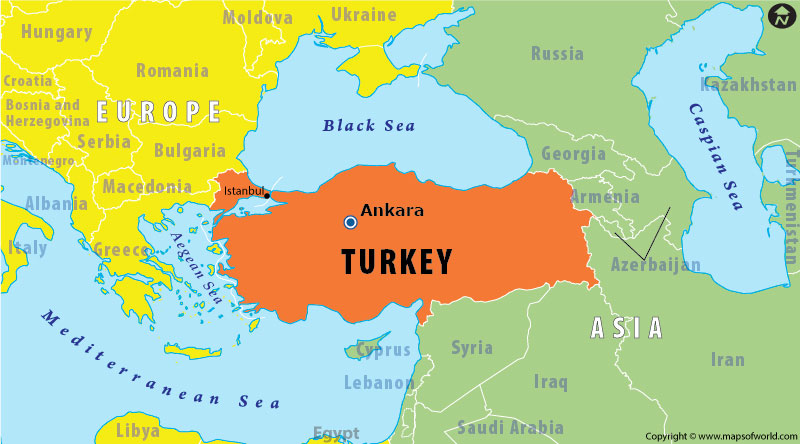
Turkey, you have a confluence of East and West. And no better example of that than literally the geography of Istanbul, part of which is in the European continental plate and part of which is in the Asian continental plate. So in Turkey, you have a country that has many Western attributes, including much higher labor productivity versus, let’s say, India, but it has an Eastern appreciation of gold.
I’m somewhat amused when I talk to, I’ll just say, all the usual suspects who do the data analysis of the gold market. They look at an industrial demand and mine production and recycling production, and they always break down, you have jewelry demand and investment demand.
And That makes sense in the United States. You walk into, whether it’s Kay Jewelers or Zales jewelers, let alone Tiffany’s, and you buy a little thing that’s three and a half grams of gold for 17 $10,000. That’s not an investment. That’s definitely jewelry. But in Turkey, in India, in Dubai, you walk into a jewelry store and there’s a video monitor with a gold price on it.
Every piece of jewelry is tagged with how many grams it is. And the price of it is the grams times the price of gold plus a making charge, which is usually single digits as a percentage.
That’s investment. It reminds me there’s a meme that floats around the internet, shows a lady sitting at her desk and somebody’s coming up to her saying, Corporate wants you to tell the difference between these two pictures. And then, wherever it meant, one of them is Trump and the other one is Biden or whatever. They’re the same. It’s the punchline. What’s the difference between jewelry demand and investment demand? They’re the same.
People want gold for savings, investment hedge, whatever you call it, and they prefer it in the form of jewelry versus in the form of bars. And there’s a lot of cultural significance, and in some cases, religious significance of the jewelry. But they’re buying the jewelry at similar markups to what Americans are paying for eagles, not at the moment. But many times people are paying 6% premium on gold eagles.
Well, that’s what people are paying for jewelry in other parts of the world. And then they get something they can wear on top of it. So that would be the first thing that comes to mind when you say, How do I see the East versus West?
Ben Nadelstein:
Goken, what makes this Turkish market so interesting to the Turkish citizens? Because they almost intrinsically understand gold as well, where like Keith mentioned, in the United States, gold is mainly in your wedding ring, but that’s about it.
Otherwise, it’s a speculation. Why in Turkey do Turkish citizens and the average person in Turkey see gold as an asset rather than just some speculative stock?
Gökhan Yılmaz:
Yeah, Turkey is one of the few countries where gold sits in every layer of society variety, cultural, financial, and industrial. We have sophisticated refineries, a powerful jewelry manufacturing sector, highly active retail demand, and banking system a system that allows gold-dominated accounts.
It’s a complete ecosystem, not a niche market. We have also one of the most active precious metals markets in Turkey. In Turkey, gold is seen through a broader lens than just a finance. It’s a part of cultural tradition, household planning, and even emotional security. People accumulate gold not for speculation, but for the long-term protection also. It’s considered one of the most reliable ways to preserve value across the generations. Since centuries, it’s like that. Because of the inflation cycles also, we have told households to prioritize protection over the speculation.
Gold has constantly preserved purchasing power, making it natural saving instrument and troops accumulate gold gradually with no intention of timings and markets. It’s a generational reserve. We have been accumulating gold since centuries. It’s not an issue which has been started 10 years or 20 years ago. It has been centuries.
Ben Nadelstein:
And Keith, I want to give that to you now, because in the US, we hear about the debasement trade or Jerome Powell is changing rates, and this is going to do for gold or that for gold.
But are people in Turkey really thinking about Jerome Powell? Do they really even know who that is?
Keith Weiner:
Gökhan might be able to answer that specific question better than I could. But I think the American gold bug, Austrian economics libertarian crowd, of which we probably have many watching the show, everything’s about the dollar. And in part, it’s a Western audience, and in part, the dollar is so much more transparent and so much more ubiquitous. Everyone thinks it’s about the dollar.
And I think the rest of the world is trying to de-dollarize. And one of my themes is to say, well, actually, in a lot of other places, they would love to dollarize, except it’s illegal because they have capital controls. And so in Turkey, the inflation rate, I think it subsided right now. You can correct me if I’m wrong, but at times it’s flirting with 20% a month. It levels inflation that the United States has never, ever had.
The worst of it in 1979, I think, was 13% per year, not per month. If you’re a Turkish citizen, you have to think, because it’s obvious that you can’t hold the Lira for… It’s a transactional currency. You get paid your salary in Lira, and you buy groceries in Lira, of course, but you can’t think of it as long term savings because it just doesn’t work.
Your savings will be decimated He had it in a year, two, three years, he had got nothing. So what do they turn to? A lot of them would love to have dollars. It’s hard to get, and it’s difficult. It’s this and that. And gold, of course, is centuries and centuries There’s a joke. I live in Arizona, which everything is brand new here. Someone who lives in central Phoenix would bragged and thump his chest. My house is old. It was built in the 1920s.
Somebody from New York would say, Oh, 1920s, you think that’s old? That’s cute. Here’s this building over here, and there’s a sign that says, George Washington slept here in 1760 or whatever. Then you go across the pond to England, and they say, Oh, 1760, you think that’s old? That’s cute. Here’s Hampton Court built in the 1500s, or here’s this cathedral built in the 1300s.
But then if you go to Istanbul, they’re going to say, Oh, you think 1300s is old? That’s cute. Here’s this thing that was built 2000 years ago. And you have a continuity of a culture that’s really, really ancient. And gold is part of that, and you’re not going to separate the two.
And obviously, long before there was a Lira, there was gold. And long after, there will be a Lira. A currency like that you can look at, and no offense to turks watching this, but the Lira is an unstable currency that’s flirting with hyperinflation.
There will be a moment, not too distant future, when there is no Lira anymore, but there will still be gold. And everybody in Turkey, I think, realizes that.
Ben Nadelstein:
Gökhan, I want you to talk a bit about what is it like the reality on the ground when people are talking about the Lira? If they hear inflation, even maybe hyperinflation, what does it look like day to day for citizens who live in Turkey dealing with the Lira?
And why is that? Is that pushing people into these gold savings account, the gold banking system and gold generally?
Gökhan Yılmaz:
Yeah, definitely. Actually, it’s a really broad topic in Turkey. So you are very well said. Lira, it’s really a daily transactional currency. Whenever we are talking about Lira, Lira operates within macro economical environment, shaped by tools such as an interest rate adjustments, inflation management strategies, reserve policies, and regulatory framework.
Those dynamics naturally influence how households and business plan their finances actually. As inflation and interest rates evolve, people diversify across multiple instruments, including Lira-based ones, gold, and foreign currencies. Even foreign currency have seen as an investment tool in Turkey to navigate the economical cycles.
The Lira remains the central to daily life cycle while the individuals use a mix of tools to manage the long term financial planning. We have really very interesting products also in Turkey.
For example, your deposits are denominated in grams of gold rather than in Lira, for example, in banks. You can do savings with grams. You can deposit physical gold, have it refined through bank, and hold it electronically or withdraw physically metal again. It’s a really unique blend of tradition and modern financial infrastructure. Those are the main, let’s say, views related with Lira and, of course, gold. How can I say?
Motivation behind the Turkish citizens.
Keith Weiner:
I just want to jump in with one confusing comment. I’m somewhat known on Twitter or what they call X now as being not a fan of Bitcoin, to say the least. And the Bitcoin people are always saying these things that just aren’t true. And they say, Gold isn’t used anywhere in the world as a currency today. There’s nobody that will accept gold. You can’t transact in it.
You can’t do anything with it. And I just bite my tongue most of the time, and I’m just I’m thinking about India. I’m thinking about Turkey, where…
Think about what Gökhan just said. If you walk into a bank in the US or Canada, and I think Britain as well, a little different in Germany, but let’s just let’s say, the Anglosphere. You walk into a bank and you take out either a little gold bar or let alone jewelry, but you take out a gold coin even.
So the Eagle in the United States is legal tender. It’s issued by the US government mint. You walk into a bank with a gold legal. The teller wouldn’t know what it was. It’s not that they would say, Oh, our policy is we don’t accept these, or, No, sir, we don’t offer gold accounts.
The teller would be like, Huh? What is that? They wouldn’t even recognize it, let alone be able to process in it. What Yokem just said, in Turkey, it’s normal for people to go in and make deposits and withdrawals of gold in Turkish banks.
That’s how far ahead they are in We’re moving towards the gold economy versus the West. Now, I have to share one story. It’s not a Turkish story, it’s an Indian story.
But I went to visit in Dubai an Indian jewelry wholesaler. So they don’t manufacture the gold, and they don’t retail it. They buy it from the manufacturer. They have some inventory. And the retailers, these offices are set up, second or third story in the gold soup, typically. And the retailers are constantly in and out. So they have literally a door for them to come in.
And there’s teller windows and little private transaction rooms, weighing, accounting, and all that. And then they gave me a tour of the office, and one of the back rooms, there’s this gigantic bolt cutter. I mean, this thing was like a meter long. It must have 20 kilos. Massive. So I’m holding it like this.
They took a picture of me holding it, and I said, What is this for? You must have some serious high security locks you have to cut with this. No, no, no. We use that to cut kilo bars. So excuse me?
Well, yeah, when the jewelers buy, the jewelry retailers buy a jewelry wholesale from us, they pay in kilo bars. And since it never adds up to an exact integer, whole number of kilo bars, we cut the bar to make change. I’m putting all the emphasis on this, not how they said it.
And I said, Okay, well, thank you. You just made me wrong because I’ve been writing for years and years that you can’t… It’s not totally not practical to cut bars because it lost its hall market, no longer, nobody knows the purity, the weight, anything.
Now it’s just a lump of gold, right? And they’re doing it. And this is daily trade. And you see they’re safe and there’s shelves and shelves with kilo bars in there.
And then obviously there’s some with hacked off pieces of kilo bars. And that’s just, yeah, they’re using gold for transactions. Absolutely. And of course, they’re going to turn around and pay the wholesale.
Excuse me, they’re going to pay the manufacturer in kilo bars and fractions thereof. And that’s just how the trade works. And I think similar, I’ll let Jokin speak to it, but I think similar in Turkey.
Gökhan Yılmaz:
Yeah, I just want to contribute something for the things that Keith said. Even in Turkey, we have nearly, I think more than 35,000, 40,000 jewelry shops. Our, let’s say, gold sector is really very different. We use sometimes gold as a currency.
Most of the jewelry shops, they are keeping their books in gold. It means accounting in grams of gold instead of local currency, inventory, payables, receivables, all tracked in gold weight. This protects businesses from currency fluctuations and provides more stable operational baseline. Assume you have a currency which is under inflation pressure, so you need to properly measure your operational baseline. So when you keep your books in gold, Jewelry shops can easily measure their performance.
Keith Weiner:
That brings up an issue very near and dear to my heart. Which is not only gold accounting, but just to explain to the audience. Actually, let me start out by there was a group of libertarian economists that were asked to consult on one of these Latin American countries was creating a free zone city, and the free zone city was going to have much less restrictive labor law, minimum wage, much lower taxes, much less welfare state, et et cetera, et cetera. And these are PhD economists that were libertarians that were advising on how to set it up. And I know several of them.
So I approached them and I said, This is really exciting. And Phelps thinking about monetary metals we might actually want to set up there, especially if they did it right. And I said, please, please, please, make sure that if there’s any taxation at all, which you probably have to have some, that you allow taxpayers to elect to use gold as the numeraire, the denominator for your accounts. Because if you’re doing anything with gold, and you have to keep your books in dollars, that’s going to look like buy, sell, buy, sell, buy, sell, buy, sell all day long.
And if the gold price doubles in a year, let’s say you have a shoe store and you start out with 100 ounces of gold capital, and you’re constantly buying and selling the gold as you’re selling and buying the shoes. At the end of the year, you might end up with 105 ounces of gold capital.
But if the gold price were to triple, you went from a million dollars to three million dollars, you have a $2 million profit. The tax on $2 million would be a lot more than five ounces.
And so you’d end up in In gold terms, you’d actually decrease, you’d becoming poorer. That you actually are better off closing the business and just holding a lump of gold, and you’d be better off financially versus operating a business and paying the tax that way.
Now, the Lira, because it’s so inflationary, The numbers are even more extreme. If you started the year with 100 million in Lira capital worth of gold, and then you do all this trading, it could be 600 million or a billion Lira of gold. At the end of the year, if you pay tax on that gain, you would reduce your gold capital massively.
But if you keep your books in gold, then it’s fair. Okay, so you went from 100 ounces of gold capital to 105 ounces. You pay tax on the five ounce gain. That’s fair, right? Everyone understands that. So what I want to contrast by saying all this, first of all, it’s an interesting issue if you think about it.
These are PhD economists that were consulting on this free zone, and they’re Austrian school guys, so they certainly understand gold. They’re certainly pro-gold in that sense. It’s not that they disagreed with me. I couldn’t explain the issue so they could understand it. I didn’t get what the issue was.
And you go to Turkey, and there’s probably, what, you’re looking at a million people in the gold industry between jewelry and refining and logistics and supply chain and everything. There’s a million people that are doing something as a very practical working matter. But PhD economists in the West, they were libertarians and Austrian school, people didn’t even understand what the issue was.
That’s the difference between East and West when it comes to gold. That right there, that the East is doing things because it’s practical, not because of some high volume theory that PhD economists need, because it just works.
And in the West, they’re not at the point where the theorists even understand a paper. Because I wrote a position paper on this. Maybe I’m not the greatest, greatest communicator in the world, but I think I’m fairly effective at getting across a few ideas. They didn’t understand what the problem was. What am I trying to solve? And I just have to jump up and down and just highlight this.
And in law of Turkey, they’re just doing it. The whole thing is just working this way for the reason that I tried to explain in the position paper, in an inflation on your currency, it presents such a distorted view of the profit and loss of the business. You’d end up paying…
Your capital would be paid out as taxes on the on the imaginary profits. And those profits are illusory or imaginary because just inflation in the currency. Anyway, so I got that off my chest. I’ve been thinking about this for years. It bothered me when I couldn’t get my point across in this free zone presumably moved forward without my tax policy tidbit that I wanted them to have. And so it’s just been frustrating me all these years.
Now I was able to finally get it out on the air in this podcast in a context where it makes sense.
Ben Nadelstein:
Keith, we’re happy you got it off your chest. And Gökhan, it’s so interesting to see that not only is the Turkish gold market very unique compared to some other gold markets, but they’re so sophisticated. They’re able to think in gold, transact in gold, get paid in gold, pay out in gold.
There’s gold bank accounts, not a safety deposit box, no, an actual gold bank account Gold. Now I want to ask you, what are some of the other things happening in gold in Turkey, and what are some of the lessons that the rest of the world can learn from the Turkish gold market?
Gökhan Yılmaz:
Actually, Turkey demonstrates the sound money It’s a natural response to our uncertainty. When people experience inflation cycles, then they intensively turn to asset within intrinsic value. Turkey experience shows how a culture can integrate gold deeply into its financial identity while still operating with a modern banking system. As I explained, we have a really very sophisticated infrastructure related with the gold infrastructure. We have one of the most, I think, active exchange precious metals market in the world.
Gold is a very important part in our lives. That’s why we know how to handle, how to take gold into our lives, how we can use it. It’s really a very important motivation for us to protect us from the different economical problems. So we are quite unique. And then we talk about gold ecosystem. As I told you, we have, I think, one of the most sophisticated gold infrastructure in the world.
Turkey has an enormous amount of dominant gold, which we call it under pillow of gold. Much of them is sitting unused in households and banks.
As I mentioned previously, our jewelry sector, they are keeping all their books in gold. Whenever they are trying to, let’s say, use a loan from the bank, unfortunately, Unfortunately, let’s say, they cannot get 100% in gold. Actually, obligation-wise, it’s 100%, but they have to convert a part which is generally 20 to 30% into Turkish Lira.
For this part, they have to keep positions and this creates cost and margin call risks, of course. In the meantime, when you are talking about household sites, actually, whenever they want to earn any yield from a government bond. By the way, we have also gold-backed bonds in Turkey, but you have to first sell your gold. Then at the end of the, let’s say, at the maturity date, you will return back your gold by buying again, and also the yield is in Turkish Lira.
Those are the things people are not very willing to bring their gold into the system. Also, our physical ecosystem, the AgaOne’s physical ecosystem, from sourcing to refining relationship, market structuring and distribution networks across multiple continents.
We have a huge experience and team, not only in Turkey, in UAE, in Singapore, in US also.
Also, gold is the most trusted saving instrument in Turkey. There is also a huge potential in even banks. As I told you, people can keep the gold grams in banks, and you can also attract people’s gold savings.
Ben Nadelstein:
Before we end our podcast, I want to talk about our friend Silver. What about Silver?
Obviously, we discussed gold gold in the Turkish markets, how the Turkish citizens think about gold, and of course, save in gold. But Gökhan, what about Silver? Do people in Turkey think about Silver? Is it a monetary metal? Is it a savings vehicle? How do people in Turkey think about Silver?
Gökhan Yılmaz:
Up to now, Silver, we also have seen as an investment tool, but because of its value and physical size, there is not so much demand for the Silver site. But of course, when we consider industrial site, it’s really a very important potential for the industry side.
It although carries monetary heritage, but today it’s heavily influenced by industrial demand, particularly solar, electronics, and clean energy. But in the meantime, the silver is quite volatile than gold. So if you like a little bit excitement, I think silver is the proper product. Because as I told you, it’s a quite volatile product when you compare it with gold.
Ben Nadelstein:
And Keith, I want to bring it to you. Obviously, at Monetary Metals, we work with both gold and silver. But silver has a slightly different style than gold does when it comes to price action, when it comes to the size of the market, when it comes to the different industrial components for silver.
So when you’ve traveled around the world, from Turkey to India to Dubai, obviously, central banks don’t necessarily buy or own silver. Where’s the silver story to you, Keith?
Keith Weiner:
Throughout the world, silver has always been the more efficient means for savings for working people. So to put it in Western terms, suppose you are a highly skilled blue collar trade worker, your machine shop foreman or something like that, and you want to take 10 % of your wage every two weeks and put it into a monetary metal.
So what is that person making? $75,000 a year, $1,500 a week, 10% of that, $150 or something. Well, over two weeks, $300, but net of tax, $200. If you want to put $200 into gold, you’re looking at a 20th of an ounce.
The premiums are pretty high on small products. What is that? A gram and a half. Premiums are pretty high on that. Well, you have to buy a grand bar and then a half a grand bar or something. Premiums are high. It’s just not an efficient way to do it. There’s also no emotional satisfaction to get a tiny little… I mean, a gram of gold is a little chip. It’s not… We call it a bar, but it’s not really much of a bar. You know, $200 worth of silver, even at today’s price, is still a bit of a handful of silver.
There’s a lot more hef to it. You can touch it, see it. It’s not going to be sealed in a little credit card thing with a clear window in it. So emotionally, it’s much more even satisfying. That’s always been the money of the working people and gold’s traditionally the money of Kings.
Now, something happened in India, and I don’t know if this is true in Turkey. It sounds like not. Now, the wage in India is a lot lower. So per capita GDP in India is $3,000. I’m guessing it’s got to be five times or eight times higher than that in Turkey. Gökhan might have the statistic. But there’s people, I mean, minimum wage In some states, in India, it’s $2 a day.
So you have people that are cleaning the streets or whatever for that wage. And when they go to buy jewelry, and now gold is $4,300 an ounce versus a few short years ago, $1,900 an ounce. They just can’t buy as much jewelry anymore, and there’s only so much. You can make it thinner and more hollow and lighter. Before at some point, you’re getting a very disappointing little thin little wire of it, which also isn’t very strong.
It was this particular Diwali, which was October in India, there was significant substitution of silver for gold in jewelry. Now, the Indians have maybe a bit more than the Turks, a dual history with both metals. Although, of course, they prefer gold.
Everyone does, which is why gold is $4,300 an ounce and silver is only $65 an ounce today. That reflects a strong preference, but they will substitute when they have to, and the $4,300, they have to because the price of gold is shot up, but we just haven’t. So every country is going to reflect that differently. The markets are different. So you think about financing:
We’re happy to go into a jewelry store with 50 kilos of gold. 50 kilos of gold, $6 million. 50 kilos of silver, and what is that? $30,000? It just isn’t worth… The juice isn’t worth the squeeze. But yes, a piece of silver jewelry will be heavier than a piece of gold jewelry. Silver is a lot cheaper, but not that much heavier. You’re still putting it on a human body. And so the store, maybe it has 75 or 100 kg of silver versus 50 of gold. It just isn’t.
So the market is very different. You’re looking for much bigger industrial users versus, let’s say, jewelry stores. So there’s a lot of differences between the metals that they’re not just, oh, gold and silver. They work differently. And then, of course, industrial uses of silver are quite different.
Ben Nadelstein:
Gökhan, and as we come to the end of the interview, I want to ask you, what’s something people should leave this interview understanding about the Turkish gold market, whether it’s the past, the present, or the future of the Turkish gold market that maybe before this interview, they didn’t know?
Gökhan Yılmaz:
Yes, sure. Let’s say we are entering to a new era in global monetary landscape on where trust, transparency, and intrinsic value will define the next generation of financial systems. In Turkey, with its deep cultural relationship to gold and its advanced precious metals market, stands at the center of this transformation.
At AgaOne, our vision is to connect century all trust in gold with technologies and financial innovations that will shape the future. From gold tokenization, from global sourcing networks to AI-enhanced compliance, we aim to build a next a next-generation gold ecosystem, one that is secure, transparent, productive, and globally integrated, actually.
The future of the gold is not about holding a value. It’s about unlocking a value. And, Turkey is uniquely positioned to lead that evaluation. We are, luckily now, partnering with a company who has a huge experience related with creating very valuable products. Those are the things that I want to say related with Turkish market and AgaOne.
Ben Nadelstein:
Keith, I’ll leave the last word with you. Obviously, we’re so excited to be partnering with AgaOne and bringing new gold products to the Turkish market. What say you about the future of gold, especially in Turkey?
Keith Weiner:
It’s interesting, and this was not planned, by the way. Gokhan said, unlocking the value. When we went and did our go-to-market plan and strategy back in 2016, nearly 10 years ago, we came up with our brand mantra, which is unlocking the productivity of gold.
There it is right on the little sign over Ben’s left shoulder, unlocking the productivity of gold. And that’s really the concept, is unlocking. And at that time, we were generating images of all the other gold companies always show pictures of vaults with a stainless steel door that’s half a meter thick and weighs three tons and all that, and say, No, we’re unlocking this. It’s about really creating value and creating utility.
That’s our vision as well. When I started this company, I wasn’t necessarily thinking about Middle East and Eastern markets. I’m an American, and of course, I tend to think of the American market first. But you start to get into business and you start to do business, and you realize where your customers are. Then when you realize all your customers are somewhere else versus where you thought they would be, you start to ask the question, why, what is going on?
It’s a lot of things. In America, we’re very fortunate in that we’ve never had a currency crisis, and we live in this incredible dollar bubble of our own making, and we Americans like it that way.
It’s been pretty good for Americans. The rest of the world is getting the short end of the stick. But for Americans, it feels pretty good. It feels natural. It feels like, Oh, of course. You look at the rest of the world and you say, Okay, this thing is coming unglued, and it’s the places at the margin that are really going to feel the brunt of it. We have always had a vision for putting gold to work productively.
That’s really central to our mission statement, our vision statement is using gold for finance, using gold for savings, put it to productive work. And we’re willing to do that globally, but you have to start in the places where the market is really ready for it. And Turkey is probably readier than any market globally to do it productively versus just to buy it. And you go to China, I think it’s a lot more about the expected price to go up.
I think it’s definitely more speculative. It’s a huge gold market. It’s bigger than India, just to the size of population. But in terms of sophistication, I don’t think it’s there. So for us, it’s logical to be in Turkey. It feels like we’re coming home in a way, and we’re trying to build a global movement.
But you got to find the starting place is where you get traction because there are always this company only have so much resources to spend on things. You have to put them to the places where you get the highest traction.
Ben Nadelstein:
Gökhan, thank you so much for joining us on the podcast. It was a fascinating dive into the Turkish gold market. And Keith, I’ll see you at work.
Gökhan Yılmaz:
It’s a pleasure, man. Thank you so much.