





Speak, Memory (And Cooling)

Nvidia’s Vera Rubin, Memory, And Cooling
Jensen Huang’s CES keynote on Monday didn’t just move Nvidia; it whipsawed a couple of names in our book.
When he leaned into how much next-gen AI depends on memory, one of our memory-adjacent names, SanDisk (SNDK 0.00%↑) ripped 27.56% the next day.
SanDisk was the “AI Data Storage” stock we placed an options trade on in this alert on December 4th.
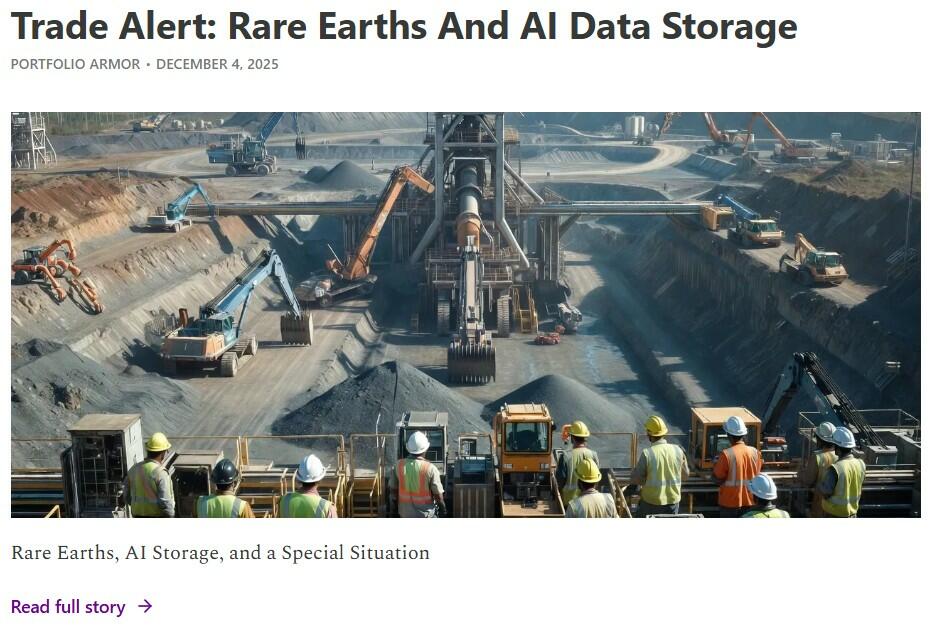
We entered that trade at $1.78 per contract, and now we’re on pace to exit it at close to $20 per contract.
Back to Jensen’s speech…
Later, when he talked about Nvidia’s new Vera Rubin platform running “hotter” and pushing thermal envelopes in the data center, the market took that as bad news for one of my cooling / CHP names, Tecogen (TGEN 0.00%↑). That one finished the day down 20.40%.
Same speech, same megatrends (AI, power, heat)… two completely opposite reactions.
Today’s note is about why I think the market overreacted on TGEN, and why I’m pairing a low-cost options trade there with another position in a memory-adjacent name from my Portfolio Armor Top Names list.
What Tecogen Actually Does
If you just glance at a chart and hear “chips running hotter,” it’s easy to think, Uh oh, bad for cooling vendors.
But that’s not what Tecogen is.
TGEN makes on-site combined heat and power (CHP) and chiller systems powered by natural gas engines: equipment that lets buildings and facilities generate their own electricity while re-using waste heat for things like hot water, heating, or even driving chillers. Think behind-the-meter power and cooling for sites that care about uptime and energy efficiency — including, potentially, data centers.
The company’s roots go back to Thermo Electron, the engineering firm that later became part of Thermo Fisher Scientific, before Tecogen was spun out as a standalone clean-energy/CHP business. That heritage matters: this isn’t some meme ticker that pivoted to “AI infrastructure” in a slide deck last week; it’s an old-line engineering shop that’s been building and servicing CHP and chiller hardware for decades.
So when the CEO of Nvidia talks about next-gen GPUs running hotter in an AI world that’s already straining grids, I don’t see that as a structural negative for companies that help customers generate and manage power and cooling more efficiently on site. If anything, it highlights the bottlenecks TGEN is trying to solve.
Which is why a 20.40% drawdown off those comments looks more like an opportunity to me than a reason to panic.
Where TGEN Came From In My Process
Tecogen didn’t come out of nowhere. It originally surfaced on my Multibaggers list — my curated feed of analysts and traders on X with documented 100%+ winners, where I go looking for small- and mid-cap ideas that fit my broader themes (reindustrialization, biotech, energy, AI infrastructure, etc.).
From that list, TGEN made it into our book as a way to play on-site power and cooling as data centers, factories, and other heavy power users collide with grid constraints.
Yesterday’s move was violent, but the underlying thesis hasn’t changed. Management even agreed to come on an investor stream this morning—not the sort of thing you do if you’re about to drop a grenade on shareholders.
So in the paid section, I’ll walk through a low-cost options structure I’m using to lean into that dislocation.
Leaning Into The “Year Of AI Memory”
The other side of Jensen Huang’s keynote was his emphasis on memory and bandwidth: if GPUs are the “brains,” memory is the working space that lets them think in bigger and longer contexts. That’s been a quiet theme of mine for a while, and one of the names in that space just popped back up near the top of my Portfolio Armor Top Names list.
Long-time readers know the drill, but a quick reminder for new ones:
Every trading day, Portfolio Armor ranks thousands of securities by estimated 6-month return.
We track how those “Top Names” actually did, in rolling 6-month cohorts.
Since December, 2022, the average 6-month performance of the top-ten cohorts has been 20.38%, versus 10.23% for SPY over the same 132 periods.
Today’s second options trade is on one of those Top Names—a company whose business sits right next to that AI memory and bandwidth bottleneck.
If you want a heads-up when we place both those trades, feel free to subscribe to the Portfolio Armor Substack below.
As usual, my trade alert will include:
- The exact trade structures, including the maximum entry price I'm willing to pay.
- Pre-set exit instructions, so we can set our exit orders right after we enter and not have to babysit the trades.