





Liquidity, Not Logic
Submitted by QTR's Fringe Finance
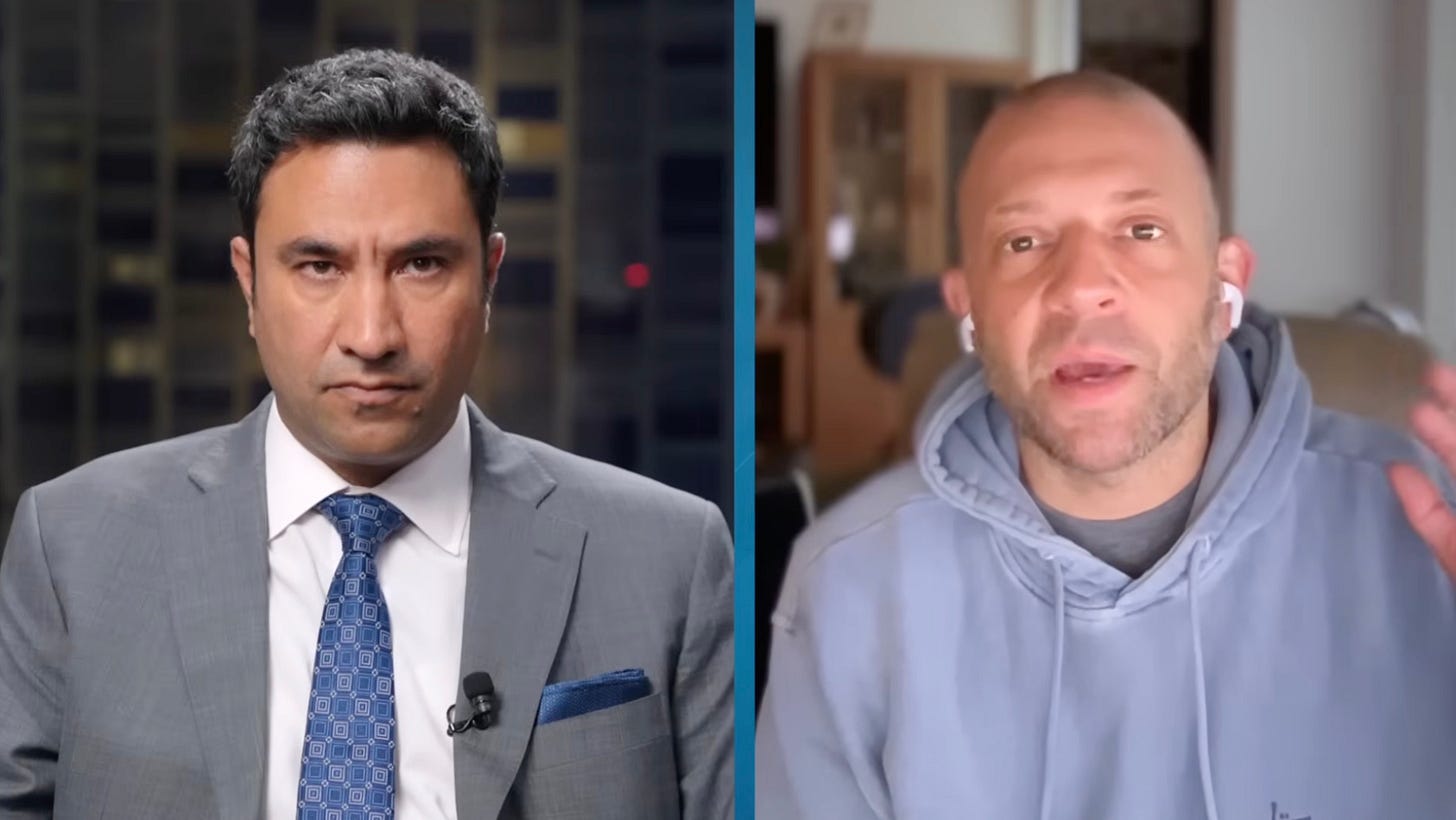
I recently sat down with The Epoch Times’ Market Insider for a wide-ranging conversation about why stocks keep grinding higher even as the real economy shows signs of strain. The host asked sharp questions about liquidity, valuation, passive investing, crypto/AI speculation, and what individual investors can do to protect themselves in a market that often feels disconnected from fundamentals.
The core idea I kept coming back to is that the stock market and the real economy are not the same thing. In my view, the economy is feeling the delayed effects of positive real interest rates hitting a consumer that’s already loaded with debt, and that pressure shows up in places like subprime auto, rising delinquencies, and stress that can creep through credit and commercial real estate. But stocks can still move higher because the market has become far more sensitive to liquidity than to everyday economic pain.
I explained why “bad news” can function as “good news” for equities: investors have been conditioned to assume that when the economy weakens enough, policymakers will respond. We’ve seen versions of this playbook in past crises, and I think it’s reasonable to expect another period of sharper deleveraging over the next year or two. The irony is that the response meant to cushion the system can also distort behavior by socializing losses, encouraging moral hazard, and disproportionately boosting the prices of assets that are mostly owned by the already-wealthy, while the costs of that policy show up more quietly in inflation and reduced purchasing power.
On valuation, I told the host that you can pick almost any historical yardstick and arrive at the same conclusion: markets look expensive. Whether you’re looking at market cap to GDP, Shiller-style measures, or long-run P/E comparisons, the multiples implied by today’s prices leave little margin for error. That doesn’t mean a crash has to happen tomorrow, but it does mean investors should be honest about what they’re paying for and what they’re assuming about the future.
We also talked about where speculation feels most concentrated, and I put crypto at the top of the list because the long-term utility story is still being debated in real time and the downside can be discontinuous if confidence breaks. Right behind that, I put AI: I think it’s here to stay and it has legitimate uses, but the market can still overshoot reality in the early innings, especially when expectations, capex, and valuations all race ahead of proven demand.
When the host asked about my background looking at questionable companies, I reiterated that I personally wouldn’t own China ADRs, largely because the due diligence and enforcement problems are structural. From there we got into what individual investors can do, and my simplest advice was to read the 10-K and learn to compare a business to its peers, understand its debt and cash flows, and think clearly about what a P/E ratio really represents. I also shared my concern that passive flows and index concentration can quietly push prices regardless of valuation, and my overall message was to study fundamentals, beware recency bias, and stay vigilant—because markets can feel stable right up until they aren’t.