





What War With Iran Means For Markets Monday
Submitted by QTR's Fringe Finance
Most of the U.S. is waking up today to news that that the U.S. and Israel have started “major combat operations” and a broad military campaign against targets across Iran.
Also it looks like we have an answer about the “mystery” SPY put buyers and the super aggressive gold and silver call buyers into the close last week. Someone was obviously in the know that full-scale military action involving Iran was about to kick off Friday night and was positioning ahead of it.
Anyone who tells you the options market can’t telegraph news or hint at where the market is headed isn’t paying attention. Order flow doesn’t predict everything — but sometimes it absolutely signals that something big is coming.
The operation against Iran reportedly began with strikes in Tehran and other strategic locations late last night/early this morning. President Donald Trump urged Iranian civilians to take shelter during the attacks, but also made unusually direct comments suggesting that once operations conclude, Iranians should reclaim control of their government. The framing went well beyond nuclear concerns and referenced decades of hostility between Washington and Tehran since the 1979 revolution.
Initial targets reportedly included areas associated with Iran’s Supreme Leader, Ayatollah Ali Khamenei, though it was not immediately clear whether he was present. Smoke was seen rising over parts of Tehran as the strikes unfolded.
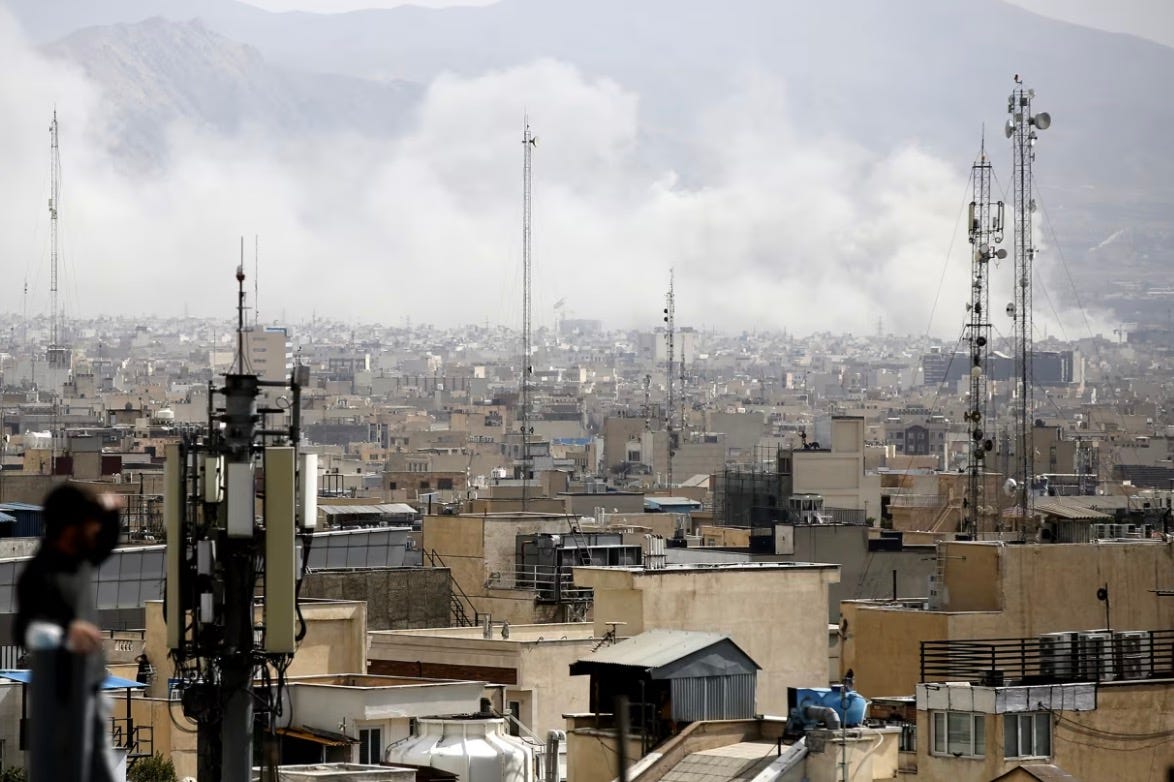
According to various live reports (AP, CNN, Bloomberg) up until this morning, Iran responded quickly. The Revolutionary Guard announced it had launched drones and missiles toward Israel in what it described as an initial wave of retaliation. Air raid warnings sounded across Israel as the military moved to intercept incoming fire.
The stated rationale from Washington and Jerusalem centered on escalating tensions over Iran’s nuclear program and missile capabilities. U.S. naval assets had been repositioned in the region in recent weeks as diplomacy stalled. Israeli Prime Minister Benjamin Netanyahu characterized the joint action as necessary to eliminate what Israel sees as a direct and existential threat.
The regional fallout has been swift. Iraq and the United Arab Emirates closed their airspace. Sirens were reported in Jordan. Bahrain said a missile targeted the headquarters of the U.S. Navy’s Fifth Fleet. Explosions were reported in Qatar. Syria later shut down portions of its southern airspace. Several major airlines suspended flights as a precaution.
European leaders issued a joint appeal for restraint, emphasizing the need to prevent further escalation and protect civilians. They stressed the importance of nuclear safety and adherence to international law while noting that the European Union has long pursued diplomatic efforts alongside sanctions targeting Iran’s leadership and Revolutionary Guard. EU officials said they are coordinating with member states to assist citizens in the region.
Meanwhile, Iran’s Revolutionary Guard said it had struck multiple facilities in retaliation, including U.S. installations in Bahrain, Qatar, and the UAE, as well as military targets in Israel.
Ayatollah Khamenei had not made a public appearance in the days leading up to the attack and had reportedly been moved to a secure location during prior hostilities. His current status has not been confirmed publicly. According to a person familiar with the planning, the operation had been coordinated between the U.S. and Israel for months and is expected to continue for several days.
So what does it mean for markets on Monday? The way I see it, there are two very different paths that are possible here...(READ THIS FULL ANALYSIS HERE).