Our Prediction for Oil Prices
Welcome to MktContext! I am a professional money manager, trader, and investor who has been timing and beating the market for over a decade. We specialize in predicting market direction by studying the economy and market signals. Join 12,000 subscribers at MktContext.com for our weekly deep dives and analysis!
WTI Oil briefly touched $120 last Sunday, before selling off aggressively on “war’s almost over” rhetoric. Since then, it has grinded its way back up to the $100 level.
Some prominent analysts believe oil price should be much higher, perhaps $200 or more. The size of the supply shock rivals the demand shock experienced during Covid shutdowns. OPEC countries must curtail oil production as barrels have nowhere to go and storage is filled up. Even if Hormuz is reopened immediately, it will take weeks to restart the spigots.
A reason why oil prices aren’t shooting higher is because Trump is talking down prices. For example, his administration announced the war’s end, release of SPR reserves, and Navy escorts in Hormuz. There are even rumors of futures market manipulation behind the scenes. This makes it difficult for traders to bet on higher prices.
In our view, oil prices will hover in the $100-$120 range but struggle to reach higher. Despite the closure of Hormuz, the supply of oil typically finds its way to end users when prices are very attractive. And we now have several good reasons why oil can continue to flow:
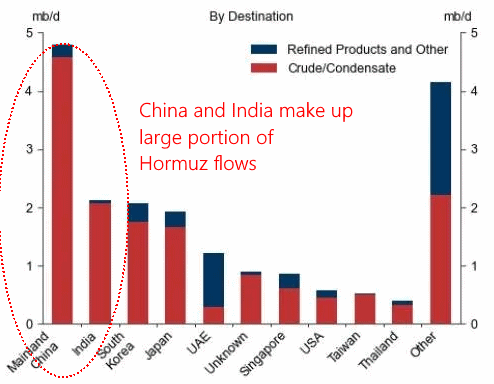
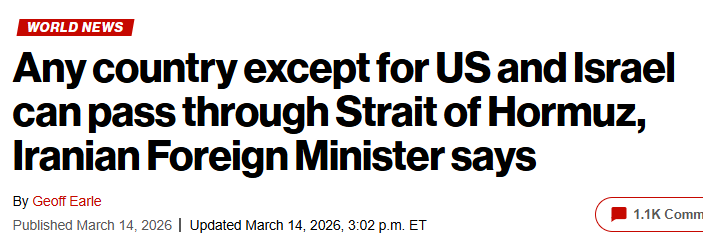
Iran is allowing limited passage for neutral and friendly countries, e.g. Turkish, Indian, Saudi, and Chinese oil tankers. If Iran allows China- and India-bound oil through, that’s more than half of normal oil traffic in Hormuz.
Iran is exporting more of its production through Hormuz than it did before the war. Much of this oil is quietly being sent to China. This is a key financing source for the war effort, which means Iran has little incentive to shut it down. It also disproves reports of sea mines in the Strait.
Saudi Arabia can activate its east-west pipeline and export oil off the opposite coast, in the Red Sea (bordering Africa).
So in the end, the blockade isn’t as big as initially feared.
US and western nations are making valiant efforts to ensure the flow of oil elsewhere. There is a coordinated move to release crude oil reserves of up to 400M barrels. The US is waiving the Jones Act, which requires shipping between US ports to be done by American ships.
The US is also waiving sanctions on Russian oil. This might just be the largest source of idle capacity on a global scale. In an ironic twist, Russia has unintentionally become one of the largest beneficiaries of this war.
Join 12,000+ macro investors who get these insights before the mainstream media catches on!