





No Gas, No Grain: How Energy Shortages Feed Global Chaos
As Confucius might have said—had he spent less time on ethics and more time in the rice fields— “He who neglects the soil should not complain about an empty bowl.” Fertilizer, though rarely invited to polite conversation, sits quietly beneath the grandeur of modern civilization. It is the invisible engine that feeds billions, the silent partner of population growth, and, in today’s world, a commodity as entangled in geopolitics and capital cycles as any barrel of oil. To understand fertilizer is to understand both the strength and fragility of the global food system—much like appreciating that a great empire may still depend on very humble ingredients.
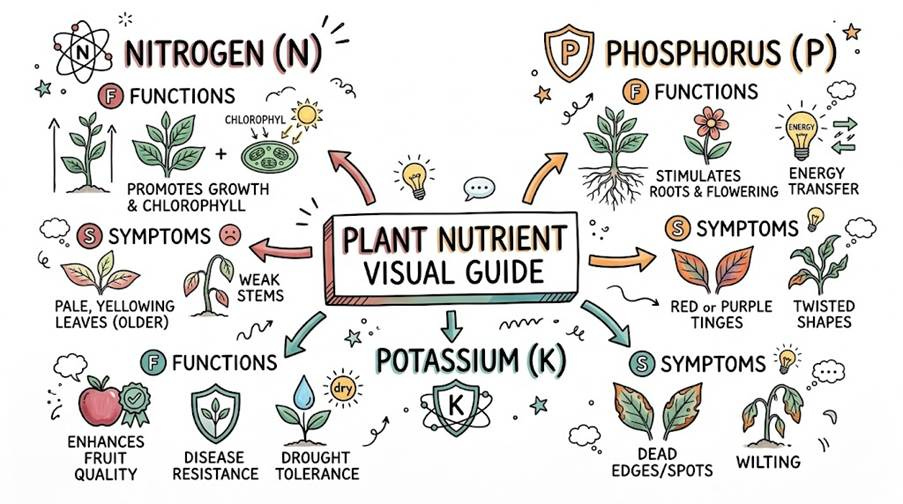
At its essence, fertilizer is simply nourishment for the soil—an offering, if you will, to ensure that plants fulfill their destiny. The wise farmer knows that crops, like students, require proper guidance and sustenance. The three essential nutrients—nitrogen (N), phosphorus (P), and potassium (K)—form what might be called the “three virtues” of agriculture. Remove them, and yields wither like discipline without purpose. Provide them, and productivity flourishes, sometimes impressively so. Fertilizers, therefore, are not luxuries but necessities—multipliers of abundance in a world where land is finite and appetites are not.
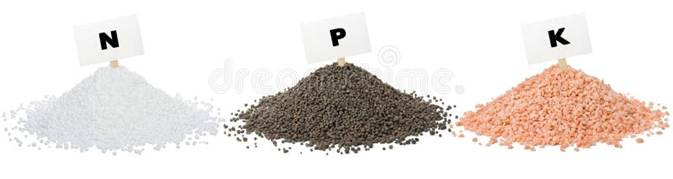
Fertilizers are essentially food for plants—whether crafted in a lab or borrowed from nature—delivering the holy trinity of growth: nitrogen (for leafy ambition), phosphorus (for roots and flowers that actually show up), and potassium (for strength and respectable-looking fruit). Those mysterious numbers on the bag, like 10-5-5, are just the nutrient résumé—who does what, and in what proportion. You’ve got the fast-food version (synthetics like urea and ammonium nitrate) that works quickly but can leave a mess if overdone, and the slow-cooked option (compost, manure, bone meal) that feeds both the plant and the soil over time. As always, the dose makes the poison—too much of the convenient stuff, and suddenly your farm is contributing to water pollution, acidic soils, and algae parties no one really wanted.
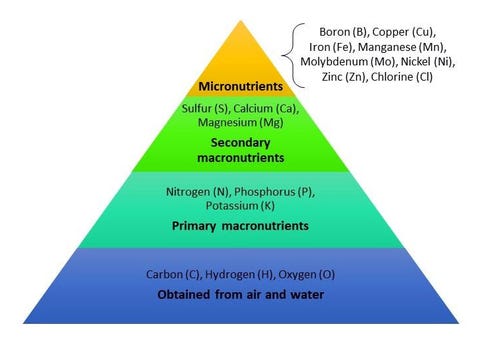
https://extension.umn.edu/manage-soil-nutrients/quick-guide-fertilizing-plants
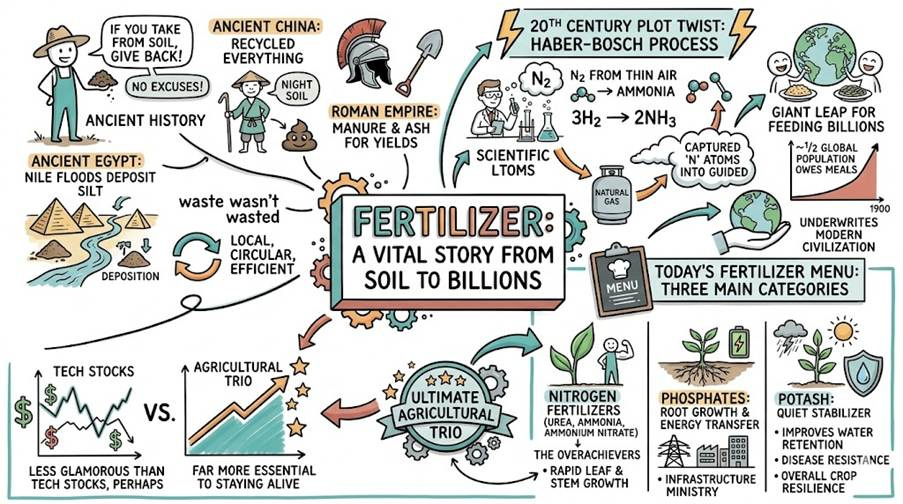
Long before spreadsheets and supply chains, farmers already knew a simple truth: if you take from the soil, you’d better give something back—preferably not just excuses. In Ancient Egypt, the Nile handled the job generously with its annual flood deposits; in Ancient China, farmers recycled everything short of philosophy itself (yes, including “night soil”); and the Roman Empire relied on manure and ash to keep yields respectable. Agriculture was local, circular, and, by necessity, efficient—waste wasn’t wasted. Then came the early 20th century plot twist: the Haber-Bosch process. Humanity essentially learned how to pull nitrogen out of thin air—quite literally—and turn it into ammonia using natural gas. A small step for chemistry, a giant leap for feeding billions. Roughly half the global population today owes its meals to this invention, which quietly underwrites modern civilization. Today’s fertilizer menu is neatly divided into three main categories: nitrogen, phosphate, and potash.
Nitrogen fertilizers (urea, ammonia, ammonium nitrate) are the overachievers, driving rapid leaf and stem growth. Phosphates focus on roots and energy transfer—think of them as the infrastructure ministry. Potash, meanwhile, is the quiet stabilizer, improving water retention, disease resistance, and overall crop resilience. Together, they form the ultimate agricultural trio—less glamorous than tech stocks, perhaps, but far more essential to staying alive.
Nitrogen fertilizers, for all their agricultural virtue, are really just natural gas in disguise wearing a lab coat. Methane (CH₄) is first reformed into hydrogen (H₂), which is then combined with nitrogen from the air under high pressure in the Haber-Bosch process to produce ammonia (NH₃)—the essential building block for urea and ammonium nitrate. In other words, no gas, no fertilizer; no fertilizer, no yield—an inconvenient chain of dependency for a world that prefers not to think about such things.
This tight relationship turns nitrogen fertilizers into a leveraged bet on natural gas prices. When gas prices rise, production costs follow with enthusiasm; when gas becomes scarce, fertilizer plants suddenly discover the virtue of staying closed. The result is predictable: shortages and price spikes. This was on full display during the Russia–Ukraine War, when soaring European gas prices forced producers to scale back, reminding everyone—once again—that food begins not in the field, but in the energy market.
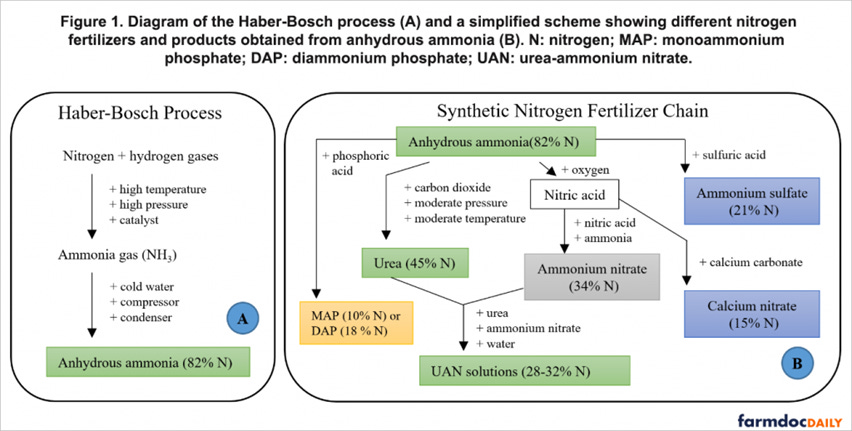
https://farmdocdaily.illinois.edu/2021/02/synthetic-nitrogen-fertilizer-in-the-us.html
Phosphate fertilizers, unlike their nitrogen cousins that flirt with chemistry labs and natural gas pipelines, begin their journey in the far less glamorous world of mining—because nothing says “abundant harvest” quite like digging up ancient rocks. Phosphate rock is extracted from the ground and then politely but firmly persuaded, through chemical processing (involving a generous splash of sulfuric acid), to become something plants can actually use. This little transformation links phosphate production not just to geology, but also to sulphur supply and energy markets—because apparently even rocks need a bit of industrial encouragement to be useful.
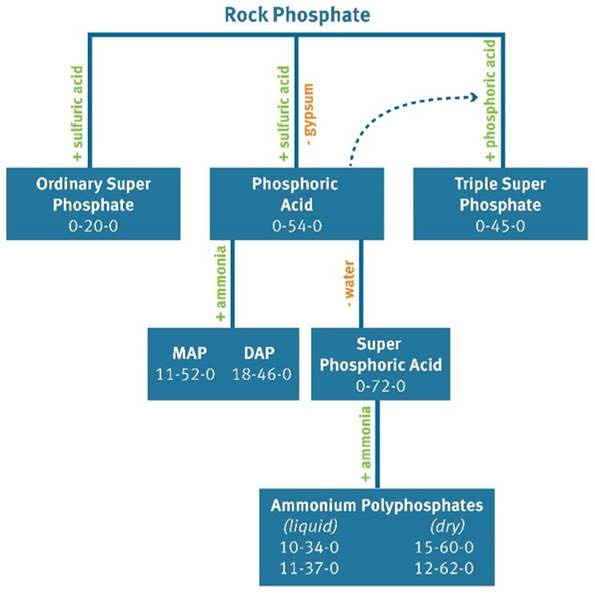
https://www.pioneer.com/us/agronomy/phosphorus-fertilizers.html
Potash, by contrast, skips the chemistry lab entirely and goes straight for the shovel. It is essentially a group of potassium-rich salts—mostly potassium chloride (KCl)—pulled from underground deposits that were once ancient seas, now thoughtfully evaporated and stored for modern farmers by geological time itself. Unlike nitrogen fertilizers, which depend heavily on energy and industrial processes, potash is more of a mining story than a chemistry experiment.
https://www.tfi.org/media-center/2025/03/10/understanding-potash/
Finding the right NPK mix is a bit like cooking without a recipe—except the guests are plants, and they complain by dying. Leafy crops like lettuce want a nitrogen-heavy diet (more leaves, less drama), root vegetables such as carrots and potatoes lean toward phosphorus (they care about what’s underground, like discreet investors), while fruiting crops—tomatoes, corn, or bananas—prefer a balanced meal with extra potassium to bulk up and look presentable at harvest. Overdo nitrogen, and you get lush leaves with no fruit—great for Instagram, useless for dinner. Skimp on potassium, and your crops lack resilience, much like a portfolio without diversification. In short, each crop has its own personality, and the wise farmer—like a good portfolio manager—adjusts the mix accordingly rather than betting everything on one nutrient and hoping for the best.
Fertilizer production, much like global power itself, is anything but evenly distributed—nature, it seems, has a clear preference for concentration over fairness. Nitrogen production is dominated by countries blessed with abundant natural gas, such as Russia, United States, China and Qatar—because when your key ingredient comes straight from gas, geography quickly turns into destiny. When it comes to importing nitrogen fertilizers, the world’s largest agricultural players often find themselves in the slightly ironic position of...
Read more and discover how to trade it here: https://themacrobutler.substack.com/p/economic-warfare-the-invisible-ba…
Visit The Macro Butler Website here: https://themacrobutler.com/
Join The Macro Butler on Telegram here : https://t.me/TheMacroButlerSubstack
Register your interest to The Macro Butler World Economic Summit 2026 here:
https://themacrobutler.substack.com/p/the-macro-butler-world-economic-s…
You can contact The Macro Butler at info@themacrobutler.com

Disclaimer
The content provided in this newsletter is for general information purposes only. No information, materials, services, and other content provided in this post constitute solicitation, recommendation, endorsement or any financial, investment, or other advice.
Seek independent professional consultation in the form of legal, financial, and fiscal advice before making any investment decisions.
Always perform your own due diligence