





The Global War for Chips
The Bronze Age was forged with copper and tin, the Industrial Revolution marched on coal and steel, and the 20th century worshipped at the altar of oil. Now comes the Age of Silicon, where tiny chips hidden inside smartphones, fighter jets, AI servers, and electric cars quietly rule the world with the humility of a Confucian bureaucrat and the power of an emperor. Modern civilization no longer runs only on bread and water, but also on GPUs, memory chips, and semiconductor fabs scattered across a few sacred territories. In this new digital Mandate of Heaven, every nation seeks sovereignty over the semiconductor supply chain: America wants technological supremacy, China seeks self-sufficiency, Europe dreams of industrial independence, while AI consumes chips with the appetite of an imperial court during famine season. The result is no longer a simple trade war, but a geopolitical chess match where whoever controls advanced semiconductors may ultimately write the rules of the 21st century.
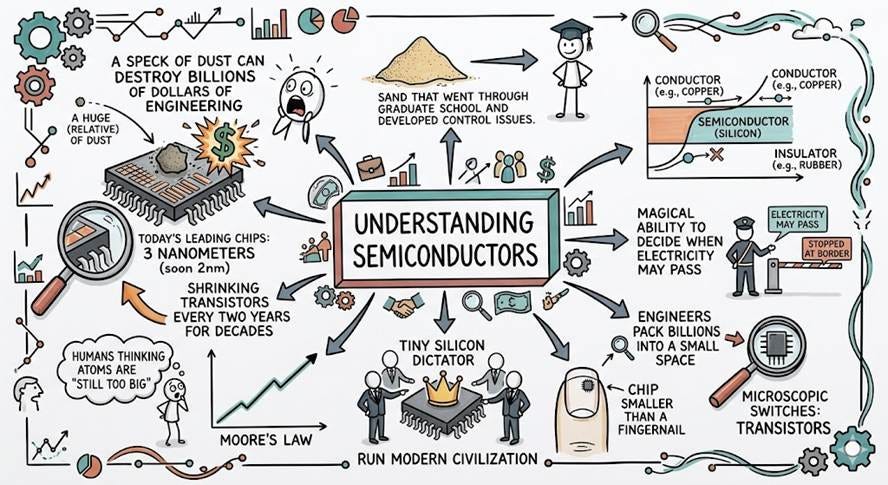
A semiconductor is essentially sand that went through graduate school and developed control issues. Sitting awkwardly between a conductor like copper and an insulator like rubber, silicon has the magical ability to decide when electricity may pass and when it should be stopped at the border. Engineers then pack billions of microscopic switches called transistors onto a chip smaller than a fingernail, creating the tiny silicon dictators that now run modern civilization. Thanks to Moore’s Law, the industry spent decades shrinking transistors every two years, because apparently humans looked at atoms and thought: “still too big.” Today’s leading chips operate at 3 nanometers and soon 2nm, a scale so absurdly small that a speck of dust can destroy billions of dollars of engineering.
A chip is essentially a tiny electronic brain etched onto a slice of silicon, designed to process, store, and move information faster than most government bureaucracies move paperwork. Some chips specialize in logic, like CPUs and GPUs, while memory chips quietly remember everything humanity posts online at 2 a.m. South Korea dominates much of this memory empire, proving once again that civilization now runs on sleep deprivation and server farms. Other chips manage sound, electricity, industrial machinery, and electric vehicles, while AI chips have become the new imperial class of semiconductors, consuming oceans of electricity and entire mountains of GPUs to train machines to generate emails nobody asked for. In the end, modern AI is really just billions of transistors switching on and off at terrifying speed while investors call it “the future.”
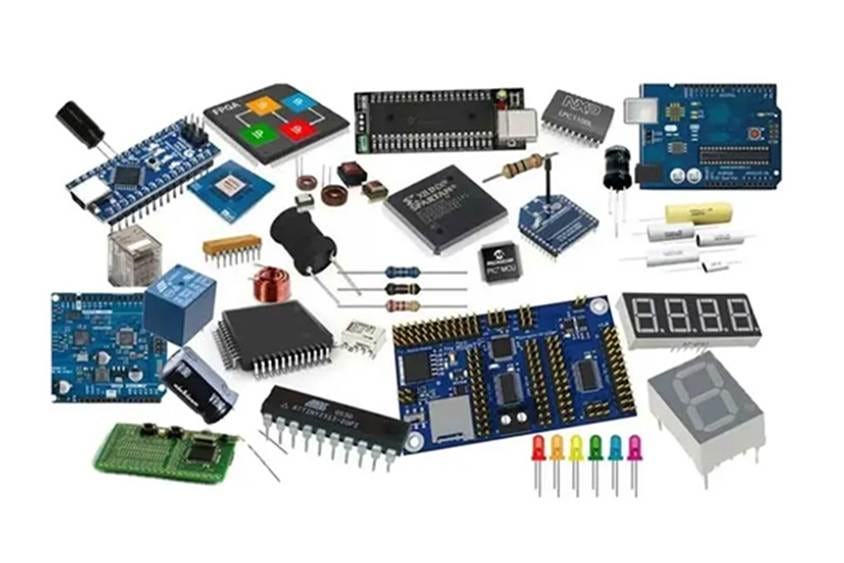
https://www.samaterials.com/blog/types-and-classifications-of-semiconductor-materials.html
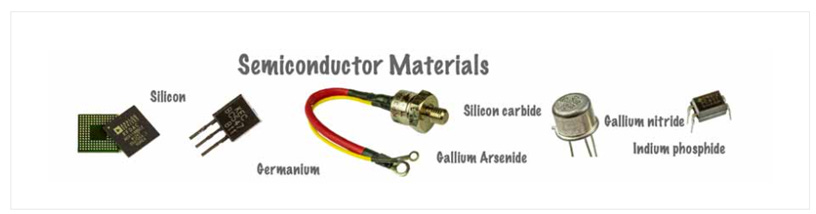
Modern semiconductors may look like futuristic technology, but the industry is really an elaborate global scavenger hunt involving sand, rare metals, chemicals, water, and geopolitics. Silicon comes from humble quartz sand, although it must be purified to levels so extreme that a single dust particle can financially traumatize an engineer. China dominates rare earths and gallium production, giving Beijing a strategic grip over everything from 5G networks to defence systems, while copper has become the nervous system of AI data centres consuming metal with the appetite of a Roman empire at peak decadence. Meanwhile, neon gas from Ukraine, palladium from Russia, platinum from South Africa, and specialty chemicals from Japan remind investors that even artificial intelligence ultimately depends on mines, pipelines, shipping routes, and weather forecasts. In the end, the semiconductor supply chain is less a triumph of globalization than a highly sophisticated international hostage situation held together by ultra-pure water and diplomatic anxiety.
Semiconductor manufacturing is what happens when humanity decides that building rockets is simply not stressful enough. A modern chip fab can cost more than $20 billion and requires thousands of production steps performed with atomic-level precision inside ultra-clean rooms where a single dust particle can destroy millions of dollars of silicon and several executive careers. At the centre of this industrial madness sits Dutch company ASML, whose EUV lithography machines are so complex and expensive — roughly $200 million each — that they make nuclear reactors look like IKEA furniture. Engineers then obsess over “yield rates,” the percentage of chips that survive the manufacturing process, before packaging them into AI processors designed to consume enough electricity to make entire power grids nervous. In short, modern semiconductors are tiny pieces of sand that require the economic coordination of an empire and the cleanliness standards of a surgical monastery.
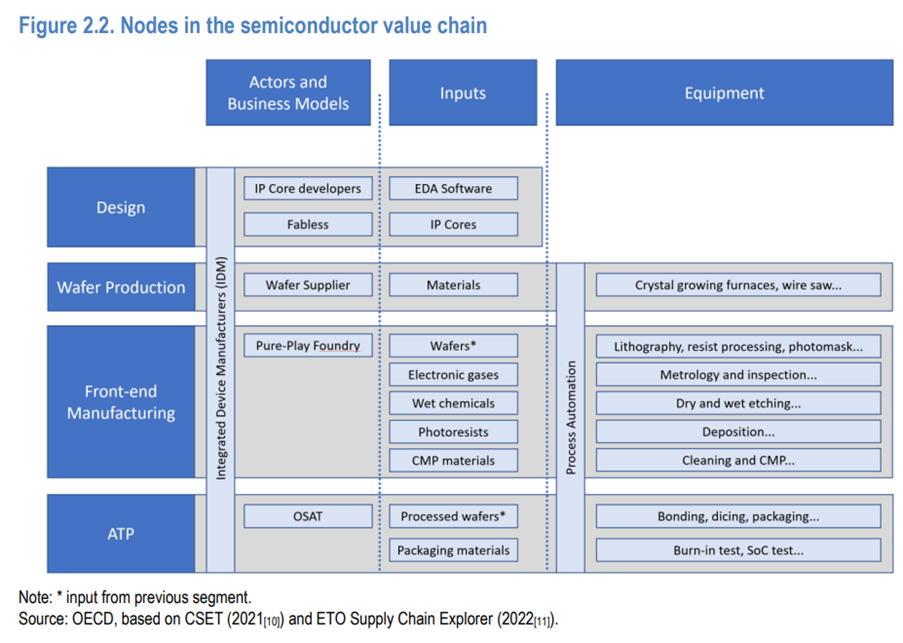
The semiconductor supply chain is globalization in its purest and most fragile form: America designs the chips, Taiwan manufactures them, South Korea remembers everything with memory chips, Japan quietly supplies the chemicals nobody can live without, Europe builds the absurdly expensive machines, and China buys almost everything while trying to become self-sufficient. The United States dominates chip design through companies like NVIDIA, AMD, and Intel, while Taiwan’s TSMC has become the industrial equivalent of a sacred temple where the world’s most advanced chips are printed. South Korea’s Samsung Electronics and SK Hynix dominate memory production, Japan supplies critical materials with the quiet efficiency of a master craftsman, and Europe contributes precision engineering through ASML. Meanwhile, China spends hundreds of billions trying to reduce dependence on foreign technology, proving that in the AI era, semiconductors are no longer just electronics — they are economic survival packaged inside microscopic rectangles of silicon.
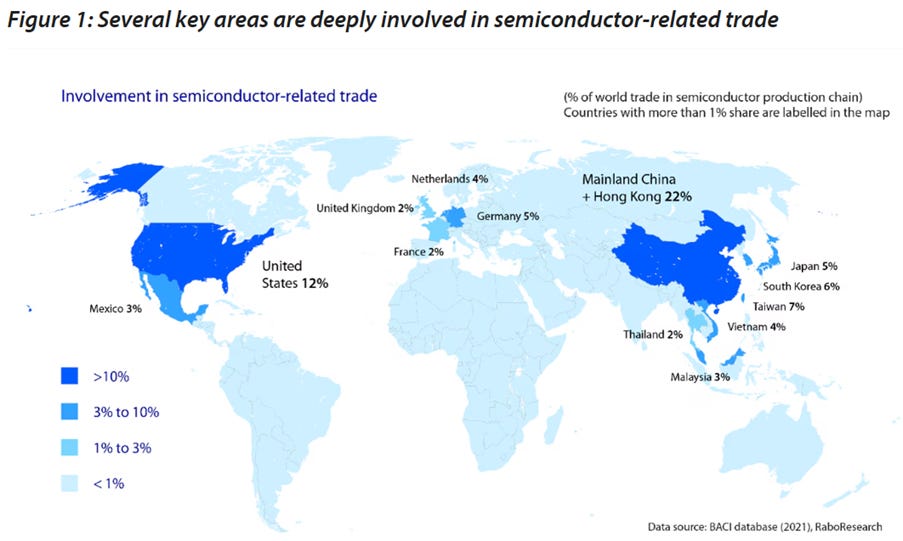
https://www.rabobank.com/knowledge/s011371708-understanding-the-semiconductor-supply-chain
The semiconductor industry is rapidly becoming the financial equivalent of an imperial gold rush. Global chip sales are expected to reach nearly US$1 trillion in 2026 as the AI boom triggers a historic spending frenzy on data centers, GPUs, and advanced infrastructure. Yet beneath the headlines lies a spectacular imbalance: AI chips now generate roughly half of industry revenues while representing less than 0.2% of total chip volumes, proving once again that in modern capitalism, a few silicon aristocrats eat while the commodity chips survive on ration coupons. Meanwhile, traditional segments like smartphones, PCs, and automotive chips are growing far more slowly as Wall Street focuses almost exclusively on anything remotely connected to artificial intelligence. In other words, the semiconductor sector increasingly resembles a digital monarchy where a few GPU emperors rule...
Read more and discover how to trade it here: https://themacrobutler.substack.com/p/the-global-war-for-chips
Visit The Macro Butler Website here: https://themacrobutler.com/
Join The Macro Butler on Telegram here : https://t.me/TheMacroButlerSubstack
Register your interest to The Macro Butler World Economic Summit 2026 here:
https://themacrobutler.substack.com/p/the-macro-butler-world-economic-s…
You can contact The Macro Butler at info@themacrobutler.com

Disclaimer
The content provided in this newsletter is for general information purposes only. No information, materials, services, and other content provided in this post constitute solicitation, recommendation, endorsement or any financial, investment, or other advice.
Seek independent professional consultation in the form of legal, financial, and fiscal advice before making any investment decisions.
Always perform your own due diligence