





Brent Johnson updates the Dollar Milkshake Theory
Brent Johnson returns to examine the forces he believes continue to underpin dollar dominance, even as confidence in the global monetary system grows more fragile.
In this conversation, he explains why geopolitical tensions, liquidity shortages, and the structure of the eurodollar system remain central to his Dollar Milkshake thesis, while also exploring gold’s role during periods of financial stress.
Johnson argues that the greatest risks may emerge from a strengthening dollar rather than a weakening one, and discusses why the current system could persist far longer than many investors expect.
Watch the episode now.
Follow Monetary Metals on X: @Monetary_Metals
Follow Brent Johnson on X: @SantiagoAuFund
Additional Resources
Milkshakes, Markets, and Madness podcast
Transcript
How the Iran conflict validates the Dollar Milkshake Theory
Monetary Metals
Brent, we’re coming off the end of fresh peace talks that didn’t quite lead to peace. There were new strikes in the conflict zone in Iran. I want to know from you, how does this impact your thesis on the dollar, if at all?
Brent Johnson
Well, I mean, this is very central to it. You know, I’ve long said that part of the reason the dollar is not going anywhere is that, number one, it’s the—it’s still the global reserve currency. It’s used all over the world. It grew up organically. These countries are using the dollar not because the US forced them to do it, but because the euro-dollar market developed outside the United States.
But when it comes to it, the United States still has the ability to throw its weight around and cause, you know, conflicts in certain places or work towards new solutions in certain places. And I just don’t think the United States is going to pull back into the Western Hemisphere and no longer act on the global stage. Where this becomes a big part of the theory is that you have seen, as a result of the conflict, you’ve seen commodity prices rise.
Now, they haven’t gone up as much as many people may have thought they would, but they did go higher. And what that forced countries to do—many of the GCC countries, companies like Turkey, even Russia, other countries that needed dollars in this environment where now commodity prices are higher— they had to sell some of their gold in order to get the dollars that they needed.
Now, that’s not me being bearish on gold. I still think gold is an incredible asset to own. I think gold will go higher in the years ahead. But the point I would want to make is people were not selling dollars to get gold in the crisis. They got the gold over the last couple years. Yeah, when the crisis hit, they were selling gold to get dollars.
And until the system changes, which maybe someday it will, but right now it hasn’t, is dollars are still what underlies everything. That is the liquidity that runs throughout the world. The world runs on dollars, for better or worse. The world runs on dollars. And I think the conflict in the Middle East has really demonstrated that. Not only that, as a precursor to the conflict is also, I think, important to understand.
How the US weaponized the dollar against Iran
Brent Johnson
And this goes directly to the point I have made over the years that if and when they choose to do so, the United States can weaponize the dollar. And what I mean by that is part of the reason the conflict is happening in Iran now— then this may be a smaller reason for it all, but part of the reason is that the US felt like it was an opportune time to do it.
Why was it an opportune time to do it? Because Iran had been weakened. Why had they been weakened? They had been weakened because the US Treasury specifically caused a dollar shortage within Iran. They use the different tools that they have to dry up dollar liquidity available to Iran. That caused Iran to have to print more currency of their local currency.
That caused that currency’s value to fall. That caused the cost of living to go higher for the average Iranian citizen. That led them to go out into the streets and protest. In the weeks and months ahead of this conflict, you know, upwards of 10,000 to 40,000, perhaps more citizens were killed by the regime as a result of them protesting. And Scott Bessant has come out and said, you know, we caused that. We know how to do that.
And in order to bring about change in Iran, that was part of our playbook. And they have subsequently done other things, you know, in addition to sanctions, even in the crypto world, they’ve been able to grab some of the crypto wallets that Iran was running. They’ve been able to sanction some of the Chinese teapot refineries that was taking some of the oil from Iran.
So one thing I would point out is whether the US should do this or not, it’s a totally different question. The fact is, is that they can. It’s happening. And it’s happening in real time. And you can see the consequences of it. Now, this doesn’t mean the United States can just do whatever they want. Iran has put up a formidable defense. They caused pain as well. And I think anytime you go into a fight, you have to be ready to get hit a few times. But the point is, is this is very much in line with my overall thesis.
From “rules-based order” to unapologetic America First
Monetary Metals
So many follow-up questions I want to ask. First one coming to mind. Is this the first time that the dollar has been weaponized in that way? Because to me, it seems different that you have you know, Scott Bassett publicly saying, we know about this and we did it. Is that the first time that’s been done? Are there other examples of the US kind of weaponizing its dollar reserve status?
Brent Johnson
Well, it’s absolutely 100% not the first time they’ve done it. Okay. It may be the first time the Treasury Secretary went out there and in a public manner said, we did this. That in and of itself is very important. Because what it—that is the perfect personification of the way the United States is dealing with the rest of the world now.
And this has been part of my thesis as well, is that I believe for a long time that where the United States used to wear this veil of altruism, we’re doing this for the greater good, we’re doing this for freedom, we’re doing this for this reason or that reason. And it’s, you know, it’s the right thing to do. And that was part of the whole rules-based order that was set up post-World War II with when the Allies kind of won World War II and set up the infrastructure that kind of governed the world.
And that was very much a greater good system. Now, it’s still certainly been benefited the United States, but that was the way in which the United States chose to deal with the rest of the world.
That was the framework they used. The America First framework is diametrically different than that. This is now very publicly, if it’s not in the best interest of the United States, regardless if it’s for the greater good, we’re not doing it. And it’s kind of an unapologetic way to deal with the rest of the world. Now again, should that be the way? That’s a different question.
We can have that as a totally different debate. This is decidedly the way they’re doing it. And when you have someone like Scott Bessant, who was a global macro hedge fund manager prior to being the US Treasury Secretary and who was actively involved when George Soros and Druckenmiller broke the Bank of England, this is a guy who knows mechanically how these things function. Yeah. And he now is the guy who sits in the office that has the button that affects the entire global economy. It’s not new, but it’s a new expression of it. And it’s a new way of just saying, yeah, we did it. What are you going to do about it? Right, right.
Monetary Metals
So I think the takeaway is that fundamentally this is a positive for the dollar. Like, the dollar strengthens on—as the result of this conflict. I’m curious, are there any ways where that doesn’t happen? Like, are there any scenarios or like different paths this could go where you might see a different reaction to the dollar?
Brent Johnson
Sure. So one thing I would clarify, this doesn’t necessarily mean the dollar goes higher. Sure.
Monetary Metals
In price, like, by whatever metric you want. Right. Yeah.
Brent Johnson
But what that means is it becomes even more entrenched than it already was. Right. And it just so happens that we’re in the process of—we’ll be releasing in the next 2 weeks the longest report we’ve ever written on the dollar. It’s about 80 pages.
Monetary Metals
Wow.
“The Band” – the DXY range that keeps the system alive
Brent Johnson
Okay. It’s the most detailed explanation of why we think the dollar is lasting longer than most people expect and the ways in which the US can use it, et cetera, et cetera. And we call it the band. And the reason we’re calling it the band is there is a band in which the dollar index needs to stay. Hmm. And if it stays within that band, the global economy can function. The United States can still kind of be the global hegemon and can be the primary beneficiary of it. But if the price level goes below this band, bad things happen.
And if the price goes above that band, bad things start to happen. Interesting. Okay. And the United States, they can control it to a certain extent, but there’s possibilities where it can get away from them. And if it goes too high and it gets away from them, it causes problems. And if it goes too low, It causes short-term problems. But the point I would make is the only way for the dollar index to fall precipitously is for—to provide more dollars, supply increases, right? But the way that the monetary system is designed is the way you provide more dollars is you loan more dollars into existence, which means eventually that debt comes due.
And when that debt comes due, that’s demand, and that eventually brings the dollar back up. And that is why, despite all of the QE programs, despite all of the bailouts, despite all the stimulus, however you want to describe this, it’s why eventually the dollar ends up coming back even though they have made so many efforts to weaken it.
Brent Johnson
I don’t know if you’ve ever seen the show Landman.
Monetary Metals
I’ve heard of it, but I haven’t seen it.
Brent Johnson
There’s a show called Landman, and Billy Bob Thornton is the lead character. And there’s a scene in there where he explains why the price of oil is so important. And he explains, you know, between $65 and $90, it works. Below that, bad things start to happen, and above that, bad things start to happen. But if you can keep it in there, the whole world can kind of continue to run as is expected. It’s very much similar with the dollar.
What breaks the band to the downside vs. upside
Monetary Metals
Interesting. This may be in the research report that people need to download, but I’m curious, can you at least give us a hint of like what would cause or what would lead to it crossing the lower bands and the higher bands? Yeah.
Brent Johnson
So on the lower side of the band, let’s say we had some kind of a downturn in the global economy or crisis, whatever, and the United States opened the floodgates and QE stimulus. They extended swap lines to other countries and just flooded the world with extension of US dollar credit. And then the other countries and the United States and the banks, they took that QE and they extended credit themselves. Right.
And so you get this flood of dollars into the system. Asset prices probably go higher. You know, the dollar index falls versus other foreign currencies and maybe it goes to, let’s call it 82 or 80 or 79 or whatever it is. That is a way that it could break the band to the downside. Now, the reason that provides short-term liquidity and it’s good in the short term, the reason that eventually leads to bad things is because under that same scenario, the dollar is falling precipitously. So a lot of new debt’s taken on.
Monetary Metals
Mm-hmm.
Brent Johnson
But when the dollar falls, foreign currencies go higher. And if in the euro-dollar market, all that credit has been extended, they’re taking on all this new US dollar debt when the dollar’s weak. That makes their currency strong. And as their exports then start to get hit because of their strong currency, now it’s more expensive to buy those goods.
Their economy starts to slow. And then when their economy starts to slow and we start to get a credit contraction, that’s when you get the dollar slingshotting back higher. And you get the double effect of just when their economy is starting to slow and go down, their dollar debt, all this new dollar debt that they took out starts to skyrocket. Right? So that’s how it can cause a problem on the downside.
Now, the other expression is if you get into that same type of situation and the dollar skyrockets through— we’ve kind of ad hoc set the band at 105 to 85. Now, I don’t know if that’s the exact number. I’m not going to die down that hill, but it’s somewhere in there. If you get the opposite and the dollar screams higher and breaks through that upper band, now there’s all this dollar debt out there.
What de-dollarization actually looks like mechanically
Brent Johnson
Dollars are harder to come by. Not only are they harder to come by, they’re more expensive. That’s when you get de-dollarization because loans are collapsing, they’re defaulting. So contraction in the underlying debt, money is disappearing. And so de-dollarization is a result of dollars disappearing. And in that situation, entities Governments, people, they have to find another solution to the dollar because they just can’t get the dollar right.
And so that’s what we experienced in the global financial crisis. That’s what we experienced during COVID It’s what happened in 2022. In circumstances, I think the United States likes that because it puts the rest of the world under pressure. On a relative basis, the US is better off, but it can get to a point where it gets away from them and then they can no longer control it. That’s the other reason we titled the paper The Band, because We kind of relate it to a rock band, right?
Monetary Metals
Can the band stay together?
Brent Johnson
Can the band stay together? Do they go out and get drunk and go on a week-long bender, right? Do they perform the way the management team or the band’s manager expected them to? You know, sometimes they can get away from them, right?
Monetary Metals
Yeah.
Brent Johnson
And even though you had control, you no longer do. Yeah. And so that’s the important thing to understand is that the United States has more control than everybody else, but they don’t have full control. Sure. Right?
Treasuries vs. the dollar: they are not the same thing
Monetary Metals
That’s fascinating. I want to ask in that framework, I want to ask about gold, but let me, let me set up the question. So part of why the dollar enjoys this, you know, global reserve status is it’s seen as the safest currency. And even, you know, look at the other side of it, treasuries are, I think, still the, you know, flight-to-safety asset par excellence, right?
Gold has some of that claim, right? Gold is often talked about as a safe haven asset. I want to ask this question, which is, given that that’s part of why the dollar is so strong in a contraction, economic contraction, people are going to go into dollars. Gold owns some of that market, not the most of it. What would it take for gold to, like, eat market share in that kind of safe haven asset or like flight to safety?
Brent Johnson
There’s two things I want to make clear here. Treasuries and the dollar are not the same thing. A lot of times people will equate those two, and incorrectly so. Treasuries are future dollars, but they’re not dollars. Right. And part of the milkshake theory said when we get into an environment where interest rates are going higher and Treasury prices are falling, in that environment, dollar actually goes up.
So Treasury prices are falling, but dollar is going up along with higher yields. So that’s number one. Until there is a system where people don’t need dollars, They are always going to need dollars right now. They may also need gold as well. And so I think gold already has a large portion of that crisis hedge or safe haven. Safe haven. Right.
Monetary Metals
But could you quantify that?
Brent Johnson
I’m just curious, like, if you had to put a number on it, maybe it’s 50/50, right? Okay. It’s probably not 50/50. Let’s just say it is. But from a reserve percent of reserves perspective, it is now— gold is now a bigger dollar value than Treasuries. That is a result of the gold price going up a lot. Right. Right. And it’s not fully that, but a lot of that is explained by the gold price going up a lot and the US Treasury prices coming down a lot.
But the thing to remember is, though, the reason gold is important to have in a crisis is it’s liquid, but you have to sell it to get liquid in the crisis. People aren’t wanting the gold. They’re wanting the dollars.
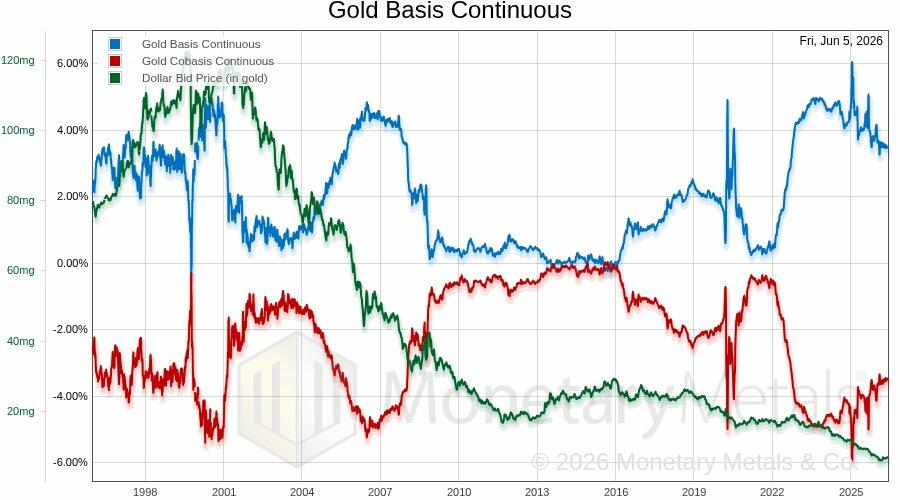
Gold helps you because it’s more liquid than anything else. There’s no counterparty. Somebody can’t take it from you as easy. But ultimately, the reason you want gold is that because you can then get liquid to satisfy debts or go speculate on some— maybe some asset has come down a lot. You can go buy it cheaply.
Why gold gets sold in a crisis (not bought)
Monetary Metals
Can I dwell on that briefly? Because I think for our audience in particular, I’ve heard this question come up, like, why isn’t the gold price rising on the heel of this conflict? And I think you just said the answer, right? Like, in these moments of stress, people want dollars. So they’re gonna sell assets, and gold is a high-quality, highly liquid asset that gets sold in these times. Is that basically how you would say—
Brent Johnson
That’s exactly right. And they may not even want dollars, but they have to have it, right? And so that’s exactly right. And, and that’s why you’ve seen, you know, last year obviously gold just had an incredible year. Gold and silver had an incredible year. That was, I think, largely as a result of the debasement trade. You know, fiat is failing, government’s gonna have to print all this money. Hey, you know, there’s no other way out. Let’s get into real assets.
But then as you get into the actual crisis itself, gold fell. And it fell because Turkey was selling some, Russia was selling some, the Gulf countries were selling some. And it’s because they needed to get liquid during that time period. Now, the interesting thing is the dollar didn’t actually go up all that much. It went up a little bit, but not all that much. And this is another important thing to point out. And we actually write about this in the paper, too. There’s a little bit of a misconception about what the dollar does in a crisis. And what I mean by that is everybody often expects that in a crisis, the dollar should rise.
Eventually, that’s the case. But actually, if you actually look historically, in the initial stages of a crisis or a credit crisis, the dollar will fall. Now, why is that? Okay. The reason is for years—and this is part of the Milkshake framework as well—is for years, countries and institutions around the world have invested their excess savings into the United States. And then when there’s a slowdown and things start to fall and they have to start paying off debts, what do they do?
They have to tap their piggy bank. So they sell their US dollar assets and they repatriate those funds back home to deal with their local crisis. When they do that, they’re selling US dollar assets, they’re getting dollars, they’re selling dollars and they’re buying euros or yen or whatever it is. That short-term fluctuation pushes pushes the price of the dollar index down. So as an example, in September of 2008, right at the beginning of the crisis, the dollar fell 5% over a 2-week period.
Monetary Metals
As a result of—
Brent Johnson
As a result of them selling US dollar assets and repatriating capital back home.
The dollar boomerang: why it always comes back
Monetary Metals
And it is one way to think of that, like, because ultimately it’s dollar-denominated assets that are coming home as euros or yen.
Brent Johnson
That’s right. Yeah, that’s right. And so that exact same thing happened again in early March of 2020. Okay. That exact thing happened last April 2025. The difference is, though, is that if that initial crisis continues, if it doesn’t get squashed right away by the central banks, the monetary authorities, and it becomes a global actual crisis as opposed to just the initial stages, that’s when you see the dollar boomerang back higher.
After that initial wave is done, then it goes back the other way because now you’ve got a global liquidity event. And everybody needs dollars. And so, you know, again, in September of 2007, you know, the dollar went up huge after it initially fell. Then it slingshotted higher.
Monetary Metals
Everything’s selling off.
Brent Johnson
Same thing in 2020. That didn’t happen last year in 2025, largely because the crisis only lasted 2 or 3 weeks. Right. It didn’t continue. Right. My argument is that if it would have continued, we would have then seen the dollar move back higher. And what the point with all of this is not that the dollar can’t ever lose global reserve currency status. It’s not that it can’t go down. It’s gone down many, many times. But until they restructure the whole system, there is an indefinite bid that will eventually take it back higher.
There’s not a lot of risk of the dollar going down. If the dollar goes down in the stages that it’s going down, that means there’s plenty of liquidity in the world. Asset prices are probably going higher. I’ve explained why that will eventually boomerang back. But during that period of time, life’s good. The risk to the system is it going through that band to the upside, because that wrecks everything. People always say, you know, it’s not a dollar milkshake, it’s a gold milkshake, because gold is ultimately going to be the winner.
Monetary Metals
This is like the Exeter’s pyramid kind of thing, right?
Brent Johnson
Yeah. But my point has always been, since the very first time I ever mentioned the milkshake, I said gold ultimately wins, right? So gold going higher is actually part of the whole thesis. But I just think the bigger risk to the world is the dollar going higher. I don’t think that there’s anything more bullish for gold than the dollar going higher because that wrecks the monetary system. And I would argue part of the reason gold has done so well from, let’s call it, 2023 to 2026 was because the dollar went so high in 2022 and it caused all these problems that has then led to further debasement that then pushed the gold higher.
How long can dollar dominance last?
Monetary Metals
So building off that, I want to ask a question. Around timing, which is one of those notoriously difficult things to ask, but I’m going to do it anyway. So I think you’ve said many different times where we are now, the current environment with dollar as king, it can go on for a long time.
And I think it’s already proven a lot of people wrong for how long it’s already gone on. I want to ask you about that. Yeah. Like, in this weird sort of way, the dollar is incredibly strong and incredibly weak at the same time. I think you can hold those two truths together in terms of like its lifespan, its future lifespan. Where do you put it?
Brent Johnson
Like, let me touch on two parts. So I think what you’re referring to is the dollar can be very weak from a purchasing power perspective against real things, but it can be very strong versus foreign currencies. Yes, that’s something I pointed out again at the very beginning when I very first started talking about this 8 years ago now. My point was that the dollar will get strong versus its currency pairs, not necessarily against real goods.
Monetary Metals
Right.
Brent Johnson
Right. Or gold, for that matter. Yeah. And the reason is because fiat currency is not designed to hold value. They don’t want it to hold value. If they wanted a strong currency that held its purchasing power, they would just use gold. But they don’t want that. Right?
And so when I first kind of came out and started talking about this, I said that I thought in the next 4 to 5 years, by 2024, this would all play out because I thought we would have a currency crisis and a sovereign debt crisis. That went past 2 years ago. But one thing I had said is, listen, don’t bet your whole portfolio on the super crisis. I don’t know that it will happen, but I think it will.
But I also said if it doesn’t happen, if I get it wrong, I think it will be because it takes much longer to play out than playing out right away. And I think that’s where we’re at. And the further we go into this, you know, in a kind of a Machiavellian type of way, I look and see what the U.S. government— and I think they can extend this a lot longer than maybe even I think right now. I think you have to be prepared for this all to blow up tomorrow.
Stablecoins as the next phase of dollar hegemony
Monetary Metals
All in the interim period, you want to have a plan.
Brent Johnson
But I could easily make the argument that the dollar is going to be the global reserve currency for the next 10, 20, 30 years. I think the rise of stablecoins is a big part of that.
Monetary Metals
Say a little more about that.
Brent Johnson
I’ve written a couple of papers on stablecoins, but stablecoins is really a way for the United States to extend dollar hegemony to the other parts of the world that currently it’s not as easy to get dollars.
Monetary Metals
In the sense of like they’re not directly connected to the dollar financial system.
Brent Johnson
That’s right. And it’s harder for local governments in other jurisdictions to regulate it or to regulate a stablecoin. You can regulate it, but to keep somebody that has an internet connection from buying it on the phone is more difficult than having it run through their bank account at the local, you know, monetary authority. And so I think that stablecoins, I think they do help the United States finance the debt.
I think that’s actually more of a smokescreen for what it really is. To me, it’s a, it goes back to the weaponization part. They, by the rest of the world adopting stablecoins, It’s almost like the euro-dollar market. These other countries are adopting that because it’s in their best interest to do it. In this case, it’s citizens adopting it because it’s in their best interest rather than using their local currency. When that happens, it transfers monetary sovereignty back to Washington and takes it away from the local monetary authority.
Monetary Metals
It reinforces the dollar.
Brent Johnson
It reinforces the dollar. Yeah, right. Now again, I don’t know for sure 100% that this is going to play out, but that’s how I— that’s what I see. See happening. And I think there’s a big belief that governments are filled with a bunch of idiot clowns who don’t know what they’re doing and couldn’t manage their way out of a brown paper bag. And for the most part, that’s probably true.
But some of the people are really, really smart. And I think if you automatically think they don’t know what they’re talking about, you’re putting yourself at a disadvantage. Some of these people are brilliant. Here’s one thing that makes me laugh is they’ll say this fiat system is robbing and pillaging for decades and it’s transferring the wealth from the many to the few. And, you know, this is such an evil system.
Okay, on the one hand you’re saying they’re these evil geniuses that enslaved the entire world without the world knowing it, but then you’re also saying they’re a bunch of idiots. Now which one is it? Were they the ones that were smart enough to enslave the whole world in this debt trap, or are they the idiots that have no idea what’s going on?
The system is fragile, but it can last decades
Brent Johnson
I think you’re better off assuming they know what’s going on than not going on. And I think they have proven that their ability to keep the plates spinning longer than most people thought possible, time and time and time again. And so I think it’s one of these things where you always have to be ready. We do have a very fragile system. It’s debt-based, it’s exponential, and all exponential systems eventually crash.
But it might take a lot longer than people think.
Monetary Metals
Last question for me. If we get to that end, you know, we use words like crash, crisis, sovereign debt defaulting. These don’t conjure up rainbows and unicorns. Like, this sounds like a not a happy time to live through. Can you imagine a graceful or painless transition to a new system?
Brent Johnson
Is that even possible? I do not think that that is— well, I’m not going to say it’s impossible. Of course, there’s always a way. I cannot figure out how that happens in a nonvolatile way. That’s always been part of my thesis is that if we have this system now, I think many people know it’s not a perfect system and we’re eventually going to have to go to this new system.
I don’t think there’s a way to go from this to that without that interim period being very volatile. And it’s my belief that during some pain— yeah, and during that volatility, I think the dollar index rises. And so that’s kind of— again, whether that happens tomorrow or 15 years from now, I’m not smart enough to know that. And perhaps I’ll be proven wrong. Perhaps we will have this transition and it will be peaceful and nonvolatile. But I think that’s very, very low probability.
Monetary Metals
Brent, I’ve enjoyed the conversation. I’m doing my best to stand in for our regular Ben Nadelstein on the Gold Exchange Podcast. Thanks so much for spending some time with me.
Brent Johnson
Thank you.