





Sell Tech, Buy Rotation
Welcome to MktContext! I am a professional money manager, trader, and investor who has been timing and beating the market for over a decade. We specialize in predicting market direction by studying the economy and market signals. Join 13,000 subscribers at MktContext.com for our weekly deep dives and analysis!
We called the dead-cat bounce last week. So far, we’ve been right to be bearish chip stocks. The rotation out of chip stocks (SOXX) accelerated to the downside, violently breaking below the 50-day average on its way to the 100-day.
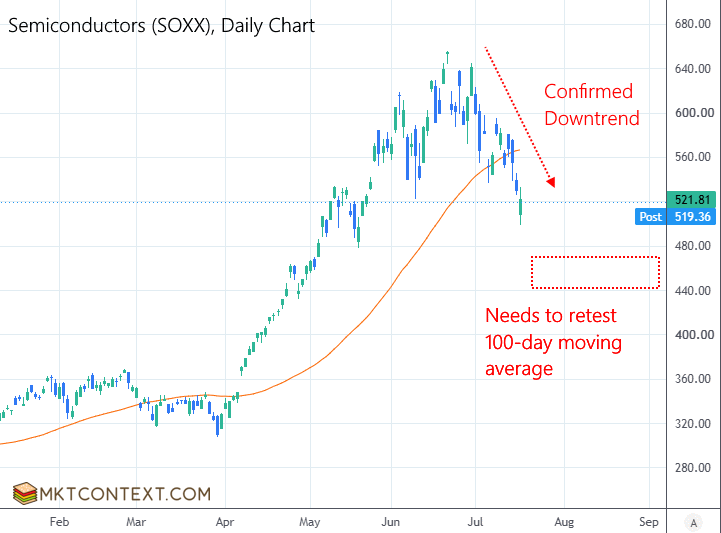
The AI trade is imploding. Hope is not a good investment strategy. To be a good investor, one must understand the market context and decipher price action. If you’re still holding Nasdaq (QQQ) or semiconductors/AI stocks, you need to revisit your portfolio!
Technical Analysis
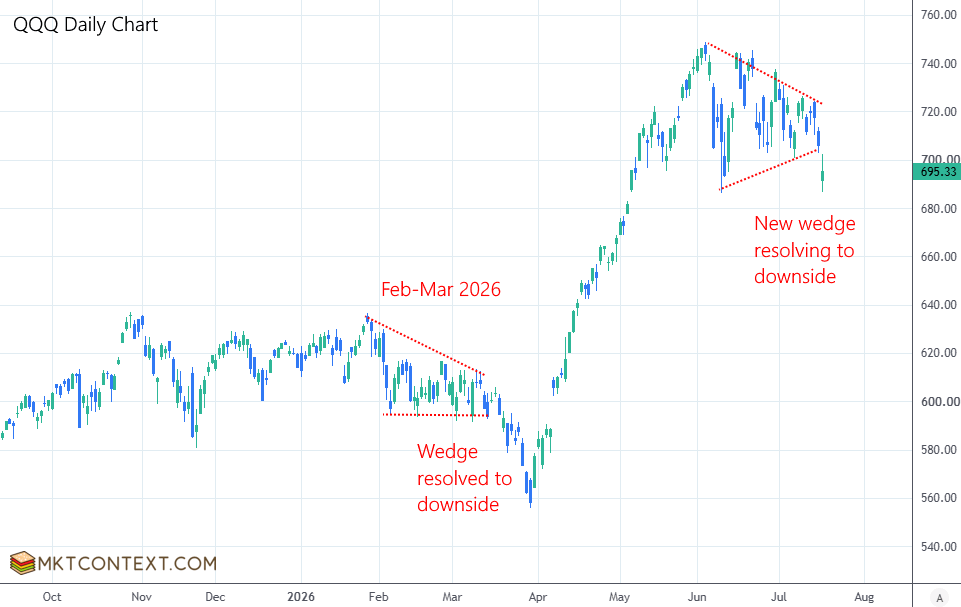
SPX and QQQ are forming a wedge very similar to the one in early 2026. That last one resolved to the downside (breakdown) due to the Iran war. History doesn’t repeat but it often rhymes; this time around, a breakdown could be triggered by negative earnings revisions in tech stocks.
Today's price action for SPX was ominous. After a gap-up in the morning, it rejected sharply and fell back down to weekly lows. It closed near the day's lows, a classic sign of price rejection.
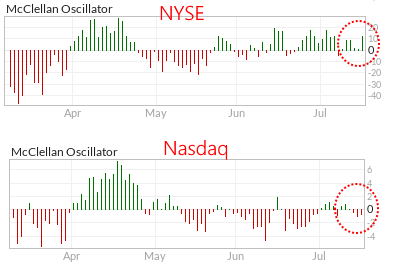
Breadth is showing a strange divergence: it is positive for the NYSE but negative for Nasdaq. So even as tech stocks on the whole are going down, the rest of the stocks are going up. We also see an above-average number of stocks in the NYSE making new highs day after day; not so for the Nasdaq.
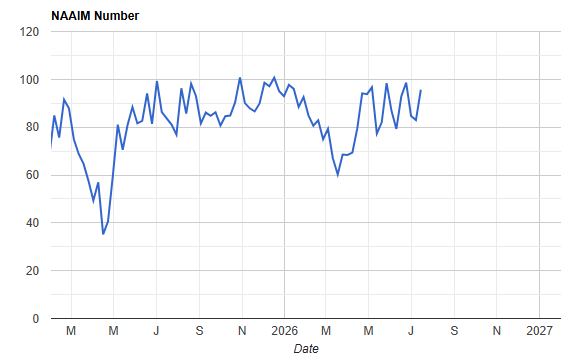
Positioning currently skews bullish, with asset managers’ exposures at highs (chart below) as well as futures positioning at highs. The market is not prepared for downside risk which could set off a cascade of selling.
Our “peak timing” indicator, Put/Call Skew, which looks at the demand for portfolio insurance, is not flashing a warning sign yet.
Overall, this is a highly unusual environment: One specific sector is collapsing while the broader “old economy” market is still robust. This was a defining characteristic of the early 2000s dot-com crash.
Immediately following the March 2000 bubble bursting, money rotated aggressively into unloved NYSE/Dow value stocks (mostly beaten-up drugmakers and financials). While the rest of the Nasdaq was collapsing, NYSE breadth surged sharply higher. Equal-weighted S&P500 and small-cap indices posted strong relative returns. The parallels to today are uncanny.
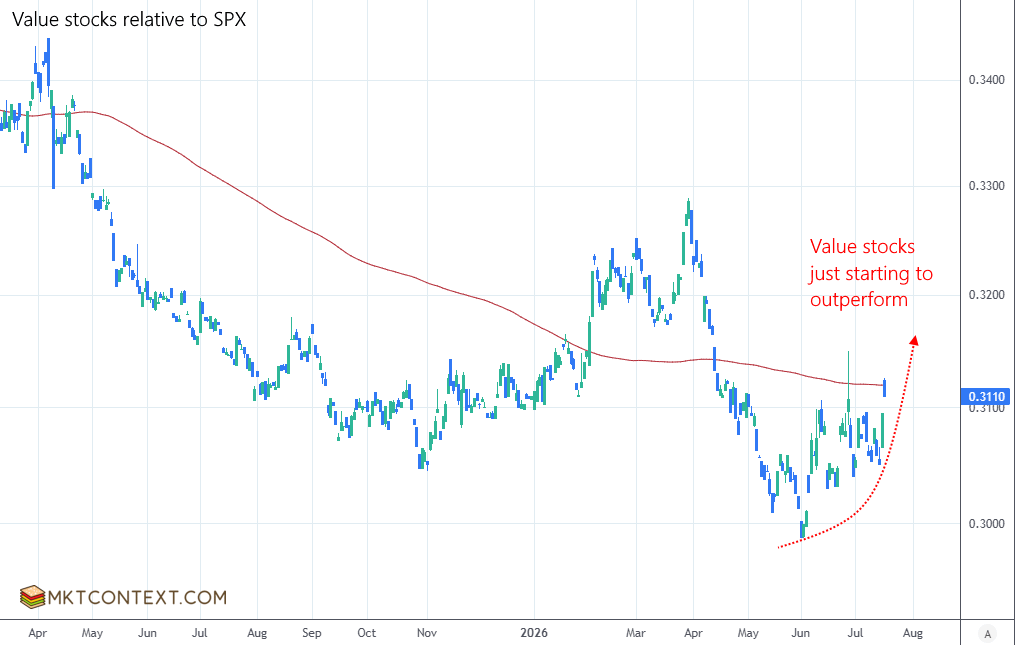
Said differently, it is possible that we are experiencing the onset of the AI bubble bursting. The key question is whether this will metastasize to the rest of the market. Even if the rest of the economy appears strong, a sharp enough correction could trigger a recession.
Get the rest of this article, including our portfolios and trades, at MktContext.com!
Join 13,000+ investors who are timing the market!