





Why does a "good" salary no longer feel enough?
By many conventional measures, the economy appears healthy.
Inflation has cooled, wage growth has remained relatively strong, and the unemployment rate is still historically low.
So why do so many households still feel like they're falling behind?
The answer may not be as simple as "everything costs more."
After all, prices are always changing. Some rise because demand increases, while others fall because businesses become more efficient.
In a healthy market economy, those price movements serve a purpose: they communicate information.
They tell producers what to make, investors where to allocate capital, and consumers when to substitute one good for another.
What happens when those signals stop working as expected?
Prices don't just measure value, they communicate it.
One of the most important functions of prices is coordination.
If beef becomes scarce, higher prices encourage ranchers to raise more cattle. If lumber prices surge, sawmills have an incentive to increase production. Over time, supply responds, and prices begin moving back toward equilibrium.
Markets aren't perfect, but that's generally how they're supposed to work.
The same principle should apply across the broader economy. Rising prices are often a signal that society needs more of something.
Yet some of today's most important prices don't seem to be producing that response.
The prices that matter most keep moving out of reach
Consider housing: home prices remain elevated in many parts of the country, even after mortgage rates climbed sharply. Under normal circumstances, high prices should encourage more homes to come onto the market.
Instead, many homeowners are reluctant to sell because doing so would mean giving up mortgages they locked in at historically low interest rates.
Buyers face higher borrowing costs, while builders face their own financing constraints.
The signal says one thing, yet the incentives produce another.
Childcare tells a similar story: for many families, it's one of the largest expenses they face, sometimes even rivaling housing itself. A high price would ordinarily encourage more providers to enter the market and expand capacity.
Instead, shortages persist, costs remain high, and many parents postpone having children or leave the workforce altogether.
The issue isn't simply that housing and childcare have become expensive.
It's that the market hasn't responded in the way economic theory would typically predict.
Not every price matters equally
This also helps explain why economic debates often feel disconnected from everyday experience.
Inflation measures changes in prices across a broad basket of goods and services. That's useful for understanding the economy as a whole.
But households don't experience every price equally.
If televisions become cheaper while housing, childcare, insurance, or healthcare become more expensive, inflation may appear relatively contained even as many families feel increasing financial pressure.
That's because some prices determine whether people can build a stable life, while others mostly affect discretionary spending.
A family can delay buying a new television.
It can't indefinitely postpone paying rent.
It can't simply opt out of childcare if both parents need to work.
And it can't ignore rising insurance premiums or medical bills.
When the prices tied to participation in society consistently outpace everything else, the economy can look healthy in aggregate while feeling increasingly unaffordable to the people living in it.
Why a good salary doesn't always feel like enough
This is one of the defining paradoxes of today's economy.
Many households earn more than previous generations did at the same stage of life. Yet those same households often struggle to buy a first home, start a family, build meaningful savings, or absorb an unexpected financial shock.
That isn't necessarily evidence that people are making poor financial decisions, nor does it mean the economic data are wrong.
It may simply reflect the fact that the prices shaping everyday life have changed in ways that conventional measures don't fully capture.
The economy isn't just a collection of numbers; it's a system that relies on prices to coordinate decisions.
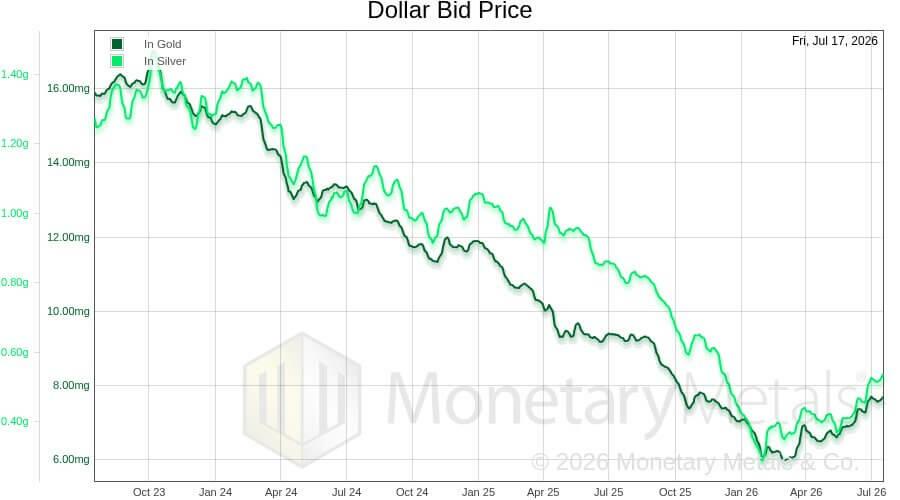
When those signals become distorted (or when the incentives surrounding them prevent markets from responding as expected), the effects ripple far beyond any single inflation report.
That's why so many people feel there's a growing disconnect between what the economy is supposed to be telling them and what they experience themselves.
This only scratches the surface of a much broader discussion.
The affordability crisis is often framed as a question of inflation, wages, or government policy. But each of those explanations captures only part of the picture.
If prices are meant to coordinate economic activity, then understanding why some of today's most important price signals no longer produce the outcomes we'd expect opens the door to a much larger conversation.
Whether you ultimately agree or disagree with that framework, it's worth considering because it challenges many of the assumptions that underpin how we think about the modern economy.