





EU Natural Gas: Russia's Closing Window
Europe increased its imports of Russian gas by more than 10% year on year in Q2, while at the same time legislating to eliminate those imports entirely by 2027. This hands Russia considerable leverage over a continent heading into winter in worse shape than it was going into the last energy crisis.
Europe Is Weaker Than It Was in 2021
We have been writing since March about the shortfall in European gas storage injections. The position has deteriorated with almost every passing week, and we now lower our forecasts for a third time.
We estimate EU storage peaks at 73% this year, 2 percentage points below our previous assumption. This assumes Qatari production ramps to 50% of normal by mid-September and 80% a month later. QatarEnergy is reportedly set to extend its force majeure again, this time to October. Equinor reiterated this week that Europe will likely not reach an 80% refill at all this year. In 2021, the year preceding the last energy crisis, European storage peaked at 77%.
European Natural Gas Storage Levels and Our 2026E Forecasts (% full)
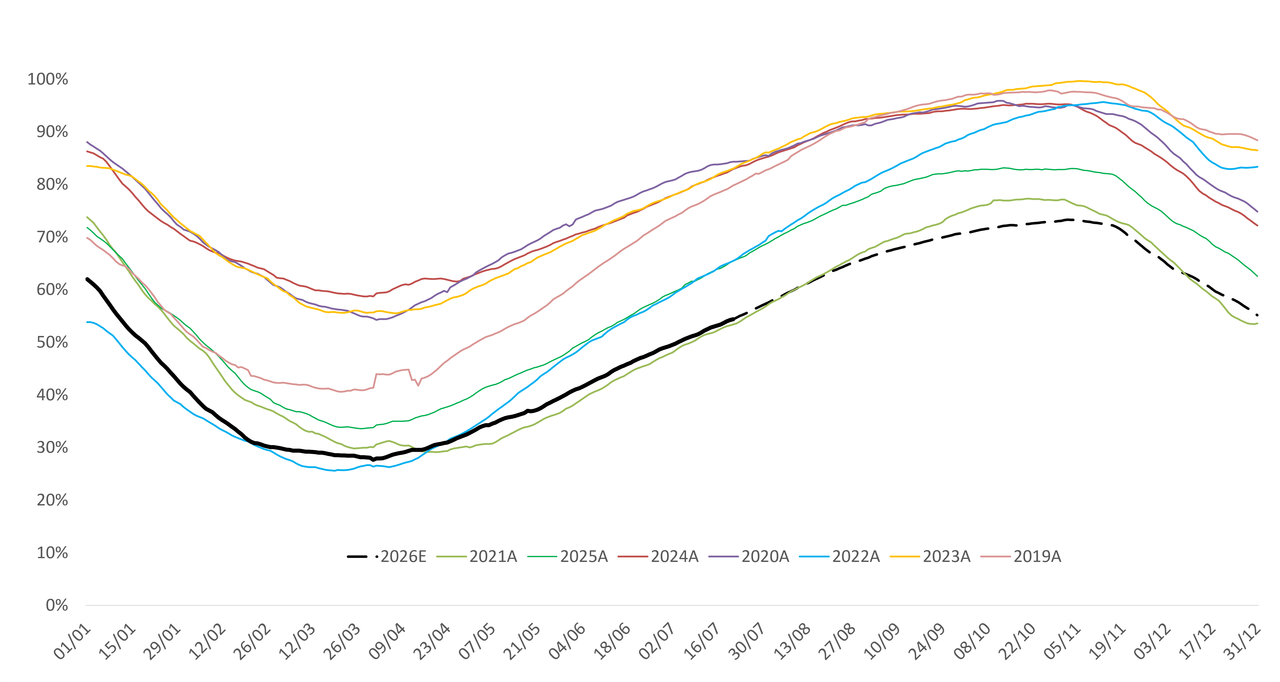
Source: GIE AGSI. 2026E = Asymmetric Research estimates
Neither geographical nor time spreads are incentivising refill. In June alone, LNG imports into Europe were down more than 20% yoy, driven predominantly by lower US volumes as cargoes found better prices elsewhere. Injections have been running noticeably weak for weeks, while continuous heatwaves have kept withdrawals higher than they should be at this point in the season.
Complacency by European politicians is striking. We think this is itself part of the bull case: either policymakers wake up and force refilling, which means buying gas aggressively in a tight market, or they remain complacent and the market does the job for them as winter approaches. Both roads lead to higher prices.
TTF price (€/MWh)
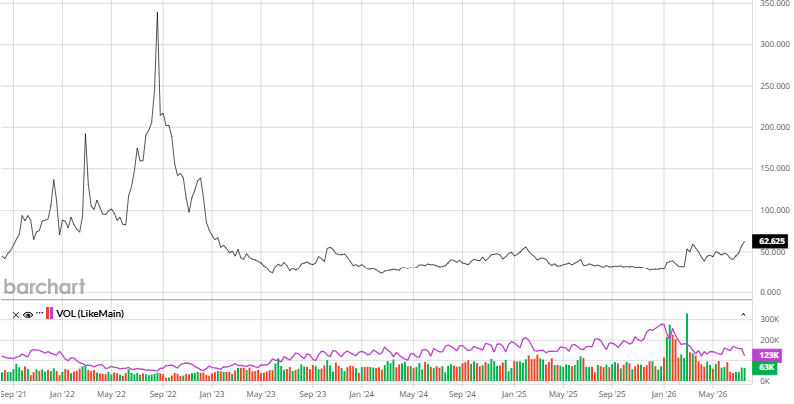
Source: Barchart (Month ahead)
The 2027 Phase-Out Creates a Deadline
Under the EU phase-out regulation, long-term Russian LNG contracts are prohibited from January 2027, and long-term pipeline contracts, the majority of remaining volumes, are phased out between September and November 2027. Europe is not ready for this. Replacing those volumes means competing for LNG cargoes in a market where Europe has already shown it will lose on price, while at the same time rebuilding storage from a depleted base and absorbing a heavy Norwegian maintenance schedule.
We think the phase-out is ultimately softened or rescinded, as the alternative is a supply gap Europe has no credible plan to fill in the next year. Politically difficult, certainly. But so was buying Russian gas again after 2022. That would be bearish TTF further out. It does not help this winter though, and it introduces something the market is not thinking about at all.
What Does This Look Like From Russia?
Russian gas still flows to Europe, and those flows increased in Q2. European storage is weaker than in 2021. Tensions with Ukraine are at highs, with attacks on Russian energy infrastructure ongoing. And a regulation is on the books that terminates the commercial relationship, and with it the leverage that relationship provides, by the end of next year. In other words the leverage Russia holds today expires, and its value is highest precisely when European storage is at its lowest.
Would Putin simply sit back and allow EU politicians to dictate the terms and timing of that separation? We doubt it.
The Risk Nobody Is Pricing
Although not our base case, the scenario we think is genuinely unpriced is that Russian flows to Europe stop early, this year, at a moment of Russia's choosing rather than the EU's. Against storage peaking at 73%, that is not a marginal event, with a demand destruction buffer considerably smaller than it was in 2022 given consumption has already reset some 16% below 2021 levels, as we discussed in an earlier report.
We would not expect the US to object particularly strenuously. The commercial interests of the US and the strategic interests of Russia point, on this narrow question, in the same direction.
None of this requires a prediction that Russia will act. It requires only the observation that the market is pricing the probability at zero for an event with a clear rationale, a closing window, and severe consequences.
Our Positioning on Energy
[...]
This article is based on research originally published on Asymmetric Research. Continue reading including positionings at: asymmetricresearch.substack.com
Disclaimer: This article is for informational purposes only and does not constitute investment advice or a personal recommendation. Past performance is not indicative of future results. The value of investments can go down as well as up. Natural gas and related instruments are highly volatile. Readers should seek independent professional financial advice before making any investment decision.