AI Demand Meets $100 Oil

AI Stocks And Oil
The week began with AI stocks trying to recover from the previous Friday’s rout and ended with the Nasdaq under pressure again. In between, the market compressed a full argument about the AI boom into five sessions: Micron jumped 12.2% on Tuesday, Brent crude broke $100 on Thursday, and strong earnings reports kept getting sold.
Friday supplied some relief. Brent fell 3.9% to $96.78, and the 10-year Treasury yield eased to 4.68%. The S&P 500 finished essentially flat and the Dow gained 0.5%, but Micron fell 7%, Broadcom lost 2.7%, and the Nasdaq dropped 0.6%.
Every major index lost ground for the week, and the S&P 500 posted its second consecutive weekly decline for the first time since March. The market ended the week with more evidence of AI demand and a higher hurdle for the capital required to serve it.
The Market Sold The Spending
Alphabet beat estimates, but its shares fell 7.1% Thursday after it raised its 2026 capital-spending forecast to $195–$205 billion. Tesla dropped 14.5% after weaker profit. Oil above $100 and a 10-year yield near 4.7% made every long-duration investment look more expensive at once.
The operating evidence was far stronger than the stock reaction. Alphabet said revenue rose 24%, Google Cloud revenue increased 82%, Cloud backlog reached $514 billion, and demand remained supply constrained. Nokia added a supplier-side confirmation: AI and cloud sales rose 105%, while order intake reached €2.8 billion.
Intel reinforced the point after Thursday’s close. It forecast revenue above estimates and raised its own spending plans as AI data-center demand increased the need for its CPUs. Meanwhile, Friday’s fresh tariff round covered nearly all U.S. imports, adding another potential source of inflation before the Federal Reserve meets next week.
The market’s question has shifted from whether AI demand exists to who can earn an adequate return on the spending. The suppliers selling scarce hardware and infrastructure can keep growing while their customers’ valuation multiples compress.
Eight Fills, Eight Passes
That was the backdrop for our trading. We proposed 16 defined-risk structures across five daily alerts. Eight filled. We let the other eight expire rather than pay away the edge we saw in them. Seven of the fills were bullish; one was bearish.
Monday’s AI-adjacent alert looked beyond the crowded megacaps toward two less-obvious beneficiaries of AI adoption and the data-center buildout.
🤖 Intelligence is Addictive 🤖
— Portfolio Armor (@PortfolioArmor) July 20, 2026
Fresh evidence the AI boom is still on—and two under-the-radar ways to play it that just cleared our screens.https://t.co/GUBlP3V5dS
Both structures filled, with one requiring a disciplined intraday reprice as the underlying shares moved.
Tuesday’s catalyst-driven alert paired a contrarian airline setup with three biotech setups.
🚨 Time Is A Bomb 🚨
— Portfolio Armor (@PortfolioArmor) July 21, 2026
A contrarian airline trade and three biotech setups with catalysts ahead.https://t.co/jg59NnvHeB
Two hybrid combos filled; two biotech orders expired unfilled even after we raised both limits to discounts to updated fair value.
A Broadening Rally—At Our Prices
Tuesday night’s screens widened the opportunity set beyond the obvious AI leaders. Wednesday’s four-trade alert covered regional banking, semiconductor equipment, defense electronics, and fintech.
🚨 Four Ways To Buy A Broadening Rally 🚨
— Portfolio Armor (@PortfolioArmor) July 22, 2026
Independent screens surfaced opportunities in semiconductors, defense, banking, and fintech.https://t.co/NIQIMpYlyv
Two structures filled and two expired unfilled. Our pricing discipline held across the broader opportunity set.
Thursday’s AI-capex and biotech alert paired semiconductor-equipment exposure with opposite biotech catalysts: a bullish courtroom-and-settlement setup and a bearish clinical-readout thesis.
🚨 AI Capex And Two Biotech Catalysts 🚨
— Portfolio Armor (@PortfolioArmor) July 23, 2026
Bullish options bets on an AI infrastructure leader, and a biotech with a courtroom catalyst; plus, a bearish options bet on another biotech with a pivotal trial.https://t.co/vicP1lmH42 pic.twitter.com/rQn5zXcXjl
The bullish biotech structure filled; the capex order and the first bearish structure did not.
We returned to the bearish biotech thesis in Friday’s alert with different payoff geometry: a January broken-wing put butterfly.
🚨A Market That Punishes Chasing🚨
— Portfolio Armor (@PortfolioArmor) July 24, 2026
Bullish options bets on a strong commercial biotech and an AI infrastructure company, plus a bearish bet on a biotech whose clinical trial we expect to fail.https://t.co/zT7t4S1Or5
That structure filled, while two bullish recovery orders did not.
That sequence captures the week. We were willing to revisit a thesis, change the structure, and update a limit when fresh pricing justified it. We were equally willing to walk away when the options market demanded too much.
Exits
Entries are only half the process. Here are the full and partial positions we exited this week:
Stocks or Exchange Traded Products
None.
Options
Call calendar on Calumet (CLMT -2.13%↓). Entered at a net debit of $2.98 on 5/1/2026; exited the calendar at a net credit of $5.53 on 7/18/2026. Profit: 86% on premium outlay. Signal: PA Top Names.
Short calls on VivoPower (VIVO 6.06%↑). Sold-to-open the October 16th, 2026 $12.50 calls for $0.97 per contract as part of a 4-leg hybrid combo on 6/22/2026; bought-to-close those calls for $0.20 per contract on 7/20/2026. Profit: 79% on premium collected. Signal: Market Watchers.
Put spread on 10x Genomics (TXG -4.12%↓). Entered the November 20th, 2026 $20/$15 put spread at a net credit of $1.70 on 5/15/2026; exited the spread at a net debit of $0.20 on 7/22/2026. Profit: 88% on premium collected (21% of max risk). Signal: Multibaggers.
Short calls on Wolfspeed (WOLF -10.39%↓). Sold-to-open the September 18, 2026 $80 calls for $9.21 per contract as part of a 4-leg hybrid combo on 6/8/2026; bought-to-close those calls for $0.20 per contract on 7/24/2026. Profit: 98% on premium collected. Signal: Market Watchers.
4-leg hybrid combo on Frequency Electronics (FEIM -0.93%↓). Entered at a net debit of $2.70 on 2/11/2026; bought-to-close the May 15th, 2026 $65 call for $0.20 on 4/29/2026; exited the May 15th, 2026 $45/$40 put spread at a net debit of $0.20 on 5/5/2026; sold the August 21st, 2026 $60 call for $17.55 on 7/21/2026. Profit: 535% on net debit (188% of max risk). Signal: Market Watchers.
Process Over Prediction
War risk, $100 oil, new tariffs, rising yields, and anxiety over AI spending all hit the tape in the same week. Next week brings the Federal Reserve and another heavy earnings calendar.
A process that can survive the next headline matters more: screen tightly, match each catalyst with an appropriate defined-risk structure, insist on attractive pricing, and let unfilled orders go.
If you’d like a heads-up in real time when we place our next trades, you can become a free subscriber to our trading Substack and occasional email list below.
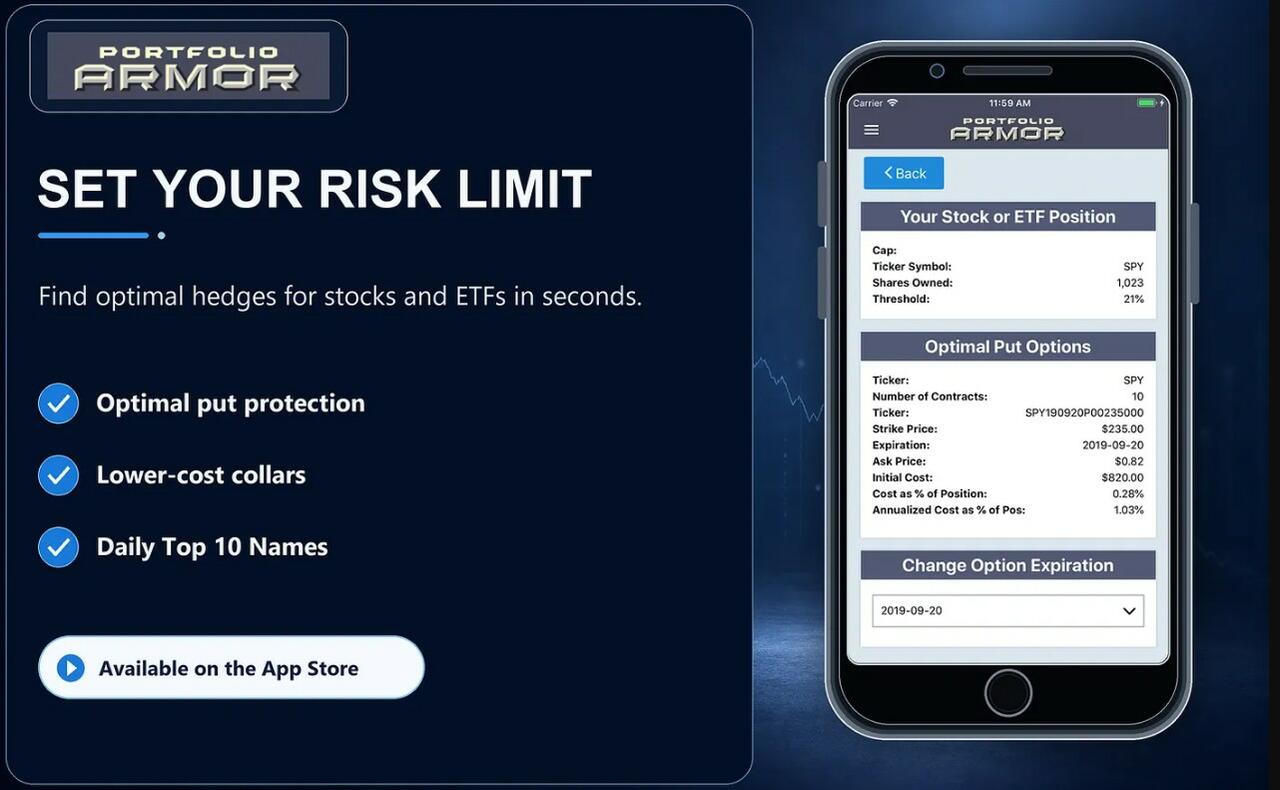
And if you're worried about market risk here (understandably so), you can hedged with the Portfolio Armor website or iPhone app.