The AI Buildout Is on Track. The Recovery Isn't.

The Momentum Massacre Mostly Continues
The latest selloff in AI infrastructure stocks has created an uncomfortable split. The companies are reporting accelerating demand, expanding margins, and higher guidance. Their stocks are still getting hit.
The earnings argue that the AI buildout remains on track. The price action says the market is still reducing exposure to some of the companies that benefited most from it. Those are different signals, and treating one as a substitute for the other is how investors end up catching falling knives.
On X Tuesday night, we wrote that the reports and post-market reactions from three AI infrastructure companies were bullish for AI.
$BE , $STX (@Seagate, not whatever is currently squatting on that cashtag) and $TER reports and post-market price action all bullish for AI 🤖.
— Portfolio Armor (@PortfolioArmor) July 28, 2026
The buildout is real and it’s continuing,
Overnight, SK hynix added a stronger data point—and a harsher lesson about this tape.
Four Checks Along the Supply Chain
The sequence started Monday with Celestica. Second-quarter revenue rose 62% year over year to $4.7 billion, adjusted operating margin reached a company record, and
management raised its 2026 revenue and earnings outlook. It expects revenue growth to accelerate again in 2027.
Tuesday broadened the confirmation. Bloom Energy reported record revenue of $1.07 billion, up 166% year over year, as product revenue rose 215%. It raised full-year revenue guidance to $3.9 billion–$4.2 billion, about twice last year’s revenue at the midpoint. Management said all the major U.S. hyperscalers, along with more than a dozen neoclouds, AI labs, and data-center operators, have approved its power systems.
Teradyne posted a second consecutive quarter of record revenue. Sales rose 104% year over year, earnings rose more than 300%, and memory-test revenue reached a record. Its third-quarter guidance reflects what management called robust AI-related demand. Seagate reported $3.6 billion in quarterly revenue, up 49% year over year, with gross margin expanding to 52.3% from 37.4%. It generated $1.1 billion in free cash flow and guided the next quarter to $4.1 billion in revenue.
The market rewarded those reports. Bloom rose 12.7% after hours, Teradyne rose 12.8%, and Seagate gained 6.6%. Celestica had already risen 10% Tuesday following its Monday report. Those moves show that the market can still reward strong execution, but they don’t constitute a broader recovery. Even at their after-hours prices, Bloom, Teradyne, and Seagate remained about 46%, 26%, and 28% below their respective late-June highs. Because the four companies occupy different points in the AI supply chain—manufacturing and networking, semiconductor testing, on-site power, and mass-capacity storage—their simultaneous strength makes a broad deterioration in AI infrastructure demand harder to square with the evidence.
The HBM Leader Gets Punished
SK hynix strengthened the fundamental case overnight. The company reported all-time-high results: revenue rose 257% year over year, operating profit rose 557%, and operating margin reached 76%. It began mass shipments of HBM4 during the quarter and has signed long-term agreements with around ten key customers.
The result nevertheless fell short of extremely high expectations. One analyst who anticipated the miss attributed it to SK hynix’s heavier mix of high-bandwidth memory, where average-selling-price growth lagged the conventional-memory market. SK hynix’s own report points to sustained AI demand, customer demand exceeding available supply, and additional supply requests from major technology customers.
The shares fell 9.4% in Korea, helping pull the Kospi down 6%. At the same time, CXMT, the newly-listed Chinese DRAM producer, rose 11.5% Wednesday to CNY52.42. That followed a 466% first-day gain Monday and a modest 4% retreat Tuesday. CXMT now trades near its debut high despite lacking SK hynix’s position in HBM.
That contrast points to positioning, expectations, regional capital flows, and forced deleveraging—not a clean investor referendum on AI demand. A record quarter can still produce a falling stock when the market expected an even bigger record.
What the Credit Bears Get Right
The strongest bearish argument concerns financing. The AI buildout is extraordinarily capital-intensive. Wider hyperscaler credit spreads, heavy data-center borrowing, and the difficulty of bringing enough power online deserve attention. If operating cash flow fails to catch up with capital spending, the buildout could slow.
Gavin Baker offered a useful counterpoint. Spot prices for GPU compute remain at least twice contracted rates, by his estimate. That suggests hyperscalers are under-earning on capacity sold under older contracts. As those contracts roll off, cloud revenue and operating cash flow could reprice higher, reducing the amount of debt needed to fund future construction.
That forecast still has to be proved. The current earnings are consistent with it: power demand is accelerating, test demand remains robust, storage margins are expanding, and the leading HBM supplier is signing multi-year customer agreements. Evidence that would challenge the thesis would include falling capital-spending plans, order cancellations, weaker memory agreements, rising inventories, or suppliers cutting guidance. This week’s reports moved in the opposite direction.
Let the Screens Call the Turn
The fundamental thesis and the entry decision remain separate questions. When positioning is unwinding, valuation alone doesn’t create a floor. A strong earnings report can produce another leg down if leverage, expectations, and technical selling dominate.
We created two dedicated screens to look for the turn. AI Profitable Recovery tracks AI-related companies with current earnings. AI Speculative Recovery tracks pre-profit companies whose upside depends more heavily on future execution. We review both every night, alongside Portfolio Armor’s Top Names and our Chartmill Trend & Consolidation Screen.
A candidate then has to pass additional checks: it should trade above a rising 50-day exponential moving average, remain absent from our Bearish Rally Failure Screen, and clear our fundamental, corporate-action, recent-exposure, and options-pricing reviews. We’ve also automated a weekly audit of our full-exit winners so that each is watched by the relevant screen for a possible re-entry.
No stocks passed either AI recovery screen last night. That’s useful information. It gives us a reason to remain selective and preserve dry powder while the tape is still damaging good companies along with weak ones. Fundamentals tell us where to look. The screens will tell us when to act.
When an AI name clears the relevant recovery screen and an attractive defined-risk structure is available, we'll post a trade alert for it.
If you’d like a heads-up in real time when we place our next trades, you can become a free subscriber to our trading Substack and occasional email list below.
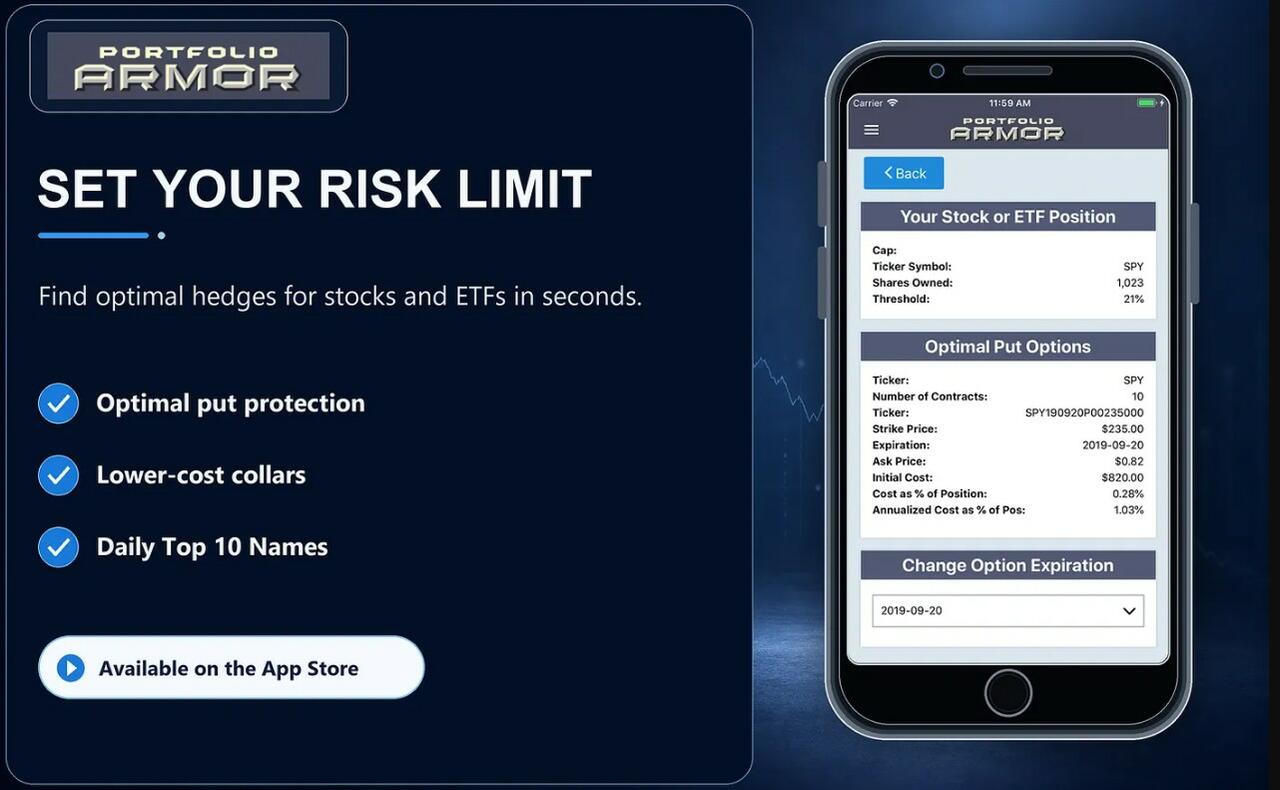
And if you're worried about market risk here (understandably so), you can hedged with the Portfolio Armor website or iPhone app.