





Continues here


BMO: China’s Gold Stockpile Could Overtake U.S. Within Five Years
BMO: China’s Gold Stockpile Could Overtake U.S. Holdings Within Five Years
China’s Total Holdings Reach an Estimated 30,000 Tonnes
Demand Extends Beyond the Central Bank
Building the Infrastructure of a Global Gold Center
The Gold Market’s Center of Gravity Moves East
China Could Surpass the United States
Authored by GoldFix
China’s growing influence in the global gold market will result in the country’s total gold holdings surpassing those of the United States within the next five years, according to research from BMO Capital Markets. The bank argues that China’s position must be measured beyond the official reserves reported by the People’s Bank of China, since large amounts of gold are also held by Chinese households, private investors, financial institutions and commercial businesses.
For all intents and purposes, they likely have already surpassed US totals, but that is not the focus of theBMO work
China’s Total Holdings Reach an Estimated 30,000 Tonnes
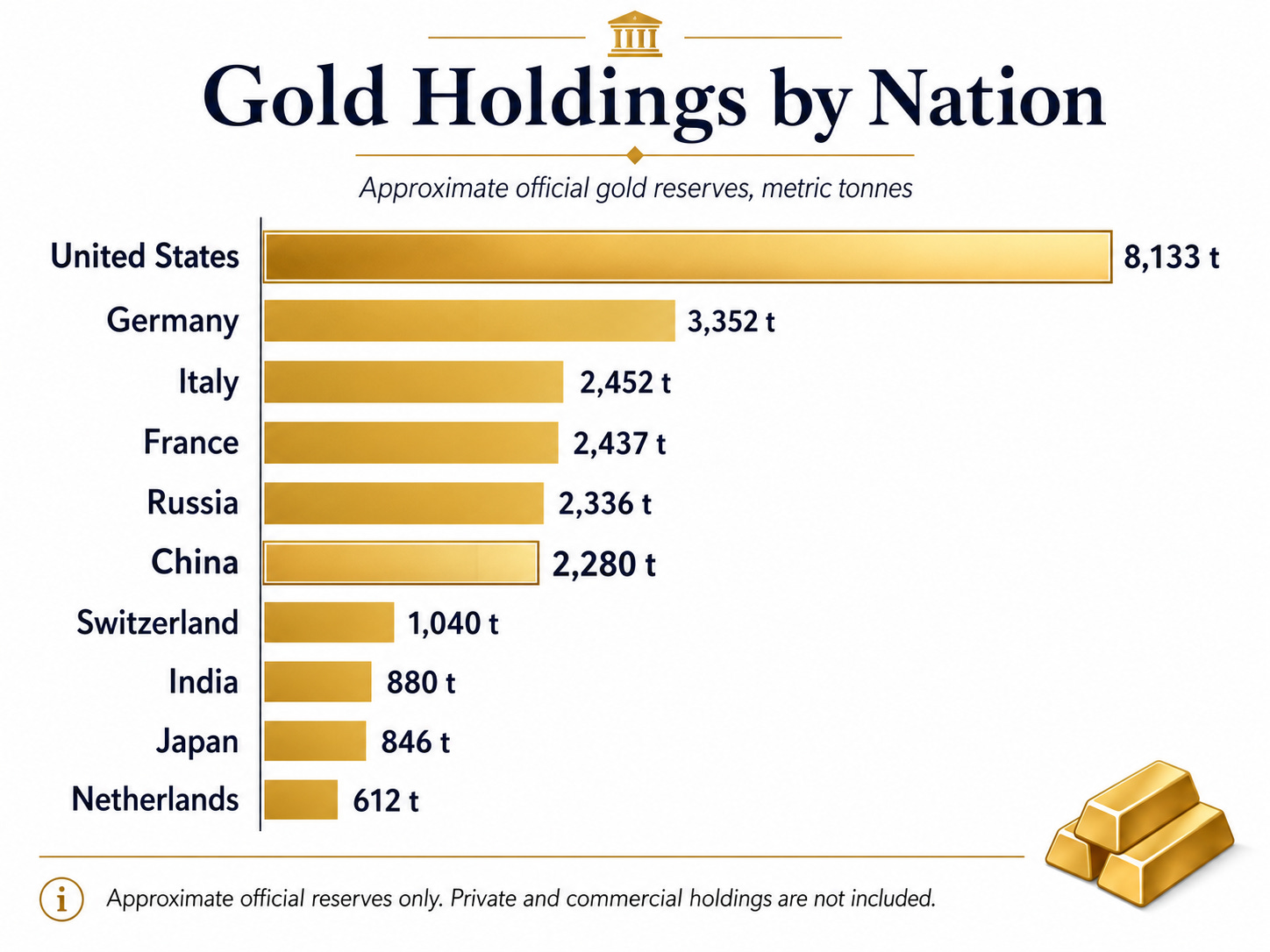
BMO estimates that China’s combined gold holdings now total approximately 30,000 tonnes. This includes official central bank reserves, commercial inventories, jewelry, investment bars and coins, and other privately owned bullion. Although that total remains below BMO’s estimate of the gold held across the United States, the bank believes the difference is narrowing as Chinese demand continues to grow.
China now accounts for roughly one-third of global physical gold demand, according to the report, making the country one of the most important forces in the bullion market. BMO says sustained buying from China has helped keep gold above $4,000 per ounce, even during periods when investment demand in North America and Europe has been relatively weak. This suggests that Chinese physical demand is becoming increasingly important in supporting the global gold price.
Demand Extends Beyond the Central Bank
Demand within China is spread across several parts of the market. Consumers continue to purchase jewelry, investment bars and coins, while financial institutions and official buyers have also increased their exposure. This broad demand base means China’s role in the market cannot be understood solely by examining changes in the central bank’s publicly reported reserves.
BMO also questions whether China’s official reserve figures fully capture the scale of the country’s gold accumulation. The bank expects China to acquire an additional 2,500 to 3,000 tonnes over the coming years through a combination of official and unofficial channels. That means through the PBOC as well as through the London OTC markets obfuscated. Continued purchases of that size, together with steady demand from households and investors, could push China’s total holdings above those of the United States within five years.
Building the Infrastructure of a Global Gold Center
The report also highlights China’s efforts to expand its role in the infrastructure of the physical gold market. The country has invested in exchanges, refining capacity, vaulting facilities and domestic pricing systems intended to improve liquidity and reduce its dependence on the established bullion markets of North America and Europe. These investments give Chinese institutions greater influence over how gold is traded, stored, financed and distributed.
Breaking: China Imports 173 Tonnes of Gold in June

GFN – BEIJING: China imported about 173 tonnes of gold in June, the highest monthly total since March 2024 and the third straight monthly increase, according to Bloomberg and Chinese customs data.
China’s strategy also involves integrating gold more deeply into its financial system. Expanding domestic trading and storage capacity allows Chinese banks and financial institutions to handle a larger share of bullion activity inside the country. It will likely also support China’s broader effort to increase the international use of the renminbi by connecting the currency more closely with physical gold trading and settlement.
The Gold Market’s Center of Gravity Moves East
BMO’s analysis suggests that the center of activity in the global gold market is continuing to move eastward. Chinese consumers, investors, institutions and official buyers represent a growing share of physical demand, while the country’s financial infrastructure is becoming more important to international bullion trading. The bank believes these changes are reducing the market’s dependence on traditional Western investment flows.
Free Posts To Your Mailbox
Contributor posts published on Zero Hedge do not necessarily represent the views and opinions of Zero Hedge, and are not selected, edited or screened by Zero Hedge editors.
Loading...