15 Million Drones
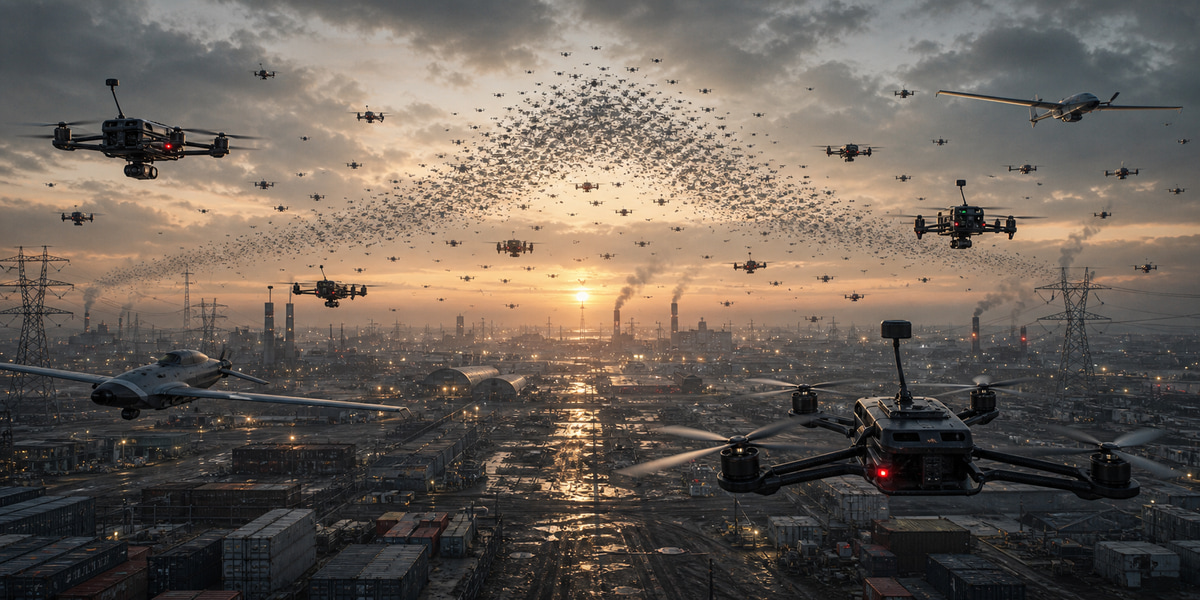
The Drone Revolution Is Here
Fifteen million drones.
At a 2025 Senate hearing, Army Chief of Staff General Randy George said DJI produces that many. He then singled out brushless motors and controllers as capabilities America needs to produce at home.
One number captures the industrial problem. The American defense industry was built around exquisite platforms, long procurement cycles, and correspondingly exquisite price tags. Small drones are cheap, expendable, and improved in weeks. The obvious investment conclusion is to buy drone stocks. The tape has been less accommodating.
A Quick Word From Our Sponsor
Before we continue, Zero Hedge highlighted an extraordinary collapse in the price of optionality on Tuesday: three-month at-the-money implied volatility on the Russell 2000 ETF had fallen to a 0.2-percentile reading. When insurance is cheap and unwanted, it is worth pricing.
Portfolio Armor’s iPhone app finds optimal puts and lower-cost collars for stocks and ETFs, based on the maximum decline you are willing to risk.

Now, back to drones.
Fifteen Million Is A Supply Chain
Ukraine is expected to produce between six million and seven million small FPV attack drones this year, according to a Pentagon official interviewed by Reuters. That is roughly 500,000 per month. The Pentagon’s $1.1 billion Drone Dominance program expects to have ordered fewer than 200,000 by February 2027.
Russia plans to produce 7.3 million FPV drones in 2026, according to intelligence cited by Ukraine’s commander-in-chief, General Oleksandr Syrskyi, and reported in May. These figures are forecasts and production plans. Their shared message is scale: the two combatants are building toward combined annual FPV output approaching 14 million units.
Volume changes military economics. An attritable drone can scout, relay communications, jam, strike, intercept another drone, or serve as a decoy. Short service lives create recurring demand. Rapid iteration rewards companies that can absorb battlefield feedback and manufacture at speed.
America’s opportunity spans the full stack:
- Airframes, propulsion, and complete systems;
- Motors, controllers, batteries, and power electronics;
- Optics, sensors, secure communications, navigation, and autonomy;
- Counter-drone detection and interception; and
- Critical minerals and domestic processing.
Rare earths remain one layer. The higher-value layers may sit in systems that combine hardware, software, communications, and battlefield data into something a military can field.
A Boom With Busting Stocks
Public drone stocks have supplied a spectacular reminder that strategic importance and shareholder returns travel on different schedules.
Every drone stock on my list has been crushed.
— Coffee House Stocks (@CoffeeStocksGuy) August 30, 2026
$AVAV down 65%+ off highs.
$KTOS down 61%+.
$AMPX down 59%+.
$RCAT down 55%+.
$ONDS down 48%+.
$UMAC down 31%+.
The Iran War, NDAA, 100% tariffs, a $1.5T defence budget - the macro could not be more perfect. The stocks still got destroyed. Here's why, and where they go from here.
Those are drawdowns from their highs rather than year-to-date returns. The distinction offers little comfort to investors who bought near the peaks.
Defense policy creates demand; public markets value the cash flows. Smaller companies often build factories, hire engineers, and carry inventory before appropriations become funded orders and orders become cash. Equity issuance can finance that bridge while diluting shareholders. Higher yields punish distant profits. Contract headlines can send a stock vertical before the economics justify the move.
The word “drone” also hides several industries. A prime contractor, battery developer, communications supplier, sensor company, and speculative airframe startup can share a news cycle while having different margins, customers, balance sheets, and capital needs.
The 15-million-drone world should produce winners. It should also produce commoditized hardware, failed programs, serial diluters, and stocks whose best news was already embedded in their prices.
Theme, Company, Entry, Structure
A successful thematic trade requires four decisions: the theme, the company, the entry, and the structure. Two of our completed drone-related trades illustrate different ways those pieces can line up.
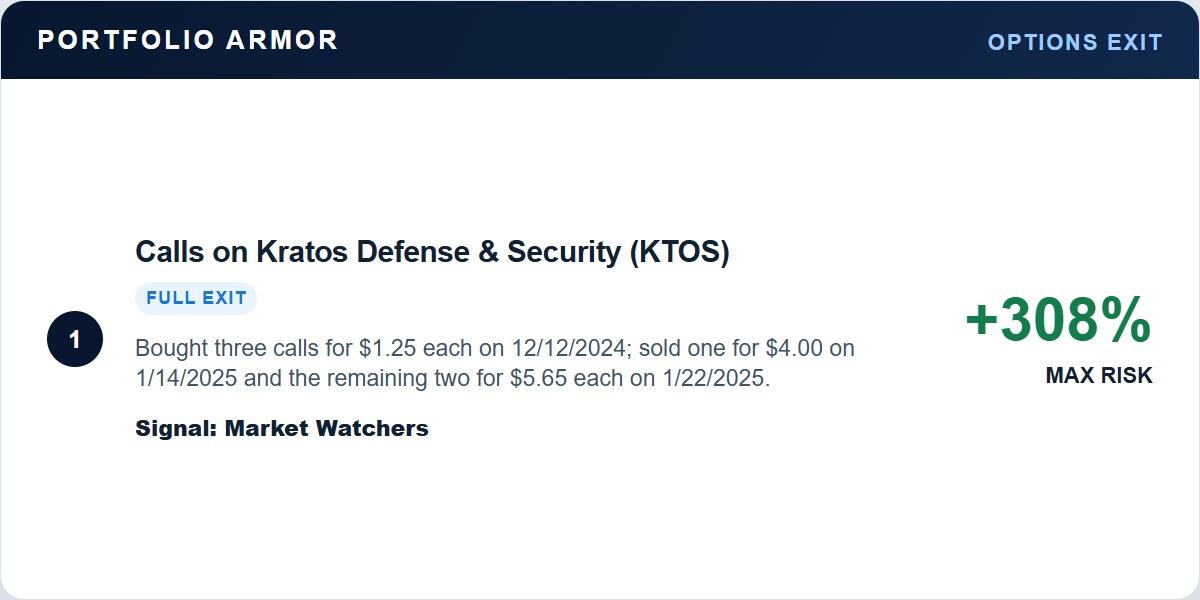
In December 2024, we bought three February 2025 $30 calls on Kratos Defense & Security Solutions (KTOS) for $1.25 each. We sold one for $4.00 in January and the remaining two for $5.65 each eight days later. The complete position returned 308% on the premium at risk over 41 days.
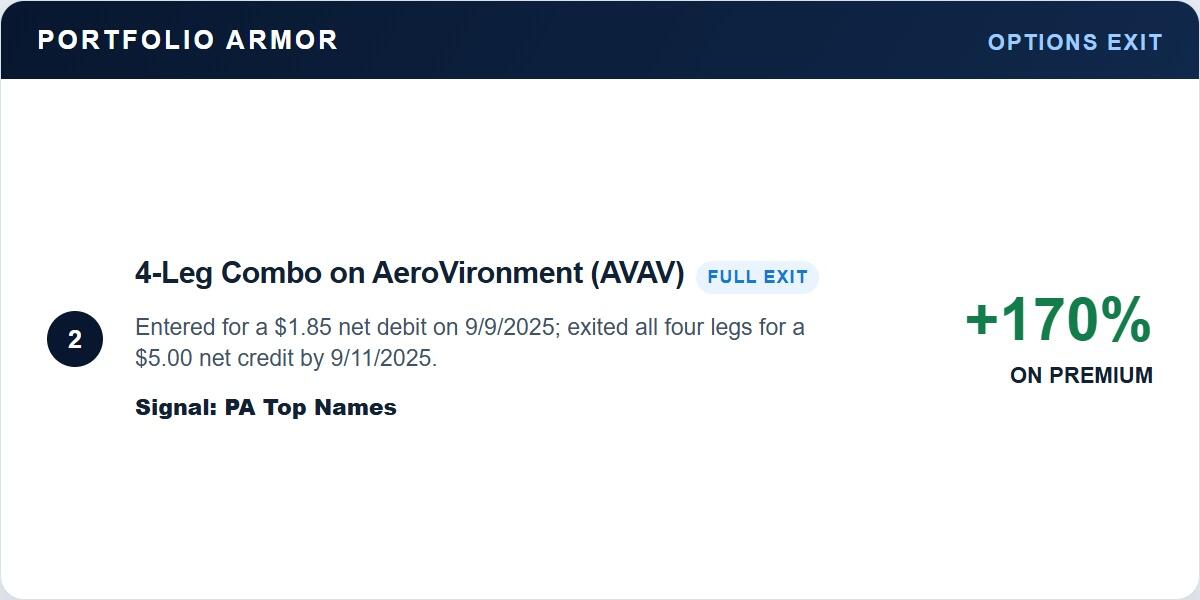
Our process has evolved since that early, straightforward call purchase. In September 2025, a four-leg combination on AeroVironment (AVAV) returned 170% on premium after the complete AVAV exit. Both results include every leg after closure.
If you would like a heads up when our system surfaces our next drone-related trade, you can subscribe to our trading Substack/occasional email list below.